
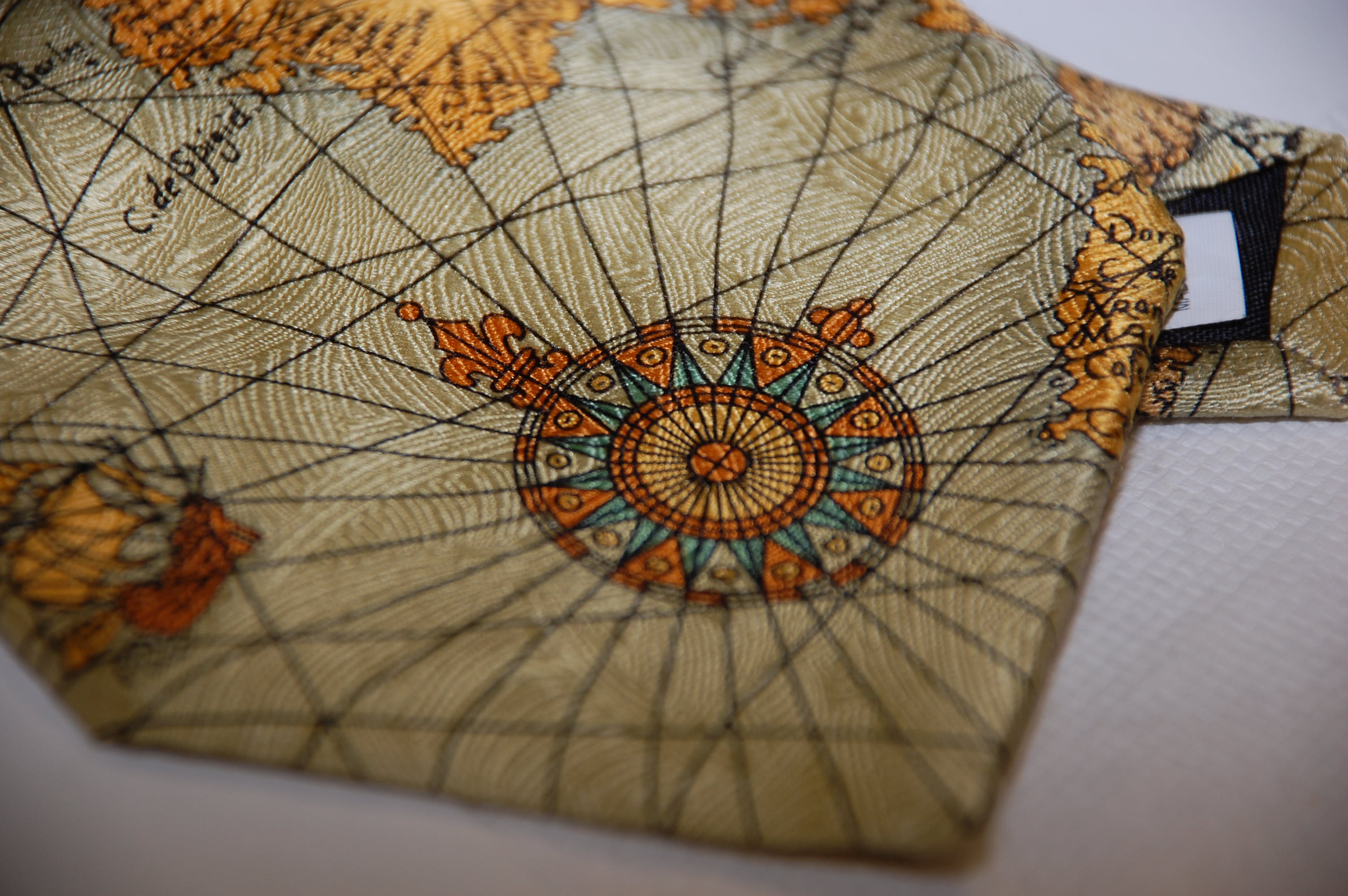
A Brief History of Edges
This road leads nowhere. I live at its end where breezes
wilt and the sun still burns my darkened skin.
I’ve sailed to Oman, but have never seen the Dakotas.
My friend searches for the concealed parable in this truth.
An early clay map depicted Babylon surrounded by a bitter river,
and an island named the sun is hidden and nothing can be seen.
Fitting the limitless within boundaries, she remembers no one.
The lighted sign says boots, but I see books.
Venturing from the shadows, she offers an accord: intersecting borders,
we must retain ourselves, deliver what calls.
In our place between the hidden and the invisible, consider
that neon gas possesses neither color nor odor.
What lives in creases and at the periphery? The isle called beyond
the flight of birds has crumbled from the lower edge.
Where I stand defines my portion of the spherical earth.
Crossing lines, I look to the sky, its bisected clouds.

“A Brief History of Edges” first appeared here in April 2016.
 O at the Edges
Wonderful, I’ ‘ve always been fascinated by the idea of a flat earth.
LikeLiked by 1 person
Thank you.
LikeLike
Fitting the limitless within boundaries…. This is a great line.
LikeLiked by 1 person
It sems we all too often try to do that!
LikeLiked by 1 person
My imagination goes running toward your “creases and periphery” thinking CANYONS! but then Reason steps in to remind that this is imagined … that every “here” is an edge, a crease, the periphery of “other” … might as well stand still in “here and now”. (Though my doctor would suggest running might be of benefit!)
Curious – this poem comes long after your blog’s naming. Can you draw lines connecting the two perspectives of “edges”?
LikeLiked by 1 person
My wife and I have had discussions about maps, and how it seems that the most interesting places seem to be in the creases or at the edges. The poem actually predates the blog by months, perhaps a year. But I’ve long been fascinated with perception, with borders and edges, with the periphery, the barely seen or heard. When I created the blog and the WordPress form asked for the name, “O at the Edges” popped into my mind, and so I went with it. No thought to it at all, which could probably describe much of my life. 🙂
LikeLiked by 1 person
Thoughts can just get in the way of intuition …
LikeLiked by 1 person
So true! I’ve learned to lean heavily on the first impulse.
LikeLike
Wow! I will need to spend some time with “A Brief History of the Edges.” Is this poem included in one of your chapbooks/collections?
Fitting the limitless within boundaries is human, of course. Recognizing that we have done so — or do so — is the essential first step to expanding what we experience. Words sometimes get in my way:
Speaking of the form or coloring of clouds in his journal, Henry David Thoreau wrote, “If by any trick of science, you rob it of its symbolicalness, you do me no service and explain nothing. I, standing twenty miles off, see a crimson cloud in the horizon. You tell me it is a mass of vapor which absorbs all other rays and reflects the red, but that is nothing to the purpose, for this red vision excites me, stirs my blood, makes my thoughts flow, and I have new and indescrible fancies, and you have not touched the secret of that influence.”
It is our human tendancy to define the limitless within the boundaries of our limited experience/selves. But that which is limitless plays on us all the same. In the words of Thoreau, it excites us, stirs us, makes our thoughts flow. It informs us that the boundaries we have imposed are illusory. They are not boundaries at all.
You should visit the Dakotas.
LikeLiked by 2 people
It’s never been published and hasn’t been included in any of my collections. Yet. Perhaps someday. In my experience, boundaries, whether imagined or real, tend to open other avenues, other passages to what really matters. I may get to the Dakotas one of these days. You might be amused to learn that the poem was written in response to a challenge my wife posed – write a poem using the makes of automobiles we’d owned. Hence neon, Dakota, accord and venture. 🙂
LikeLiked by 1 person
I do like that as a genesis for the poem. It’s a great poem. I was startled by it. I guess, in part, I have your wife to thank for that!
LikeLiked by 1 person
Poetry is everywhere!
LikeLike
I do find your wife’s challenge amusing! On occasion some of our Members of Parliament here in Britain have accepted similar challenges to include outlandish words in speeches in the Chamber. I feel puritanically disapproving about that, but with a poem no such objections arise. So well done!
LikeLiked by 1 person
I would likely feel the same about speeches from our representatives. But in poetry, it’s fun.
LikeLiked by 1 person
Great poem and even greater title!
LikeLiked by 1 person
Thanks, Daniel!
LikeLiked by 1 person
You have a way with words that makes me swoon…
LikeLiked by 1 person
Are you sure it’s not the Hibiki? 🙂
LikeLiked by 1 person
Nope. I don’t drink to get berobero yopparau or anything. (Great) whiskey is for sipping, though a little Hibiki and your poetry go great together, like fresh honey on cheddar cheese. I am never futsukayoi when I finish with my whiskeys either. My swoons are creative!
LikeLiked by 1 person
The best kind of swoons!
LikeLiked by 1 person
Indeed…
LikeLiked by 1 person
As someone who loves maps, I love this poem. Cartography and poetry really do go well together. A really underrated duo I think.
LikeLiked by 1 person
Thanks, A.M. And I agree – we need more map poems!
LikeLiked by 1 person
This has to be one of my favorites. Everything. And great illustration too–do you know whose work that is? (K)
LikeLiked by 1 person
Thanks, Kerfe. I don’t know whose work it is – found it on morguefile.
LikeLiked by 1 person
Nice…. How do you get these nice topics??
LikeLiked by 1 person
Poetry is everywhere!
LikeLike
Excellent … ah, the lure of maps and their missing elements … echoes, for me, of Rimbaud’s ‘Drunken Boat’!
LikeLiked by 1 person
The missing elements, the places we don’t see…
LikeLiked by 1 person
I love this. thank you.
LikeLiked by 1 person
I’m so pleased it resonates for you. Thank you.
LikeLike
Beautiful!
LikeLiked by 1 person
Thanks very much!
LikeLike