

Self-Portrait with Umeboshi
Our resemblance strengthens each day.
Reddened by sun and shiso,
seasoned with salt,
we preside, finding
comfort in failure. Or does
the subjugation of one’s flavor for another’s
define defeat? The bitter, the sour, the sweet
attract and repel
like lovers separated by distances
too subtle to see.
Filling space becomes the end.
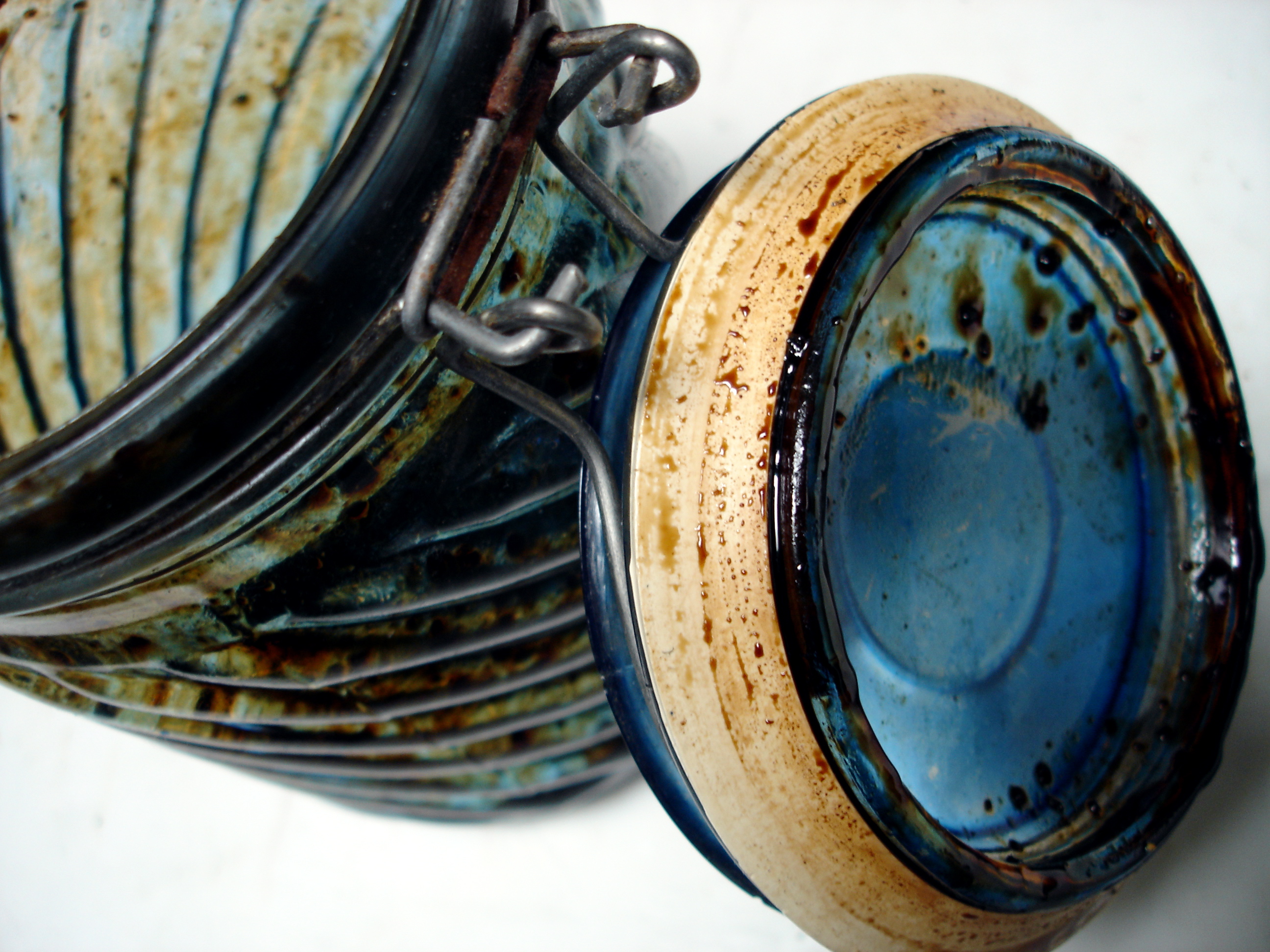
What do you learn when you look through the glass?
Knowing my fate, I say fallen. I say earth.
Ah, simplicity! When I was a child my mother would occasionally serve rice balls in which a single mouth-puckering umeboshi rested at the center. These have long been a favorite, but I admit that umeboshi might be an acquired taste. Commonly called “pickled plums,” ume aren’t really plums but are more closely related to apricots. I cherish them.
“Self-Portrait with Umeboshi” first appeared in the Silver Birch Press Self-Portrait Series (August 2014), was included in the subsequent print anthology, Self-Portrait Poetry Collection, and also appears in my chapbook, If Your Matter Could Reform.
 O at the Edges
I have acquired the taste for umeboshi. And for this poem, so many nuances of flavor.
LikeLiked by 3 people
It was always such a treat when I was a kid. Mmmmmm.
LikeLike
like lovers separated by distances/too subtle to see…that’s brilliant! I am fond of umeboshi but haven’t enjoyed one in a long time. Your poem gave me a hankering for reunion.
LikeLiked by 3 people
Thank you, Linnet. Yes, you must reunite!
LikeLiked by 1 person
the intensity of love and umeboshi … a blend of it’s own , wonderful Robert !
LikeLiked by 1 person
Both can be tart and sweet!
LikeLike
In Korea, this fruit is called maesil. It makes a delicious tea. This is a delicious poem.
LikeLiked by 1 person
I’d like to try that tea. And thank you.
LikeLike
Not gonna lie…umeboshi sound delicious. ^_^
LikeLiked by 1 person
It is. Especially if you were raised on it. 🙂
LikeLiked by 1 person
As umeboshi are disgusting, I cannot in good conscience “like” this poem. It is a great poem and I like it, but cannot click “like” as I would have to accept the umeboshi as a likable object! 🙂
The umeboshi is a test for foreigners, and I have happily failed the Trial By Umeboshi… after triumphing in the Trial By Natto.
Natto Forever… (with mustard and soy sauce of course…)!!
LikeLiked by 1 person
Ha! Someday you’ll attain enlightenment and enjoy this delight. I have to admit that I may be the only remaining person in my family willing to eat it. And then there’s beni shoga, which I make from ginger and ume “vinegar.” Yum.
LikeLiked by 1 person
You are a genius of poetry, but I question the sanity of anyone who can eat beni shoga and/or umeboshi and then question the spiritual status of others! LOL!
I wills ay this though. My almost wife in Japan hated both too, and the dark look she would shoot at anyone bringing either to our place was a hilarious mix of cynicism, sarcasm, weltschmerz, and resignation. It is a look that Japanese folks have mastered, and one of the greatest things I have ever seen. Made me wish I was a LOT closer in genetics to the Asian part of “Caucasian”!
You remain my hero…
… all is forgiven! 🙂
LikeLiked by 1 person
My wife (from Ohio, of Alsatian-English heritage) likes beni shoga but can’t stomach umeboshi. I admit that a little bit of either goes a long way. And I won’t get into the particulars of another favorite from childhood (rice, ketchup and pepperoni). Yum.
LikeLiked by 1 person
The pic of the jar looks like an eye with eyelashes
LikeLiked by 1 person
It’s looking back at you!
LikeLiked by 1 person
this is really good. It reminds me or sounds to me like a description of the ocean; and its: the ocean’s or oceans’ when thinking of it as a collective-it, description of itself; as in from its own perspective.
LikeLiked by 1 person
Thank you. I never would have thought of the ocean, but see how that could be. It’s always interesting to share other perspectives.
LikeLike
this is a wonderful pies of writing.
LikeLiked by 1 person
Thanks very much.
LikeLike
Where can we find this fruit ?
LikeLiked by 1 person
I have never seen the fruit in its fresh state. I purchase it in Asian markets and health food stores.
LikeLike
I have never seen it in India
LikeLiked by 1 person
You might find it in shops catering to macrobiotic diets, or those specializing in Japanese food.
LikeLike
One of my favorites from the chapbook, Bob. Although (I think I might have told you) every time I see the word umeboshi, it always reminds me of watercolor painting (talk about incorrect associations with a language one doesn’t know). So, synesthesia can lead you in a weird way sometimes! Also, it could be the power of suggestion—you trickster-poet, you! [using an art term in the title]
LikeLiked by 1 person
Ha! I am such the trickster that I didn’t even know I was doing it!
LikeLike
It’s those unknown unknowns; even poets have to be mindful of them! 🙂
LikeLiked by 1 person
And the older I get, the less I know.
LikeLike
Such is the fate of humans and ume, to fall, to return to the earth. Yes.
LikeLiked by 1 person
It is, indeed. And sometimes we rise.
LikeLiked by 1 person
Very nice metaphoric use of the ume.
LikeLiked by 1 person
Which reminds me – I’m almost out!
LikeLike