

Palinode (translation, passway, glass)
(translation)
What falters in translation? The dove’s silhouette resides
on the window three months after the sudden refusal. I
observe wingprints, the skull’s curve, a history of assumptions
angled in the moment of impact. And after, residue. Light’s
incident rests. One body whispers another’s shape and the
next rumbles through the narrowing passway. Traitorous,
I call it fact. I name it truth, and naming it, reverse the coat.
(passway)
I name it truth, but considered denial, root of the renegade’s
term. I have a bird to whistle and I have a bird to sing. Misperception
in flight. Betrayal’s gate, unhinged. What comes next? Sunlight
slants through the window each morning, and departs, bending
in reversal. Stones all in my pass. Dark roads. Another naming,
another transition. Trials waged in the grammar of refraction.
The deflected word.
(glass)
The deflected word reciprocates and the sky opens, outlining
its missing form. I have pains in my heart, they have taken my
appetite. Derived from wind, from eye, from hole. Once through,
what then? Mention archetype, and my world dims. Mention
windows, and I see processions and enemies lined along the way.
Boys, please don’t block my road. We select certain paths, others
choose us. Wingprints on glass.
Notes: italicized selections are from Robert Johnson’s “Stones in My Passway.”
This piece first appeared, in slightly different form, in ditch, in January 2014.
 O at the Edges
What I like best about your poetry is that it makes me pause long enough to truly consider each part of each piece. Like a work of art in a gallery that I can’t just walk past, but must sit on the marble bench in front of it and experience it, work to identify it’s meaning for me.
You make me stretch as a reader, and I like to think, grow, certainly aspire to grow, as a poet. Thank you Señor Okaji.
LikeLiked by 8 people
You have paid me the highest compliment, Michael: the marble bench. We write these things and never know if anyone will see them, much less read and work through them. I’m so pleased to have produced something worth stopping for.
LikeLiked by 3 people
Our mourning doves often fly into our windows, other birds too. Sometimes they lie stunned. Occasionally the imprint of their wings remains frozen on the glass, a reverse photo. “Wingprints on glass”, indeed: I like this poem very much.
LikeLiked by 1 person
I fashioned a mobile of little bird ornaments and placed that in the offending window. Since then, I’ve found no more wingprints. And thank you.
LikeLiked by 1 person
Pingback: Palinode (translation, passway, glass) — O at the Edges – randomwordbyruth…Out of the Closet…In a few words
Talk about a haibun! This is a very dense example of haibun-ness.
Excellent!
LikeLiked by 1 person
I wrote about a dozen of these over a four or five month period. I enjoyed the process, but don’t think I’ll return to this particular form. They are indeed dense, and I’ve headed in a slightly different direction with language.
LikeLike
OK, so here is a question:
“How does/should one write?”
You are a master. What is the secret?
LikeLiked by 1 person
I’m no master, Daniel. But I am persistent.
The secret: One word, followed by another. Repeat.
I seldom know what I’m writing about in advance, but often a single word or phrase or even a vague uneasiness will set me off. I follow the urge, and after much give and take, something takes shape.
LikeLiked by 4 people
I like it when a poem fills the spaces between its lines.
LikeLiked by 1 person
And then even more space creeps in!
LikeLiked by 1 person
It lives and changes and grows 🙂
LikeLiked by 1 person
Just when you least expect it!
LikeLike
The first stanza is flawless. I mean absolutely pristine. I live the past about ‘a history of assumptions’.
I like the whole concept of finding some relatively inconsewuential thing dead, and giving it depth and weight, making its demise a mysterious incident that has some universal elements.
LikeLiked by 1 person
Thanks very much. I spend much of my time living in the inconsequential, and have learned to consider it. 🙂
LikeLike
*love the part
LikeLiked by 1 person
Great as always.
LikeLiked by 1 person
Thank you. I appreciate your comments.
LikeLike
For once, I’m choosing not to mar your pristine moment with my overzealous residue. I’ve decided, instead, to bask…
LikeLiked by 1 person
Ha! “Overzealous residue.” Love that term.
LikeLiked by 1 person
Today’s time ,no one really cares about nature ,birds ,flowers ,emotions ,you write about these its good
LikeLiked by 1 person
My writing was awfully abstract for years, but took a turn for the better when I started observing the world around me.
LikeLike
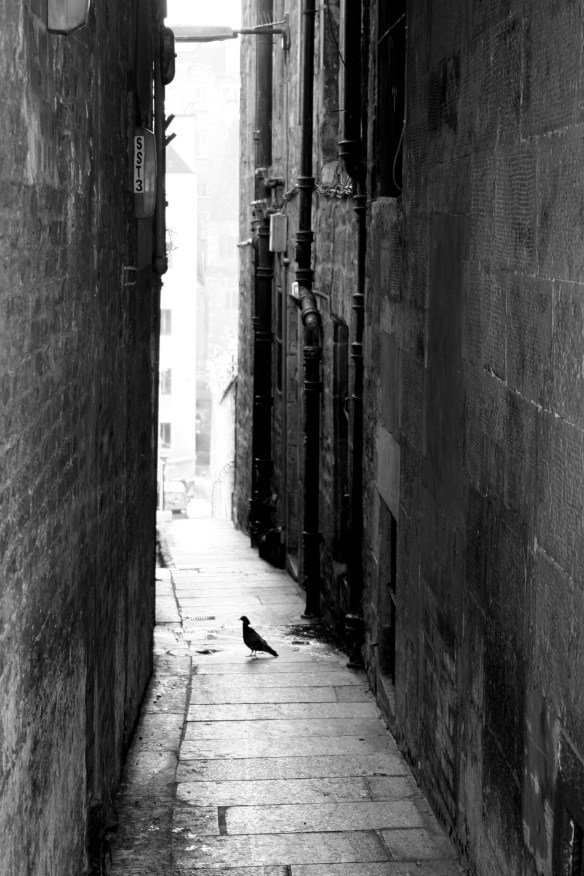
You have gleaned so much from an image I have so often photographed. Very well done
LikeLiked by 1 person
I’ve always felt sorry for the birds who’ve been surprised in that way. Now that I have a little mobile hanging in that particular window, it’s no longer a problem.
LikeLiked by 1 person
Your work is so thoughtful and resonant. I love it.
LikeLiked by 1 person
Thank you, Karen. I just concentrate on the little details – there’s so much there!
LikeLiked by 1 person
What more can I say? I just agree with everyone else (for a change)
LikeLiked by 1 person
Thank you.
LikeLike
A very large grin here for the Robert Johnson. I’ve had a few poems slide into my brain in unusual forms lately and this one inspires me to run with them. I always like your writing advice, too; it’s very very simple if you renounce the fear.
LikeLiked by 1 person
Ha! That’s just the way my mind works – I was staring at the bird’s imprint on the window, when the Robert Johnson tune popped into my head. Who am I to deny Robert Johnson? So I went with it. And with regards to writing, I don’t know how else to do it. Put words down on paper. Remove some. Replace them. Remove more. Repeat. Sometimes the initial impulse is all that remains in the finished product.
LikeLiked by 1 person
I read this over and over. And then I read it again and know I’ll come back for more. The poem itself… wingprints on glass.
LikeLiked by 1 person
Thanks, Chris. I do enjoy attempting to meld the disparate. Sometimes it works. 🙂
LikeLiked by 1 person
So rich, Bob. Like your first commentor, I am reading and re-reading, feeling the poem settle with each pass.
LikeLiked by 1 person
I’m so pleased you feel it’s worth the effort, Cate.
LikeLike