
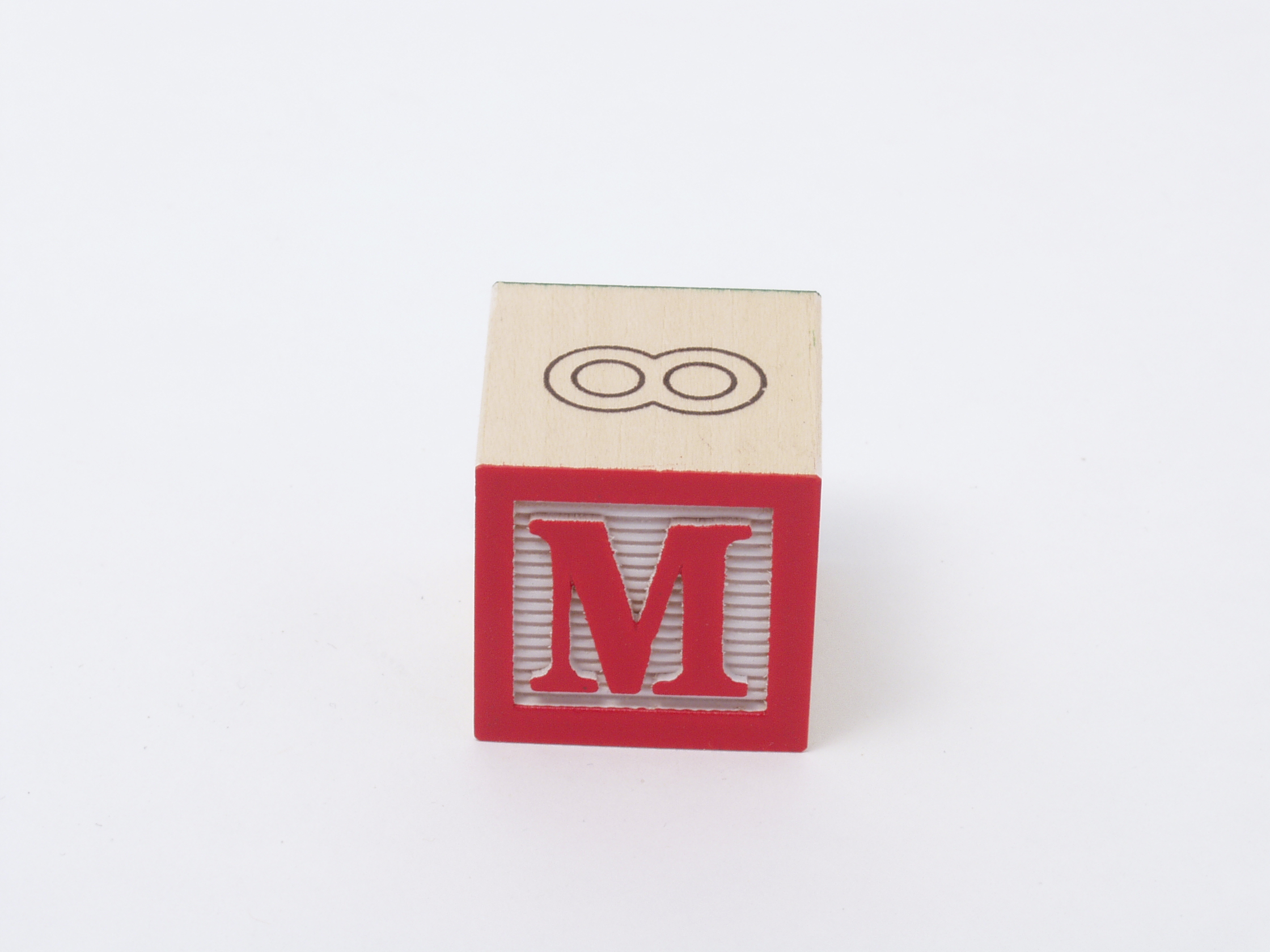
Snow with Moose
Guide to the incremental, to the sifted mass. The Phoenician mem shifted
shapes, but always suggested water.
Moose likely derives from the Algonquian descriptor “he strips away.”
The Japanese character for water, mizu, evokes currents.
Moose are solitary creatures and do not form herds. A bilabial consonant,
M is a primary sound throughout the world.
The prehensile upper lip undresses branches and grabs shoots.
Wavering, I share the lack of definition, of clarity in design and choice.
The sound is prevalent in the words for mother in many unrelated tongues,
from Hindi to Mandarin, Hawaiian to Quechua, and of course English.
Eleven strokes compose the Japanese character for snow.
A smile would reveal no upper front teeth.
Long legs enable adults to manage snow up to three feet deep. Under water,
individual flakes striking the surface sound similar, despite size disparities.
It can also accurately be classified as a mineral.
Solitude to connection, dark on white. The lone traveler.

“Snow with Moose” first appeared here in December 2015.
 O at the Edges
What a great poem, RO. One of my favorites.
LikeLiked by 1 person
Thanks, Jeff. The Lovely Wife provided the title about three years ago, and tasked me to write a poem. So I did. 😬
LikeLiked by 1 person
This is so richly complex, Robert. It’s like a long train ride in one short poem. And I love the companion photo. M and infinity; like your poem.
LikeLiked by 1 person
With these, it’s almost always a matter of choosing what to discard. But I enjoy taking those forks in the path…
LikeLike
Interesting prosody! Like!
LikeLiked by 1 person
Thanks, Gary. It’s fun to mix things up a bit.
LikeLiked by 1 person
Nice poem, Rbt. I love the etymology! Here’s a recent one of mine employing a simlar technique:
SNOW(FLAKE)
I doubt the Inuit have
fifty words for snow.
In some cultures, the heart
isn’t the seat of love:
Unchain my bladder!
Take another little piece of my. . . .
You get the idea. Let’s
chant the Lung Sutra.
Dear xenophobes,
repeat after me:
“qanuk, qanuk, qanuk,”
Inuit for “snowflake,”
weather, not politics.
LikeLiked by 2 people
Thanks, Jefferson. I think we share some interests. “Weather, not politics.” Indeed!
LikeLiked by 1 person
Matthew recently got some shots of a juvenile male moose at a campsite in Idaho. When showing off his pictures and zooming in, he kept remarking how cute “moose lips” are. I think there’s definitely something primordial to the fact that the word for “he (who) strips away” begins bilabial-ly, and that we’re drawn to “him” as we are to water and to our mothers.
Smart, subtle and lovely, this one reaches down through an ice age of divisive posturing to locate our common, human roots.
LikeLiked by 1 person
or our common animal roots!
LikeLiked by 2 people
Yep!
LikeLiked by 1 person
They are kinda cute. This is how I learn through poetry – from an assigned title I learned a bit about moose, then went on to explore linguistics, etymology and the letter “m,” as well as snow. That three word title took me down many different paths!
LikeLiked by 1 person
I love this. Today my grandkids and I learned that in Alaska it is illegal to whisper in the ear of someone who is moose hunting.
LikeLiked by 3 people
Thanks, Leslie. Good to know. I’ll try to refrain from whispering to moose hunters.
LikeLiked by 2 people
Whilst in Alaska….
LikeLiked by 1 person
Oh, yeah. Hard to find moose hunters in the Texas hill country. 🙂
LikeLiked by 1 person
But I once met a French-Canadian moose hunter in a Japanese restaurant in San Francisco…
LikeLike
The development of the theme is nicely juxtaposed, it makes leaps, yet seems to stay in the same spot, like a clever superimposition of separate objects, which leaves the viewer thinking one thing until they move & the same arrangement becomes something different & they see something new, if that makes sense.
LikeLiked by 1 person
It’s very much a collage technique, using unrelated themes to reinforce each other in some perhaps not logical way. An enjoyable technique, as it lets me use my curiosity. 😀
LikeLiked by 2 people
Yes, collage is a better way to explain it. Roy Fisher uses the technique to great effect. It gave him a freedom to utilize his various curiosities in the form of poems, usually ending in a reasonable length, but to great effect. As my reading habits began to change i am starting to see the pull toward this sort of writing. My Thinking Out Loud poems are an attempt toward this, but i find i have to be totally open, if i faff too much the poems become studied, if i just use what comes to mind it becomes more erratic & i think more interesting.
LikeLiked by 1 person
As I alluded to earlier, with these I write many more lines than I use. So the poems are often the result of the balance between attrition and retention. Much more so than with my usual mode of writing.
LikeLiked by 1 person
Yes, I realize, over and over, this technique works best for me, allowing me to break free from the chains of narrative.
LikeLiked by 1 person
And I often prefer implication in poetry over directness. This technique allows for a “layering” of sorts that points to or glances off of “meaning.”
LikeLike
A Fascinating writing Robert, I’m not converse with techniques, nor styles of poetry, simply that I really enjoyed your poem, so visually descriptive..
LikeLiked by 1 person
Thanks, Ivor. I’d get bored if I wrote in the same style all the time, so I play around a bit.
LikeLiked by 1 person
Wow! Love it!
LikeLiked by 1 person
Thank you.
LikeLike
I enjoyed this verbal ramble. A propos of Leslie’s comment, is there, I wonder, such a person as a moose whisperer.
LikeLiked by 1 person
Now that is an occupation I don’t want to take up!
LikeLiked by 1 person
Off the subject a tad, but why would anyone want to kill a moose? I am so down on trophy hunters, as if a healthy relation to life is to take it and then glorify the taking.
LikeLiked by 1 person
I don’t have problems with people who hunt for meat and respect nature. But trophy hunters? A blight!
LikeLike
Japanese character for water
–Mizu– 水
eleven is a prime number
indivisible
solitary among its relatives
a herd of one
indispensable
like a moose
Your divergences suggest a higher math,
the matrix of life, without speaking its name outright.
This is skill, or talent, or something else entirely,
which also cannot be named.
LikeLiked by 1 person
Still, we try to name the unnameable.
LikeLike