Peach Blossom (after Li Po)

file0001629991807
Another adaptation…

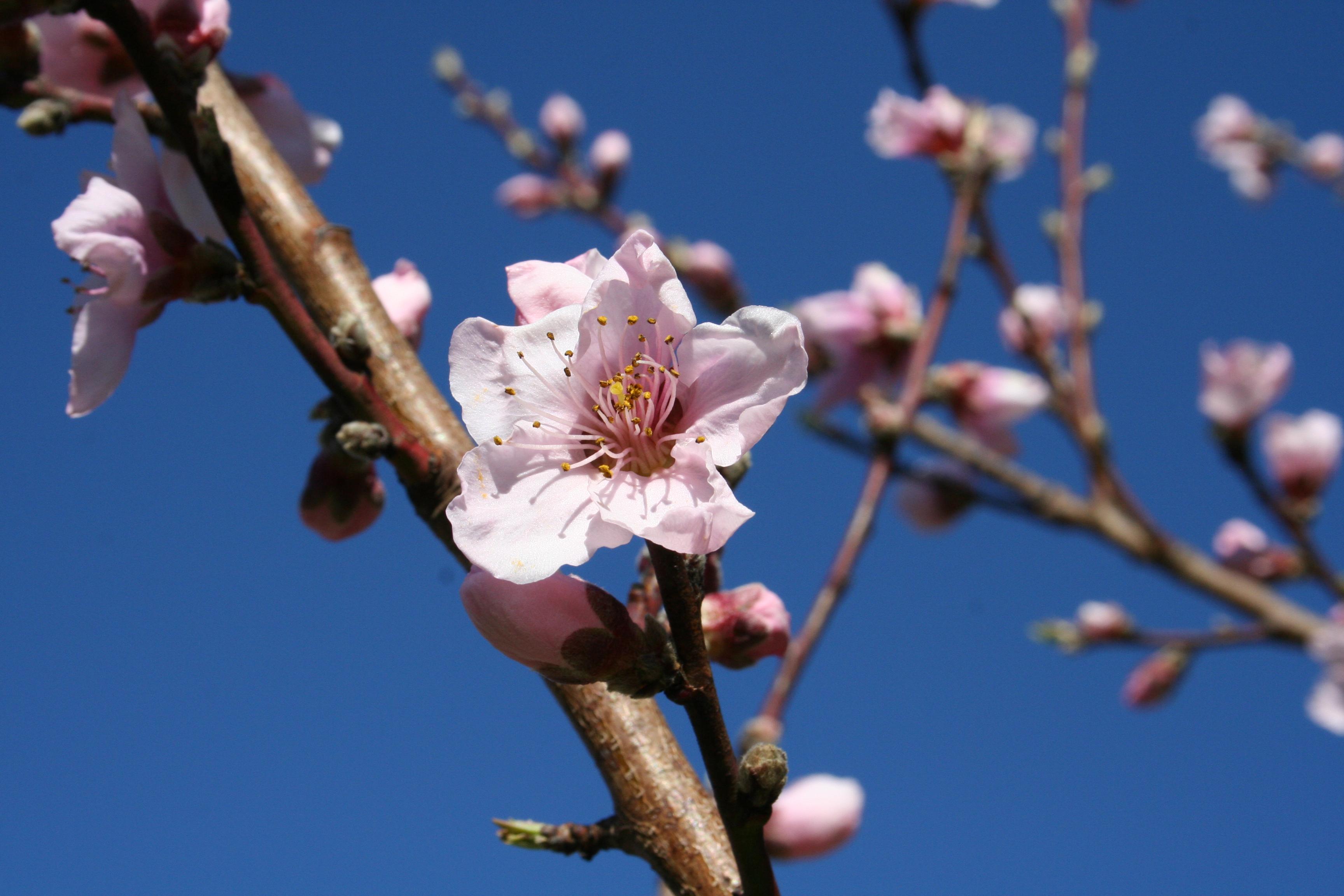
Peach Blossom

Ask why I stay on the green mountain
and I smile but do not answer; my heart rests.
A peach blossom floats downstream –
Heaven and earth, apart from this world.

The transliteration on Chinese-poems.com is as follows:

Ask me what reason stay green mountain
Smile but not answer heart self idle
Peach blossom flow water far go
Apart have heaven earth in human world

There the poem is titled “Question and Answer on the Mountain.”

Note: an alternative reading of the last line is “apart from” the human world.

IMG_5780

2,000 Ways of Looking at Wang Wei (and I still can’t resist)

_5305908
The subject of Nineteen Ways of Looking at Wang Wei: How a Chinese Poem is Translated, these four lines have not suffered from lack of translation. Gary Snyder’s rendition is beautiful – some might say perfect – as is Burton Watson’s. And then there’s Octavio Paz’s version. Yet I persist…

The transliteration on Chinese-poems.com (which differs from that offered by Eliot Weinberger):

Empty hill not see person
Yet hear person voice sound
Return scene enter deep forest
Duplicate light green moss on

And my take:

Deer Sanctuary

There’s no one on this empty hill,
but I hear someone talking.
Sunlight trickles into the forest,
reflecting onto the green moss.

Time and again Weinberger objects to an explicit first person observer, but to my ear it flows better. I’ve tried to retain a sense of precision in observation and at least a hint of duality, and believe that I’ve succeeded, at least in part. Having carried this poem with me for more than two decades, only now have I felt up to the task (or at least approaching it). I chose the title “Deer Sanctuary,” because in my neck of the woods spaces enclosed by “game fences” are generally meant for hunting. We Texans do love our venison. But the poem, to me, is ultimately peaceful. Hence my title.

file000701390163

Spring Night (after Wang Wei)

file4401311417052
Spring Night (after Wang Wei)

Among falling devilwood blossoms, I lie
on an empty hill this calm spring night.
The moon lunges above the hill, scaring the birds,
but they’re never quiet in this spring canyon.

Another try at an old favorite…

I consider this adaptation rather than translation, but perhaps appropriation or even remaking might be more accurate.

Here’s the transliteration from chinese-poems.com:

Person idle osmanthus flower fall
Night quiet spring hill empty
Moon out startle hill birds
Constant call spring ravine in

So many choices, none of them exactly right, none of them entirely wrong. How does one imply idleness, what words to use for “flower” (blossom? petal?), or for that matter, “fall” (descend, flutter, spiral)? And how to describe a moonrise that scares the constantly calling birds? My first attempt began:

“I lie among the falling petals”

but it seemed vague. The word “osmanthus” fattened my tongue, or so it felt, but the osmanthus americanus, otherwise known as devilwood or wild olive, grows in parts of Texas. So I brought the poem closer to home.

I considered naming the birds (quail came to mind) but decided against. In this case the specificity felt somehow intrusive.

My hope is that I’ve managed to amplify, in some small way, previous iterations, and that while the edges are still a bit blurred in morning’s first light, perhaps they’ll become slightly crisper by the evening.

file8981286030058

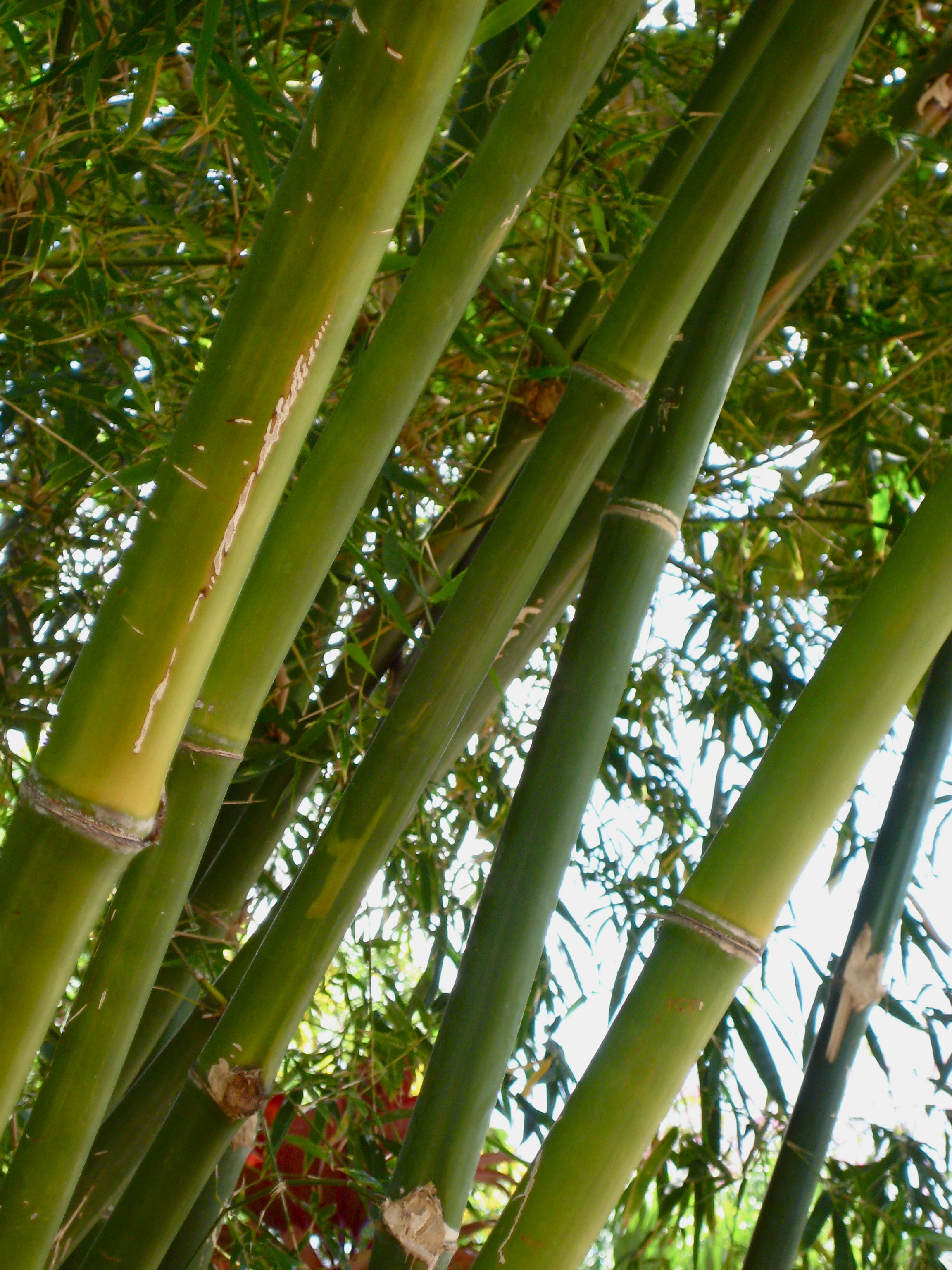
Cedar Grove (after Wang Wei)

file000675350848

Cedar Grove (after Wang Wei)

I sit alone among the cedars,
play my guitar and hum.
In this dark forest
no eye spies me but the moon’s.

My take on Wang Wei’s “Bamboo Grove.”

I worked from this transliteration copied somewhere along the way:

alone sit dark bamboo among
strum lute again long whistle
deep forest man not know
bright moon come mutual shine

I hope it works.

IMG_1533

Late Night (after Li Po)

file0001588704472

The moon smiles upon my bed.
I consider frost and ice,
and raising my head, the bright sky.
Lying back, I think of home.

Once again, I’ve attempted to shiver myself into a timeless piece. I can only hope that my version does not offend.

The literal translation from Chinese-Poetry.com follows:

Bed before bright moon shine
Think be ground on frost
Raise head view bright moon
Lower head think home

file000656391838(1)

Night Journey (after Tu Fu)

IMGP3335
This is not a translation, but rather a version, my “take” on a famous Tu Fu poem. I claim no abilities in translation, neither speak nor read Chinese, and instead depend upon the skills of those who have ventured into these difficult reaches. This is where the poem carries me, a middle-aged Texas hill county dweller, in the Year of the Horse, 2014.

Night Journey (after Tu Fu)

Wind bends the grass along the road.
A lonely truck passes by.
Stars reach down to touch these hills
and the moon drifts behind.

No one will ever know my poems.
I am too old and ill to work.
Circling, floating, who am I
but a vulture looking down.

Here’s a literal translation of the piece (or so I believe), found on chinese-poems.com:

Nocturnal Reflections While Traveling

Gently grass soft wind shore
Tall mast alone night boat
Stars fall flat fields broad
Moon rises great river flows

Name not literary works mark
Official should old sick stop
Flutter flutter what place seem
Heaven earth one sand gull

My goal was to retain the mood, as I understand it, of the original, and to place it into my personal context. An interesting exercise.