
Dink Press has released the digital version of my chapbook, If Your Matter Could Reform. The print version will be available on April 19.

Dink Press has released the digital version of my chapbook, If Your Matter Could Reform. The print version will be available on April 19.
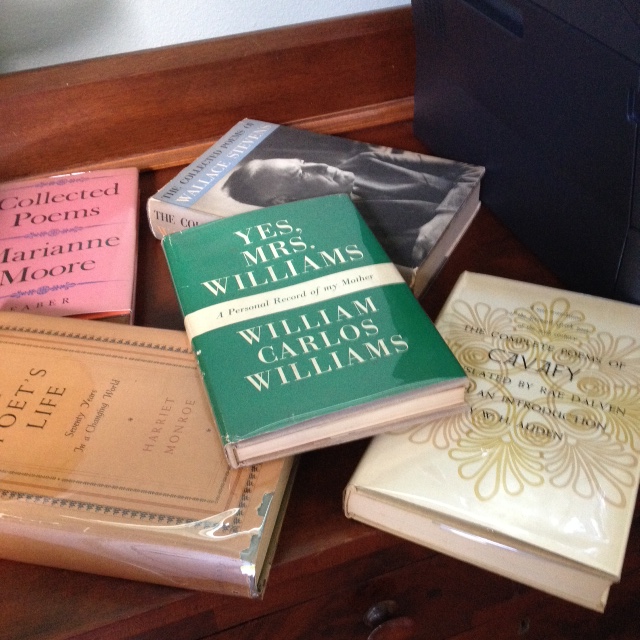
In another life books framed my days. I slept with them, dreamt about them, woke to their presence stacked by the bed and in various corners throughout the house, read them, handled them, discussed their merits with friends, co-workers, beer-drinking buddies, bartenders, customers, strangers, relatives, and even enemies. Traced my fingers slowly down their spines, identified some by odor alone, others by weight and feel. Bought, sold, cleaned, lent, skimmed, traded, gave, borrowed, collected, repaired, preserved, received. Traveled to acquire more, returned home to find still others languishing in never-opened, partially read or barely touched states. There were always too many. There were never enough.
The relationship began innocently. I’ve been an avid reader since the age of five, and over the years developed a knack for uncovering uncommon modern first editions. I’d walk into a thrift shop and spot a copy of William Kennedy’s first novel, The Ink Truck, snuggling up to Jane Fonda’s workout book, for a buck. Or at a small town antique store, something especially nice, perhaps a near-fine first edition of Cormac McCarthy’s Outer Dark, would leer at me from a dark shelf – $1.50. John Berryman’s Poems (New Directions, 1942) found me at a garage sale, for a quarter. Good Will yielded Pynchon’s Gravity’s Rainbow. There were others, of course. Many others.
I partnered with a few like-minded friends and opened a store, and when that didn’t work out, started my own home-based book business, which eventually expanded into a small brick-and-mortar shop, a true labor of love. And I mean labor. The forlorn space we rented was cheap and had housed for years a low-end, illicit massage parlor. Cleaning it out was, oh, shall we say interesting? I’ll never forget the furry massage table, the naked lady lamp or the various implements left behind after the joint was finally forced to close. But we hauled out the filthy carpeting, stripped and refinished the hardwood floors, fixed, painted and patched what we could, and hid what we couldn’t. It was exhausting, but well worth the toil.
My work schedule ran from Monday through Sunday, a minimum of eighty hours a week – in a seven-year period, I took off only two long weekends. It consumed me, but in the end I emerged mostly intact, a little more aware of my proclivities, of an unhealthy tendency to immerse myself wholly into an enthusiasm, to the detriment of family and friends. When we sold our store’s wares, I embraced the change; some dreams simply deplete you. But the itch remained.
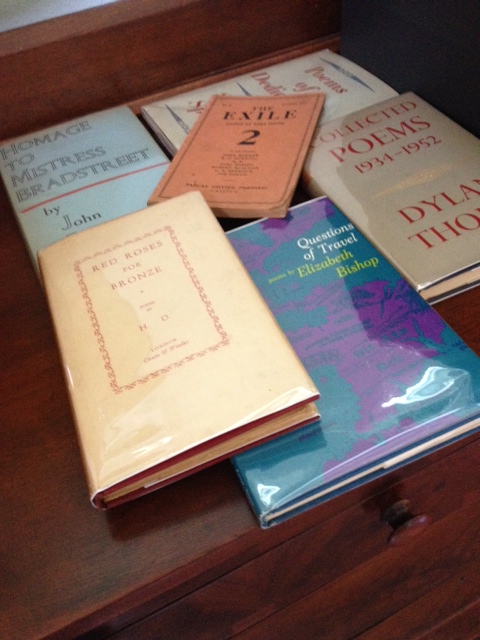
Just a few weeks ago I found myself perusing an accumulation of books in a storage facility across the street from a junk shop in Llano, Texas, a small county seat an hour’s drive west of my home on the outskirts of Austin. The shop’s owner had purchased an English professor’s estate, and judging by the collection, the professor had specialized in poetry. My first thought was “I want it all,” but reason set in (I could very well imagine my wife’s reaction were I to arrive home with a trailerful of books) so I glanced over the criticism, fiction, drama, essays and biographies, and concentrated on the poetry. In the end I walked away with thirty-one books, including H.D.’s Red Roses for Bronze (Chatto & Windus, 1931), Randall Jarrell’s Little Friend, Little Friend, Elizabeth Bishop’s Collected Poems and Questions of Travel, a brace of Berrymans – His Toy, His Dream, His Rest and Homage to Mistress Bradstreet – both the U.S. and U.K. first editions, which differ – and Love & Fame. A good haul, to say the least, but one that left me only partially satisfied and contemplating a return. But I remain resolute. So far.
As I said, the itch remains…

Memoir (Cento)
Your hands touched
everything. Will you
be a fountain
or a sea?
A woman sleeps next to me
on the earth. Now
nothing else keeps my eyes
in the cloud.
Each rock is news.
A cento is composed of lines from poems by other
poets. This cento originated from pieces in:
77 Poems, Alberto de Lacerda
Because the Sea is Black, Blaga Dimitrova
Body Rags, Galway Kinnell
Song of the Simple Truth, Julia de Burgos
Love Poems, Anne Sexton
For further information and examples of the form, you might peruse the Academy of American Poets site: http://www.poets.org/poetsorg/text/poetic-form-cento

The Art of Flight
What wings accumulate is not air
but space, an exemplar
of restraint defied. I listen
and hear feathers
ruffling in the shadows,
a vibration that swells
until it becomes flight or
regret, the retrieval of our
bodies from this dream of ascent.
The art of flight is one of
disturbance, of angles and lift
and touching what can’t be seen.
What we hold carries no meaning.
The beauty lies in the gathering.

Track (after Tranströmer)
2 p.m.: Sunlight. The subway flows
beneath us. Flecks of darkness
shimmer madly on the wall.
As when a man cracks a window into a dream,
remembering everything, even
what never occurred.
Or after skimming the surface of good health,
all his nights become ash, billowing clouds,
strong and warm, suffocating him.
The subway never stops.
2 o’clock. Filtered sunlight, smoke.
I’ve been dipping into Friends, You Drank Some Darkness, Robert Bly’s 1975 translations of Harry Martinson, Gunnar Ekelöf and Tomas Tranströmer, and I couldn’t resist playing with one of my favorite poems. A different darkness, a separate space, another landscape…
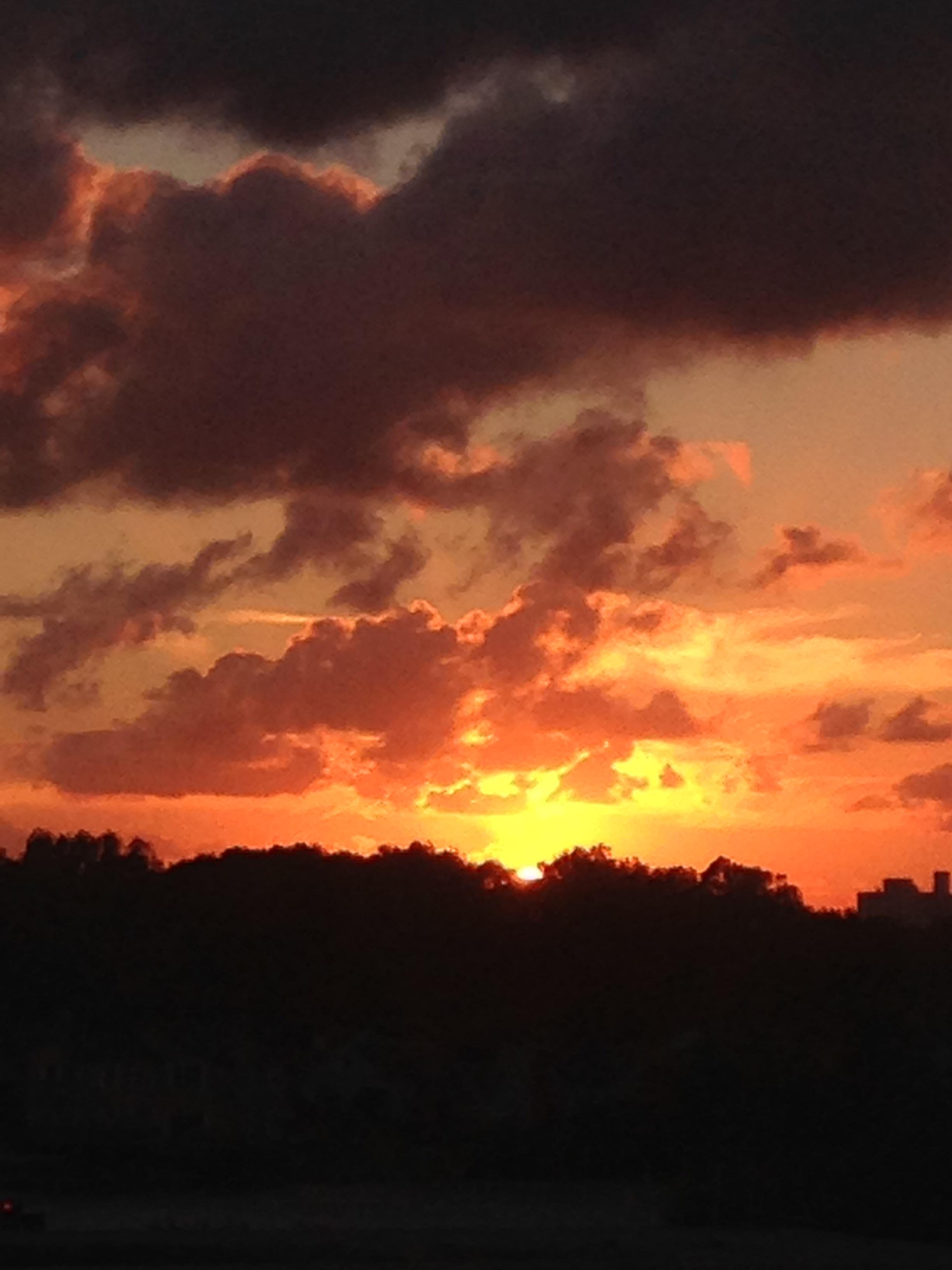
Bright Autumn Moon (after Su Shi)
Clouds gather on the horizon, but here
it’s clear and cold as the silent Milky Way
and the stone of heaven, turning.
My life, like this night, will not last long.
Where will the bright moon find me next year?
The transliteration on Chinese-poems.com reads:
Mid-Autumn Moon
Sunset cloud gather far excess clear cold
Milky Way silent turn jade plate
This life this night not long good
Next year bright moon where see
Jade was also known as the “stone of heaven” and was considered a bridge
between heaven and earth. It made more sense to me in this context. I’m clearly
taking license here…

 O at the Edges