
My poems “Not Language but the Possibility” and “Reduced to Translation” are live at Wildness. Many thanks to editor Michelle Tudor for taking these two poems.

My poems “Not Language but the Possibility” and “Reduced to Translation” are live at Wildness. Many thanks to editor Michelle Tudor for taking these two poems.

5
Woe is me! Break out the tiny violins! I am in full-whine mode!
Numbers, numbers, numbers, numbers. Add, divide, multiply, subtract. Take note, shift columns. Despair. For months, the numbers have been backhanding me, to and fro, up and down. Bullying, mocking, teasing mercilessly, always heading in the wrong direction. Property taxes have increased. Life expectancy has plummeted. The bank account is steadily dwindling. With my illness, work, or a job, isn’t really feasible, though occasionally I sell a book or two (not mine, mostly scholarly or collectible tomes), which brings in a few bucks. And inflation! Everything costs more. Just a few years ago I seldom paid more than a dollar a pound for chicken thighs. Nowadays we’re lucky to pay four times that amount. And so it goes.
But, a few weeks ago, the numbers finally stepped in firmly on my side! In May, scans showed that my lung cancer had spread to the brain; nine small lesions were found, cause for concern, as you might imagine. Now, nine is a fascinating number, majestic, mystical, some might say. Multiply it by two, and you get 18. Add the two digits that comprise 18, one and eight, and you get 9. Multiply it by three: 27. Total the two digits forming 27, and you get, yes, 9. Multiply it by four, by five, by six, by seven, eight or nine. Fifteen. Twenty. Add the digits that comprise the sum and you return to nine. Interesting, no?*
But I’ve digressed. Nine is not the digit one wants to hear when discussing the number of lesions manifested in one’s brain. That was the situation a few months ago. But now, apparently, the numbers have taken my side, and I no longer need concern myself with that figure. Recent scans revealed that the lesions have resolved; they’ve disappeared! In other words, the treatment is working. Oh, the cancer is still with me elsewhere, but after months of bad report after bad report, the news is finally trending in the right direction.
So today I praise the magical number nine, which, in my case, has transformed itself into nothing, a circumstance most worthy of commemoration. What numbers do you celebrate, and why?
*If this sounds familiar, you may have read my essay originally posted here in February 2014.
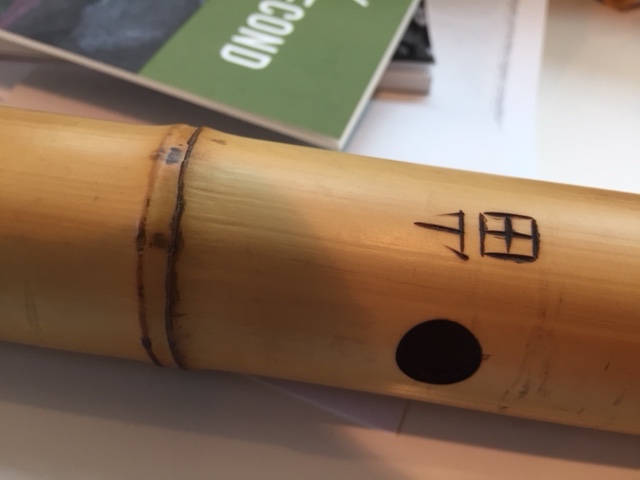
My poem “Self-Portrait as Shakuhachi” is live at The Headlight Review. I am grateful to the editors for taking this piece.

4
In my desk, nestled among the odd assortment of books and keepsakes (including Hashimoto, my stuffed toy dog companion of nearly sixty years), sits an old, chipped, cut glass ashtray bearing eclectic objects. The ashtray was my mother’s, and was one of the few possessions she was able to bring with her to the U.S. after she married my dad. It’s a rather ironic keepsake, as my mom, a heavy smoker for some sixty years, died from lung cancer, and it appears that I will, too, though I’ve never smoked. Nevertheless, it remains one of my most prized possessions. In it, you’ll find an old, broken, silver pocket watch (a father’s day gift to my dad in the late 70s), a lock of Stephanie’s hair, my dad’s original army dog tags, multiple mandolin and guitar picks, including one given to me by Kinky Friedman, author, musician, and one-time candidate for governor for the state of Texas, and various polished stones. Not one of these items has great monetary value, yet they’re all priceless to me. They all have stories.
What are your treasures? How did they come to be so valued? What are their stories?

A handful of my poems have been published since January, and in the grip of my illness I did not properly acknowledge the publications. I hope to make up for this, at least in part, by providing, at this late date, links to the poems in these journals.
My poem “The Kohlrabi Polka” was published at Panoply in January. I am grateful to editors Andrea, Clara, Jeff and Ryn for taking this piece, and to Pleasant Street, who provided the title during a mini-fundraiser for Brick Street Poetry in September 2021.

My poem “Letter to Wright from Between Gusts” is live at Heduan Review. I am grateful to editor-in-chief Anya Motwani for taking this piece, which was originally published in The Lake.
A handful of my poems have been published since January, and in the grip of my illness I did not properly acknowledge the publications. I hope to make up for this, at least in part, by providing links to these journals.
My poems “In That Moment of Clarity,” “Hearse, Departing,” and “In This Gray Morning I Think of Hiroshige” were published at The Big Windows Review in March. I am grateful to editor Thomas Zimmerman for taking these poems,
3
I have always loved books, their smell and heft, bindings, illustrations, and of course, the stories within. But I don’t recall the title of the first book I personally checked out of the library. I was five-years old, in first grade. It was a Friday, the book was replete with color illustrations, and the story was, perhaps, about a little bear. So long ago. But I read and reread that book all weekend, and I felt (and still feel!) the awe and wonder, mystery and power of that glorious artifact.
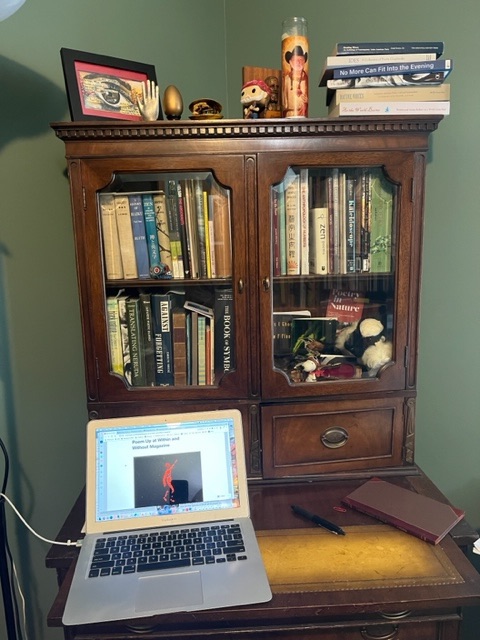
Nearly sixty years later, that awe has never diminished. The books behind my desk’s glass doors offer glimpses at rare beauty and yes, secrets. In front of me sits a U.S. first edition of Remy de Gourmont’s A Night in the Luxembourg (Boston, 1919), which may be an interesting relic in and of itself, but this particular volume bears the bookplate of Jun Fujita, historical figure, poet and photographer extraordinaire. Alongside it rests a much thumbed copy of The Book of Symbols, a source of great contemplation, insight and forehead slapping.
On the shelf above that a volume titled The Anthropology of Numbers, also a treasured resource, nestles just to the left of Kaleidoscope: Poems by American Negro Poets, a landmark 1967 anthology edited by Robert Hayden, the Consultant in Poetry to the Library of Congress from 1976 to 1978. Should your eyes wander down this shelf, you’ll also discover an inscribed copy of David Wevill’s Other Names for the Heart: New and Selected Poems 1964-1984, Maggie Nelson’s The Argonauts, and Kenkō’s Essays in Idleness, translated by Donald Keene.
Why are these books here? How have they come to be gathered in this house in Indiana, on these particular jumbled shelves? Who are the authors? What is their significance? Who knows them, feels them, understands them? What wisdoms have they endured?
Share with me your favorite books—from the volumes you’ve read time and again, to the ones you own simply because you were compelled to possess them, and those that have great significance to you, even if you’ve not read them and never will.

A handful of my poems have been published since January, andI’ve been remiss and have not kept up with my end of the bargain. I hope to make up for this, at least in part, by providing links to these publications.
My poems “When Madeline Said No” and “Poetry in the Dark” are live at Within and Without Magazine. I am grateful to editors Gracie DeSantis and Heather Curran for taking these poems, and to poets Lynne Burnett and Ken Gierke for providing the titles during a mini-fundraiser for Brick Street Poetry a couple of years ago.
2
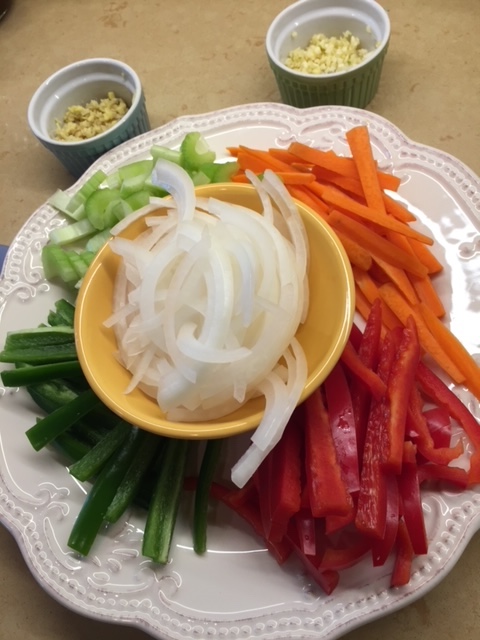
Lately, the word “doing” has taken on increased importance in my world. Yes, I’m ill, but it’s not in my nature to sit idly by while others do. I abhor incapacitation. I enjoy, I celebrate, I NEED the encompassing rituals of doing, of preparing dinner, of the measuring, peeling, chopping, shredding, organizing and facilitating the timing of it all. So even when I’m not at my best, even if I have no appetite, I dice those carrots, deseed the poblanos, shred the cave-aged gruyere. I stand in front of the stove, ensuring the proper sear on the cubed beef. I flip the eggs, turn the meat, stir whatever needs stirring. I take kosher salt between thumb and forefinger, sprinkle it on the julienned peppers. As long as I’m able, I do.
Where do your compulsions lie? What doings must you do?
 O at the Edges