Peach Blossom (after Li Po)

file0001629991807
Another adaptation…

Peach Blossom

Ask why I stay on the green mountain
and I smile but do not answer; my heart rests.
A peach blossom floats downstream –
Heaven and earth, apart from this world.

The transliteration on Chinese-poems.com is as follows:

Ask me what reason stay green mountain
Smile but not answer heart self idle
Peach blossom flow water far go
Apart have heaven earth in human world

There the poem is titled “Question and Answer on the Mountain.”

Note: an alternative reading of the last line is “apart from” the human world.

IMG_5780

Just Published in Lightning’d Press

file5011246505663

I’m pleased that my poem “Trains” has found a home in the current issue of Lightning’d Press.

Pages 35-36

http://www.lightningdpress.com/current-issue1.html

file0001571194471

2,000 Ways of Looking at Wang Wei (and I still can’t resist)

_5305908
The subject of Nineteen Ways of Looking at Wang Wei: How a Chinese Poem is Translated, these four lines have not suffered from lack of translation. Gary Snyder’s rendition is beautiful – some might say perfect – as is Burton Watson’s. And then there’s Octavio Paz’s version. Yet I persist…

The transliteration on Chinese-poems.com (which differs from that offered by Eliot Weinberger):

Empty hill not see person
Yet hear person voice sound
Return scene enter deep forest
Duplicate light green moss on

And my take:

Deer Sanctuary

There’s no one on this empty hill,
but I hear someone talking.
Sunlight trickles into the forest,
reflecting onto the green moss.

Time and again Weinberger objects to an explicit first person observer, but to my ear it flows better. I’ve tried to retain a sense of precision in observation and at least a hint of duality, and believe that I’ve succeeded, at least in part. Having carried this poem with me for more than two decades, only now have I felt up to the task (or at least approaching it). I chose the title “Deer Sanctuary,” because in my neck of the woods spaces enclosed by “game fences” are generally meant for hunting. We Texans do love our venison. But the poem, to me, is ultimately peaceful. Hence my title.

file000701390163

Cedar Grove (after Wang Wei)

file000675350848

Cedar Grove (after Wang Wei)

I sit alone among the cedars,
play my guitar and hum.
In this dark forest
no eye spies me but the moon’s.

My take on Wang Wei’s “Bamboo Grove.”

I worked from this transliteration copied somewhere along the way:

alone sit dark bamboo among
strum lute again long whistle
deep forest man not know
bright moon come mutual shine

I hope it works.

IMG_1533

From Alternative Fiction & Poetry (1987)

file8981286030058

Quite the interesting mag back in the day. This particular issue saw the likes of Bukowski, Ivan Arguelles, Lyn Lifshin, Norm Moser, Sheila E. Murphy, and, well, me, among others. I was thinner back then, as was my poetry.

no more than
the slow grace
of light turning

the leaf so
patient in the
air and colder

now that sense
of permanence unfurled
it is not

long to wait
as Wang Wei
said in his

letter I listen
for a sound
but hear none

file000517598275

Late Night (after Li Po)

file0001588704472

The moon smiles upon my bed.
I consider frost and ice,
and raising my head, the bright sky.
Lying back, I think of home.

Once again, I’ve attempted to shiver myself into a timeless piece. I can only hope that my version does not offend.

The literal translation from Chinese-Poetry.com follows:

Bed before bright moon shine
Think be ground on frost
Raise head view bright moon
Lower head think home

file000656391838(1)

Night Journey (after Tu Fu)

IMGP3335
This is not a translation, but rather a version, my “take” on a famous Tu Fu poem. I claim no abilities in translation, neither speak nor read Chinese, and instead depend upon the skills of those who have ventured into these difficult reaches. This is where the poem carries me, a middle-aged Texas hill county dweller, in the Year of the Horse, 2014.

Night Journey (after Tu Fu)

Wind bends the grass along the road.
A lonely truck passes by.
Stars reach down to touch these hills
and the moon drifts behind.

No one will ever know my poems.
I am too old and ill to work.
Circling, floating, who am I
but a vulture looking down.

Here’s a literal translation of the piece (or so I believe), found on chinese-poems.com:

Nocturnal Reflections While Traveling

Gently grass soft wind shore
Tall mast alone night boat
Stars fall flat fields broad
Moon rises great river flows

Name not literary works mark
Official should old sick stop
Flutter flutter what place seem
Heaven earth one sand gull

My goal was to retain the mood, as I understand it, of the original, and to place it into my personal context. An interesting exercise.

Texas Haibun

Originally posted in February, 2014.

This is my first attempt at a haibun. Please forgive my transgressions.

file000227150579

Texas Haibun

I dream of poetry in all its forms, rising and flowing and subsiding without end, much like ice shrugging within itself. Last winter a hard freeze split a valve on the downstream side of the cistern. Had it cracked even a few inches up-line there would have been no need to replace the valve.

captive rain recalls
its journey towards the ground
the garden returns

The well terminates at 280 feet. The water is hard, but cool, and tastes of dark limestone and ancient rains.

Even the gnarled live oaks have dropped their leaves. Grass crunches underfoot and smells like dead insects and dried herbs. Mosquitoes have vanished. Only the prickly pears thrive. Their flowers are bright yellow and bloom a few days each year.

sauteed with garlic
nopalitos on my plate
their thorns, forgiven

I wipe sweat from my forehead with the back of the glove, and wonder how many ounces of fluid have passed through my body this year, how the rain navigates from clouds through layers of soil and stone, only to return, how a cold beer might feel sliding down my throat.

stoking the fire
winter rain whispers to me
forget tomorrow

photo(15)

Draft: Valentine’s Day Sonnet

CRW_6222

If You Were a Guitar

If you were a guitar I would play you
till my fingers grew rough from your body’s
touch, till the moisture in the clouds withdrew
and only music rained down. But what breeze

could retain your voice? At night my hands would
dream new chords of light and air, of pearl and
flesh and warm breath suspended over wood.
And as we slept our bodies would demand

completion, and the space would diminish
till nothing lay between us but the sly
notes singing through our veins, replenish-
ing each other’s thirst. When I say hope, I

mean you. When I whisper nothing, my
silence shouts your name. Each breath. Every sigh.

Numbers numbers numbers: NINE

Numbers numbers numbers: NINE
file0002037739398

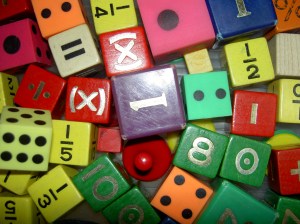
Early on in my other life I was hand-picked and hired to assist with budgets, to work with numbers. One of the higher-ups remarked that my spelling score was quite good for a “numbers person.” This amused me to no end, as I’d no inkling that a) anyone in the world considered me fluent with numbers, or b) that the mundane labor that comprised my livelihood had been noticed, much less evaluated, by someone beyond my small, three-person office (certainly no one noticed the writing I’d produced and published). More than a quarter century later, I’m still amused. And still working with numbers, which even now remain mysterious, magical, and even inspiring.

Take the number nine. Multiply it by two, and you get 18. Add the two digits that comprise 18, one and eight, and you get 9. Multiply it by three: 27. Total the two digits forming 27, and you get, yes, 9. Multiply it by four, by five, by six, by seven, eight or nine. Add the digits that comprise the sum and you return to nine. Interesting, no?

It appears everywhere. In Islamic cosmology, the universe is built of nine spheres. In Ancient Mexico, the netherworld consisted of nine layers. The magic square consists of nine parts. Beijing was designed as a center with eight streets. Hindu temple foundations contain jewels and nine distinct grains. The human body has nine openings. The number also appears in both sacrificial and healing rites. The River Styx bends nine times. I could go on (we haven’t scratched the surface), but will refrain.

But if this piece piques your curiosity, you might find this poem inspired by zero (a truly fascinating subject) of interest:

http://www.cladesong.com/okaji.withtheseninefigures.html