Tell it Slant: How to Write a Wise Poem, essay by Camille Dungy

OLYMPUS DIGITAL CAMERA

Few essays on writing poetry grab me by the collar, slam me against the wall, and say “Listen, dammit!” But this one did.

Camille Dungy’s words sear through the fog. She tells it slant. She tells it true. She explains how some masters have done it. If you’ve not read her poetry, seek it out. You’re in for a treat. If you have the good fortune to attend a lecture or reading by her, do so. She’s energetic, wise and kind. She knows.

http://www.poetryfoundation.org/article/247926

2,000 Ways of Looking at Wang Wei (and I still can’t resist)

_5305908
The subject of Nineteen Ways of Looking at Wang Wei: How a Chinese Poem is Translated, these four lines have not suffered from lack of translation. Gary Snyder’s rendition is beautiful – some might say perfect – as is Burton Watson’s. And then there’s Octavio Paz’s version. Yet I persist…

The transliteration on Chinese-poems.com (which differs from that offered by Eliot Weinberger):

Empty hill not see person
Yet hear person voice sound
Return scene enter deep forest
Duplicate light green moss on

And my take:

Deer Sanctuary

There’s no one on this empty hill,
but I hear someone talking.
Sunlight trickles into the forest,
reflecting onto the green moss.

Time and again Weinberger objects to an explicit first person observer, but to my ear it flows better. I’ve tried to retain a sense of precision in observation and at least a hint of duality, and believe that I’ve succeeded, at least in part. Having carried this poem with me for more than two decades, only now have I felt up to the task (or at least approaching it). I chose the title “Deer Sanctuary,” because in my neck of the woods spaces enclosed by “game fences” are generally meant for hunting. We Texans do love our venison. But the poem, to me, is ultimately peaceful. Hence my title.

file000701390163

Spring Night (after Wang Wei)

file4401311417052
Spring Night (after Wang Wei)

Among falling devilwood blossoms, I lie
on an empty hill this calm spring night.
The moon lunges above the hill, scaring the birds,
but they’re never quiet in this spring canyon.

Another try at an old favorite…

I consider this adaptation rather than translation, but perhaps appropriation or even remaking might be more accurate.

Here’s the transliteration from chinese-poems.com:

Person idle osmanthus flower fall
Night quiet spring hill empty
Moon out startle hill birds
Constant call spring ravine in

So many choices, none of them exactly right, none of them entirely wrong. How does one imply idleness, what words to use for “flower” (blossom? petal?), or for that matter, “fall” (descend, flutter, spiral)? And how to describe a moonrise that scares the constantly calling birds? My first attempt began:

“I lie among the falling petals”

but it seemed vague. The word “osmanthus” fattened my tongue, or so it felt, but the osmanthus americanus, otherwise known as devilwood or wild olive, grows in parts of Texas. So I brought the poem closer to home.

I considered naming the birds (quail came to mind) but decided against. In this case the specificity felt somehow intrusive.

My hope is that I’ve managed to amplify, in some small way, previous iterations, and that while the edges are still a bit blurred in morning’s first light, perhaps they’ll become slightly crisper by the evening.

file8981286030058

From Alternative Fiction & Poetry (1987)

file8981286030058

Quite the interesting mag back in the day. This particular issue saw the likes of Bukowski, Ivan Arguelles, Lyn Lifshin, Norm Moser, Sheila E. Murphy, and, well, me, among others. I was thinner back then, as was my poetry.

no more than
the slow grace
of light turning

the leaf so
patient in the
air and colder

now that sense
of permanence unfurled
it is not

long to wait
as Wang Wei
said in his

letter I listen
for a sound
but hear none

file000517598275

Which Poet, Which Beer?

file6671234665917
I’m staring at the flight of beers that John has placed in front of me. On the left I find Real Ale Brewing Company’s Phoenixx Double ESB. Next to it rests Ranger Creek’s Saison Oscura, followed by Revolver Brewing’s High Brass Golden Ale, and finally, Southern Tier Brewing’s Creme Brulee Stout. I sip the Phoenixx ESB, and am delighted to find it just as I remembered: dry, but sweet, without being overly bitter. Rich, deceptive, caramely odor, amber color. Overtones, hidden layers. I immediately think of Cole Swensen and her book Try, my real introduction to her work, how she reflects tone and imagery, perception and language, intricately weaving them into patterns, into narrative bits to be experienced and savored. “There’s a world out there that isn’t there,” the Phoenixx, evidently a fan of Cole Swensen, whispers.

I linger over the last sip of the ESB, and move on to the Saison Oscura, which quite frankly, surprises me. And that’s good. My preferences edge towards the bitter, and most of the saisons I’ve tried have finished a tad fruity and sweet for my palate. Not so with Ranger Creek’s rendition. Its beguiling light body, with notes of pepper and spice, end with just the right note of bitterness. But which poet, which book would I pair with this dark saison? Someone who juggles the lyrical with harsh realism, whose voice blends and releases the bitter, the forsaken, in distilled snippets of striking clarity. Ah, yes. I have just the book, The Last Time I Saw Amelia Earhart, by Gabrielle Calvocoressi, and the line:

“The whole world tastes like salt,

crows overhead shout, Gone, gone
gone. She can’t help me any more.
I’ll have to walk.

It’s much more difficult to pair the Revolver Brewing High Brass Golden Ale with a favorite poet, because, sadly, I find it lacking. It’s light in the mouth, and, to take Gertrude’s quote totally out of context, there is no there there. If I’m to choose a blonde ale, I’d much prefer Real Ale Brewing’s Fireman’s #4. But waste not, want not. I down it, and consider which poet would not only transcend this disappointment, but also hand it a one-way ticket to, perhaps, Stein’s lost Oakland? Easy. G.C. Waldrep, whose Goldbeater’s Skin sets its barbed hooks into my flesh each time I open it. And for this particular occasion, I find no poem more appropriately titled than “What Begins Bitterly Becomes Another Love Poem,” in which he writes:

We stood without shadows on asphalt at midday.
What we call patience is only fire again, compressed.

And fire should accompany Southern Tier’s Creme Brulee Stout. A crackling fire fending off the icy, shingle-ripping wind, with Miles Davis echoing in the background, an exquisite meal resting comfortably in the belly, and the pleasure of knowing that the book you’re about to dip into is an endless well.
Quite simply, it’s a liquid dessert. Light coffee, a tad chocolatey, with big vanilla. Medium body, sweet. Smells like creme brulee. Tastes like it. But it’s beer. It tells the truth, but tells it slant! And who better to accompany this frothy delight than Emily Dickinson?

Tell all the truth but tell it slant,
Success in circuit lies,
Too bright for our infirm delight
The truth’s superb surprise…

Onward to the next flight, and more truth. More poetry. More beer. More surprise!
photo(14)

Poet’s Pantry

file3911233869642

In my sliver of the world, poetry and cooking share many qualities. When I step into the kitchen, I often have only a vaporous notion of what’s for dinner. A hankering for roasted poblano peppers, the need to use a protein languishing in the refrigerator, the memory of an herbal breeze wafting down a terraced hill near Lago d’Averno, Hell’s entrance, according to Virgil, or even a single intriguing word, may spark what comes next. But the success of what follows depends upon the ingredients at hand, on how we’ve stocked the pantry. Good products beget better results. Let’s take my desire for roasted poblanos. What to do with them? Poking around, I uncover an opened package of goat cheese, a bit of grated grana padano and some creme fraiche, and I immediately think pasta! Looking further I spot arugula, a lemon, a handful of pecans, some cherry tomatoes. Dinner: Pappardelle with a roasted poblano and goat cheese sauce, garnished with toasted pecans, served with an arugula and cherry tomato salad dressed with a lemon vinaigrette. Simple, when you’ve stocked a solid base of quality components.

My writing employs a similar process. Anything – a vague sense of uneasiness, a particular word, the sunlight slanting through the unfortunate dove’s imprint on my window, articles or books I’ve read or perused on a myriad of subjects – may launch a poem. But what truly makes the poem, what bolsters, fills and completes, what ignites and catapults it arcing into the firmament are, of course, the pantry’s ingredients.

Everyone’s needs differ, and I wouldn’t presume to inflict my peculiar sensibilities on anyone, but if you cracked open my burgeoning poetry pantry’s door, you’d certainly unearth dictionaries and a thesaurus, fallen stars, books on etymology and language, curiosity, a guitar or mandolin, at least one window (sometimes partially open), conversations floating in the ether, various empty frames, wind, dog biscuits and dirty socks, a walking stick, sunlight and shadows, more books on such subjects as ancient navigation, the history of numbers, the periodic table, alchemy and olives. You might also spy reams of paper, unspoken words, coffee cups, a scorpion or two, scrawled notes on index cards, wandering musical notes, a pipe wrench, wood ear mushrooms and salvaged fragments of writing, failed ideas moldering in clumps on the floor, a few craft beers and empty wine bottles, a chain saw, and most important of all, a bucketful of patience.

(I cannot over-emphasize the bucket’s contents…)

This is just to say (no, I didn’t eat the plums) that the best equipped poets stock their pantries with the world and all its questions, with logic, with faith, persistence, emotion, science, art, romance and yes, patience. Line your kit with every tool you can grasp or imagine. Keep adding to it. Read deeply. Listen. Breathe. Listen again. Converse. Look outward. Further, past the trees, around the bend and beyond the horizon’s curve, where the unknown lurks. Look again. Don’t stop. Continue.

And if after all this you’re wondering what basks in my kitchen pantry:

photo(13)

Fifty-Word Review: Greenhouses, Lighthouses by Tung-Hui Hu

Tung-Hui Hu’s Greenhouses, Lighthouses highlights lyrical precision in poems that bounce between such diverse launching points as photographic sequences, Euripedes, union slogans, woodcuts and even an historical seaman’s guide. His language placates and challenges, whispers, cajoles and insinuates, and overflows with layered possibilities and nuance. You must read his work.

photo(10)

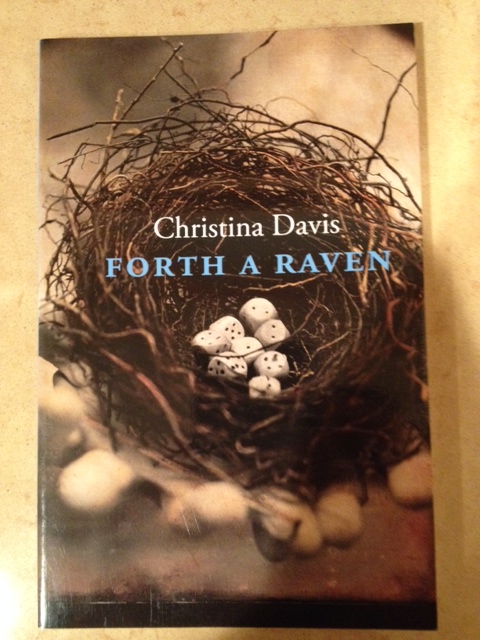
Fifty-Word Review: Forth a Raven, by Christina Davis

Christina Davis’s Forth a Raven offers stark, textured, intelligent and lyrical pieces in a stripped-down yet ultimately complex, reflective language. Encompassing the tension of different realms – the spiritual and the secular, the extraordinary and the mundane, her work, quite simply, astounds. Read this book. Seek out her work. It’s sublime.

photo(7)

Not Your Mama’s Carnitas (and not my Mama’s either, but then she was Japanese)

red_green_pepper

The Lovely Wife and her boon companion Apollonia, the 5-lb terror of Texas, are in the country, shooting arrows, fixing weed whackers, burning wood and sipping Chianti with the neighbor, leaving me bereft, alone but for Jackboy, the loyal cattle dog, and forced to fend, alas, for myself. So after a vigorous cardiac rehab session I repaired to my favorite bar, er, grocery store, and while meandering with a “mazy motion” like Kubla Khan’s sacred river through the aisles laden with organic produce, wondrous cheeses, craft beers and dubious dietary supplements, what did I spy but a comely little top round bison roast! I’d never before prepared said roast, but throwing caution to the wind is of course part and parcel to fending for oneself, and it was a breezy day. And while resting at the bar, er beverage sampling station, and sampling the wares (a local German-style pilz), I pondered the piece of meat and eavesdropped among my fellow samplers – talk of shopping conquests, welding, 14th century navigation and hoppy beer. But what to do with the roast? Certainly not an ordinary potato and carrot concoction. Chili? Nah, just had it. Grilled? Are you kidding? And then I overheard the word, the one way, the truth: carnitas, which instantly transported me through various savory stretches of the world and multiple cuisines, initiating salivary gland overload, but leading, in the end, to what I hoped would become a culinary delight, or at least an edible dinner.

I knew that I should braise the meat, as this particular cut of bison was very lean (hell, bison is very lean), but it was late and I was famished. So I did what any bright, hungry, middle-aged sojourner of the kitchen would do: put it off. But thinking it might be nice to enhance the depth of flavor, I threw together a few dry ingredients (salt, sugar, 5-spice powder, ground pepper), sprinkled the mixture on the roast, and set it in the refrigerator to cure overnight.

[To assuage my hunger I fried some leftover rice with ham, green onion, jalapenos, carrots and peas. Tweren’t bad.]

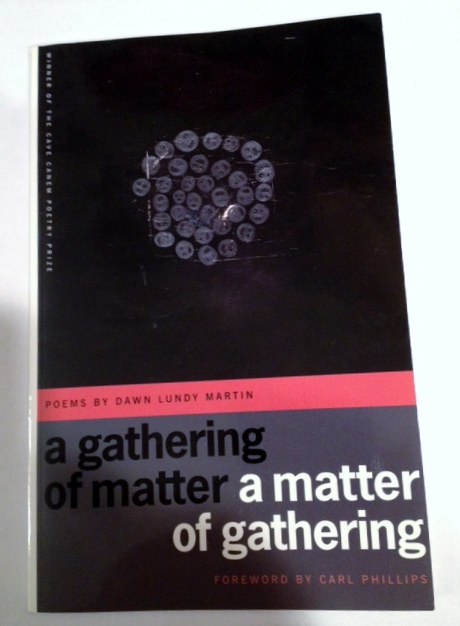
And the next day, after taking The Lovely Wife’s dobro to the repair shop, reading Dawn Lundy Martin’s A Gathering of Matter a Matter of Gathering (amazing poet, incredible poetry) at Hopfield’s gastropub while enjoying the Pascal Burger (medium rare with camembert, cornichons and carmelized onions) and frites accompanied by a delightful tulip of Birra del Borgo’s American Pale Ale,and following this with a productive and pleasant writing session in the poetry shack, I commenced preparing dinner…
photo(7)
…which began with opening a bottle of Parducci Small Lot Blend Pinot, and pondering Dawn Lundy Martin’s book. The collection opens with “Last Days,” a poem of death and grief and what lies before, between and after, consisting of questions and replies. But such questions. Such replies! She begins the poem:

What is the relation between Figure A and Figure B?

This is what the father has become.

And ends it:

How is the pain endured?

A stem of grass imagined when it is not raining.
All those things called intentions. The private / treasures one keeps safe.

The depths, the deliberation, the complexities of language and image brought forth in the replies, astound (confound?) me. So much to consider. And what lies between the opening and ending serves to build, layer by layer, the emotional foundation, adding texture and nuance, providing power in detail and, yes, simplicity. Wonderfully complex and beautifully done. But back to the pinot (light, spicy, woody aroma (cedar?), and balanced, though unlike Martin’s work, not complex, but hey, it was only $11), and cooking:

First I inventoried my supplies, starting with veggies: three slightly withered carrots, one whole onion, garlic, three jalapenos, a small knob of ginger, one red pepper, four green onions, half of a small red cabbage, and a poblano pepper that had seen better days. Next, the braising liquid. Hmm. Which primary liquid? Pinot? No, I wanted to drink it and wasn’t willing to share with the bison. Sherry? Nah, use it too often. Chicken broth? Water? Surely you jest. And then I spotted a partially full (empty? was I truly feeling optimistic?) bottle of sake, resting amiably next to its close friend, Ms. Soy Sauce. Braising liquid, check.

I peeled and fine-diced the carrots, sliced the jalapenos lengthwise into thin strips, diced the red pepper and onion, salvaged what I was able of the poblano (about half had gone mushy) and diced that, and minced three cloves of garlic and the knob of ginger, reserving half of the ginger for later use.

Then I patted the roast dry with a paper towel removing the excess moisture drawn out by the rub, after which I seared it in a little oil in a Dutch oven. After judging the roast suitably crusty, I removed it and added the carrots, onion and peppers, sauteed them until softened, added the garlic and ginger, two tablespoons of soy sauce and the rest of the bottle of sake, perhaps three quarters of a cup. I brought this up to a roil, turned down the heat, let it simmer for a few minutes, and then covered and placed the Dutch oven into the oven, where it remained for two and-a-half hours, simmering gently at 350 degrees.

While the roast braised, I shredded the remnants of the red cabbage, sliced the green onions, prepared a dressing consisting of rice vinegar, sesame oil, hoisin sauce, hot mustard, minced garlic and the reserved ginger, and tossed it all together, resulting in an in-your-face but nevertheless tasty slaw.

And after the allotted time, I removed the bison from the oven and shredded it with a fork – yes, it was that tender – placed a bit of it in taco shells (hey, these are MY carnitas, not your mama’s), topped the meat with some of the cooked veggies, dolloped a bit of creme fraiche on that (I’d found a partial container in the fridge, only a month past the “sell by” date), covered that with the slaw, and took a bite. My. Goodness. Wow. More. Want more. All in all, I must proclaim that the Asian-Inspired Bison Carnitas with Hoisin Slaw was a success. I give it two thumbs up, and a few assorted toes.

But I’m still pondering Dawn Lundy Martin, and have turned to her latest (I think) book, Discipline, which looks to be every bit as intriguing as A Gathering of Matter a Matter of Gathering.