Ron Evans of Haiku Odyssey

Since I can’t access Ron’s blog directly, I thought I’d post this note, with appropriate tags.

For those of you who may be wondering why he hasn’t posted as much as usual, Ron has been hospitalized. He expects to be released in a couple of days, and will no doubt bombard the world with haiku and bad puns shortly afterward. Please send him your best wishes. I’m sure he’d love to hear from you, and I’ll forward your comments directly to Ron as they come in.

Interview/Chat with me on Brigit’s Flame Writing Community

can write on any surface

The Brigit’s Flame Writing Community has an interview/chat with me on their site:

Talking With A Poet: Part One

Feel free to post questions or comments there.

An excellent hangout for writers, Brigit’s Flame members offer tips, feedback, contests and best of all, support, to writers in all stages of their careers. Please visit!

7:00 p.m. Reading in Austin on June 4 at Malvern Books

An evening with poets Chip Dameron and Robert Okaji

Some of you may want to jet in for this event. Or not. Chip is certainly worth the effort!

DameronOkajiFlyerINHOUSE

Obsession: Books, or, Poetry Finds Me

photo 2

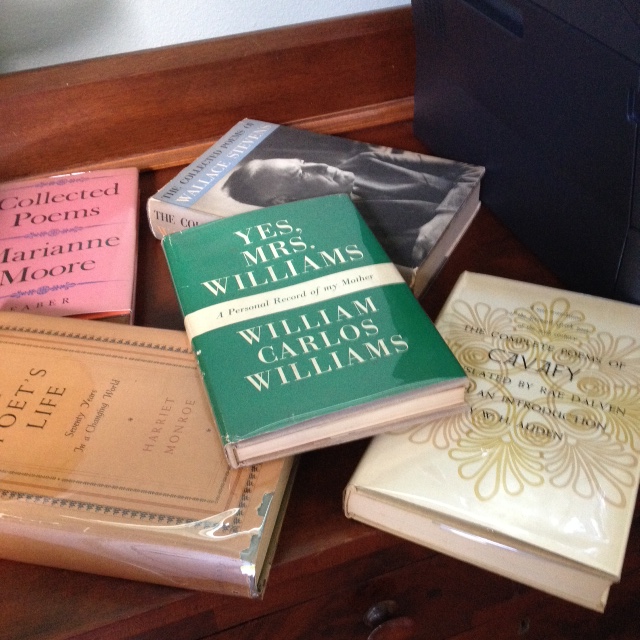
In another life books framed my days. I slept with them, dreamt about them, woke to their presence stacked by the bed and in various corners throughout the house, read them, handled them, discussed their merits with friends, co-workers, beer-drinking buddies, bartenders, customers, strangers, relatives, and even enemies. Traced my fingers slowly down their spines, identified some by odor alone, others by weight and feel. Bought, sold, cleaned, lent, skimmed, traded, gave, borrowed, collected, repaired, preserved, received. Traveled to acquire more, returned home to find still others languishing in never-opened, partially read or barely touched states. There were always too many. There were never enough.

The relationship began innocently. I’ve been an avid reader since the age of five, and over the years developed a knack for uncovering uncommon modern first editions. I’d walk into a thrift shop and spot a copy of William Kennedy’s first novel, The Ink Truck, snuggling up to Jane Fonda’s workout book, for a buck. Or at a small town antique store, something especially nice, perhaps a near-fine first edition of Cormac McCarthy’s Outer Dark, would leer at me from a dark shelf – $1.50. John Berryman’s Poems (New Directions, 1942) found me at a garage sale, for a quarter. Good Will yielded Pynchon’s Gravity’s Rainbow. There were others, of course. Many others.

I partnered with a few like-minded friends and opened a store, and when that didn’t work out, started my own home-based book business, which eventually expanded into a small brick-and-mortar shop, a true labor of love. And I mean labor. The forlorn space we rented was cheap and had housed for years a low-end, illicit massage parlor. Cleaning it out was, oh, shall we say interesting? I’ll never forget the furry massage table, the naked lady lamp or the various implements left behind after the joint was finally forced to close. But we hauled out the filthy carpeting, stripped and refinished the hardwood floors, fixed, painted and patched what we could, and hid what we couldn’t. It was exhausting, but well worth the toil.

My work schedule ran from Monday through Sunday, a minimum of eighty hours a week – in a seven-year period, I took off only two long weekends. It consumed me, but in the end I emerged mostly intact, a little more aware of my proclivities, of an unhealthy tendency to immerse myself wholly into an enthusiasm, to the detriment of family and friends. When we sold our store’s wares, I embraced the change; some dreams simply deplete you. But the itch remained.

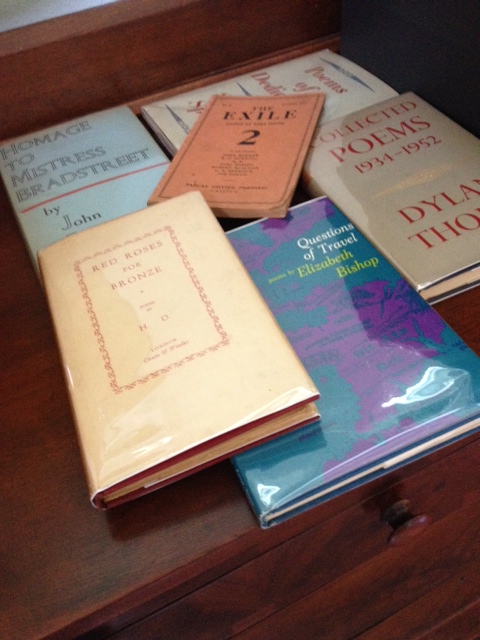
Just a few weeks ago I found myself perusing an accumulation of books in a storage facility across the street from a junk shop in Llano, Texas, a small county seat an hour’s drive west of my home on the outskirts of Austin. The shop’s owner had purchased an English professor’s estate, and judging by the collection, the professor had specialized in poetry. My first thought was “I want it all,” but reason set in (I could very well imagine my wife’s reaction were I to arrive home with a trailerful of books) so I glanced over the criticism, fiction, drama, essays and biographies, and concentrated on the poetry. In the end I walked away with thirty-one books, including H.D.’s Red Roses for Bronze (Chatto & Windus, 1931), Randall Jarrell’s Little Friend, Little Friend, Elizabeth Bishop’s Collected Poems and Questions of Travel, a brace of Berrymans – His Toy, His Dream, His Rest and Homage to Mistress Bradstreet – both the U.S. and U.K. first editions, which differ – and Love & Fame. A good haul, to say the least, but one that left me only partially satisfied and contemplating a return. But I remain resolute. So far.

As I said, the itch remains…

photo 1(1)

Calm

DSC_0002

Calm (after H.D.)

I flow over the ground,
healing its hidden scar–
the scar is black,
the bedrock risen,
not one stone is misplaced.

I relieve the ground’s
burden with white froth,
I fill and comply—
I have thrown a pebble
into the night,
it returns to me,
settles and rises,
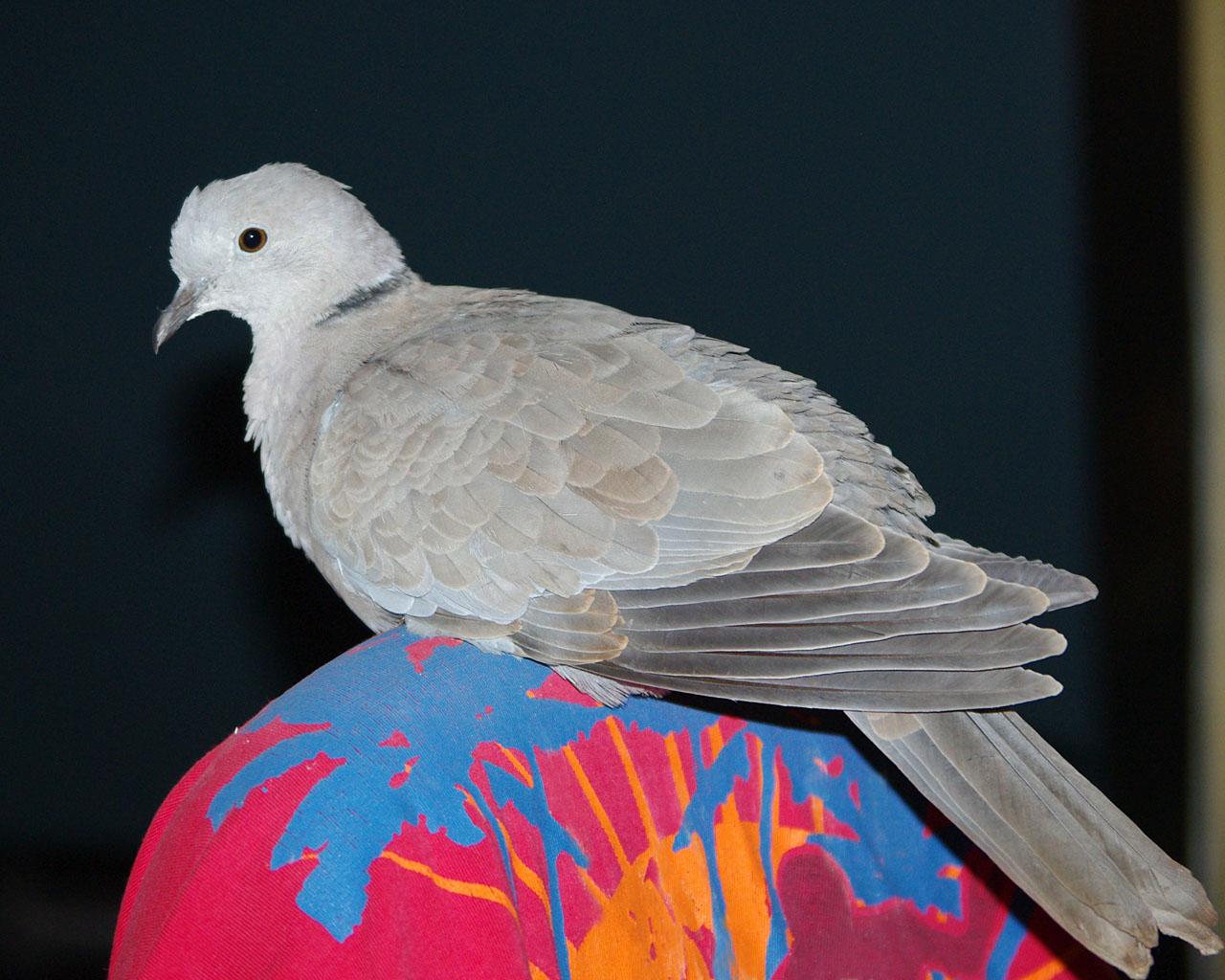
a white dove.

This is an exercise, using a poem by H.D. (Storm) as the launching point. I’ve tried to emulate her diction and rhythm, with mixed success. Still, it’s fun to try these on occasion.

collareddove48d1

Autumn Winds (after Li Po)

IMG_1951

Autumn Winds (after Li Po)

Clear autumn winds swirl
below the moon’s glow,
scattering the gathered leaves.
The startled crows return.
When will we see each other again?
This hour, this lonely night, my feelings grow brittle.

The transliteration on Chinese-poems.com reads:

Autumn wind clear
Autumn moon bright
Fall leaves gather and scatter
Jackdaw perch again startle
Each think each see know what day
This hour this night hard be feeling

I started this adaptation in the heart of summer, hoping that it would offer a respite from the unrelenting Texas heat…

Bird Fall MGD©

Greeting the Moon (after Li Po)

file0001288535990

As always, I approach these adaptations slowly. This may need a few tweaks, but it’s close.

Greeting the Moon (after Li Po)

Wine conceals the night’s approach,
while blossoms blanket my clothing.
Drunk, I stumble to the stream and greet the moon,
thinking of birds, so distant, and people, so few.

The transliteration on Chinese-Poems.com reads:

Amusing Myself

Face wine not aware get dark
Fall flower fill my clothes
Drunk stand step stream moon
Bird far person also few

file0002143220456

Interview at Four Ties Lit Review

file5371250911680

Matt Larrimore, editor of Four Ties Lit Review, interviews me:

http://fourtieslitreview.com/home/interviews/interview-with-robert-okaji/

photo(17)

Earth’s Damp Mound

OLYMPUS DIGITAL CAMERA

Earth’s Damp Mound
for P.M.

I. February 1998.
That week it rained white petals
and loss completed its

turn, the words finding themselves
alone, without measure,

without force, and no body to compare.
Though strangers spoke I could not.

Is this destiny, an unopened
mouth filled with

pebbles, a pear tree
deflowered by the wind? The earth’s

damp mound settles among your bones.

II. Count the Almonds
What bitterness
preserves your sleep,

reflects the eye’s
task along the inward thread?

Not the unspoken, but the unsayable.

Curious path, curious seed.
A shadow separates

to join another, and in the darker
frame carries the uncertain

further, past silence, past touch,
leaving its hunger alert and unfed,

allowing us our own protections.

III. The Bowl of Flowering Shadows
Reconciled, and of particular
grace, they lean, placing emphasis on balance,

on layer and focus, on depth of angle
absorbing the elegant darkness,

a lip, an upturned glance, the mirror.

What light caresses, it may destroy.
Even the frailest may alter intent.

So which, of all those you might recall,
if your matter could reform

and place you back into yourself,
would you choose? Forgive me

my selfishness, but I must know.

IV. Requiem
Then, you said, the art of nothingness
requires nothing more

than your greatest effort.
And how, seeing yours, could we,

the remaining, reclaim our
space without encroaching on what

you’ve left? One eye closes, then
the other. One mouth moves and another

speaks. One hears, one listens, the eternal
continuation. Rest, my friend. After.

Prentiss Moore influenced my reading and writing more than he ever realized. We spent many hours talking, eating, arguing, drinking, laughing. Always laughing – he had one of those all-encompassing laughs that invited the world to join in. And it frequently did. Through Prentiss I met in person one of my literary heroes, Gustaf Sobin, whose work Prentiss had of course introduced me to. Those few hours spent with the two of them driving around in my pickup truck, discussing poetry, the Texas landscape, horticulture and the vagaries of the publishing world, are hours I’ll always hold close.

Earth’s Damp Mound first appeared in the anthology Terra Firma.

file0001831388228

(Poet’s) Writing Process Blog Hop – Robert Okaji

file3721267337572

Many thanks to Judy Dykstra-Brown, who invited me to tag along on this Poet’s Writing Process Blog Hop. Judy is an amazing person who was raised in South Dakota but has lived in Australia, Ethiopia, Wyoming, California, and Mexico. She has four books available on Amazon in print and Kindle versions, and you can find her blog at: http://grieflessons.wordpress.com/

You’ll find my responses to the process questions below, but first I’d like to introduce you to two of my favorite poets, Ron Evans and Jeff Schwaner. At first glance (or second, third, or twenty-fifth) one might question the logic behind placing two such different poets in proximity. Ron Evans focuses on short pieces – mostly haiku, tanka, and senryu – while Jeff Schwaner, well let’s just say that some of Jeff’s titles consist of more words and syllables than any ten of Ron’s poems combined. Yet their work shares those universal qualities that comprise the best poetry – pathos, empathy, wonder, humor, profundity – combining them with artful craft, precise language, and more importantly, sufficient space to allow their readers to explore the work.

Ron is a retired editor, father and grandfather, published poet, author of one book of his collected poetry, amateur radio operator, ex staff member of Lowell Observatory and Hat Designer Emeritus for Minnie Pearl. (Google it if you dare!) Ron has also done a pot load of other stuff in his 73 years, some of it legal, all of it fun. He lives with his wife and dog in north-central Texas where he bides his time writing haiku for his blog and working on a book of his haiku to be published this millennium.

In a recent haiku, Ron evoked a vivid picture of the aftermath of a summer rain. In this brief piece, I experienced: a back porch in the late afternoon, a brief but heavy rain shower, perhaps just a day or two after mowing, smells associated with rain and vegetation and hot pavement, the realization that the lawn will need to be mowed again, in just a few days, because the damned drought-adapted weeds shoot up so quickly after a good watering, and the humorous contradiction of cursing much needed rain because it also benefits the weeds. And of course Ron accomplished this with just six words (he’s very annoying in that way):

downpour
listening to the weeds
grow

Brilliant! You’ll find Ron at Randa Lane – Haiku and More: http://randalane.wordpress.com/

Jeff Schwaner lives in the shadow of the Blue Ridge mountains in Staunton, Virginia, with his wife and family. He’s published five books of poetry; the work in progress, The Drift, is what is being seen in draft form on his blog, poem by poem as he writes it, with plans to have the book out late 2014 / early 2015. All the books are self published, and he has something of a history as a trailblazer in that area, having co-founded the print-on-demand sites Greatunpublished.com and Booksurge.com in 2000, which was later acquired by Amazon in 2005 and merged into CreateSpace. St Brigid Press in Afton VA has published a few curiosities of Jeff’s, including the broadside “Drop Everything,” the haiku drink coaster set “Night Walk on Cape Cod” and a translation from the Chinese of Tang dynasty poet Li Ho entitled “Sky Dream.”

Jeff has the inconsiderate habit of writing lines that I wish I’d written. In his 14-line poem “Mei Yao-Ch’en and I, Both Approaching Fifty Years of Age Though He Has Been Dead for Nine Hundred and Fifty Two Years, Discuss the Poetics of Getting Older and Apprehending Death, After Which He Wonders How Much of This He Will Remember When He Returns to the 11th Century and Decides to Write to Hsieh Shih-Hou on the Inside of His Robe So He Can Take it With Him Even if Memory Abandons Him, but It Comes Out in the Wash After I Copy It Down, Even In The Gentle Cycle,” he shoves me through envy’s doorway a half-dozen times, starting with “Is it any wonder we drink wine under the waxing moon/but feel the weight of its dark side which will only grow?” and culminating with “Still my host/does not know when black drift’s wave/becomes the shape of his boat and he sinks into night…”

To share in this envy, see Jeff’s blog, Translations from the English, at http://jeffschwaner.com/.

I was asked to answer four questions that I believe Ron and Jeff will also answer, in some form or fashion at a later date.

What am I working on? I generally have many pans on the fire, with probably a dozen pieces, perhaps more, in various stages of completion at any one time. These range from adaptations of short poems by T’ang Dynasty poets Li Po, Tu Fu and Wang Wei, to a series of self-portraits, a few elegies, and several longer poems that I’ve been tinkering with for the past few years. I’ve also a couple of chapbook manuscripts making the rounds, and hope to finish a full-length manuscript during the next year or two. I’m not in any rush to get these out, but at the same time it would be nice to “complete” something.

How does my work differ from others of its genre? That’s a difficult one to approach. But with regards to the poetry, perhaps I leave just a little more space, more room for the reader to fill in the blanks, than some do. I’m more interested in unearthing the connections, the relationships, between seemingly disparate entities than I am in providing detailed, cohesive narratives. Thus a single 16-line poem may mention the letter “W,” the Roman Empire, Baudelaire, water, Woden and the concept of lost perfection. I also tend to examine the ordinary, the prosaic bits of daily life, through a slightly fogged lens, and I take great delight in dipping into the history of a subject and extracting interesting tidbits, in order to frame, to my satisfaction, relevant questions.

Why do I write what I do? The facile reply is that it’s easier to write than not write. But it all comes down to learning: I enjoy the process of learning. And writing what I do, the way I do, demands exploration into areas I know little about. So it’s self-indulgent yet edifying. I’m playing, massaging my curiosity, and adding, bit by bit, to the motley toolkit accumulating in my brain. My natural impulse is to try to assign meaning, to organize that chaotic assemblage. Hence the writing.

How does my writing process work? I haven’t the foggiest. Basically it consists of butt in chair, books at hand, and a word or short phrase that’s gnawing at my innards. That one word or phrase prompts another, then another, then likely poses a question requiring me to research (albeit lightly) something that darted out from a dim corner of my mind. Thus examining the etymology or definition of a word may prompt an investigation into, oh, something like Shintoism, which veers the poem down a new, nearly deserted alley where torii, god-shelves and kami exist. I follow these diverse paths for a while, and then attempt to arrange them into a (likely) non-sequential yet somehow sensible (if only to me) order. This may seem chaotic to you, but I find it comforting.

file000781873552