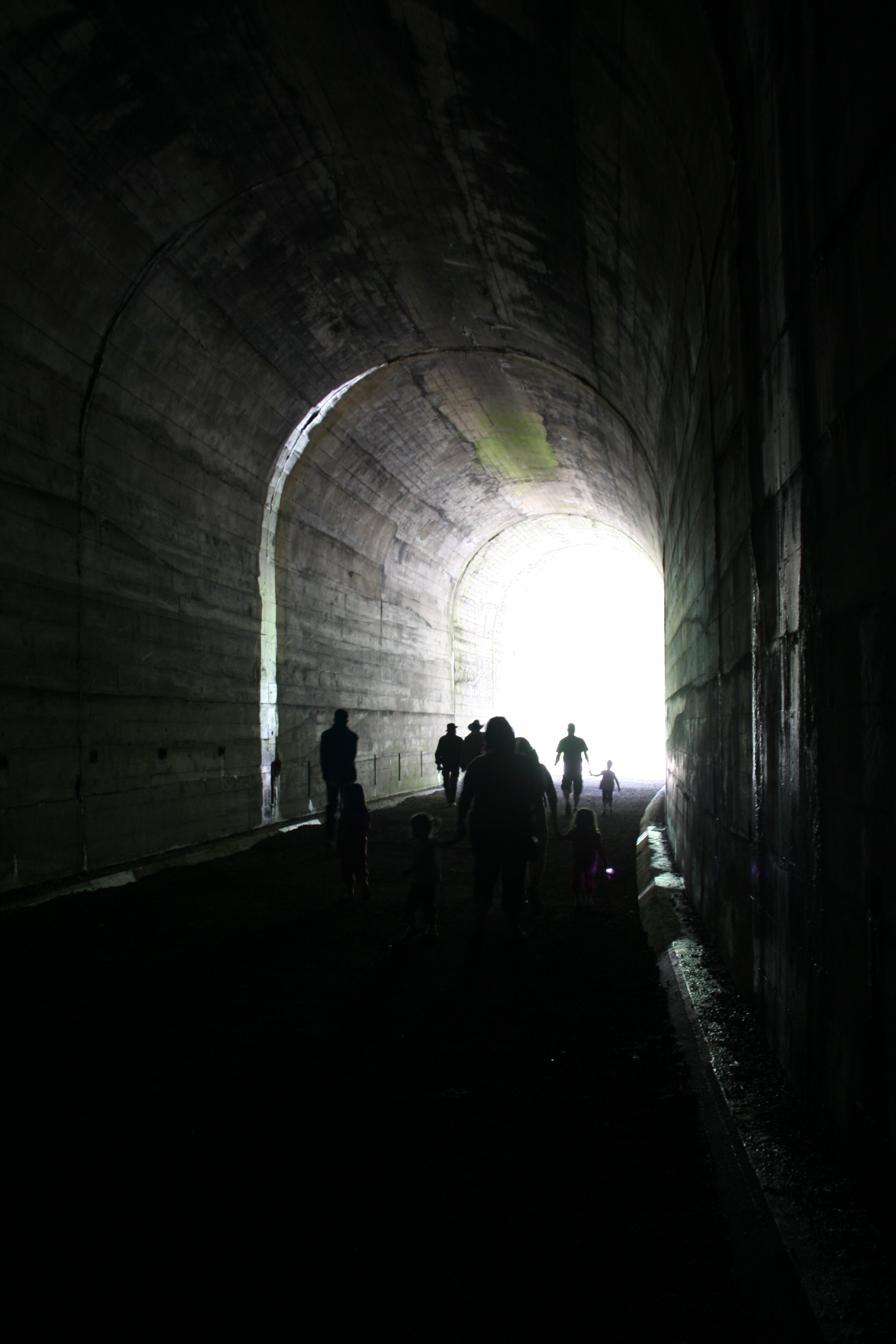
I’m pleased that my poem “Trains” has found a home in the current issue of Lightning’d Press.
Pages 35-36
http://www.lightningdpress.com/current-issue1.html
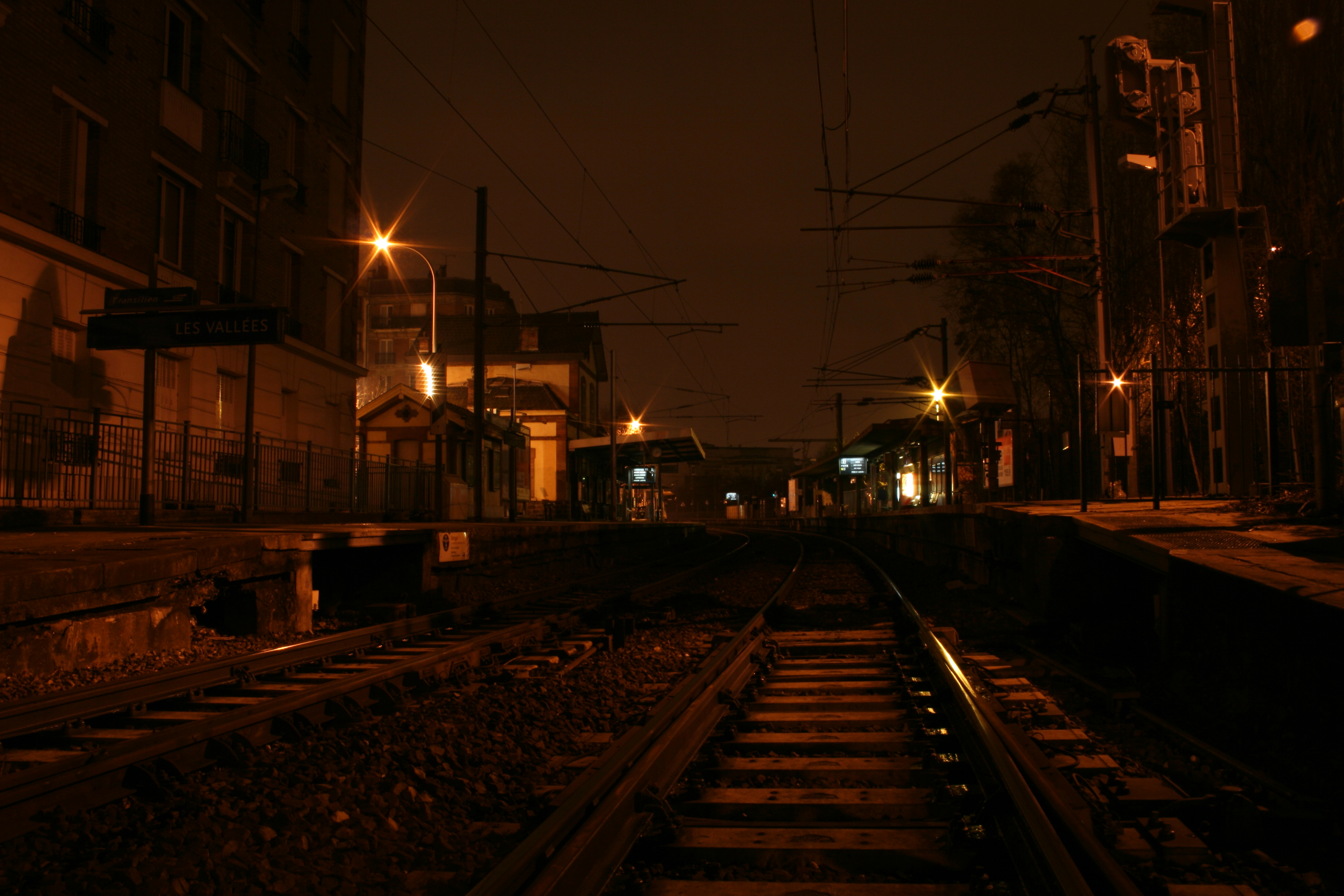

I’m pleased that my poem “Trains” has found a home in the current issue of Lightning’d Press.
Pages 35-36
http://www.lightningdpress.com/current-issue1.html

The subject of Nineteen Ways of Looking at Wang Wei: How a Chinese Poem is Translated, these four lines have not suffered from lack of translation. Gary Snyder’s rendition is beautiful – some might say perfect – as is Burton Watson’s. And then there’s Octavio Paz’s version. Yet I persist…
The transliteration on Chinese-poems.com (which differs from that offered by Eliot Weinberger):
Empty hill not see person
Yet hear person voice sound
Return scene enter deep forest
Duplicate light green moss on
And my take:
Deer Sanctuary
There’s no one on this empty hill,
but I hear someone talking.
Sunlight trickles into the forest,
reflecting onto the green moss.
Time and again Weinberger objects to an explicit first person observer, but to my ear it flows better. I’ve tried to retain a sense of precision in observation and at least a hint of duality, and believe that I’ve succeeded, at least in part. Having carried this poem with me for more than two decades, only now have I felt up to the task (or at least approaching it). I chose the title “Deer Sanctuary,” because in my neck of the woods spaces enclosed by “game fences” are generally meant for hunting. We Texans do love our venison. But the poem, to me, is ultimately peaceful. Hence my title.

Spring Night (after Wang Wei)
Among falling devilwood blossoms, I lie
on an empty hill this calm spring night.
The moon lunges above the hill, scaring the birds,
but they’re never quiet in this spring canyon.
Another try at an old favorite…
I consider this adaptation rather than translation, but perhaps appropriation or even remaking might be more accurate.
Here’s the transliteration from chinese-poems.com:
Person idle osmanthus flower fall
Night quiet spring hill empty
Moon out startle hill birds
Constant call spring ravine in
So many choices, none of them exactly right, none of them entirely wrong. How does one imply idleness, what words to use for “flower” (blossom? petal?), or for that matter, “fall” (descend, flutter, spiral)? And how to describe a moonrise that scares the constantly calling birds? My first attempt began:
“I lie among the falling petals”
but it seemed vague. The word “osmanthus” fattened my tongue, or so it felt, but the osmanthus americanus, otherwise known as devilwood or wild olive, grows in parts of Texas. So I brought the poem closer to home.
I considered naming the birds (quail came to mind) but decided against. In this case the specificity felt somehow intrusive.
My hope is that I’ve managed to amplify, in some small way, previous iterations, and that while the edges are still a bit blurred in morning’s first light, perhaps they’ll become slightly crisper by the evening.
I am delighted that three of my poems are included in Boston Review’s National Poetry Month Celebration:
http://www.bostonreview.net/poetry/npm14-robert-okaji-three-poems
This calls for a toast:

No, no, not that. This:

Cheers!

Cedar Grove (after Wang Wei)
I sit alone among the cedars,
play my guitar and hum.
In this dark forest
no eye spies me but the moon’s.
My take on Wang Wei’s “Bamboo Grove.”
I worked from this transliteration copied somewhere along the way:
alone sit dark bamboo among
strum lute again long whistle
deep forest man not know
bright moon come mutual shine
I hope it works.


Quite the interesting mag back in the day. This particular issue saw the likes of Bukowski, Ivan Arguelles, Lyn Lifshin, Norm Moser, Sheila E. Murphy, and, well, me, among others. I was thinner back then, as was my poetry.
no more than
the slow grace
of light turning
the leaf so
patient in the
air and colder
now that sense
of permanence unfurled
it is not
long to wait
as Wang Wei
said in his
letter I listen
for a sound
but hear none

The moon smiles upon my bed.
I consider frost and ice,
and raising my head, the bright sky.
Lying back, I think of home.
Once again, I’ve attempted to shiver myself into a timeless piece. I can only hope that my version does not offend.
The literal translation from Chinese-Poetry.com follows:
Bed before bright moon shine
Think be ground on frost
Raise head view bright moon
Lower head think home


This is not a translation, but rather a version, my “take” on a famous Tu Fu poem. I claim no abilities in translation, neither speak nor read Chinese, and instead depend upon the skills of those who have ventured into these difficult reaches. This is where the poem carries me, a middle-aged Texas hill county dweller, in the Year of the Horse, 2014.
Night Journey (after Tu Fu)
Wind bends the grass along the road.
A lonely truck passes by.
Stars reach down to touch these hills
and the moon drifts behind.
No one will ever know my poems.
I am too old and ill to work.
Circling, floating, who am I
but a vulture looking down.
Here’s a literal translation of the piece (or so I believe), found on chinese-poems.com:
Nocturnal Reflections While Traveling
Gently grass soft wind shore
Tall mast alone night boat
Stars fall flat fields broad
Moon rises great river flows
Name not literary works mark
Official should old sick stop
Flutter flutter what place seem
Heaven earth one sand gull
My goal was to retain the mood, as I understand it, of the original, and to place it into my personal context. An interesting exercise.

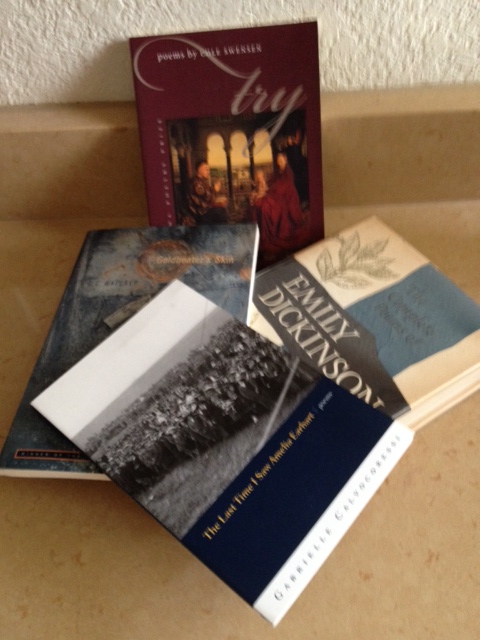
I’m staring at the flight of beers that John has placed in front of me. On the left I find Real Ale Brewing Company’s Phoenixx Double ESB. Next to it rests Ranger Creek’s Saison Oscura, followed by Revolver Brewing’s High Brass Golden Ale, and finally, Southern Tier Brewing’s Creme Brulee Stout. I sip the Phoenixx ESB, and am delighted to find it just as I remembered: dry, but sweet, without being overly bitter. Rich, deceptive, caramely odor, amber color. Overtones, hidden layers. I immediately think of Cole Swensen and her book Try, my real introduction to her work, how she reflects tone and imagery, perception and language, intricately weaving them into patterns, into narrative bits to be experienced and savored. “There’s a world out there that isn’t there,” the Phoenixx, evidently a fan of Cole Swensen, whispers.
I linger over the last sip of the ESB, and move on to the Saison Oscura, which quite frankly, surprises me. And that’s good. My preferences edge towards the bitter, and most of the saisons I’ve tried have finished a tad fruity and sweet for my palate. Not so with Ranger Creek’s rendition. Its beguiling light body, with notes of pepper and spice, end with just the right note of bitterness. But which poet, which book would I pair with this dark saison? Someone who juggles the lyrical with harsh realism, whose voice blends and releases the bitter, the forsaken, in distilled snippets of striking clarity. Ah, yes. I have just the book, The Last Time I Saw Amelia Earhart, by Gabrielle Calvocoressi, and the line:
“The whole world tastes like salt,
crows overhead shout, Gone, gone
gone. She can’t help me any more.
I’ll have to walk.
It’s much more difficult to pair the Revolver Brewing High Brass Golden Ale with a favorite poet, because, sadly, I find it lacking. It’s light in the mouth, and, to take Gertrude’s quote totally out of context, there is no there there. If I’m to choose a blonde ale, I’d much prefer Real Ale Brewing’s Fireman’s #4. But waste not, want not. I down it, and consider which poet would not only transcend this disappointment, but also hand it a one-way ticket to, perhaps, Stein’s lost Oakland? Easy. G.C. Waldrep, whose Goldbeater’s Skin sets its barbed hooks into my flesh each time I open it. And for this particular occasion, I find no poem more appropriately titled than “What Begins Bitterly Becomes Another Love Poem,” in which he writes:
We stood without shadows on asphalt at midday.
What we call patience is only fire again, compressed.
And fire should accompany Southern Tier’s Creme Brulee Stout. A crackling fire fending off the icy, shingle-ripping wind, with Miles Davis echoing in the background, an exquisite meal resting comfortably in the belly, and the pleasure of knowing that the book you’re about to dip into is an endless well.
Quite simply, it’s a liquid dessert. Light coffee, a tad chocolatey, with big vanilla. Medium body, sweet. Smells like creme brulee. Tastes like it. But it’s beer. It tells the truth, but tells it slant! And who better to accompany this frothy delight than Emily Dickinson?
Tell all the truth but tell it slant,
Success in circuit lies,
Too bright for our infirm delight
The truth’s superb surprise…
Onward to the next flight, and more truth. More poetry. More beer. More surprise!

If You Were a Guitar
If you were a guitar I would play you
till my fingers grew rough from your body’s
touch, till the moisture in the clouds withdrew
and only music rained down. But what breeze
could retain your voice? At night my hands would
dream new chords of light and air, of pearl and
flesh and warm breath suspended over wood.
And as we slept our bodies would demand
completion, and the space would diminish
till nothing lay between us but the sly
notes singing through our veins, replenish-
ing each other’s thirst. When I say hope, I
mean you. When I whisper nothing, my
silence shouts your name. Each breath. Every sigh.
 O at the Edges