
I learned a few days ago that my poem “In the Stillness of After” has been nominated by Sunlight Press for a “Best of the Net” award. I am grateful to editors Rudri Patel and Beth Burrell for this honor.

I learned a few days ago that my poem “In the Stillness of After” has been nominated by Sunlight Press for a “Best of the Net” award. I am grateful to editors Rudri Patel and Beth Burrell for this honor.
A handful of my poems have been published since January, and in the grip of my illness I did not properly acknowledge the publications. I hope to make up for this, at least in part, by providing, at this late date, links to the poems in these journals.
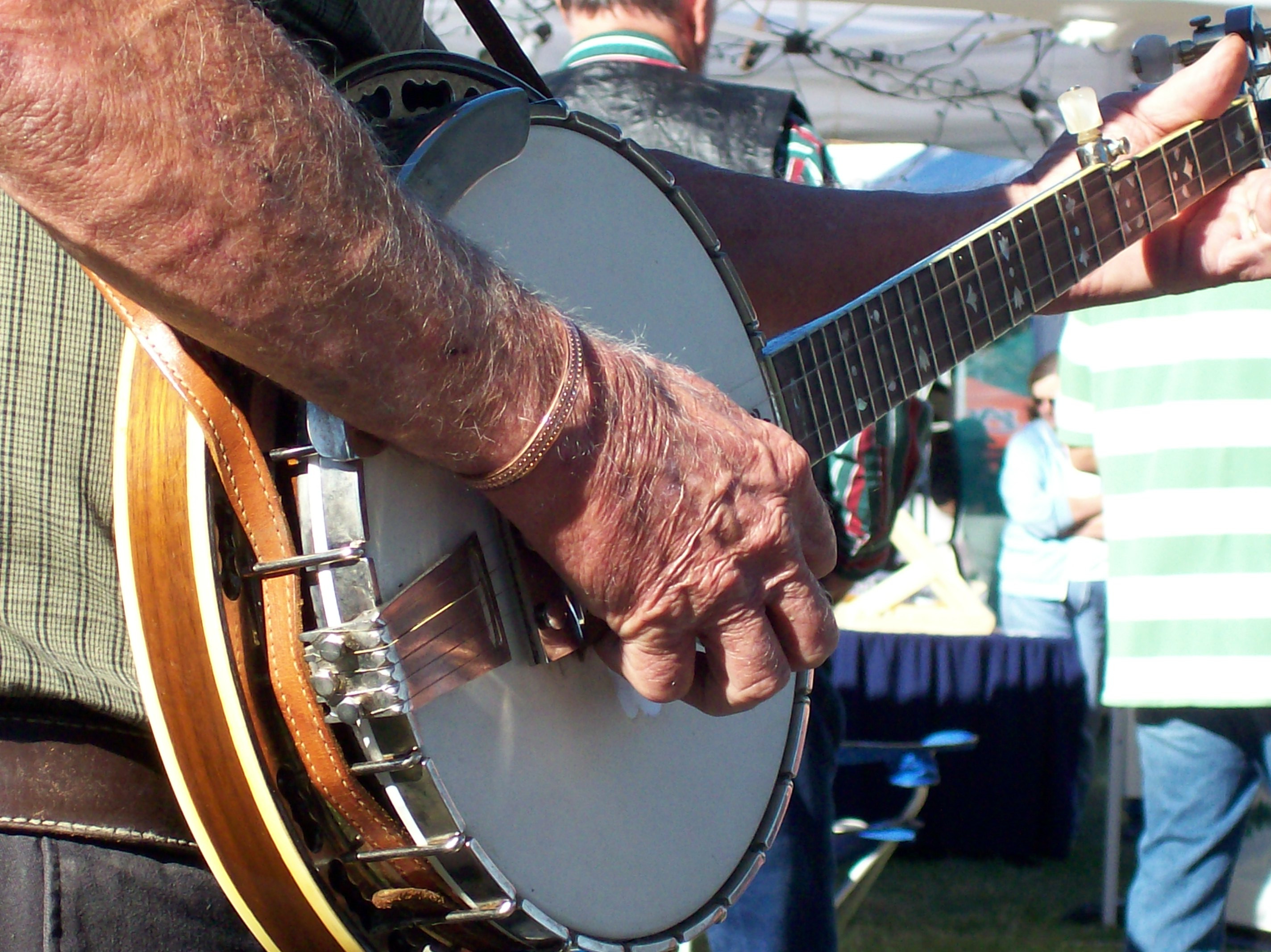
“While Listening to Fleck, Hussein and Meyer, I Consider Children’s Book Titles, Hops and the Ongoing Search for Meaning,” was published at Amethyst Review in January. I am grateful to editor Sarah Law for taking this sonnet, and to Stephanie L. Harper, who provided the title during a fundraiser for Tupelo Press iin August 2016. Little did I know that four years later Stephanie and I would be married. Ah, the power of poetry.

A handful of my poems have been published since January, and in the grip of my illness I did not properly acknowledge the publications. I hope to make up for this, at least in part, by providing links to these journals.
My poems “In the Middle of the Rest of the World,” and “Driving By I See Different Flesh in the Field” were published at Abandoned Mine this past February. I am grateful to editors Jasen Christensen and Robert Grant for taking these pieces.
What the Body Gives, Gravity Takes (Cento)
As if what we wanted
were not the thing
that falls,
as what was given
to answer ourselves with – air
moving, a stone
on a stone,
something balanced momentarily.
Or wheels turning,
spinning, spinning.
The waters would suffer
at being waves,
but nothing of their dream
takes place,
nothing that is complete
breathes. But the world
is peopled with objects.
You grow smaller,
smaller, and always
heavier.
You can think of nothing else.
Credits:
Jane Hirshfield, Gustaf Sobin, George Oppen, Joy Harjo, Alberto de Lacerda, Jacques Dupin, Francis Ponge, Denise Levertov, Jacques Roubaud.
* * *
“What the Body Gives, Gravity Takes” appeared in Issue Four of Long Exposure, in October 2016.
I assembled this cento years ago. It seems aligned with my life today…

A handful of my poems have been published since January, and in the grip of my illness I did not properly acknowledge the publications. I hope to make up for this, at least in part, by providing links to these journals.
My poems “Another Night at the Breach,” “At World’s Edge,” and “Cactus Needle” were published at The Globe Review this past spring. I am grateful to editor Blanka Pillar for taking these pieces.

My poems “Not Language but the Possibility” and “Reduced to Translation” are live at Wildness. Many thanks to editor Michelle Tudor for taking these two poems.

5
Woe is me! Break out the tiny violins! I am in full-whine mode!
Numbers, numbers, numbers, numbers. Add, divide, multiply, subtract. Take note, shift columns. Despair. For months, the numbers have been backhanding me, to and fro, up and down. Bullying, mocking, teasing mercilessly, always heading in the wrong direction. Property taxes have increased. Life expectancy has plummeted. The bank account is steadily dwindling. With my illness, work, or a job, isn’t really feasible, though occasionally I sell a book or two (not mine, mostly scholarly or collectible tomes), which brings in a few bucks. And inflation! Everything costs more. Just a few years ago I seldom paid more than a dollar a pound for chicken thighs. Nowadays we’re lucky to pay four times that amount. And so it goes.
But, a few weeks ago, the numbers finally stepped in firmly on my side! In May, scans showed that my lung cancer had spread to the brain; nine small lesions were found, cause for concern, as you might imagine. Now, nine is a fascinating number, majestic, mystical, some might say. Multiply it by two, and you get 18. Add the two digits that comprise 18, one and eight, and you get 9. Multiply it by three: 27. Total the two digits forming 27, and you get, yes, 9. Multiply it by four, by five, by six, by seven, eight or nine. Fifteen. Twenty. Add the digits that comprise the sum and you return to nine. Interesting, no?*
But I’ve digressed. Nine is not the digit one wants to hear when discussing the number of lesions manifested in one’s brain. That was the situation a few months ago. But now, apparently, the numbers have taken my side, and I no longer need concern myself with that figure. Recent scans revealed that the lesions have resolved; they’ve disappeared! In other words, the treatment is working. Oh, the cancer is still with me elsewhere, but after months of bad report after bad report, the news is finally trending in the right direction.
So today I praise the magical number nine, which, in my case, has transformed itself into nothing, a circumstance most worthy of commemoration. What numbers do you celebrate, and why?
*If this sounds familiar, you may have read my essay originally posted here in February 2014.
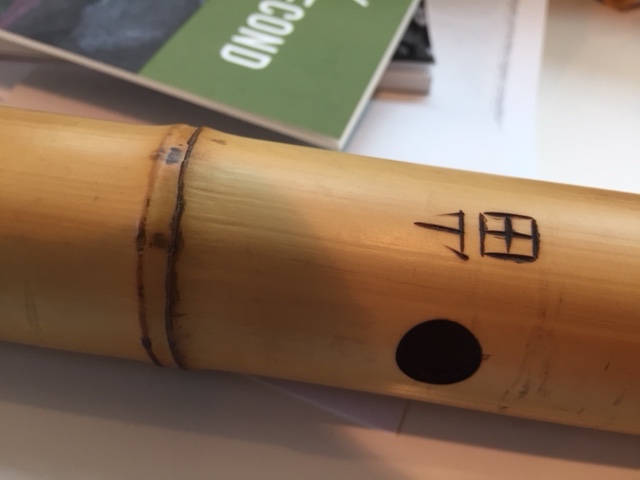
My poem “Self-Portrait as Shakuhachi” is live at The Headlight Review. I am grateful to the editors for taking this piece.

4
In my desk, nestled among the odd assortment of books and keepsakes (including Hashimoto, my stuffed toy dog companion of nearly sixty years), sits an old, chipped, cut glass ashtray bearing eclectic objects. The ashtray was my mother’s, and was one of the few possessions she was able to bring with her to the U.S. after she married my dad. It’s a rather ironic keepsake, as my mom, a heavy smoker for some sixty years, died from lung cancer, and it appears that I will, too, though I’ve never smoked. Nevertheless, it remains one of my most prized possessions. In it, you’ll find an old, broken, silver pocket watch (a father’s day gift to my dad in the late 70s), a lock of Stephanie’s hair, my dad’s original army dog tags, multiple mandolin and guitar picks, including one given to me by Kinky Friedman, author, musician, and one-time candidate for governor for the state of Texas, and various polished stones. Not one of these items has great monetary value, yet they’re all priceless to me. They all have stories.
What are your treasures? How did they come to be so valued? What are their stories?

A handful of my poems have been published since January, and in the grip of my illness I did not properly acknowledge the publications. I hope to make up for this, at least in part, by providing, at this late date, links to the poems in these journals.
My poem “The Kohlrabi Polka” was published at Panoply in January. I am grateful to editors Andrea, Clara, Jeff and Ryn for taking this piece, and to Pleasant Street, who provided the title during a mini-fundraiser for Brick Street Poetry in September 2021.

