Parting from Wang Wei (after Meng Haoran)

P1010508


Parting from Wang Wei (after Meng Haoran)

These quiet days are ending
and now I must leave.

I miss my home’s fragrant grasses
but will grieve at parting – we’ve

eased each other’s burdens on this road.
True friends are scarce in life.

I should just stay there alone, forever
behind the closed gate.

* * *

“Parting from Wang Wei” is included in my micro-chapbook, No Eye But The Moon’s, available via free download at Origami Poems Project.

The transliteration on Chinese-poems.com reads:

Quiet end what wait
Day day must go return
Wish seek fragrant grass go
Grieve with old friend separated
On road who mutual help
Understanding friend life this scarce
Only should observe solitude
Again close native area door

file5971307479422

Q&A With Editor Matt Larrimore

Five editors have generously agreed to help me with the Tupelo Press 30/30 Challenge, by providing, for a modest donation of $20, critiques of poetry. Matt Larrimore, founder and editor of Four Ties Lit Review, answers a few questions for us.

Matt L

Which three words best describe your favorite poetry?
insightful, unpretentious, craftsmanship

Would you mind sharing a bit about your background?
I’ve been in love with poetry since I encountered Rudyard Kipling’s If as a 10 year old. I’ve been spell bound by Robert Frost, Anne Sexton, Sharon Olds, and yes Billy Collins. I’ve studied poetry in earnest for the last nine years, earning a BA in English (Northern Colorado), a MA in Creative Writing (Poetry, Northern Arizona), and a MFA (Poetry, Old Dominion) So, I suppose I’m influenced by academic writing though I try my best to resist it. I’ve worked on 8 annual collegiate journals as well at the last five issues of Four Ties Lit Review, which I founded in 2012.

What sets apart the poems you accept from those you turn down?
Good poems are very clear, the reader has no doubt what the poem is saying, and then they say something interesting. If those two attributes can be combined with a poem that is well executed technically, you really have a good chance of getting published or at the least getting some quality feedback.

If you were a poetic form, which would you be?
Theoretically, I’d like to be Sonnet but in reality I’m more of Sestina that ignores the rules in the third and fifth stanza in order to make a point that might already be obvious.

Do you pay much attention to cover letters? What do you like/dislike about them?Honestly, No. Though I do use them as material if I enter into a conversation with the author (poets are authors) like earnest feedback or a personalized acceptance / rejection. We ask for a bio which serves a similar purpose and occasionally helps us to contextualize a piece, though if we have to do that it’s already unlikely we’ll publish the piece.

List three favorite poets, an admirable animal, and your go-to beverage.
 How about 3 you might have to look up? Fred Dings, Gary Short, Pamela Uschuk

The industrious Beaver – but I love how wolves improved the ecology of Yellowstone.

Summer / Spring – Ice coffee          Fall / Winter – Mocha

Bio:
Matthew Larrimore was born and raised in Baltimore, Maryland, but spent six years in the west, Earning a BA at Northern Colorado then a MA in English, Creative Writing emphasis, in 2012 from Northern Arizona. After teaching for a year he relocated to Virginia to earn his MFA in Poetry from Old Dominion University. He’s an annual journal veteran, and founded Four Ties Lit Review in 2012. He teaches composition and literature as an Adjunct Professor at ODU. His own work has appeared in The Princess Anne Independent, The Noise, Poetry Pacific, and Aproposthearts.

* * *

Please consider supporting poetry and literary publishers (specifically Tupelo Press). Perhaps one of these incentives will entice you?


Q&A With Editor Karen Craigo

Five editors have generously agreed to help me with the Tupelo Press 30/30 Challenge, by providing, for a modest donation of $20, critiques of poetry. Karen Craigo, author of the poetry collection No More Milk, nonfiction editor and former editor-in-chief of Mid-American Review, reviews editor of SmokeLong Quarterly, an editor of Gingko Tree Review, and the managing editor of ELJ Publications, answers a few questions for us.

Karen Craigo

Which three words best describe your favorite poetry?
Something to say. I like poetry that tries to express something important or deeply felt—an emotion, say, or a philosophy—more than I like poetry that is merely showy. This is not to say that I don’t enjoy some language-centered work, and I definitely feel that an openness to experimentation and play benefits all poetry.

Would you mind sharing a bit about your background?
I’m from Ohio, and I was raised in Gallipolis, a small river town in the Appalachian part of the state. I was a journalist for almost a decade before heading off to get an MFA, and small-town journalism is where my heart is, although I’ve been teaching college writing ever since. When I’m not working, I enjoy my home and my family, and I love to read mystery novels and watch classic TV.

What sets apart the poems you accept from those you turn down?
It’s a little hard to say, actually. Occasionally, I just really like it—meaning that I connect with it on a personal level. A poet can’t really write toward that; sometimes things just click, and maybe those writers just get lucky because I’m especially receptive toward what they’re doing. But more generally, I like to be surprised by something—an image, a rare insight—and I like utter control of form and diction. Any form will do, mind you—I’ve accepted formal poems and sprawling, irregular-looking poems. Form can’t be an afterthought, though, and it can’t be accidental. I need to see that the artist has thought form through.

If you were a poetic form, which would you be?
I think I’d be an unfinished villanelle—it’s the obsession, the same thoughts turning back on themselves again and again, but without the healing resolution of that final decisive quatrain.

Do you pay much attention to cover letters? What do you like/dislike about them?
I don’t. I used to, when the submissions came in paper form, but now that they’re electronic, it’s an added step to look at bios. They’re necessary; they’re a polite convention, and I like to keep things cordial. I actually think something is lost when poets aren’t permitted to present themselves the way they want to—sort of like how something is lost when with singles instead of albums. It’s not a big deal, though—the poems end up speaking for themselves, and when I’m feeling interested, I look at the whole shebang.

List three favorite poets, an admirable animal, and your go-to beverage.
Carl Phillips, Michelle Boisseau, and Ocean Vuong.
The noble narwhal.
2% milk.

Karen Craigo is the author of the poetry collection No More Milk (Sundress, 2016) and the forthcoming collection Passing Through Humansville (ELJ, 2017). She maintains Better View of the Moon, a daily blog on writing, editing, and creativity, and she teaches writing in Springfield, Missouri. She is the nonfiction editor and former editor-in-chief of Mid-American Review, the reviews editor of SmokeLong Quarterly, an editor of Gingko Tree Review, and the managing editor of ELJ Publications.

* * *

Please consider supporting poetry and literary publishers (specifically Tupelo Press). Perhaps one of these incentives will entice you?


Q&A With Editor Anthony Frame

Five editors have generously agreed to help me with the Tupelo Press 30/30 Challenge, by providing, for a modest donation of $20, critiques of poetry. Anthony Frame, the editor of Glass Poetry Press, and poetry editor of The Indianola Review, answers a few questions for us.

Anthony Frame

Which three words best describe your favorite poetry?
Musical, sharp, open.

Would you mind sharing a bit about your background?
I’m a Midwestern, blue collar poet who spent most of his life in academia. I have English degrees (BA & MA) from The University of Toledo and I did one year of an MFA before dropping out. I spent five or so years working as an adjunct before taking a full-time job in my family’s pest control business. I write poems (and occasionally essays and reviews) and I edit Glass Poetry Press (which runs a chapbook series and an online poetry journal) and I edit the poetry section of Indianola Review.

What sets apart the poems you accept from those you turn down?
Well, I like pretty poems – so a sense of music and rhythm in the language is usually pretty important to me (though, it should be said that there are many types of music and rhythm in our language). I also like poems that have an edge. So, there’s a balancing act there between the lyrical and the gritty. I also am drawn to poems that are unexpected. If I’m not surprised after reading the poem, it is unlikely to stay with me.

If you were a poetic form, which would you be?
Either the paradelle, because I ramble and repeat myself, or the sonnet, but a faux sonnet because iambs are hard.

Do you pay much attention to cover letters? What do you like/dislike about them?
Not at first, I don’t. I read a submission first, then, later, look at the cover letter. The cover letter doesn’t matter, unless it is bad, so I recommend, as first principle, that cover letters should do no harm. Then, it is nice to know a bit about the author, especially if it informs his/her/hir work, a bit about how they found the journal, and how they plan to achieve total world domination. Or around five to six recent publications. Either is good.

List three favorite poets, an admirable animal, and your go-to beverage.
Poets: Li-Young Lee, Alison Stine, and Kazim Ali (first three on my mind – ask me again tomorrow and there will be three other equally admired poets).

Animal: kakapoo

Beverage: hot tea (I’m a teetotaler so … yeah, tea)

* * *

Please consider supporting poetry and literary publishers (specifically Tupelo Press). Perhaps one of these incentives will entice you?


Q&A With Editor Jennifer Finstrom

Five editors have generously agreed to help me with the Tupelo Press 30/30 Challenge, by providing, for a modest donation of $20, critiques of poetry. Jennifer Finstrom, the poetry editor of Eclectica, answers a few questions.

JenEditorPic

Which three words best describe your favorite poetry?
Personal, complex, and detailed.

Would you mind sharing a bit about your background?
I grew up in the Milwaukee area and lived in various places in Wisconsin until the year 2000 when I moved to Chicago. I grew up an avid reader, and my mother started taking me to the library when I was just a few months old! One of my grandmothers was a librarian, and I feel that I’ve always been surrounded by books.

What sets apart the poems you accept from those you turn down?
I ask myself if the poem is doing what it intends. I look for concrete details that let me into the world of the poem and create that world.

If you were a poetic form, which would you be?
A sonnet, but not a traditional sonnet. One of my own projects is a series of “almost sonnets,” so that’s what I’ll say I would be.

Do you pay much attention to cover letters? What do you like/dislike about them?I do like to read cover letters, and I find them interesting as a genre. I like to see something of the individual coming through.

List three favorite poets, an admirable animal, and your go-to beverage.
C.P. Cavafy, Louise Glück, and Sylvia Plath. I’m fascinated by owls and bats (when I was little, I memorized bat species). I love tea, but I need coffee.


Bio: Jennifer Finstrom teaches in the First-Year Writing Program and tutors writing at DePaul University. She is the poetry editor of Eclectica Magazine, and recent publications include Autumn Sky Poetry DailyEscape Into LifeGingerbread House Literary Magazine, and NEAT. For Silver Birch Press, she has work appearing in The Great Gatsby Anthology, the Alice in Wonderland Anthology, and Ides: A Collection of Poetry Chapbooks, as well as forthcoming in the Nancy Drew Anthology. 


* * *

Please consider supporting poetry and literary publishers (specifically Tupelo Press). Perhaps one of these incentives will entice you?


Q&A With Editor Jeff Santosuosso

Five editors have generously agreed to help me with the Tupelo Press 30/30 Challenge, by providing, for a modest donation of $20, critiques of poetry. Jeff Santosuosso, the editor of Panoply, is the first to be presented here.


Jeff Santosuosso

Jeff Santosuosso


Which three words best describe your favorite poetry?
Language, imagery, and rhythm. Most good poetry does one of these well. Two makes it great. Three makes it unforgettable. (Poster child: Plath’s “Alicante Lullaby.”)

Would you mind sharing a bit about your background?
I grew up in the suburbs of Boston from immigrant families and still associate closely with that connection to the American Dream, which I firmly uphold. Majored in English in college because at that age, I had no idea what to pursue. I chose English because I liked it. Good idea for me, paying more qualitative dividends as I age. Got an MBA because after my parents’ divorce (when I was about 12), we lived on government aid for a while. No way I wanted to continue on that path. Long career in business, which has taken me all over the world. I love to travel and have 2 states left to achieve a bucket list item of visiting them all (MT and ND). Got “back” into poetry about a decade ago. Been married 26 years, with a son through college and doing fine on his own. He lives in Dallas, where he first attended middle school. The local arts scene in Pensacola is healthy, but a bit fractious. It’s a small city. There’s a biennial anthology published, which is fine, but way too infrequent for me. So with two friends, we launched Panoply in 2015. It’s a thrill to edit. Some of the work is so uplifting! I’ve made some good friends via poetry, many of whom I’ve never actually met. Reminds me of pen pals. Most poets I know are introverts. Not me. Extravert. I have learned to inquire and listen. It’s hugely important in business. But I think my natural inclination gives us an advantage as we market Panoply. We read blind so that we can concentrate on the poetry, not the poet (see below) and are just as proud to debut a new voice as we are to include a Pushcart nominee.

What sets apart the poems you accept from those you turn down?
See above. I like craft, even loose craft or meandering. I’d like to infer that there’s been some deliberation. I also am partial to the unusual. If a poem makes me think and/or feel differently, unusually, I’m ready. Take me somewhere I haven’t been, or via a new route. Not afraid of rhyme or formality. Those can be refreshing.

If you were a poetic form, which would you be?
Sestina. I’m a sucker for form, and I think repetition can be a very effective tool. I am fascinated by memory and association. These days, I am focused on when and how poetry approaches song.

Do you pay much attention to cover letters? What do you like/dislike about them?
No. Not to be rude or dismissive, but I dive right into the poetry. My own cover letters are quite lacking. I “get” personal context. It can be overwhelming. In our local workshops though, one of the catchphrases we use is, “Imagine that 60 years from now some teenager in Peoria is going to pick up your poem out of the blue…”

List three favorite poets, an admirable animal, and your go-to beverage.
Poets: Robinson Jeffers, Sylvia Plath, Carl Sandburg. Go figure. (This is a bit difficult for me, as I’m an aficionado, not a scholar. I don’t really process that way. Much more intuitive, and I generally prefer poems over poets. Likewise, I love both Dali and Hopper.)

Animal: elephant. I have a predisposition to the large, apparently peaceful slow ones, like elephants and cows. Elephants have 6-chamber brains and publicly grieve.

Go-to beverage: Uh….in order of consumption: water, coffee, milk, martinis (these days with jalapeno and something sweet to counterpoint), hefeweizen. Tea in the winter. It relaxes me, even the regular stuff.

* * *

Please consider supporting poetry and literary publishers (specifically Tupelo Press). Perhaps one of these incentives will entice you?


Earth’s Damp Mound

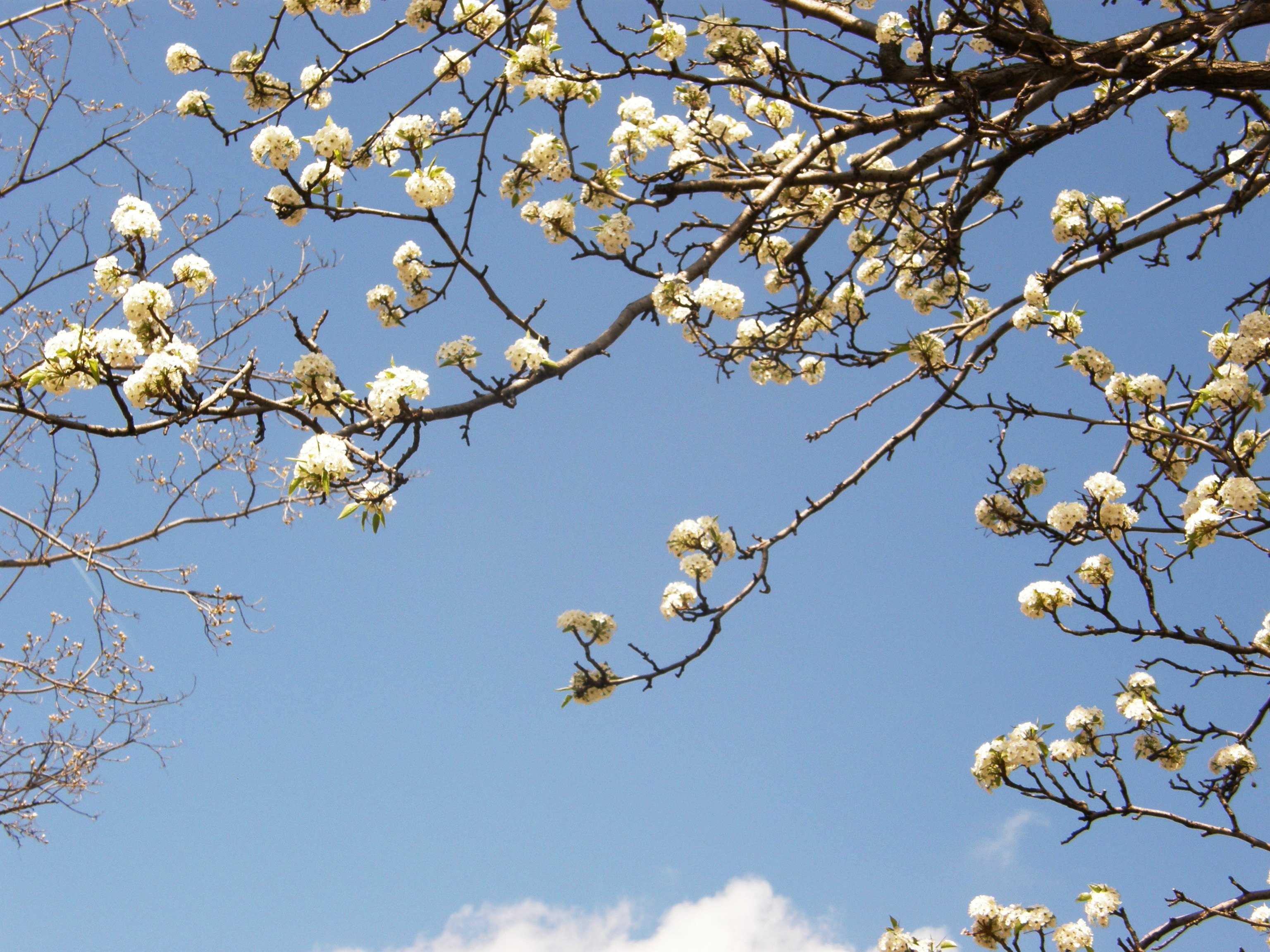
OLYMPUS DIGITAL CAMERA

Earth’s Damp Mound
for P.M.

I. February 1998.

That week it rained white petals
and loss completed its

turn, the words finding themselves
alone, without measure,

without force, and no body to compare.
Though strangers spoke I could not.

Is this destiny, an unopened
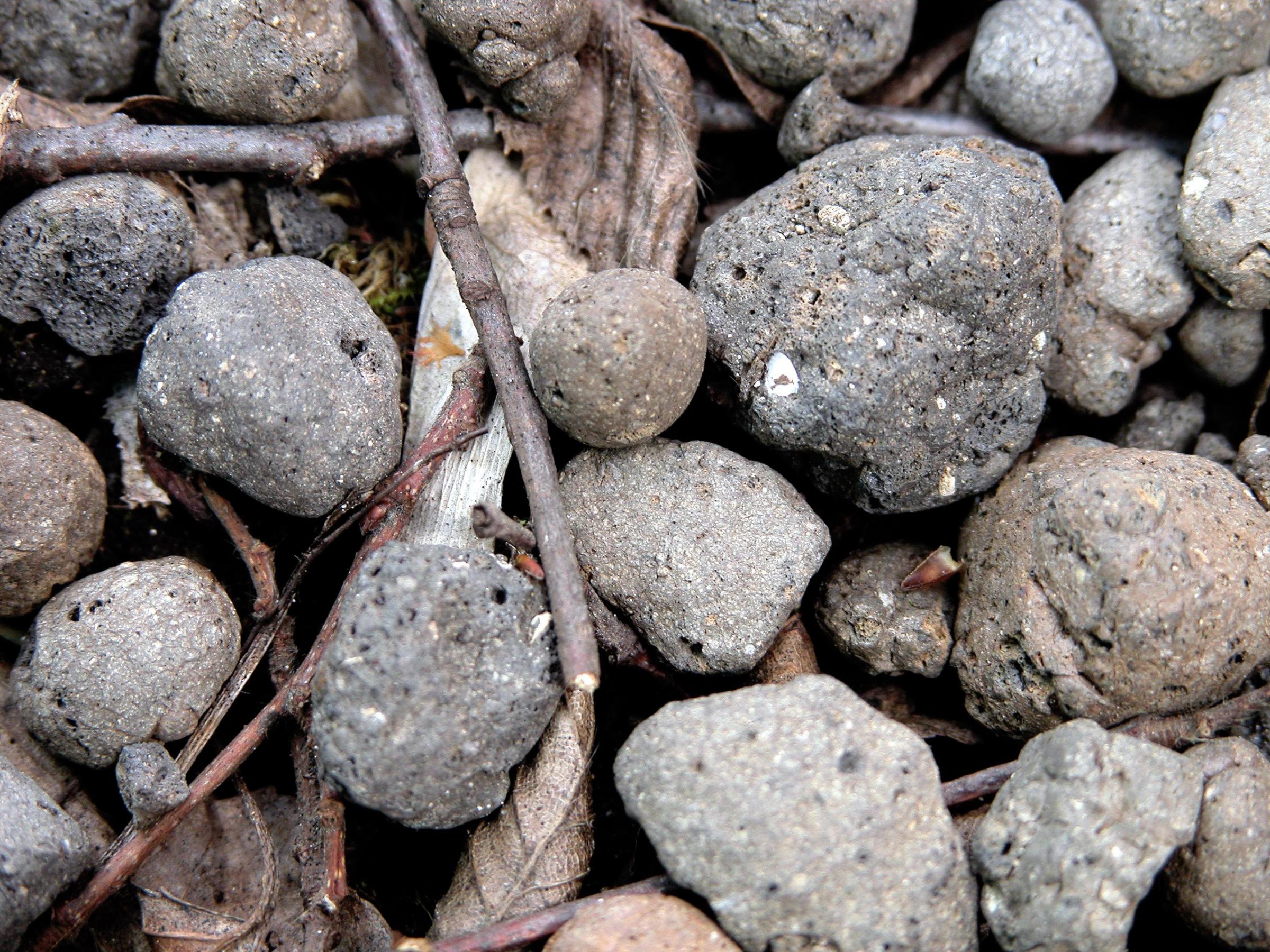
mouth filled with

pebbles, a pear tree
deflowered by the wind? The earth’s

damp mound settles among your bones.


II. Count the Almonds

What bitterness
preserves your sleep,

reflects the eye’s
task along the inward thread?

Not the unspoken, but the unsayable.

Curious path, curious seed.
A shadow separates

to join another, and in the darker
frame carries the uncertain

further, past silence, past touch,
leaving its hunger alert and unfed,

allowing us our own protections.


III. The Bowl of Flowering Shadows

Reconciled, and of particular
grace, they lean, placing emphasis on balance,

on layer and focus, on depth of angle
absorbing the elegant darkness,

a lip, an upturned glance, the mirror.

What light caresses, it may destroy.
Even the frailest may alter intent.

So which, of all those you might recall,
if your matter could reform

and place you back into yourself,
would you choose? Forgive me

my selfishness, but I must know.


IV. Requiem

Then, you said, the art of nothingness
requires nothing more

than your greatest effort.
And how, seeing yours, could we,

the remaining, reclaim our
space without encroaching on what

you’ve left? One eye closes, then
the other. One mouth moves and another

speaks. One hears, one listens, the eternal
continuation. Rest, my friend. After.


Prentiss Moore influenced my reading and writing more than he ever realized. We spent many hours talking, eating, arguing, drinking, laughing. Always laughing – he had one of those all-encompassing laughs that invited the world to join in. And it frequently did. Through Prentiss I met in person one of my literary heroes, Gustaf Sobin, whose work Prentiss had of course introduced me to. Those few hours spent with the two of them driving around in my pickup truck, discussing poetry, the Texas landscape, horticulture and the vagaries of the publishing world, are hours I’ll always hold close.

Earth’s Damp Mound first appeared in the anthology Terra Firma, and is included in my chapbook, If Your Matter Could Reform.

file0001831388228

Resurrection (Cento)

rocks and fog


Resurrection (Cento) 

Everything we love
returns to the ground.

Each syllable is the work of sabotage,
a breeze seeping from the heart of the rocks.

They are my last words
or what I intend my last words to be.

I think just how my shape will rise,
a miracle, anywhere light moves.

*****

A cento is composed of lines borrowed from other poets. “Resurrection” owes its existence to the poetry of Tishani Doshi, Paul Auster, Antonella Anedda, Sean Hill,
Emily Dickinson, and Ruth Ellen Kocher. I urge you to seek out their work. It astounds!

 
ladybug

Not Your Mama’s Carnitas (and not my Mama’s either, but then she was Japanese)

red_green_pepper

This first appeared in December 2013.

The Lovely Wife and her boon companion Apollonia, the 5-lb terror of Texas, are in the country, shooting arrows, fixing weed whackers, burning wood and sipping Chianti with the neighbor, leaving me bereft, alone but for Jackboy, the loyal cattle dog, and forced to fend, alas, for myself. So after a vigorous cardiac rehab session I repaired to my favorite bar, er, grocery store, and while meandering with a “mazy motion” like Kubla Khan’s sacred river through the aisles laden with organic produce, wondrous cheeses, craft beers and dubious dietary supplements, what did I spy but a comely little top round bison roast! I’d never before prepared said roast, but throwing caution to the wind is of course part and parcel to fending for oneself, and it was a breezy day. And while resting at the bar, er beverage sampling station, and sampling the wares (a local German-style pilz), I pondered the piece of meat and eavesdropped among my fellow samplers – talk of shopping conquests, welding, 14th century navigation and hoppy beer. But what to do with the roast? Certainly not an ordinary potato and carrot concoction. Chili? Nah, just had it. Grilled? Are you kidding? And then I overheard the word, the one way, the truth: carnitas, which instantly transported me through various savory stretches of the world and multiple cuisines, initiating salivary gland overload, but leading, in the end, to what I hoped would become a culinary delight, or at least an edible dinner.

I knew that I should braise the meat, as this particular cut of bison was very lean (hell, bison is very lean), but it was late and I was famished. So I did what any bright, hungry, middle-aged sojourner of the kitchen would do: put it off. But thinking it might be nice to enhance the depth of flavor, I threw together a few dry ingredients (salt, sugar, 5-spice powder, ground pepper), sprinkled the mixture on the roast, and set it in the refrigerator to cure overnight.

[To assuage my hunger I fried some leftover rice with ham, green onion, jalapenos, carrots and peas. Tweren’t bad.]

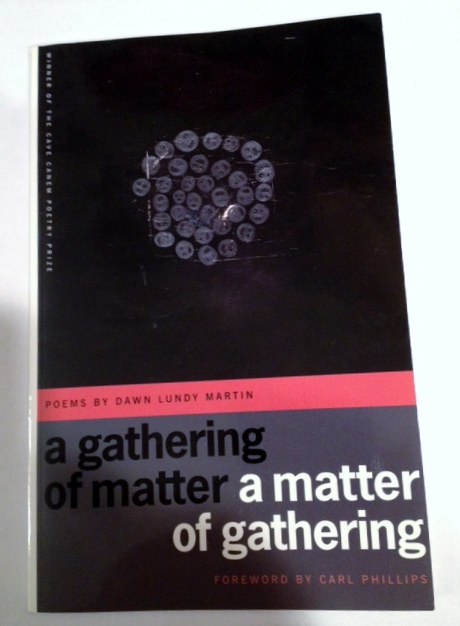
And the next day, after taking The Lovely Wife’s dobro to the repair shop, reading Dawn Lundy Martin’s A Gathering of Matter a Matter of Gathering (amazing poet, incredible poetry) at Hopfield’s gastropub while enjoying the Pascal Burger (medium rare with camembert, cornichons and carmelized onions) and frites accompanied by a delightful tulip of Birra del Borgo’s American Pale Ale,and following this with a productive and pleasant writing session in the poetry shack, I commenced preparing dinner…
photo(7)
…which began with opening a bottle of Parducci Small Lot Blend Pinot, and pondering Dawn Lundy Martin’s book. The collection opens with “Last Days,” a poem of death and grief and what lies before, between and after, consisting of questions and replies. But such questions. Such replies! She begins the poem:

What is the relation between Figure A and Figure B?

This is what the father has become.

And ends it:

How is the pain endured?

A stem of grass imagined when it is not raining.
All those things called intentions. The private / treasures one keeps safe.

The depths, the deliberation, the complexities of language and image brought forth in the replies, astound (confound?) me. So much to consider. And what lies between the opening and ending serves to build, layer by layer, the emotional foundation, adding texture and nuance, providing power in detail and, yes, beauty. Wonderfully complex and masterfully done. But back to the pinot (light, spicy, woody aroma (cedar?), and balanced, though unlike Martin’s work, not complex, but hey, it was only $11), and cooking:

First I inventoried my supplies, starting with veggies: three slightly withered carrots, one whole onion, garlic, three jalapenos, a small knob of ginger, one red pepper, four green onions, half of a small red cabbage, and a poblano pepper that had seen better days. Next, the braising liquid. Hmm. Which primary liquid? Pinot? No, I wanted to drink it and wasn’t willing to share with the bison. Sherry? Nah, use it too often. Chicken broth? Water? Surely you jest. And then I spotted a partially full (empty? was I truly feeling optimistic?) bottle of sake, resting amiably next to its close friend, Ms. Soy Sauce. Braising liquid, check.

I peeled and fine-diced the carrots, sliced the jalapenos lengthwise into thin strips, diced the red pepper and onion, salvaged what I was able of the poblano (about half had gone mushy) and diced that, and minced three cloves of garlic and the knob of ginger, reserving half of the ginger for later use.

Then I patted the roast dry with a paper towel removing the excess moisture drawn out by the rub, after which I seared it in a little oil in a Dutch oven. After judging the roast suitably crusty, I removed it and added the carrots, onion and peppers, sauteed them until softened, added the garlic and ginger, two tablespoons of soy sauce and the rest of the bottle of sake, perhaps three quarters of a cup. I brought this up to a roil, turned down the heat, let it simmer for a few minutes, and then covered and placed the Dutch oven into the oven, where it remained for two and-a-half hours, simmering gently at 350 degrees.

While the bison braised, I shredded the remnants of the red cabbage, sliced the green onions, prepared a dressing consisting of rice vinegar, sesame oil, hoisin sauce, hot mustard, minced garlic and the reserved ginger, and tossed it all together, resulting in an in-your-face but nevertheless tasty slaw.

And after the allotted time, I removed the bison from the oven and shredded it with a fork – yes, it was that tender – placed a bit of it in taco shells (hey, these are MY carnitas, not your mama’s), topped the meat with some of the cooked veggies, dolloped a bit of creme fraiche on that (I’d found a partial container in the fridge, only a month past the “sell by” date), covered that with the slaw, and took a bite. My. Goodness. Wow. More. Want more. All in all, I must proclaim that the Asian-Inspired Bison Carnitas with Hoisin Slaw was a success. I give it two thumbs up, and a few assorted toes.

But I’m still pondering Dawn Lundy Martin, and have turned to her latest (I think) book, Discipline, which looks to be every bit as intriguing as A Gathering of Matter a Matter of Gathering.

Talking with a Poet: The Finale (on Brigit’s Flame)

use your brain

The fourth and last segment of my chat/interview with Kathy Boles-Turner on Brigit’s Flame Writing Community.

notebook