Bent


Bent

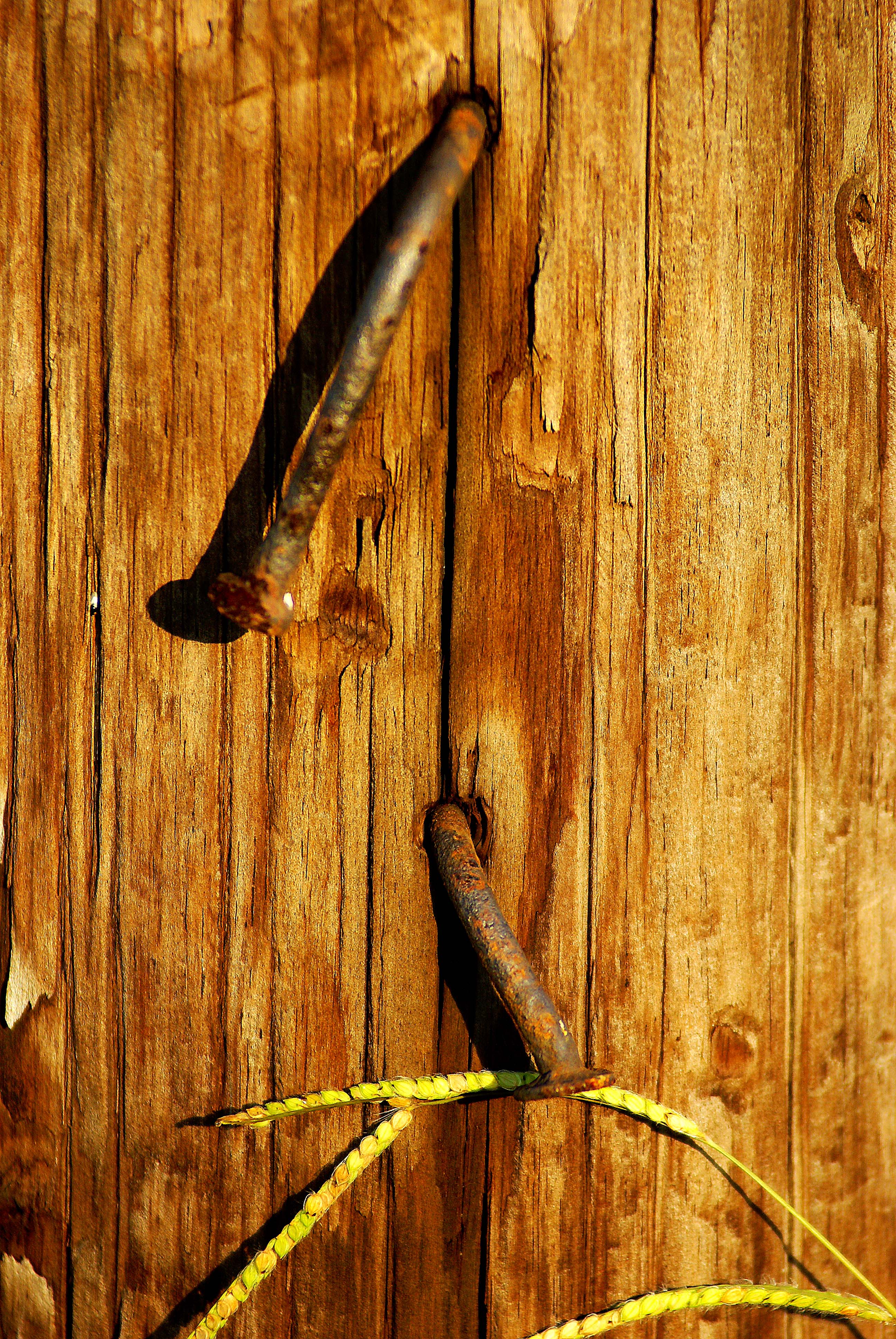
We’ve seen some version of the nail
curled over, the head angled at 90 degrees
or parallel to its body, just above

the penetration point. Three years ago
a tornado powered a single straw stem
through the oak’s bark and into its trunk,

illustrating the Old English beonet, for
“stiff grass,” and sadly conjuring the image
of a blade affixed to a firearm’s muzzle, the

etymology of which lies elsewhere, in Gascony.
And when we consider mental inclination,
signifying deflected, turned, or not straight,

we might also include an earlier past participle
meaning “directed in course.” But even the
tree’s armor could not deter the twister’s

wrath, and the hammer, no matter my aim
or purpose, seems intent upon glancing off
the nail, twisting it, leaving us, again, bent.


“Bent” first appeared in the print publication Ristau: A Journal of Being in January 2018.


Naming What Was Not (Cento)


Naming What Was Not (Cento)

The dark: an ocean for us all.
We could fall off one edge

or another, like the letter
that falls in the middle of an eye,

as if what we wanted
were not the thing that falls.

Precisely what the body resists
the body is. If you know

the names of a bird in ten
languages, do you know any more

about the bird? I thought that
all this was perhaps nothing more

than a way of remembering:
distance grows in the bones.

What’s called hearer is hearing. Oh
this is the animal that never was.


Credits: Katherine Coles, Vicente Huidobro, Jane Hirshfield, Sean Hill, Arthur Sze, Dawn Lundy Martin, Cecilia Vicuña, Sean Hill, Mei-mei Berssenbrugge, Rainer Maria Rilke.

A cento is composed of lines from poems by other poets.

For further information and examples of the form, you might peruse the Academy of American Poets site: http://www.poets.org/poetsorg/text/poetic-form-cento


Two Poems Up at The Literary Nest


My poems “I Feel the Wind” and “Believe Me” are live at The Literary NestBoth are golden shovel poems, a form created by Terrance Hayes, which uses a line (or more) from an existing poem. Each word in the line is used as the end word in a new poem. Thus if you use a ten-word line, the poem will consist of ten lines. You might read this article to learn more about the form.

The source for both of my pieces was “The Mother” by Gwendolyn Brooks. The great Ruby Dee recites it on YouTube.


The Resonance of No (with recording)

dishes


 The Resonance of No

Yes, yes, we’ve heard. The dishwasher wastes less
and cleans better. But Kenk­ō believed in the beauty
of leisure, and how better to make nothing
while standing with hands in soapy water, thoughts
skipping from Miles Davis’s languid notes to the spider
ascending to safe shelter under the sill (after I blow
on her to amuse myself), washing my favorite knife
and wondering if I should hone it, not to mention
my skills on the six-string or the potato peeler.
And if I linger at the plates, even the chipped one,
admiring their gleam after hot water rinses away
the soap residue, who could question the quick gulp
of ale or the shuffle of an almost-but-not-quite
dance step-or-stumble while arranging them on the
ribbed rack, back-to-back, in time to Coltrane’s
solo. Then the forgotten food processor’s blade
bites my palm, and I remember that I’ve outgrown
the dark suit, the cut branches still need bundling
and none of the words I’ve conjured and shaped
over decades and miles will extend their comfort
when I stand at my father’s grave this week or next.


“The Resonance of No,” was published in December 2016 in Gravel, and is included in my chapbook, From Every Moment a Second.

Daniel Schnee wrote about this poem here.

Music Credit: Cool Vibes Kevin MacLeod (incompetech.com)
Licensed under Creative Commons: By Attribution 3.0 License
http://creativecommons.org/licenses/by/3.0/


In This Shack a Cold Wind Blows


In This Shack a Cold Wind Blows

In this shack a cold wind blows,
shuffling papers and ideas before settling

on the floor. Leaves rustling. Tea,
cooling. You recall the peace of near

death, fear circling the drain,
giving in to breath, labored but certain,

one exiting another and again,
then laughing at the improbability: you

are nothing. You were nothing.
Nothing will come of you. You say

yesterday, and think tomorrow. Today.


* * *

“In This Shack a Cold Wind Blows” was first published in April 2019 by The Elixir Magazine out of Yemen.