I’m Still Here (the celebration continues)

Featured

In April 2023 I was diagnosed with late stage metastatic lung cancer. The cancer had spread to the lymphatic system, the brain, the liver and the pelvis (actually fracturing bone). The large lung mass was also responsible for partially paralyzing my vocal cords, in addition to affecting the heart, resulting in the implantation of a pacemaker. While the prognosis (not good—it’s terminal) and timing (uncertain) remain unchanged, I feel much better than I did when first diagnosed.

All this is to say that I admit to being surprised (though grateful) at my ongoing existence.

And I continue celebrating this persistence, despite certain setbacks. Lately, food has not appealed to me. Oh, I’m still eating, but food has become fuel rather than edible joy. I’m the guy who gets excited about red pepper paste, about finding mayacoba beans or za’atar seasoning on grocery shelves. Several months ago Stephanie and I were meandering (but not in a mazy motion, as in Coleridge’s Kubla Khan), in between medical appointments, the aisles of a store when I spotted a treasure. “Ooh, cornichons,” I exclaimed in my outdoor voice. I grabbed a jar, and babbled on, as I do, about how I needed them to make Julia Child’s potato salad. Stephanie looked amused, because, well, she’s used to my food enthusiasms. The potato salad was excellent, by the way.

But for the past six weeks or so, I seem to have lost this enthusiasm. Nothing has appealed to me. Or if it appealed to me before I started cooking, by the time I pulled it out of the oven, I no longer wanted it. Except last weekend, a brownie recipe slipped into my email inbox, and I simply, absolutely, inevitably, needed brownies. So I baked them. Dark chocolate, a smidgeon of espresso powder, chopped walnuts. THE BEST EVER! Perfect crust, crunchy exterior, moist, soft interior. Yum. It appears that my food enthusiasm isn’t entirely moribund. Perhaps I’ll become a baker. Maybe not.

But as this is a poetry blog, I should mention something about poetry. During the past year, knowing that my time is limited, and that if I want my poems to be published, I must send them out, I assembled several manuscripts: a couple of chapbooks, a micro-chapbook, and a second full-length book. The long and short of it is that within the next year, I’ll have had published, by five separate publishers, two full-length books, two chapbooks and one micro-chap. After so many years of accumulated rejections, this level of success is unprecedented. And very welcome! Something to celebrate! If only there were brownies…

Osso Buco

file00029145808


Osso Buco

The reconciled, the residue of one’s
virtues displayed or absorbed

that within become the basis for
talk: furtive movements, the knife’s

gentle persuasion, wine
afforded the quality of enhancement.

We must preserve the truth, and other
disingenuous phrases, as if we may

admit our tastes only at great cost
to our politics and sense of being.

And fruitful loss – the reduction
sauce, or stock evaporated – which

attaches in dissipation
the grace of subtlety. To be more

with less. To be apparent yet
concealed. To be, in turn, aware.


file00092920180

“Osso Buco” first appeared here in March 2015.


As the Gravy Flows


As the Gravy Flows

Viscosity is always a consideration, as is definition:
traditionally a sauce composed of meat juices and
thickeners, or, a sediment of melted tallow, which
somehow brings to mind a laborer rising early after
a hard night, eating red-eye, made of fried ham
drippings and coffee, served over grits. Or perhaps
an egg gravy – a béchamel sauce flavored by bacon,
with water and milk, and an egg – ladled over butter-
rubbed biscuits. But then I picture my vegetarian
friends pushing away from plates of this fine repast,
and not wishing to deny them or those following a vegan
lifestyle, we turn to roasted vegetables with broth, oils
and wine and a savory yeast extract. But I can’t fathom
a life without giblet gravy, which features the neck and
offal of fowl, including the liver, the taste of which may
be too strong for other recipes using giblets, an interesting
word in itself, from the Old French for a game-bird stew,
and the Middle English meaning of an inessential
appendage, or entrails, morphing to garbage. I would
never throw out an onion gravy, essentially a thick sauce
of slow-cooked onion and stock or wine, and admit to
having tasted a cream version with the consistency and
flavor of diluted paste, indicating a lack of balance in
flavor and poor roux-making technique. My favorite
would be an Italian-American buddy’s gravy, his word
for a rich ragù of sausage, braised beef and shredded
pork, red wine, tomatoes and herbs, served over pasta.
This of course stretches the definition of the word, but
language is elastic, is it not? So it flows, as does the gravy.


“As the Gravy Flows” was drafted during the August 2016 30/30 Challenge. Thank you to Lady Phoenix for sponsoring the poem and providing the title!


As the Gravy Flows


As the Gravy Flows

Viscosity is always a consideration, as is definition:
traditionally a sauce composed of meat juices and
thickeners, or, a sediment of melted tallow, which
somehow brings to mind a laborer rising early after
a hard night, eating red-eye, made of fried ham
drippings and coffee, served over grits. Or perhaps
an egg gravy – a béchamel sauce flavored by bacon,
with water and milk, and an egg – ladled over butter-
rubbed biscuits. But then I picture my vegetarian
friends pushing away from plates of this fine repast,
and not wishing to deny them or those following a vegan
lifestyle, we turn to roasted vegetables with broth, oils
and wine and a savory yeast extract. But I can’t fathom
a life without giblet gravy, which features the neck and
offal of fowl, including the liver, the taste of which may
be too strong for other recipes using giblets, an interesting
word in itself, from the Old French for a game-bird stew,
and the Middle English meaning of an inessential
appendage, or entrails, morphing to garbage. I would
never throw out an onion gravy, essentially a thick sauce
of slow-cooked onion and stock or wine, and admit to
having tasted a cream version with the consistency and
flavor of diluted paste, indicating a lack of balance in
flavor and poor roux-making technique. My favorite
would be an Italian-American buddy’s gravy, his word
for a rich ragù of sausage, braised beef and shredded
pork, red wine, tomatoes and herbs, served over pasta.
This of course stretches the definition of the word, but
language is elastic, is it not? So it flows, as does the gravy.


“As the Gravy Flows” was drafted during the August 2016 30/30 Challenge. Thank you to Lady Phoenix for sponsoring the poem and providing the title!


As the Gravy Flows


As the Gravy Flows

Viscosity is always a consideration, as is definition:
traditionally a sauce composed of meat juices and
thickeners, or, a sediment of melted tallow, which
somehow brings to mind a laborer rising early after
a hard night, eating red-eye, made of fried ham
drippings and coffee, served over grits. Or perhaps
an egg gravy – a béchamel sauce flavored by bacon,
with water and milk, and an egg – ladled over butter-
rubbed biscuits. But then I picture my vegetarian
friends pushing away from plates of this fine repast,
and not wishing to deny them or those following a vegan
lifestyle, we turn to roasted vegetables with broth, oils
and wine and a savory yeast extract. But I can’t fathom
a life without giblet gravy, which features the neck and
offal of fowl, including the liver, the taste of which may
be too strong for other recipes using giblets, an interesting
word in itself, from the Old French for a game-bird stew,
and the Middle English meaning of an inessential
appendage, or entrails, morphing to garbage. I would
never throw out an onion gravy, essentially a thick sauce
of slow-cooked onion and stock or wine, and admit to
having tasted a cream version with the consistency and
flavor of diluted paste, indicating a lack of balance in
flavor and poor roux-making technique. My favorite
would be an Italian-American buddy’s gravy, his word
for a rich ragù of sausage, braised beef and shredded
pork, red wine, tomatoes and herbs, served over pasta.
This of course stretches the definition of the word, but
language is elastic, is it not? So it flows, as does the gravy.


“As the Gravy Flows” was drafted during the August 2016 30/30 Challenge. Thank you to Lady Phoenix for sponsoring the poem and providing the title!


Rice

image


Rice

Yesterday’s rain informs me I’m born of luck and blended
strands, of hope and words forged before a common tongue emerged.

Of my first two languages only one still breathes.

The other manifests in exile, in blurred images and hummed tunes.

Rice is my staple. I eat it without regarding its English etymology,
its transition from Sanskrit to Persian and Greek, to Latin, to French.

Flooding is not mandatory in cultivation, but requires less effort.

Rice contains arsenic, yet I crave its polished grains.

In my monolingual home we still call it gohan, literally cooked rice, or meal.
The kanji character, bei, also means America.

Representing a field, it symbolizes abundance, security, and fertility.

Three rice plants tied with a rope. Many. Life’s foundation.

To understand Japan, look to rice. To appreciate breadth, think gohan.
Humility exemplified: sake consists of rice, water and mold.

The words we shape predicate a communion of aesthetics.

Miscomprehension inhabits consequence.


* * *

“Rice” has appeared here twice before, and is included in my chapbook-length work, The Circumference of Other, published in Ides, a one-volume collection of fifteen chapbooks published by Silver Birch Press and available on Amazon.com.

image


As the Gravy Flows


As the Gravy Flows

Viscosity is always a consideration, as is definition:
traditionally a sauce composed of meat juices and
thickeners, or, a sediment of melted tallow, which
somehow brings to mind a laborer rising early after
a hard night, eating red-eye, made of fried ham
drippings and coffee, served over grits. Or perhaps
an egg gravy – a béchamel sauce flavored by bacon,
with water and milk, and an egg – ladled over butter-
rubbed biscuits. But then I picture my vegetarian
friends pushing away from plates of this fine repast,
and not wishing to deny them or those following a vegan
lifestyle, we turn to roasted vegetables with broth, oils
and wine and a savory yeast extract. But I can’t fathom
a life without giblet gravy, which features the neck and
offal of fowl, including the liver, the taste of which may
be too strong for other recipes using giblets, an interesting
word in itself, from the Old French for a game-bird stew,
and the Middle English meaning of an inessential
appendage, or entrails, morphing to garbage. I would
never throw out an onion gravy, essentially a thick sauce
of slow-cooked onion and stock or wine, and admit to
having tasted a cream version with the consistency and
flavor of diluted paste, indicating a lack of balance in
flavor and poor roux-making technique. My favorite
would be an Italian-American buddy’s gravy, his word
for a rich ragù of sausage, braised beef and shredded
pork, red wine, tomatoes and herbs, served over pasta.
This of course stretches the definition of the word, but
language is elastic, is it not? So it flows, as does the gravy.


“As the Gravy Flows” was drafted during the August 2016 30/30 Challenge. Thank you to Lady Phoenix for sponsoring the poem and providing the title!


Mole (Pipian)

00936


Mole (Pipian)

Always the search beneath texture,
layers captured in subsidence,
the drift to interpretation: a mixture, meaning

sauce, and its journey from seed to mouth,
the careful blend of herb and fire,

dismembered chiles,
the crushed and scorched fruit
rendered to preserve for consumption
the most tender qualities

and their enhancement towards art.


* * *

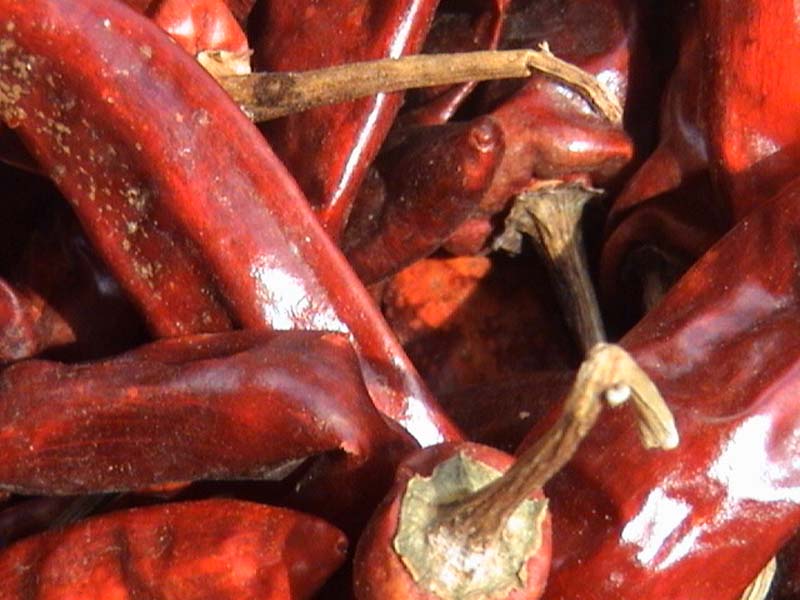
This is of course not about the mammal with the subterranean lifestyle, but rather a version of the Mexican sauce, pronounced “mo-lay,” which includes, as a main ingredient, pumpkin seeds. It takes a while to put together, but is well worth the effort. “Mole (Pipian)” first appeared here in February 2015.


file000720697612


Osso Buco

file00029145808


Osso Buco

The reconciled, the residue of one’s
virtues displayed or absorbed

that within become the basis for
talk: furtive movements, the knife’s

gentle persuasion, wine
afforded the quality of enhancement.

We must preserve the truth, and other
disingenuous phrases, as if we may

admit our tastes only at great cost
to our politics and sense of being.

And fruitful loss – the reduction
sauce, or stock evaporated – which

attaches in dissipation
the grace of subtlety. To be more

with less. To be apparent yet
concealed. To be, in turn, aware.


file00092920180

“Osso Buco” first appeared here in March 2015.


Rice

image

Rice

Yesterday’s rain informs me I’m born of luck and blended
strands, of hope and words forged before a common tongue emerged.

Of my first two languages only one still breathes.

The other manifests in exile, in blurred images and hummed tunes.

Rice is my staple. I eat it without regarding its English etymology,
its transition from Sanskrit to Persian and Greek, to Latin, to French.

Flooding is not mandatory in cultivation, but requires less effort.

Rice contains arsenic, yet I crave its polished grains.

In my monolingual home we still call it gohan, literally cooked rice, or meal.
The kanji character, bei, also means America.

Representing a field, it symbolizes abundance, security, and fertility.

Three rice plants tied with a rope. Many. Life’s foundation.

To understand Japan, look to rice. To appreciate breadth, think gohan.
Humility exemplified: sake consists of rice, water and mold.

The words we shape predicate a communion of aesthetics.

Miscomprehension inhabits consequence.

* * *

“Rice” has appeared here twice before, and is included in my chapbook-length work, The Circumference of Other, published in Ides, a one-volume collection of fifteen chapbooks published by Silver Birch Press and available on Amazon.com.

image