What Edges Hold

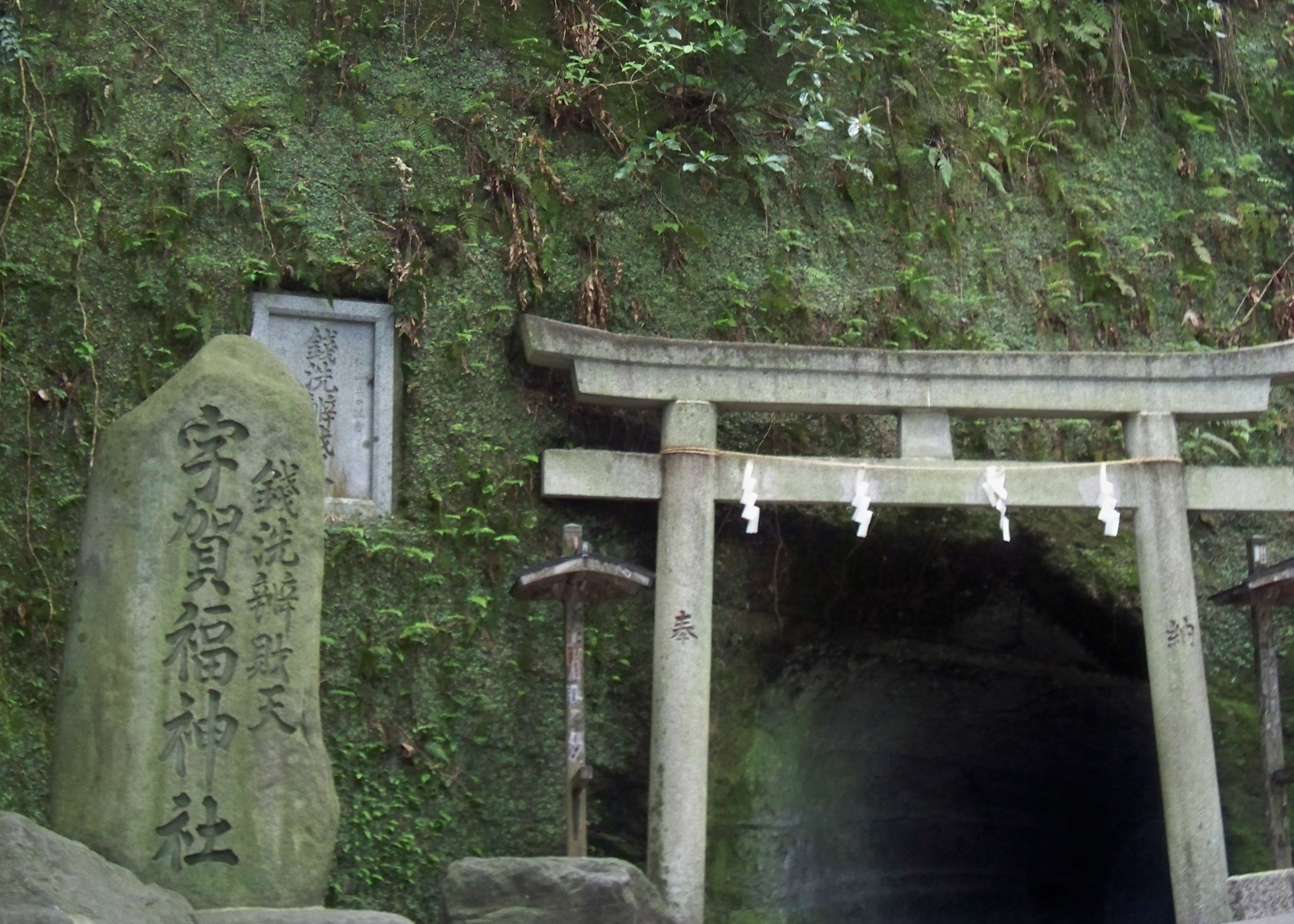
TorilCave

What Edges Hold

By which I mean those lines framed in certainty: the demarcation of sunlight and shadow. Kami signifies not spirit, but rather that force above man.

Never religion, but life itself: the mountains, trees, the rocks. Lightning.

Or waves, thundering off the coast, lured by the moon.

Stirring the water with a spear, Izanagi dripped an island into being.
Separate the ordinary through limitation, by practice, by ritual and space.

Another night in the twisted trees. The god-shelf.

Recognize that wind respects no borders.

Knowing that to the east questions may respond to answers I have long
suspected, I look elsewhere. After the vowel, the consonant. 

Though torii differ in style, each retains two posts and a crosspiece.

After the consonant, the winnowed tunnel, extinguished light.

At the gate, bow respectfully, then enter. Ladle water from right to left, 
then left to right. Pour it into your left hand, then cleanse your mouth.

Invert and regard the precipice.

I have placed one foot in their sphere. The other still searches.

This originally appeared in April 2014 as part of Boston Review‘s National Poetry Month Celebration.

edges

Day Twenty-seven, Tupelo Press 30/30 Project

bird

Tupelo Press still has a few openings for September’s 30-30 challenge. Leave a comment or email me for contact info. It’s well worth doing.

“His Softness” is among the Day Twenty-seven offerings of the Tupelo Press 30/30 Project (9 poets have agreed to write 30 poems apiece in 30 days, to raise funds for Tupelo Press, a non-profit literary publisher). Many thanks to Sarah Rivera who sponsored and provided the title.

His Softness

What name would survive
had you not stepped into the water

that day? Memory assigned
a separate word, another given…

To see the rest of the poem, click here

Even though no more title sponsorships remain, you can still contribute to Tupelo Press! Every bit helps (even a dollar or two), and I’ve some other sponsorship opportunities, with corresponding incentives, listed here.

If you’re so inclined, please visit the 30/30 blog at: Donate to Tupelo. Scroll down to “Is this donation in honor of a 30/30 poet?” and select my name, “Robert Okaji,” from the pull down so that Tupelo knows to credit the donation to me. And please let me know so that I may send a thank you and incentive gift your way.

Tomorrow’s poem is titled “With Summer Purpled Awe,” thanks to the kindness and generosity of Charlotte Hamrick.

Thank you for your support! Only 3 poems to go!

Day Twenty-six, Tupelo Press 30/30 Project

broom

Tupelo Press still has a few openings for September’s 30-30 challenge. Leave a comment or email me for contact info.

“Something Lost, Something Trivial” is among the Day Twenty-six offerings of the Tupelo Press 30/30 Project (9 poets have agreed to write 30 poems apiece in 30 days, to raise funds for Tupelo Press, a non-profit literary publisher). Many thanks to Darryl Williams who sponsored and provided the title.

Something Lost, Something Trivial

Another word, another bewildered
moment in transition: the phrase
barely emerges from your mouth
before crumbling back into a half-opened…

To see the rest of the poem, click here

Even though no more title sponsorships remain, you can still contribute to Tupelo Press! Every bit helps (even a dollar or two), and I’ve some other sponsorship opportunities, with corresponding incentives, listed here.

If you’re so inclined, please visit the 30/30 blog at: Donate to Tupelo. Scroll down to “Is this donation in honor of a 30/30 poet?” and select my name, “Robert Okaji,” from the pull down so that Tupelo knows to credit the donation to me. And please let me know so that I may send a thank you and incentive gift your way.

Tomorrow’s poem is titled “His Softness,” thanks to the kindness and generosity of Sarah Rivera.

Thank you for your support! Only 4 poems to go!

I Have Misplaced Entire Languages

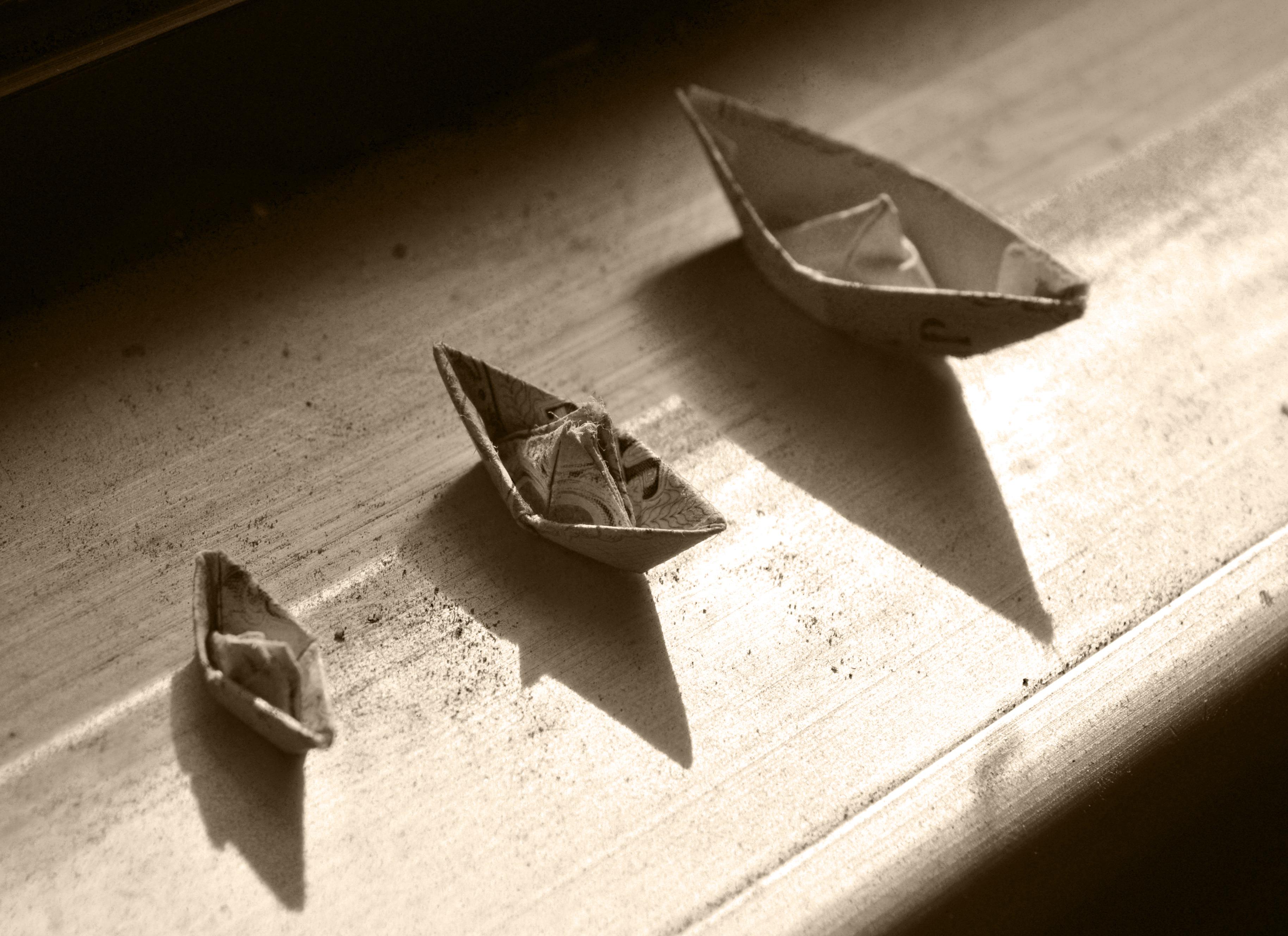
ships

I Have Misplaced Entire Languages

Neither this tongue nor that still dwells in my house.
The hole of remembrance constricts, leaving behind only debris.

As a child I mixed three languages in family discourse.

Now only one is comprehensible, and I abuse it daily.

The woman in the blue dress stands alone on the pier, weeping.
A pidgin is a simplified language developed between groups with no

common tongue. Sounds form easily, but meanings struggle.

My father is shipped to Korea without warning.

Some words insert epenthetic consonants to separate vowels. Years
later we arrive in Italy and my mother starts receding.

A fourth language emerges.

This morning I asked, “Ame?” “Yes,” she said, “but just drizzling.”

Some families share no common language and must forge without.
We have used pain, pane and pan without reference to etymology.

Having abandoned the familiar, she chose another, never accepting the loss.

These forms we can’t articulate, these memories we have not traced.

This originally appeared in April 2014 as part of Boston Review‘s National Poetry Month Celebration.

bread

The Color of Water

SONY DSC

The Color of Water

Eyes the color of water. The tree I cut down
returns: fallen leaves, smoke, the missing

shade, memory come to reflect
emotion. Once the blue grosbeak

hid in its branches, calling but refusing
to appear, the voice our only consolation.

Now rain streaks the empty space.
Those things we touch often bruise,

but to leave them untouched may harm us
even more. Two days ago the sky cleared.

Changes, how often we see them for what
they are not. An essential falsity. Those eyes.

Words, ever-changing. Shadows of lovers
whose bodies merge but never touch.

file731340645452

My Poem “Ashes” Reprinted on The Reverie

file0001138262091

My poem “Ashes,” which appeared in Extract(s) two years ago, has been reprinted on The Reverie Poetry Journal‘s blog:

Ashes

DSC_0206

Poem for Bonnie Mcclellan’s International Poetry Month Celebration

Ornate Door Treatment MGD©

My poem “Giving Time” is today’s offering in Bonnie Mcclellan’s International Poetry Month Celebration:

https://bonniemcclellan.wordpress.com/2015/02/17/giving-time-by-robert-okaji/

20130904_145308

Letter from Kansas

file7201265025021

I was a military brat. My return to the U.S. after attending high school in Italy was, well, interesting. Junction City, Kansas was definitely not bella Napoli. This poem came from that experience, albeit a few years after, and was published in the mid-80s in the Allegheny Review, a national journal of undergraduate creative writing. It’s a flawed piece, and doesn’t resemble today’s work at all, but I think the kid who wrote it still exists. Somewhere.

Letter from Kansas

Caro amico,
Driving the stretch to Junction City,
I look for familiar faces in the cars
we pass, but see only strange grasses
gliding by. Three weeks ago
I slept on a stone-littered hilltop
overlooking the Bay of Naples.
Now the prairie laps at our front door.
A mile from the house two corralled bison
munch dull hay thrown daily
from a truck’s flat bed, and past that
the Discount Center’s sign
spells America. What I wouldn’t give
for a deep draught of Pozzuoli’s
summer stench and the strong
yellow wine that Michele’s father
makes. We mixed it with the gardener’s
red, creating our own bouquet,
remember? And here they say
I’m too young to buy beer and wine.
Without them the food is flavorless,
like the single language spoken.
I understand it all,
and miss the difficulty. Maybe Texas
will be better. Ci vediamo. Bob

This was one of my first posts on the blog, and as you might expect, very few people saw it. I wrote the poem in the summer of 1983, when I was new to poetry, still tentative, exploring. A few weeks later I attempted the sonnet form, and, well, everything changed. Everything.


Earth’s Damp Mound

OLYMPUS DIGITAL CAMERA

Earth’s Damp Mound
for P.M.

I. February 1998.
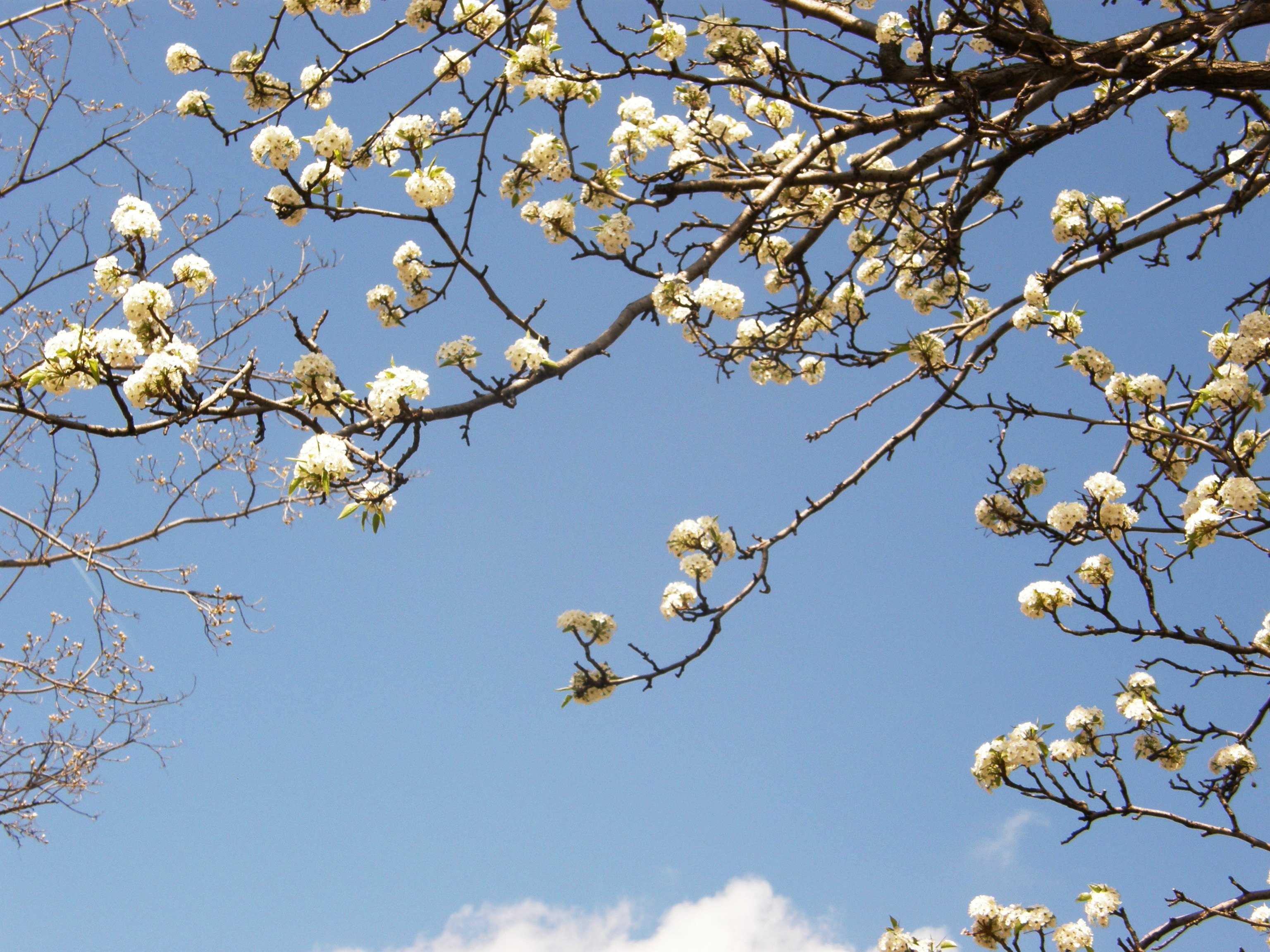
That week it rained white petals
and loss completed its

turn, the words finding themselves
alone, without measure,

without force, and no body to compare.
Though strangers spoke I could not.

Is this destiny, an unopened
mouth filled with

pebbles, a pear tree
deflowered by the wind? The earth’s

damp mound settles among your bones.

II. Count the Almonds
What bitterness
preserves your sleep,

reflects the eye’s
task along the inward thread?

Not the unspoken, but the unsayable.

Curious path, curious seed.
A shadow separates

to join another, and in the darker
frame carries the uncertain

further, past silence, past touch,
leaving its hunger alert and unfed,

allowing us our own protections.

III. The Bowl of Flowering Shadows
Reconciled, and of particular
grace, they lean, placing emphasis on balance,

on layer and focus, on depth of angle
absorbing the elegant darkness,

a lip, an upturned glance, the mirror.

What light caresses, it may destroy.
Even the frailest may alter intent.

So which, of all those you might recall,
if your matter could reform

and place you back into yourself,
would you choose? Forgive me

my selfishness, but I must know.

IV. Requiem
Then, you said, the art of nothingness
requires nothing more

than your greatest effort.
And how, seeing yours, could we,

the remaining, reclaim our
space without encroaching on what

you’ve left? One eye closes, then
the other. One mouth moves and another

speaks. One hears, one listens, the eternal
continuation. Rest, my friend. After.

Prentiss Moore influenced my reading and writing more than he ever realized. We spent many hours talking, eating, arguing, drinking, laughing. Always laughing – he had one of those all-encompassing laughs that invited the world to join in. And it frequently did. Through Prentiss I met in person one of my literary heroes, Gustaf Sobin, whose work Prentiss had of course introduced me to. Those few hours spent with the two of them driving around in my pickup truck, discussing poetry, the Texas landscape, horticulture and the vagaries of the publishing world, are hours I’ll always hold close.

Earth’s Damp Mound first appeared in the anthology Terra Firma.

file0001831388228

My 3rd (and Final) Poem in the Silver Birch Press Self-Portrait Series

file0001818876295(1)

Ah, simplicity! When I was a child my mother would occasionally serve rice balls in which a single tart umeboshi rested at the center. These have long been a favorite, but I admit that umeboshi might be an acquired taste. Commonly called “pickled plums,” ume aren’t really plums but are more closely related to apricots. Whatever they are, I cherish them.

Self-Portrait with Umeboshi, poem by Robert Okaji (Self-Portrait Poetry Series)

file0001977442406