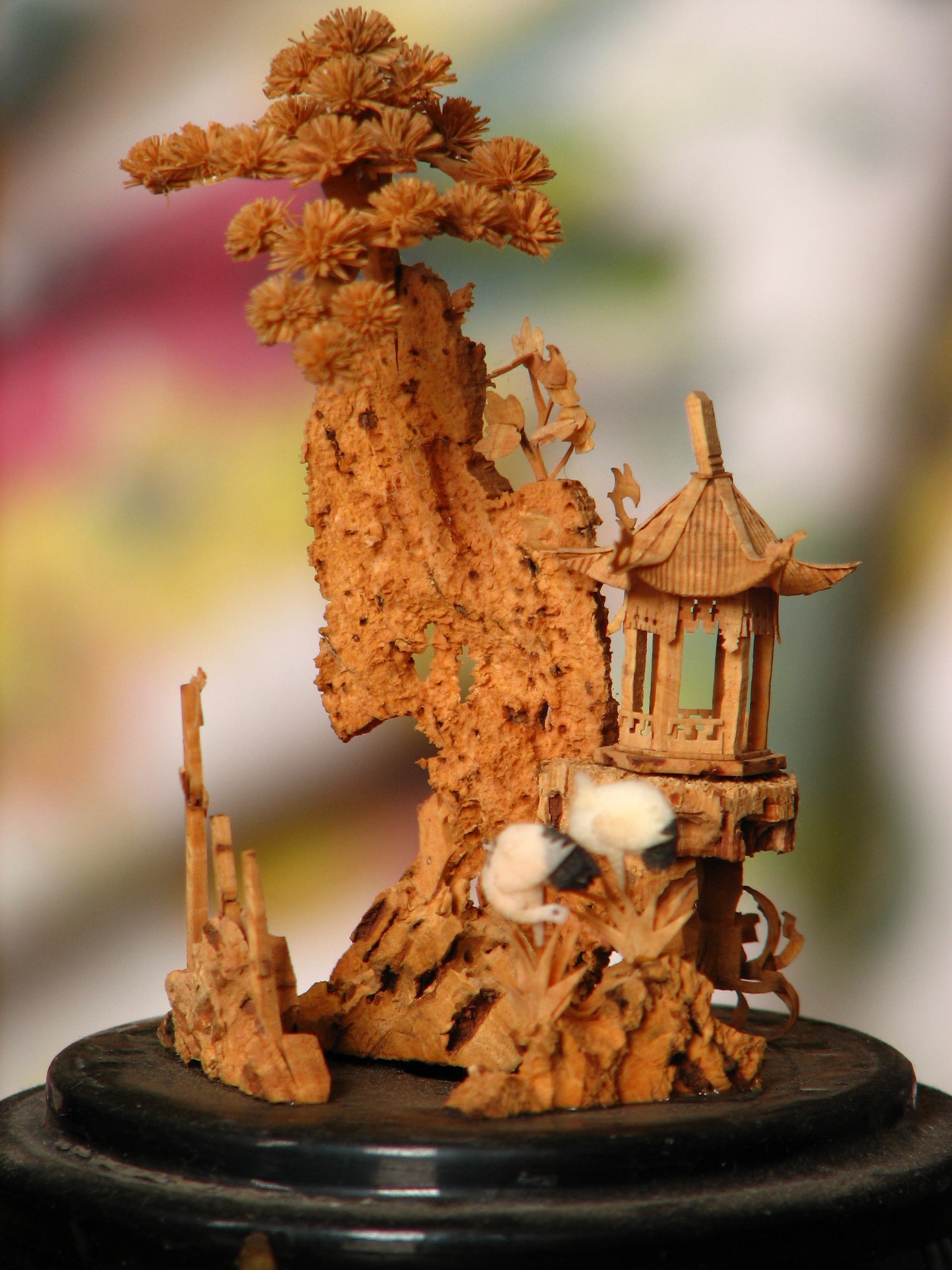
Laolao Ting Pavilion (after Li Po)

file0001681287329

Another attempt at adapting Li Po. A note on Chinese-poems.com stated “at this time, the breaking of a willow twig was part of formal leave-taking.”

Laolao Ting Pavilion (after Li Po)

Where do more hearts break under heaven?
This sad pavilion, where visitors part,
the spring wind whispers bitter goodbyes
and willow twigs never mend.

Transliteration from Chinese-poems.com:

Heaven below damage heart place
Laolao see off visitor pavilion
Spring wind know parting sorrow
Not send willow twig green.

file000171156221

Tell it Slant: How to Write a Wise Poem, essay by Camille Dungy

OLYMPUS DIGITAL CAMERA

Few essays on writing poetry grab me by the collar, slam me against the wall, and say “Listen, dammit!” But this one did.

Camille Dungy’s words sear through the fog. She tells it slant. She tells it true. She explains how some masters have done it. If you’ve not read her poetry, seek it out. You’re in for a treat. If you have the good fortune to attend a lecture or reading by her, do so. She’s energetic, wise and kind. She knows.

http://www.poetryfoundation.org/article/247926

Fellowships for Writers and Poets

OLYMPUS DIGITAL CAMERA

Some of you may be interested in these fellowships, most of which have no entry fees:

http://creativegenius.hubpages.com/hub/Fellowships-Writers-Poets

Thanks to Brian Scott, for providing this resource!

To Tu Fu (after Li Po)

file000441892107

Yet another adaptation. This was a bit more difficult than other recent pieces, in part because I wanted more detail in the first line. With some difficulty, I refrained from adding it.

To Tu Fu (after Li Po)

I arrive, finally, at this:
above me, Shaqiu City
among the ancient trees
and the autumn winds at sunset.

Lu wine can’t make me drunk,
These songs do nothing for me.
My thoughts flow to you like the
Wen River on its journey south.

And here’s the transliteration on Chinese-poems.com:

Sent to Du Fu below Shaqiu City

I come finally what thing
High lie Sha qiu city
City beside are ancient trees
Sun set join autumn sounds

Lu wine not can drunk
Qi song vain again feel
Think you resemble Wen water
Mighty immense send south journey

file9091307479627

Cedar Grove (after Wang Wei)

file000675350848

Cedar Grove (after Wang Wei)

I sit alone among the cedars,
play my guitar and hum.
In this dark forest
no eye spies me but the moon’s.

My take on Wang Wei’s “Bamboo Grove.”

I worked from this transliteration copied somewhere along the way:

alone sit dark bamboo among
strum lute again long whistle
deep forest man not know
bright moon come mutual shine

I hope it works.

IMG_1533

Late Night (after Li Po)

file0001588704472

The moon smiles upon my bed.
I consider frost and ice,
and raising my head, the bright sky.
Lying back, I think of home.

Once again, I’ve attempted to shiver myself into a timeless piece. I can only hope that my version does not offend.

The literal translation from Chinese-Poetry.com follows:

Bed before bright moon shine
Think be ground on frost
Raise head view bright moon
Lower head think home

file000656391838(1)

Which Poet, Which Beer?

file6671234665917
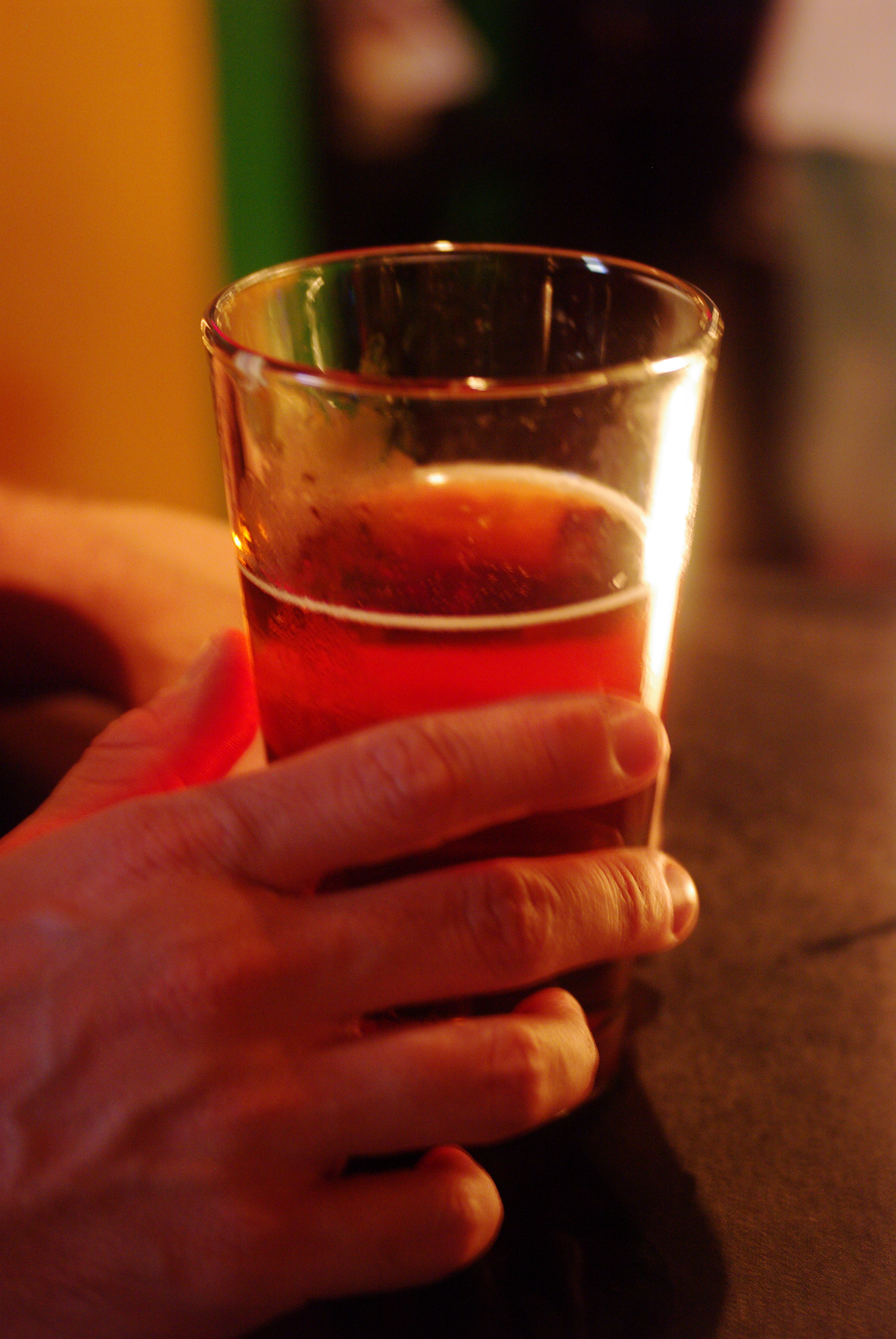
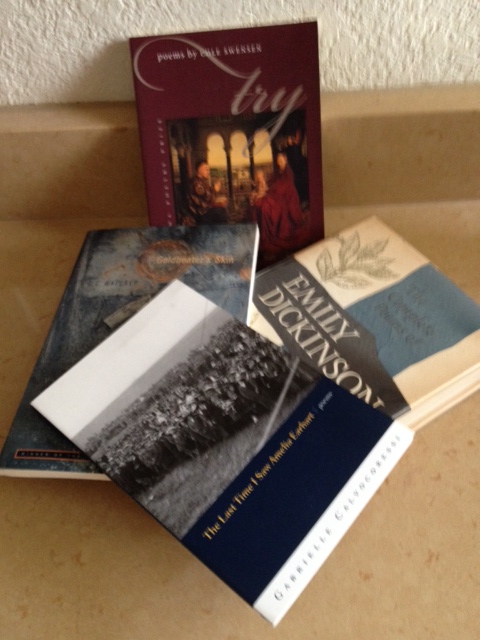
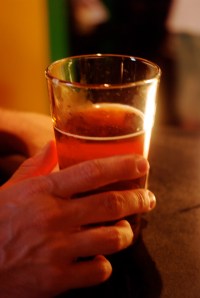
I’m staring at the flight of beers that John has placed in front of me. On the left I find Real Ale Brewing Company’s Phoenixx Double ESB. Next to it rests Ranger Creek’s Saison Oscura, followed by Revolver Brewing’s High Brass Golden Ale, and finally, Southern Tier Brewing’s Creme Brulee Stout. I sip the Phoenixx ESB, and am delighted to find it just as I remembered: dry, but sweet, without being overly bitter. Rich, deceptive, caramely odor, amber color. Overtones, hidden layers. I immediately think of Cole Swensen and her book Try, my real introduction to her work, how she reflects tone and imagery, perception and language, intricately weaving them into patterns, into narrative bits to be experienced and savored. “There’s a world out there that isn’t there,” the Phoenixx, evidently a fan of Cole Swensen, whispers.

I linger over the last sip of the ESB, and move on to the Saison Oscura, which quite frankly, surprises me. And that’s good. My preferences edge towards the bitter, and most of the saisons I’ve tried have finished a tad fruity and sweet for my palate. Not so with Ranger Creek’s rendition. Its beguiling light body, with notes of pepper and spice, end with just the right note of bitterness. But which poet, which book would I pair with this dark saison? Someone who juggles the lyrical with harsh realism, whose voice blends and releases the bitter, the forsaken, in distilled snippets of striking clarity. Ah, yes. I have just the book, The Last Time I Saw Amelia Earhart, by Gabrielle Calvocoressi, and the line:

“The whole world tastes like salt,

crows overhead shout, Gone, gone
gone. She can’t help me any more.
I’ll have to walk.

It’s much more difficult to pair the Revolver Brewing High Brass Golden Ale with a favorite poet, because, sadly, I find it lacking. It’s light in the mouth, and, to take Gertrude’s quote totally out of context, there is no there there. If I’m to choose a blonde ale, I’d much prefer Real Ale Brewing’s Fireman’s #4. But waste not, want not. I down it, and consider which poet would not only transcend this disappointment, but also hand it a one-way ticket to, perhaps, Stein’s lost Oakland? Easy. G.C. Waldrep, whose Goldbeater’s Skin sets its barbed hooks into my flesh each time I open it. And for this particular occasion, I find no poem more appropriately titled than “What Begins Bitterly Becomes Another Love Poem,” in which he writes:

We stood without shadows on asphalt at midday.
What we call patience is only fire again, compressed.

And fire should accompany Southern Tier’s Creme Brulee Stout. A crackling fire fending off the icy, shingle-ripping wind, with Miles Davis echoing in the background, an exquisite meal resting comfortably in the belly, and the pleasure of knowing that the book you’re about to dip into is an endless well.
Quite simply, it’s a liquid dessert. Light coffee, a tad chocolatey, with big vanilla. Medium body, sweet. Smells like creme brulee. Tastes like it. But it’s beer. It tells the truth, but tells it slant! And who better to accompany this frothy delight than Emily Dickinson?

Tell all the truth but tell it slant,
Success in circuit lies,
Too bright for our infirm delight
The truth’s superb surprise…

Onward to the next flight, and more truth. More poetry. More beer. More surprise!
photo(14)

Draft: Valentine’s Day Sonnet

CRW_6222

If You Were a Guitar

If you were a guitar I would play you
till my fingers grew rough from your body’s
touch, till the moisture in the clouds withdrew
and only music rained down. But what breeze

could retain your voice? At night my hands would
dream new chords of light and air, of pearl and
flesh and warm breath suspended over wood.
And as we slept our bodies would demand

completion, and the space would diminish
till nothing lay between us but the sly
notes singing through our veins, replenish-
ing each other’s thirst. When I say hope, I

mean you. When I whisper nothing, my
silence shouts your name. Each breath. Every sigh.

Numbers numbers numbers: NINE

Numbers numbers numbers: NINE
file0002037739398

Early on in my other life I was hand-picked and hired to assist with budgets, to work with numbers. One of the higher-ups remarked that my spelling score was quite good for a “numbers person.” This amused me to no end, as I’d no inkling that a) anyone in the world considered me fluent with numbers, or b) that the mundane labor that comprised my livelihood had been noticed, much less evaluated, by someone beyond my small, three-person office (certainly no one noticed the writing I’d produced and published). More than a quarter century later, I’m still amused. And still working with numbers, which even now remain mysterious, magical, and even inspiring.

Take the number nine. Multiply it by two, and you get 18. Add the two digits that comprise 18, one and eight, and you get 9. Multiply it by three: 27. Total the two digits forming 27, and you get, yes, 9. Multiply it by four, by five, by six, by seven, eight or nine. Add the digits that comprise the sum and you return to nine. Interesting, no?

It appears everywhere. In Islamic cosmology, the universe is built of nine spheres. In Ancient Mexico, the netherworld consisted of nine layers. The magic square consists of nine parts. Beijing was designed as a center with eight streets. Hindu temple foundations contain jewels and nine distinct grains. The human body has nine openings. The number also appears in both sacrificial and healing rites. The River Styx bends nine times. I could go on (we haven’t scratched the surface), but will refrain.

But if this piece piques your curiosity, you might find this poem inspired by zero (a truly fascinating subject) of interest:

http://www.cladesong.com/okaji.withtheseninefigures.html

Fifty-Word Review: Greenhouses, Lighthouses by Tung-Hui Hu

Tung-Hui Hu’s Greenhouses, Lighthouses highlights lyrical precision in poems that bounce between such diverse launching points as photographic sequences, Euripedes, union slogans, woodcuts and even an historical seaman’s guide. His language placates and challenges, whispers, cajoles and insinuates, and overflows with layered possibilities and nuance. You must read his work.

photo(10)