This Turning

turning


This Turning

what one says
depends not on
words the wind

begins it does
not end but
lends itself to

an end this
turning may be
an answer the

sound of intent
so concealed a
word displayed is

only a word
not an end
nor the beginning


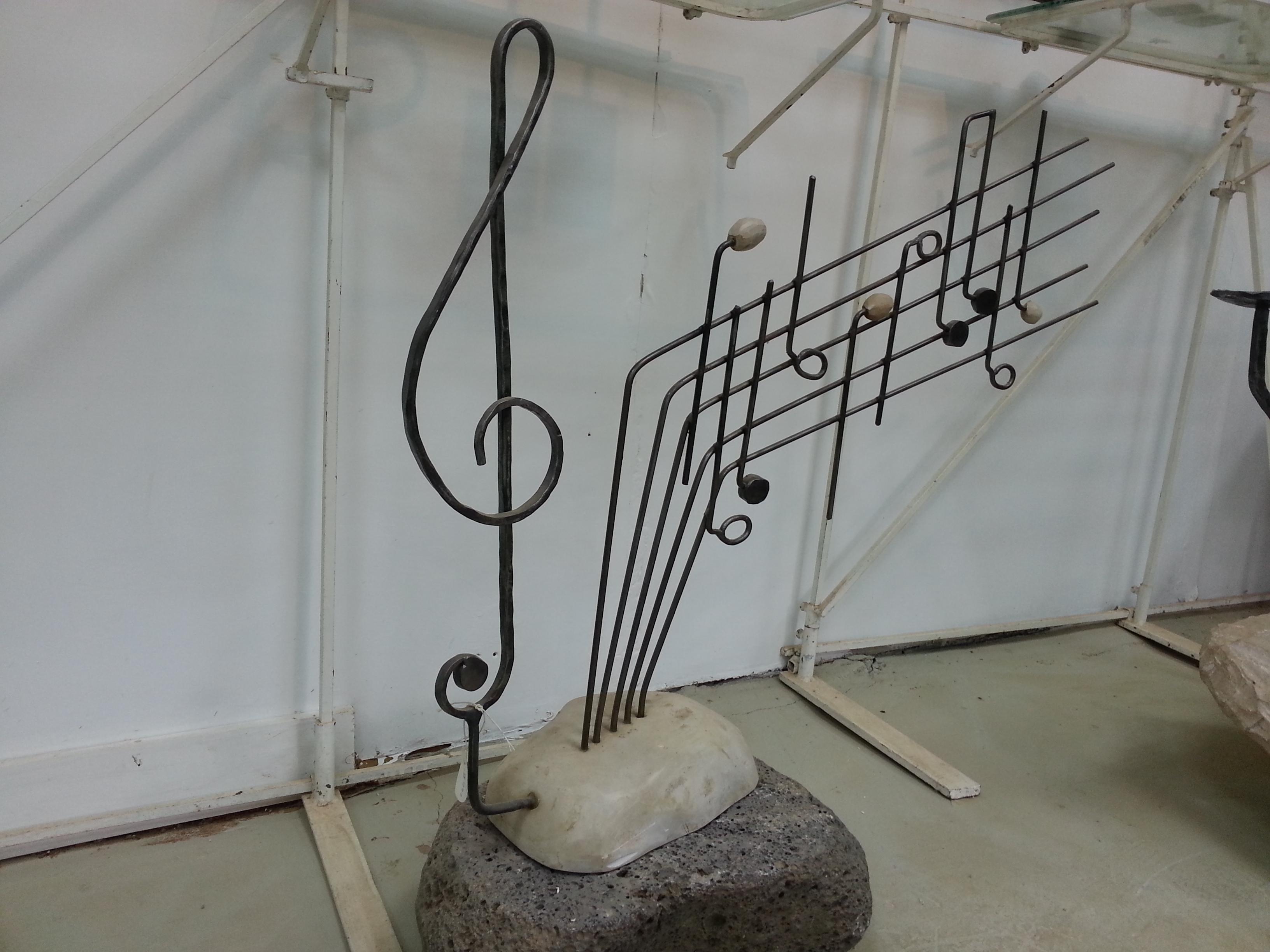
magnets

Another oldie from the eighties. It seems that even my poetry was thinner then.

You Say Cicada, Which Shrivels My Ears

Status

robert okaji's avatar


You Say Cicada, Which Shrivels My Ears

I say cicada, the difference lurking in the middle,
like the shortest dancer in an off-Broadway musical,
or a note hidden between two reams of legal paper
in the supply room of a well-appointed dentist’s
office, where you find yourself, by accident, searching
for the exit. But think how our sap-sucking friend must
feel, a foot underground, during its final instar phase,
reversing course, leaving behind the darkness
and moist roots, burrowing up through the soil
toward light and the shrug into maturity. And after
that, squeezing through a crack in what had been
itself, emerging, soft and vulnerable, slouching to the
inevitable call. I think of ecdysis, how we, too, shed
ourselves, leaving behind remnants, old skin and
armor, and rising, on occasion, wiser, softer, more
complete. But sometimes we try to reenter those
discarded shells. My acquaintance searches through
the past for bits of himself, purchases toys – marbles,
pocket knives – stitching together a semblance of the
old comfort. He keeps, in one jar, three teeth from his
childhood, in another the exuviae of a half-dozen
scorpions. How delightful it would be, he says, to
abandon your hardened self and become someone
new. He looks to the ground. I nod, and whisper.


“You Say Cicada, Which Shrivels My Ears,” appeared in the inaugural issue of Claw & Blossom, in July 2019. The poem was originally written during the August 2016 30-30 challenge. I’m grateful to Sunshine Jansen, who sponsored the poem and provided three words to be included in the piece: instar, ecdysis, and sap-sucking. Thank you, as well, to editor C.B. Auder for accepting the poem.


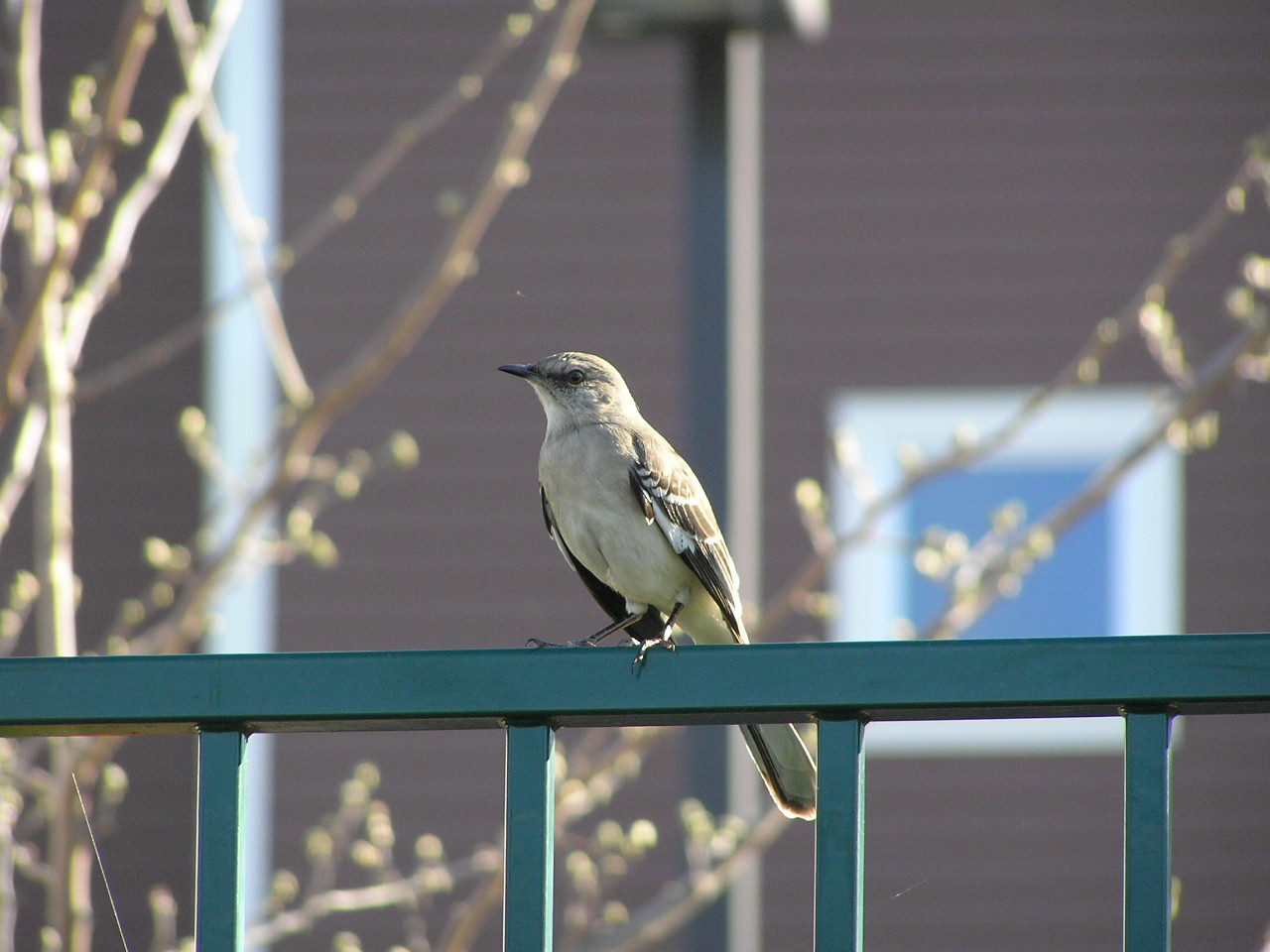
Mockingbird III

OLYMPUS DIGITAL CAMERA


Mockingbird III

Songs, returned
to their space

within the sphere of
movement, the patterns inscribed
as if to touch the face of every

wind: here one moment, then
gone. This quickness delights us.
How, then, do we so often forget

those things we share? Night
comes and goes to another’s
phrase, yet each note is so precisely

placed, so carefully rendered
that we hear only the voice, not its source.


* * *

Another piece from the 80s. This first appeared here in March 2015, and would likely be a much longer poem if I were to write it today.


20131129_140442


Sunday, June


Sunday, June

Trying to give, I fail too often.
But this day we prepare for you
food that your beloved often cooked,
made with the ingredients of 19,000
nights and promises of more to come.
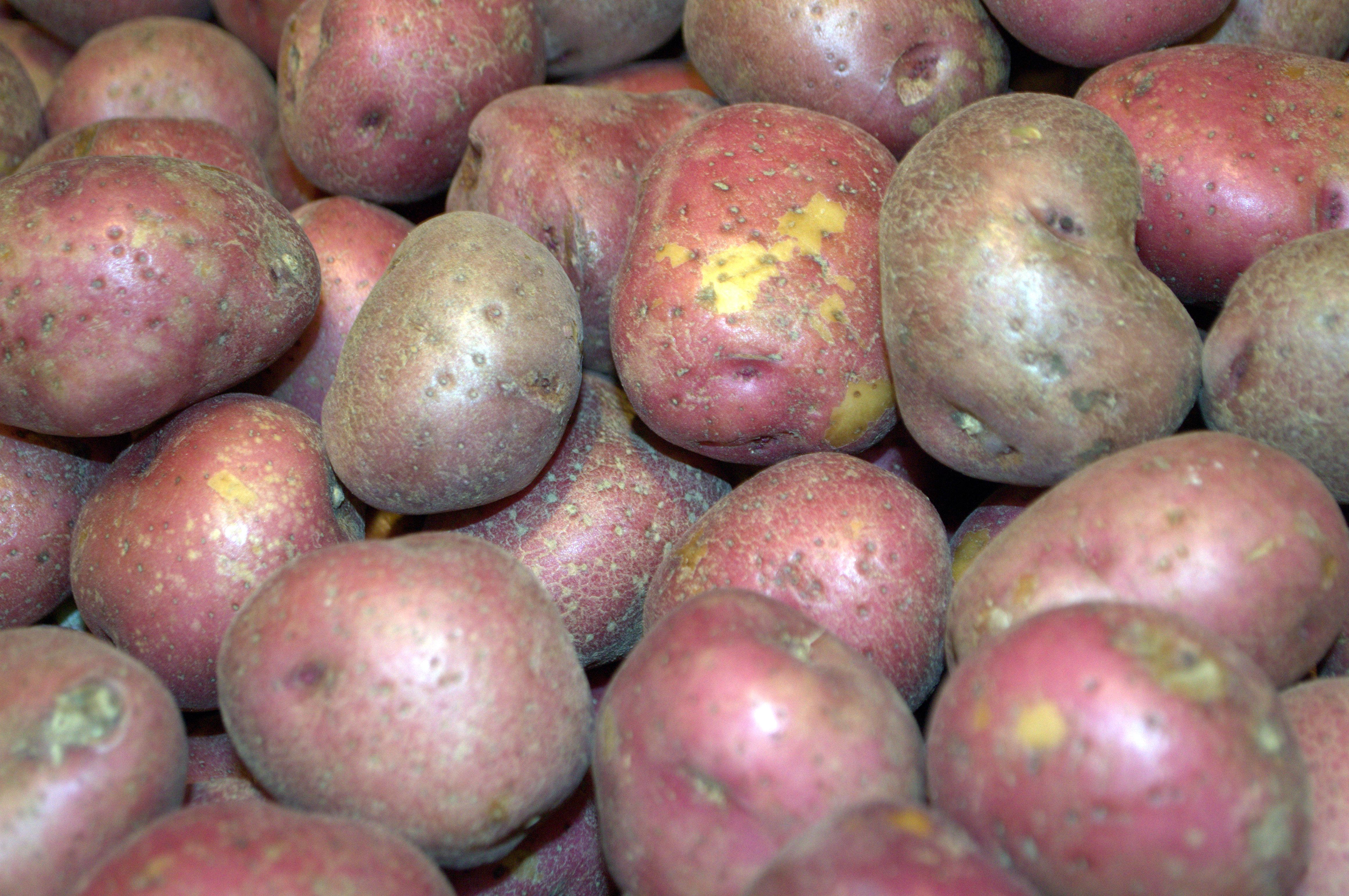
These potatoes. That beef, the fruit.
Simple, and yet so difficult to reproduce.
Even the recipe is incomplete. “Some
mayonnaise,” it says, then “mustard,”
but not whether dry or prepared, and
the amount is unclear. Yet the results
transport you to stronger days, to
the clear-eyed self and limitless
possibilities, meals on the table
at five o’clock, the satisfaction of work
well done, knowing that you have soared
above your father’s imprecations
but never beyond love’s touch, her
sleepy murmurs, morning coffee,
burnished histories and late cigarettes,
the tulips on the soil you’ll soon share.


“Sunday, June” first appeared in the print journal Nourish in March 2018.

Cracked


Cracked

When you say smile, I hear footsteps.
When you say love, I think shortened breath,
an inner tube swelling in the abdomen,
and the magic of tension and elasticity.
Decision, indecision. Bursting
points. The child’s hand clenching
a pin. I tell myself this, too,
will pass, that life’s gifts
balance hurt with pleasure. One
kiss lands in softness. Another twists
into bruises and cracked ribs. Two
nights in intensive care, perpetual
nerve-shredding. When you say quiet,
I see headstones. When you say
please, I feel fingers at my throat.


“Cracked” first appeared in Noble Gas Quarterly. I’m grateful to the Noble Gas team for taking this piece.


Pain (Haibun)

Pain

Pain reminds me that I’m breathing, still able to appreciate the fragrance of French roast coffee brewing, the diced red pepper, onion and jalapeño mixture sizzling in the pan. Today is a good day. When I roll out the dough for the onion tart, the leg barely protests, and as I sip ginger tea while the tart bakes, no throb interrupts my pleasure.

Sometimes the hip shocks me with its barbed lance attack, or the knee rasps “not today, sonny,” and I grimace, concentrate on deliberate forward movement, one short step followed by another, into the kitchen or down the steps to the shack.

Music soothes, as does poetry, but occasionally the weight of the guitar is more than the leg can bear. Still, when I manage to lose myself in a tune or a few phrases, I drift in their currents, weightless, free.

Oh, to climb that hill
among those lost maples
Look — my shoe’s untied

* * *

“Pain” first appeared in The Zen Space in July 2018.

Poems Up at Tistelblomma


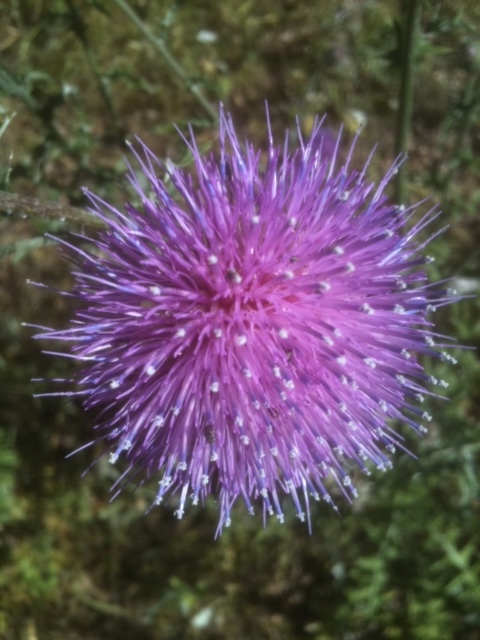
My poems “Never Enough,” “Lace Cactus” and “Love Note” are live at Tistelblomma, a new publication out of Sweden. Many thanks to editor Jenny Enochsson for taking these pieces.


Dragging the River


Dragging the River 

Knowing the truth of it, he marvels
at the red grape’s resiliency,
how it contains itself even after
a fall. What matters, what doesn’t.
Those simplistic thoughts
dissipating in the coffee’s sad
swirl. And what they wanted,
truly wanted, even more than
that first plunge of lips to private
flesh or the forbidden highlights
in the book of dreams never to
be opened. He looks over the side,
but can’t divine the message
in the brown ripples. A wine bottle
bobs by, followed by an inflated vest
and two snarled branches. Everything
revealed in its time.


 * * *

“Dragging the River” first appeared inMay 2019 in The Elixir Magazine out of Yemen.


Poet’s Pantry

file3911233869642

In my sliver of the world, poetry and cooking share many qualities. When I step into the kitchen, I often have only a vaporous notion of what’s for dinner. A hankering for roasted poblano peppers, the need to use a protein languishing in the refrigerator, the memory of an herbal breeze wafting down a terraced hill near Lago d’Averno, Hell’s entrance, according to Virgil, or even a single intriguing word, may spark what comes next. But the success of what follows depends upon the ingredients at hand, on how we’ve stocked the pantry. Good products beget better results. Let’s take my desire for roasted poblanos. What to do with them? Poking around, I uncover an opened package of goat cheese, a bit of grated grana padano and some creme fraiche, and I immediately think pasta! Looking further I spot arugula, a lemon, a handful of pecans, some cherry tomatoes. Dinner: Pappardelle with a roasted poblano and goat cheese sauce, garnished with toasted pecans, served with an arugula and cherry tomato salad dressed with a lemon vinaigrette. Simple, when you’ve stocked a solid base of quality components.

My writing employs a similar process. Anything – a vague sense of uneasiness, a particular word, the sunlight slanting through the unfortunate dove’s imprint on my window, articles or books I’ve read or perused on a myriad of subjects – may launch a poem. But what truly makes the poem, what bolsters, fills and completes, what ignites and catapults it arcing into the firmament? The pantry’s contents.

Everyone’s needs differ, and I wouldn’t presume to inflict my peculiar sensibilities on anyone, but if you cracked open my burgeoning poetry pantry’s door, you’d certainly unearth dictionaries and a thesaurus, fallen stars, books on etymology and language, curiosity, a guitar or mandolin, at least one window (sometimes partially open), conversations floating in the ether, various empty frames, wind, dog biscuits and dirty socks, a walking stick, sunlight and shadows, more books on such subjects as ancient navigation, the history of numbers, the periodic table, alchemy and olives. You might also spy reams of paper, unspoken words, coffee cups, a scorpion or two, scrawled notes on index cards, wandering musical notes, a pipe wrench, wood ear mushrooms and salvaged fragments of writing, failed ideas moldering in clumps on the floor, a few craft beers and empty wine bottles, a chain saw, and most important of all, a bucketful of patience.

(I cannot over-emphasize the bucket’s contents…)

This is just to say (no, I didn’t eat the plums) that the best equipped poets stock their pantries with the world and all its questions, with logic, with faith, persistence, emotion, science, art, romance and yes, patience. Line your kit with every tool you can grasp or imagine. Keep adding to it. Read deeply. Listen. Breathe. Listen again. Converse. Look outward. Further, past the trees, around the bend and beyond the horizon’s curve, where the unknown lurks. Look again. Don’t stop. Continue.

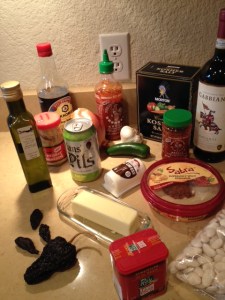
And if after all this you’re wondering what basks in my kitchen pantry:
photo(13)

This first appeared here in January  2014.

Mockingbird

 OLYMPUS DIGITAL CAMERA


Mockingbird

Withdrawn, it unfolds
to another
voice, like that

of a child lost in the wind.
Or, lonely, it rises from its place

and sings, only
to return and start again.
The pleasure we accept derives from

the knowledge that we are not alone.
Each morning we walk out and sit
by the stones, hoping to observe some

new patterns in his life. What we
see is an answer. What we hear is no song.


* * *

file5231249687751

“Mockingbird” made its first appearance here in January 2015. It was written
in the 1980s, probably around 1987-1989.