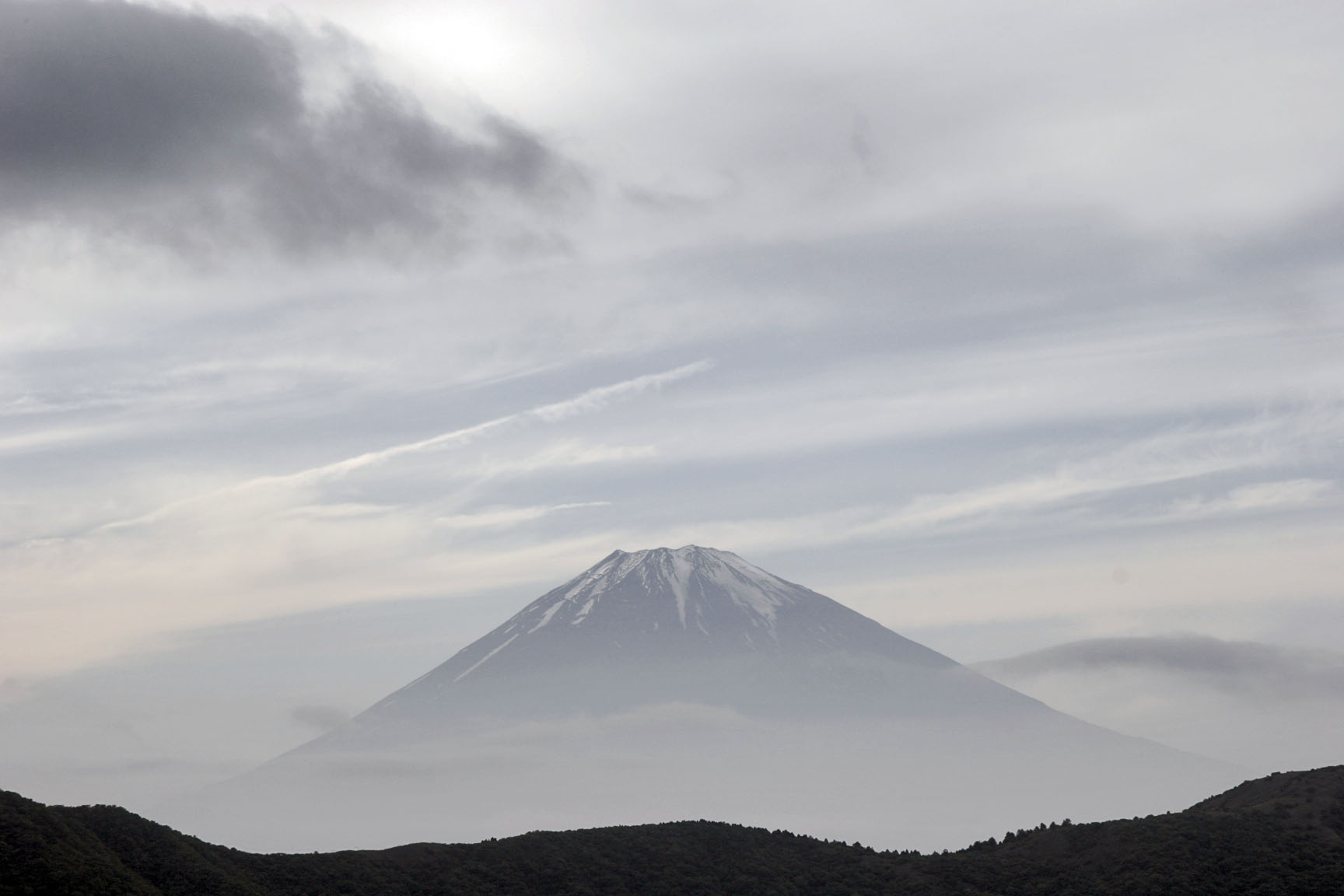
Snow Country

Fuji

Snow Country

desolate the reach
of space a
curved line of

white empty as
the loneliness one
feels the tone

is different on
a day like
this she says

unaware that her
words fall like
snow in the

mountains soft quiet
in the roar
no one hears

Another piece from the eighties…

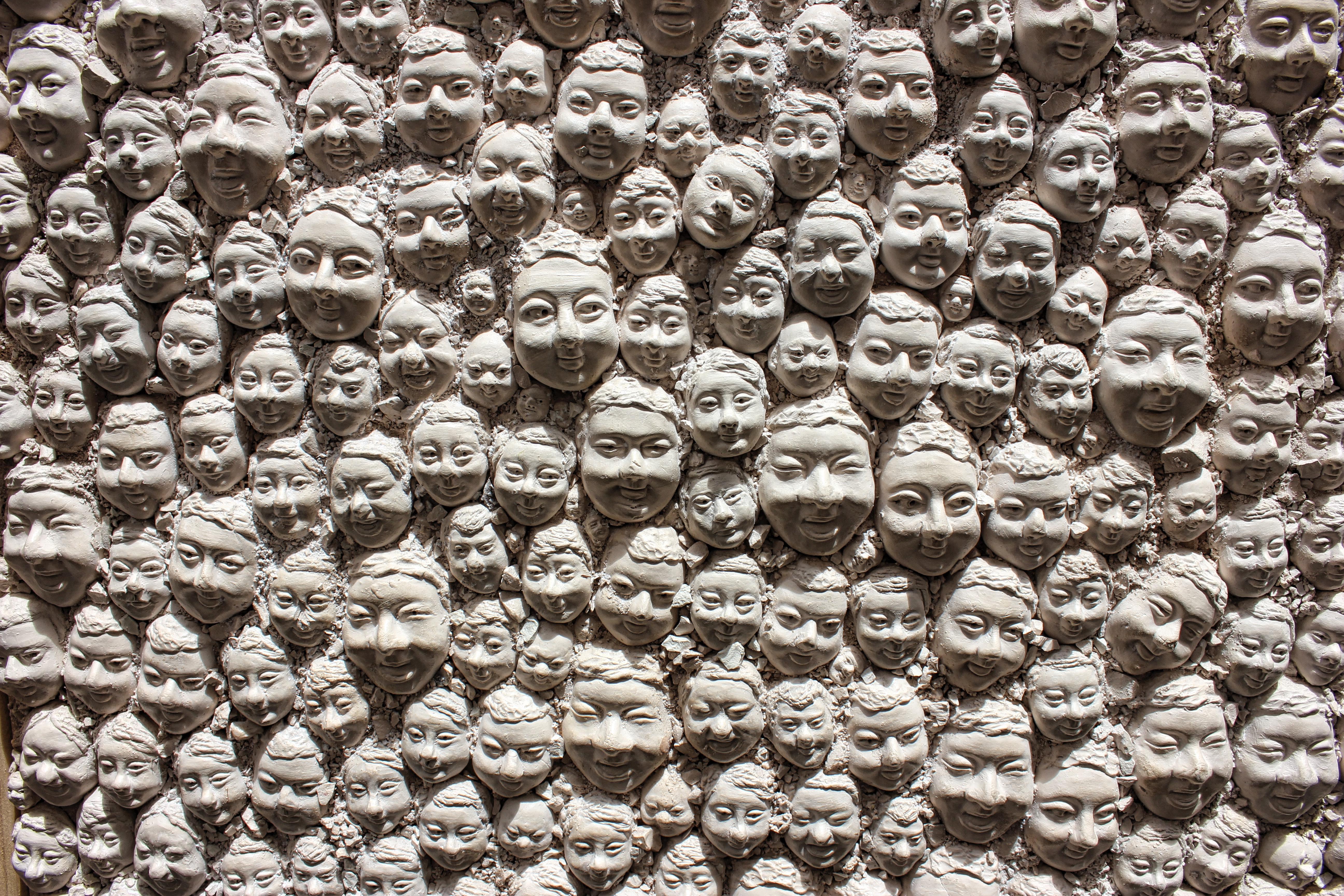
FACES 2

Cardinal

Cardinal

Question: what is air if not
the means by which we

see and feel? Sound creates only
itself, another version of the original

sense. I move from shadows to a deeper
darkness, hoping to find that point where absence
ends. But there is no end, only

continuation, a cry for those
who offer their hands in ambiguity. Sometimes
a cardinal’s call fills our

morning with questions. So
little of all we touch
is felt. We are the air. The air is.

A Poem in Hermeneutic Chaos, Issue 11

Chaos

Many thanks to Shinjini Bhattacharjee for including one of my poems, with an audio recording, in Hermeneutic Chaos, Issue 11, alongside work by Nancy Bevilaqua, Kenzie Allen, Shannon Elizabeth Hardwick, and others. This is a lovely, well curated publication, and I’m excited to have work in it.


Self-Portrait with Orbit

planet231

Self-Portrait with Orbit

An arced path around a central point, bound to but held apart,
as in night’s returning grace, or standing waves.

In periapsis, you reach out as I slowly withdraw.

Gravity does not prevent departure but prolongs it.

The acceleration of a body is equal to the sum of the gravitational forces, divided by its mass. I rise from the chair but can’t escape.

Not circular but elliptical.

Where falling away and curving from never meet.

Realizing that I am neither focus nor center, I discover place
in symmetry, in flow and subtraction.

A cloud obscures the sun and you close your eyes.

I wither at the thought of scaling or relative size, or your departure.

In the simplest Klemperer rosette, four bodies cycle their dances,
heavy, light, heavy, light, in a rhombic configuration.

My arteries fill in opposition to desire.

Wanting you, I absolve weight and listen, accept my place.

“Self-Portrait with Orbit” is included in The Circumference of Other, my offering in the Silver Birch Press publication, IDES: A Collection of Poetry Chapbooks, available on Amazon.
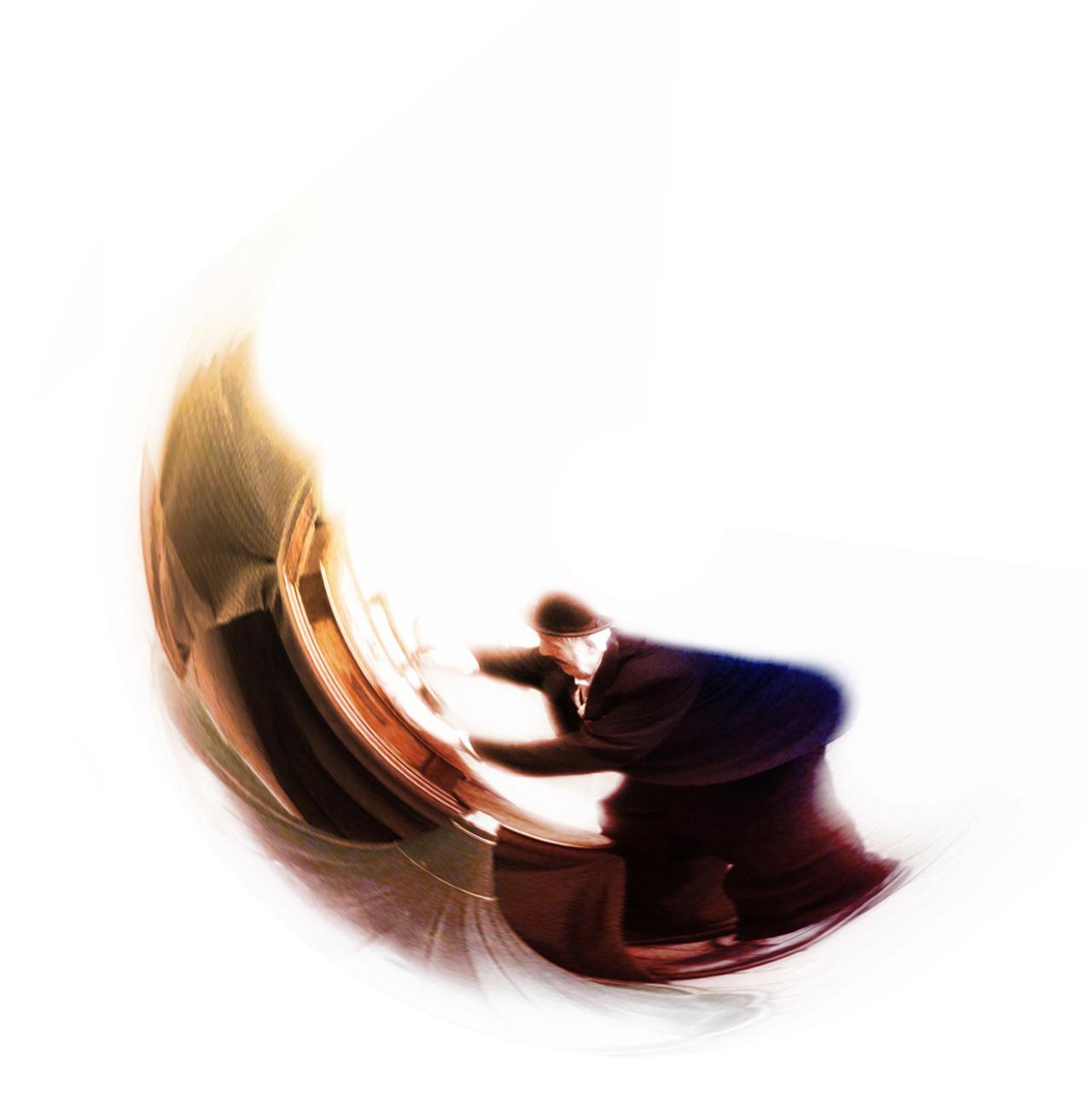
old man grammo - upsidedown

Morning Covers You

eye camera

Morning Covers You

1

We extract
light, bleeding
it out one

diamond-shaped
hole after
another.

Finger the results.
Remediation
in form

or placement
to best
advantage?

At night
loneliness cradles
our bones.

2

You arrange our bodies to greater effect,
presuming lesser horrors
to be less.

A list emerges.
Refuting one,
accepting another.

Choices fixed.
Ecstasies of failure
purged.

Morning covers you
like a blue
shroud, so pale.

So cold
and bitter.

This originally appeared in Boston Poetry Magazine in April, 2014.

diamond fence

Incongruities

image

Years ago, I worked in a library…

Incongruities

So little depends
upon

the half-Japanese
bookman

reading Italian
haiku

in the Texas
library.

Once again, my apologies to William Carlos Williams, whose poetry inspires and therefore often bears the brunt of my little diversions into whimsy.

image

December Moon (1999)

december moon

December Moon (1999)

If loneliness breathes,
then rain is its heart,

always falling to its lowest point
before receding. Water graces us

daily in all its forms – the slowest
drop, the line of ice on the wall,

your breath, so soft and even
in the cool night. But no one,

no thing, can fill the void of
departure. You exhale and turn

away, and the air, with its empty
arms, embraces the space

you’ve left. I feel this daily,
whenever we part. At forty-one

I’ve known you half my life
but have loved you even longer,

through the millennium’s demise
and all that preceded or follows.

The brightest moon for a century to come
is but a shadow in your light.

It’s hard to believe that I wrote this nearly sixteen years ago. Busy with books, work and life, I didn’t write much in the nineties. But this, the last poem of that decade, recently surfaced. The sentiments are as true today as they were then. I am a lucky man.

streetfog

Having Survived Myself I Lean Away

Survival

Having Survived Myself I Lean Away 

You know that
but not
why

the mockingbird mocks,
or how one note

marries others,
forming blissful

chords. And the skies
flaring each night

betraying your willful
ignorance,

while you paint
the words for love

in seven languages
you can’t
speak.

Where are you now,

whose bodies
have you denied,

wrapped in linen,
bagged or boxed,
arriving unseen?

Sagging, I observe your
counted victories, the
smirk claiming

exceptionalism
and destiny or
nobility of purpose,

as even your own shadow
recoils.

cemetery

Which Poet, Which Beer (2)

pint

Tastes change. In my younger years I preferred sweeter brown ales, eschewed hoppier, bitter beverages, and seldom branched out. Nowadays, I lean heavily towards the bitter, and when the opportunity presents itself, feel compelled to sample the unknown. Thus when I spied Alaskan Brewing Company’s Alaskan Jalapeño Imperial IPA on tap, I had no choice but to order a pint. We may not normally place the words Alaska and jalapeño alongside each other, but if this Imperial IPA is any indication, perhaps we should. With an odor of hops and capsicum, it felt smooth on the tongue, a little malty, even earthy. Not  complex at the outset, but subtle, defying definition and developing over time, in the way a good poem develops. My only complaint would be the lack of heat. But hey, I’m from Texas, and we do jalapeños. This is a beer of multiple cultures, a blend of distinct identities. I think of Joan Naviyuk Kane, and her first book, The Cormorant Hunter’s Wife, in which she writes in “Antistrophic”

Instead of out, I am in,
Trying at the old habit of imperfect definition
As well as the less familiar,
Between falling gold

Kane’s narrative, her mythology and landscape, are not mine, yet they invite me in and envelop my senses, allowing synthesis, acceptance, to occur.

But sometimes I crave the unadorned. The Lone Pint Brewery’s Yellowrose IPA, a single malt, single hop concoction, startled me. Surprisingly mellow in the mouth, it imparts grapefruit and perhaps pineapple with a hint of something I can’t readily identify. Strong yet delicate, infinitely interesting, Yellowrose is most definitely a celebration of simplicity and craft – a few ingredients combined to create magic. Which may also describe Christina Davis’s book An Ethic. Spare in nature, her work transcends the limits of language, the borders of the page. Her poems blossom anew with each reading, and the farther away I move from them, the more I long to return:

”All Those That Wander,” in its entirety:

After the ark survived the Flood,
it was taken apart
to be made into cages.

This is the nature of religion.

Of course my curiosity leads me down other paths, too. Infamous Brewing Company’s Sweep the Leg peanut butter stout pours with a small head, and tastes of rich malts and coffee, with a little cocoa and, of course, subtle peanut tones. An opaque, dark brown or black, with minimal carbonation, exuding stillness, it isn’t quite what I anticipated, with the peanut butter flavor a tad muted. But the mouthfeel is spot on, and the aftertaste lingers, leaving me requesting more of this unlikely combination, and reminding me of Charles Simic’s  Dime-Store Alchemy: The Art of Joseph Cornell, in which he imparts, through prose poems, the experience of viewing Cornell’s enigmatic art. Nothing is quite as you expect it should or could be, yet you go on, somehow understanding. He writes in “Secret Toy”:

In a secret room in a secret house his secret toy sits
listening to its own stillness.

Simic offers openings into Cornell’s art, explains the unexplainable without explanation. I stare into the pint of Sweep the Leg, and find my own stillness. I read Simic and find another. This is what I seek in poetry, what I want in good beer. I have found it.
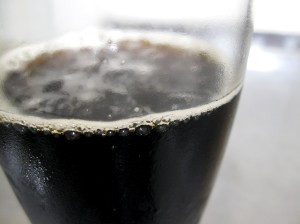
blackbeer

Celan, 1970

image

Celan, 1970

From frame to door,
the obvious defers, denying

entry as if
an eye could reclaim

or separate

the fallen tear
and the river’s skin,

or return
those words to

thought, water to
stone, intent

to cold
reason,
now to before.

He stepped into release.

One of the most influential (and difficult) European poets of the 20th century, Paul Celan survived the horror of World War II but never escaped its shadow. A brief biography may be found here.

image