My poem “The Shakuhachi Knows,” which originally appeared in Midwest Zen and is included in my full length book, Our Loveliest Bruises, is live at Feed the Holy. Thank you, Barbara Leonhard for giving this poem additional life.
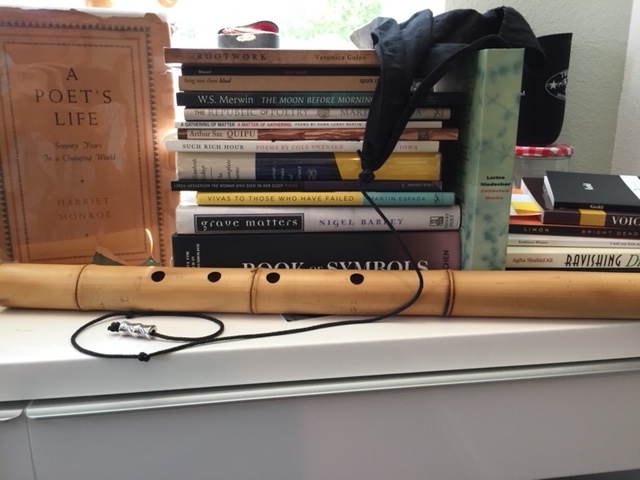

My poem “The Shakuhachi Knows,” which originally appeared in Midwest Zen and is included in my full length book, Our Loveliest Bruises, is live at Feed the Holy. Thank you, Barbara Leonhard for giving this poem additional life.
Thoughtful, proposing not end, but process.
In this noon’s grayness I disclose my need.
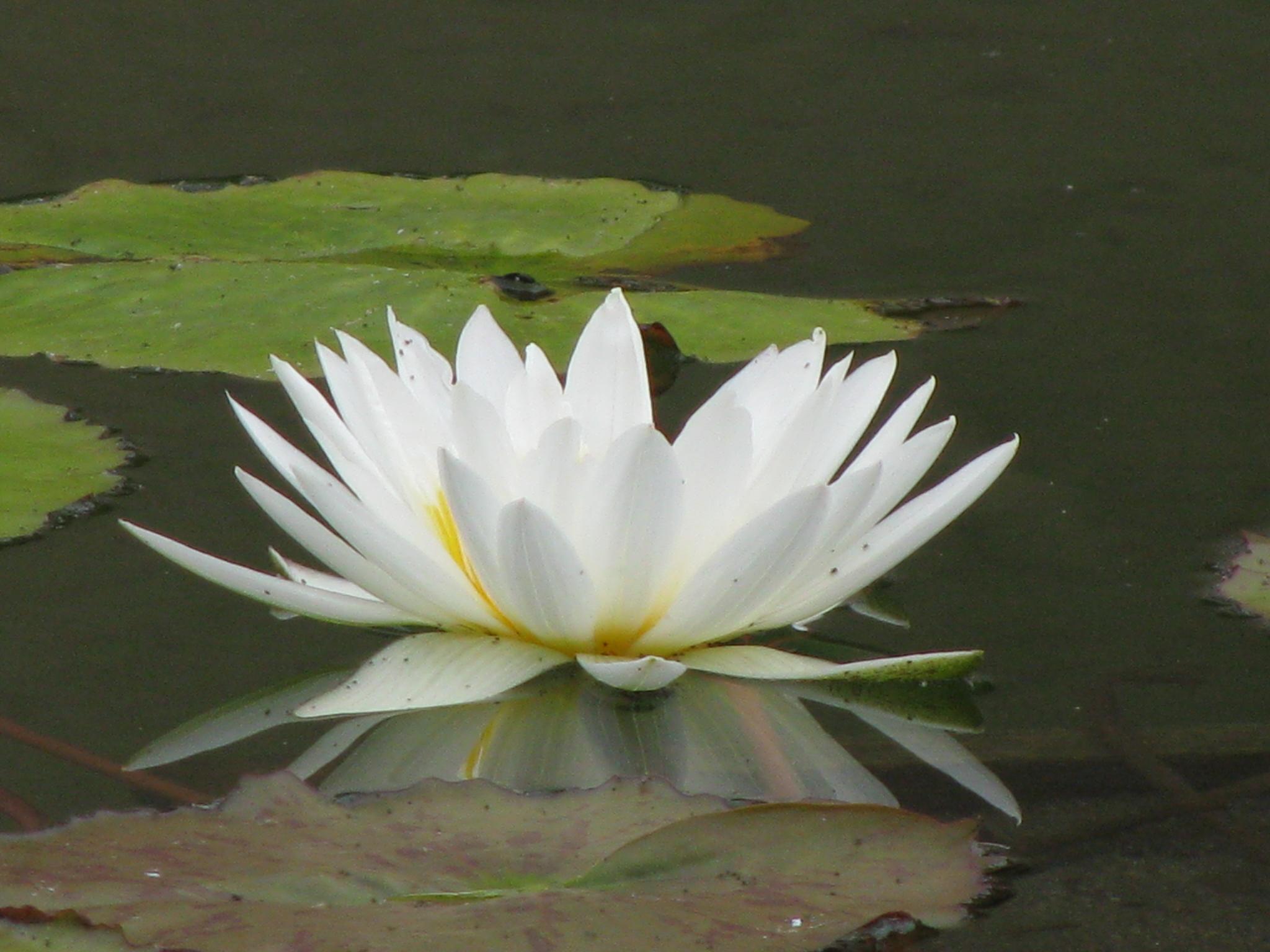
Which is a lotus floating in your pond, a clutch of zeros
blooming in moonlight. Last night’s missing sleep.
An ending, by definition, concludes.
But what occurs in a circle’s body, or infinity’s border?
Imprecision acknowledged, I sip wine and gauge distance.
Take comfort in the disorderly.
Starting at the top, the brush moves down and right,
clockwise, then rising in opposition, halts.
Drifting, incomplete, I step back.
Some leave a gap; others do not.
* * *
This first appeared in Posit: A Journal of Literature and Art in September 2017, and may be found in my full-length collection Our Loveliest Bruises, recently published by 3: A Taos Press.

I am thrilled to announce that my chapbook, In the Garden of Wind’s Delight, a collection of 22 short poems exploring the ecology of mind, spirit, and music through meditations on learning to play the shakuhachi, the traditional Japanese bamboo flute, is available from the publisher, Illuminated Press. Founded by Laura Rowley in 2014, Illuminated Press specializes in books crafted by hand, featuring handmade papers for elements such as covers and endpapers. This book is hand bound in the Yotsume Toji binding, the traditional four-hole Japanese binding structure. Limited to 300 copies.
Many thanks to Laura Rowley and the Illuminated Press team for bringing this work to fruition.

I am thrilled that Midwest Zen has published six of my shakuhachi poems, which were written in November 2017, during a self-imposed poem-a-day jag. I am grateful to editor Mark Howell for taking these poems. I still can’t play that damned flute!

Because You Cook
You know the pleasure of
hunger, of patience
and a task well done.
Dice onion, peppers – one hot,
one sweet – saute them in olive oil,
fold them into an egg
cooked flat. Add
crumbled goat cheese, basil.
Look away.
Morning ascends, then declines,
but night drifts in, confident,
ferrying these odors among others.
Accept what comes but choose wisely.
Light the candle. Shift the burden.
* * *
“Because You Cook” first appeared in Ristau: A Journal of Being in January 2018. I am grateful to editor Robert L. Penick for taking this piece.

Ro
When this note fades
will it join you in that place
above the sky
or below the waves
of the earth’s plump
body? Or will it
circle back, returning to
my lips and this
hollow day
to aspire again?
Note: Ro designates the fingering required to produce a particular note on the shakuhachi, the traditional Japanese bamboo flute. In this case, closing all holes.

Why I Hate Mowing the Lawn
The unmowed green reveals its secrets
blade by blade, shadowed and fresh.
Don’t look, it says, whisper deep
into my chlorophyll. Save this blue.
It unveils other nuances, confiding in
contrast and symmetry, employing
your eyes and their measures. The quiet,
all-encompassing and subtle. So true.
* * *
“Why I Hate Mowing the Lawn” was first published at Buddhist Poetry Review.. Thank you, Jason Barber, for taking this poem.
Japanese Gardens
how natural the
lines falling so
purely as if
with a single
stroke we walk
through the opening
and see space
the white center
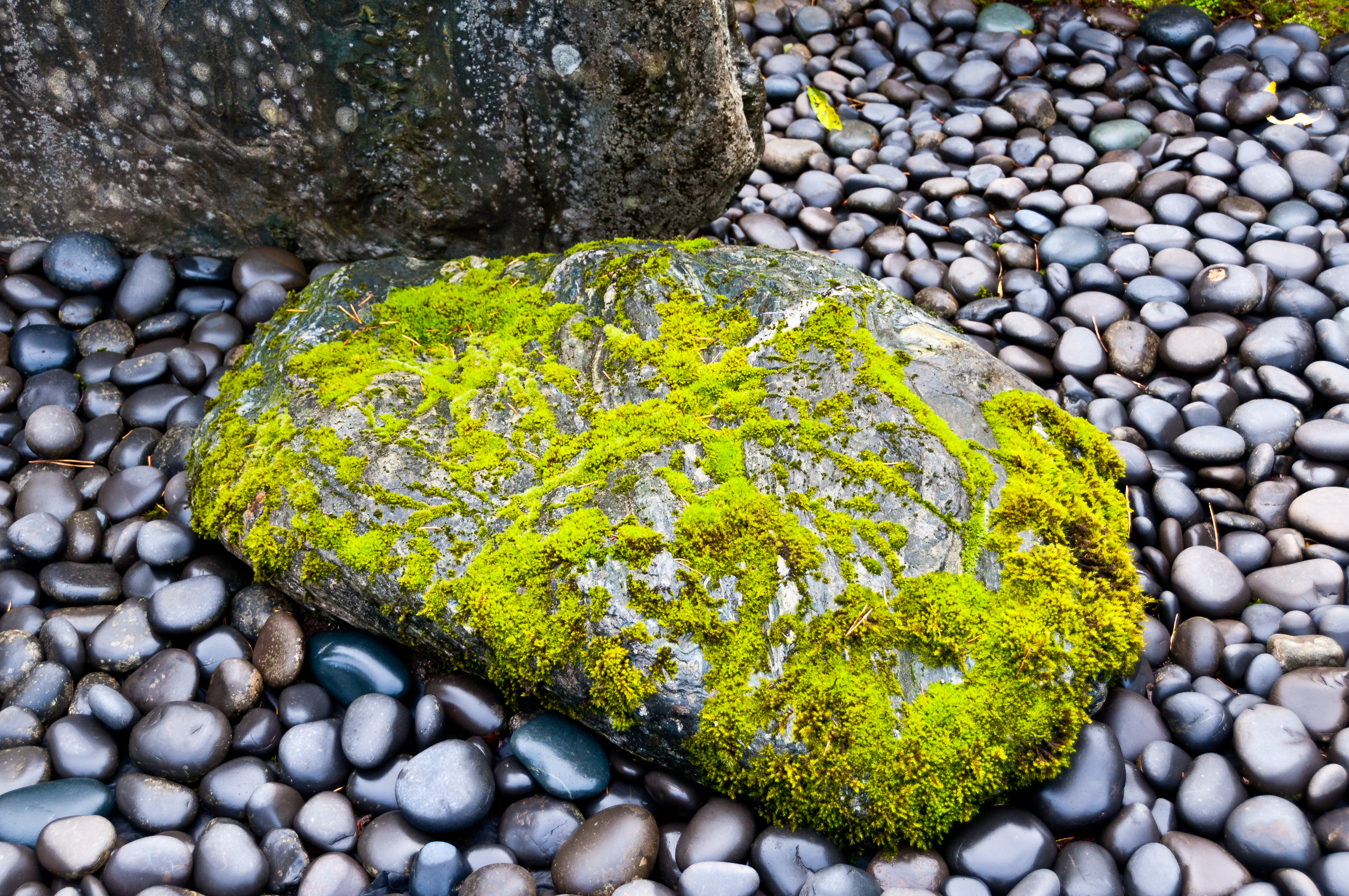
composed of sand
and gravel later
a gate opens
to another garden
its lantern and
stone so carelessly
arranged so deliberate

“Japanese Gardens” first appeared here in January 2015.
Morning Suizen
Boundless, it sips direction in the way of all music,
tonguing each note for its salt.
We call this ecstasy. Or peace.
Follow, and they still escape, always beyond
our outstretched fingers.
Exhale slowly. What do you know?
That long tunnel, ribbed in silence.
The scent of burning cedar.
Days framed in darkness and birdsong.
* * *
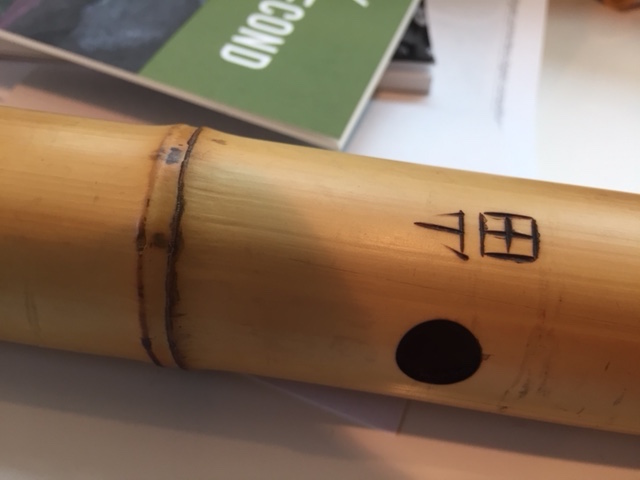
Note: Suizen is the practice of playing the shakuhachi, the traditional Japanese bamboo flute, as a means of attaining self-realization.
“Morning Suizen” first appeared on Nine Muses Poetry. Many thanks to editor Annest Gwilym for taking this piece.
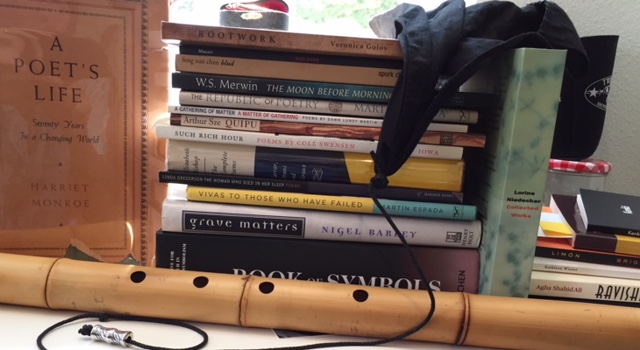
Emptying Haibun
Waiting, I open myself but nothing enters. Even music’s comfort avoids me, preferring calmer ports or perhaps another’s wind choices. I drop the weighted cord through the flute, pull it, and watch the cloth ease out. Some days pain drags behind me no matter what words emerge, what phrases follow. Last night brought the season’s first fireflies. This wall of books grows taller each day.
exhaling, I note
smudges in the sky —
oh, dirty window
 O at the Edges