Tell it Slant: How to Write a Wise Poem, essay by Camille Dungy

OLYMPUS DIGITAL CAMERA

Few essays on writing poetry grab me by the collar, slam me against the wall, and say “Listen, dammit!” But this one did.

Camille Dungy’s words sear through the fog. She tells it slant. She tells it true. She explains how some masters have done it. If you’ve not read her poetry, seek it out. You’re in for a treat. If you have the good fortune to attend a lecture or reading by her, do so. She’s energetic, wise and kind. She knows.

http://www.poetryfoundation.org/article/247926

Originally posted in June 2014.

Update to August 2016 Tupelo Press 30/30 Challenge

image

In August I am participating in the Tupelo Press 30/30 challenge, a fundraiser for this outstanding nonprofit publisher. I have pledged to write 30 poems in 30 days, and hope that you might follow along and consider supporting poetry and literary publishers by making a donation. Every bit helps. To make this fun, and with hopes of enticing you, I’ve instituted a few incentives:

Name That Poem! For $10 donation, you provide a title, and I’ll write the poem during the marathon. As of July 30, only 20 titles remain – I have five in hand, with another five committed. Be imaginative. Make the title as long or as interesting as you wish – consider this a dare! We begin the month tomorrow with “Nose-Picking Reese’s Hider,” which was sponsored by a generous anonymous donor.

Use These Words, Poet! For an $11 donation, you can offer 3 words that I must use in a poem. Why only 3? Because I’m (a) chicken (pawk, pawk!), and (b) I hate relinquishing control of my poetry’s language. Yes, yes, I know. This says horrible things about my character. But look at it this way, you could combine the first two incentives to force me to use your title AND three words that I likely wouldn’t use otherwise, which is about as much control as I’m able to give up (shuddering). Be kind. Or not.

Isn’t Broadside a Military Term? Well, yeah, but in this case it’s also a printed poem. For a $15 donation, you’ll receive sometime in September a signed broadside (printed on 8.5 x 11 paper or card stock) of any of the poems I produce during the 30-30 marathon. Your choice.

Editors, Critique My Poem! For a $20 donation, one of the participating editors, chosen at random, will critique your poem(s) (no more than three pages total, either one poem up to three pages long, a two-page poem plus a one-page poem, or three one-page poems). This is a wonderful (tax-deductible for U.S. participants) opportunity to have experienced lit mag editors examine your work and let you know what they think of it.

Participating editors include: Karen Craigo (whose recently released volume of poetry, No More Milk, is a must-read!), nonfiction editor of Mid-American Review and an editor of Gingko Tree Review; Jennifer Finstrom, poetry editor of Eclectica; Jeff Santosuosso, editor of Panoply; Anthony Frame, editor of Glass Poetry Press (which includes Glass: A Journal of Poetry) and poetry editor of Indianola Reviewand Matt Larrimore, Editor in Chief of Four Ties Lit Review.

Think Dink! A $30 donation will get you my 2015 chapbook If Your Matter Could Reform, Barton Smock’s Infant Cinema, Jamie Hunyor’s A New Sea, and Tim Kahl’s full length book, The String of Islands, thanks to the generosity of Dink Press founder and editor Kristopher Taylor!  A limited quantity is available, so order earlier rather than later.

If none of these incentives appeals to you, but you’d still like to help, I’m open to suggestions. Last year I sent signed poems to several donors, and even recorded a poem for another’s blog. Don’t limit yourself to the aforementioned incentives. Think big! Let’s have fun!

If you choose to sponsor me, please click on the links to my Tupelo Press 30/30 donation page, or after August 1, visit the 30/30 page, click on the donate button, and then my name. And please inform me of your donation and provide your contact info via email at robertokaji at yahoo dot com or through Facebook so that I may thank you and arrange or send your premium.

If you’ve seen through this blog or other outlets enough of my writing to last your remaining days, you might consider a $99 subscription to Tupelo’s regular subscription series (which I have done), which garners you nine books from one of the country’s top literary presses! If you choose this option, please indicate in the comments that you are subscribing to the 9 books for $99 option, specify “in honor of” and insert my name, “Robert Okaji,” to show your support for my efforts.

For more information on the 30/30 Project, and to read the daily poems, see: https://tupelopress.wordpress.com/3030-project/ I’ll likely post updates daily, but we’ll see. Things are going to be hectic. No matter what, I look forward to reading your comments. Thanks very much!

Many, many thanks to Karen Craigo, Jennifer Finstrom, Anthony Frame, Matt Larrimore, Jeff Santosuosso and Kristopher Taylor for their generous spirits and willingness to help out.

August 2016 Tupelo Press 30/30 Challenge

image

In August I am participating in the Tupelo Press 30/30 challenge, a fundraiser for this outstanding nonprofit publisher. I have pledged to write 30 poems in 30 days, and to find sponsors to assist in this endeavor. If you have the time and inclination, please follow along and consider supporting poetry and literary publishers by making a donation. Every bit helps. To make this fun, and with hopes of enticing you, I’ve instituted a few incentives:

Name That Poem! For $10 donation, you provide a title, and I’ll write the poem during the marathon. Be imaginative. Make the title as long or as interesting as you wish – consider this a dare! But this incentive is limited to only thirty titles, and reduces by one every day of the marathon, so reserve your slot soon! Last year’s titles ranged from one word (“Stuck,” “Bent,” “Latitude,” “Katharsis”) to upwards of 80 (“Robert Okaji, Forced By This Title to Write a Poem in Third Person About Himself, Considers the Phenomena of Standing Waves, Dreams Involving Long-Lost Cats (Even If He Has Not Had Such a Dream Himself), And the Amazing Durability of Various Forms of Weakness, In a Meditation Which Following the Form of Certain Sung Dynasty Poets Also Happens to Be Written in a Way That Can Be Chanted to the Tune of a Popular Song of His Youth”), and also included such atrocities as “Calvin Coolidge: Live or Memorex,” “Your Armpits Smell Like Heaven,” and “Reduce Heat and Simmer Gently Without Cloud Cover, Till Sundown. Serves 2 – 7 Billion.” These last three were, of course, among my favorites to write.

Use These Words, Poet! For an $11 donation, you can offer 3 words that I must use in a poem. Why only 3? Because I’m (a) chicken (pawk, pawk!), and (b) I hate relinquishing control of my poetry’s language. Yes, yes, I know. This says horrible things about my character. But look at it this way, you could combine the first two incentives to force me to use your title AND three words that I likely wouldn’t use otherwise, which is about as much control as I’m able to give up (shuddering). Be kind. Or not.

Isn’t Broadside a Military Term? Well, yeah, but in this case it’s also a printed poem. For a $15 donation, you’ll receive sometime in September a signed broadside (printed on 8.5 x 11 paper or card stock) of any of the poems I produce during the 30-30 marathon. Your choice.

Editors, Critique My Poem! For a $20 donation, one of the participating editors, chosen at random, will critique your poem(s) (no more than three pages total, either one poem up to three pages long, a two-page poem plus a one-page poem, or three one-page poems). This is a wonderful (tax-deductible for U.S. participants) opportunity to have experienced lit mag editors examine your work and let you know what they think of it.

Participating editors include: Karen Craigo (whose recently released volume of poetry, No More Milk, is a must-read!), nonfiction editor of Mid-American Review and an associate editor of Gingko Tree Review; Jennifer Finstrom, poetry editor of Eclectica; Jeff Santosuosso, editor of Panoply; Anthony Frame, editor of Glass Poetry Press (which includes Glass: A Journal of Poetry) and poetry editor of Indianola Reviewand Matt Larrimore, Editor in Chief of Four Ties Lit Review.

Think Dink! Thanks to the generosity of Dink Press founder and editor Kristopher Taylor, $30 donation will get you the Dink Press Collection: 3 chapbooks, including my 2015 work If Your Matter Could Reform, Barton Smock’s Infant Cinema, one of the more interesting chapbooks I’ve read in the past year, Jamie Hunyor’s A New Sea, and Tim Kahl’s full length book, The String of Islands. A limited quantity is available, so order earlier rather than later.

If none of these incentives appeals to you, but you’d still like to help, I’m open to suggestions. Last year I sent signed poems to several donors, and even recorded a poem for another’s blog. Don’t limit yourself to the aforementioned incentives. Think big! Let’s have fun!

If you choose to sponsor me, please click on the links to my Tupelo Press 30/30 donation page, or after August 1, visit the 30/30 page, click on the donate button, and then my name. And please inform me of your donation and provide your contact info via email at robertokaji at yahoo dot com or through Facebook so that I may thank you and arrange or send your premium.

If you’ve seen through this blog or other outlets enough of my writing to last your remaining days, you might consider a $99 subscription to Tupelo’s regular subscription series (which I have done), which garners you nine books from one of the country’s top literary presses! This is not tax-deductible, but the quality of writing you receive with this discount is well worth it. If you choose this option, please indicate in the comments that you are subscribing to the 9 books for $99 option, specify “in honor of” and insert my name, “Robert Okaji,” to show your support for my efforts.

For more information on the 30/30 Project, and to read the daily poems, see: https://tupelopress.wordpress.com/3030-project/ I’ll likely post updates daily, but we’ll see. Things are going to be hectic. No matter what, I look forward to reading your comments. Thanks very much!

Many, many thanks to Karen Craigo, Jennifer Finstrom, Anthony Frame, Matt Larrimore, Jeff Santosuosso and Kristopher Taylor for their generous spirits and willingness to help out.

Laocoön

GREEK COLUMN LINDOS

Laocoön

This figure of complexity
persuades a lingering

glance, the two-fold
inclination entwined,

horror expressed
in tandem, the sons’

limbs compressed
as the father struggles,

realizing true
sacrifice, the inward

grasp of storm and
wrath and serpent,

his face
echoing those yet

to come, breached
walls, a city in

flames, the cries
of warnings unheeded.

the_kelpies

Laocoön, through Virgil’s Aeneid, is the source of the phrase “Beware of Greeks bearing gifts.” The poem, which first appeared in The Blue Hour Magazine, was inspired by the sculpture “Laocoön and His Sons,” which resides at the Vatican. You might find Wikipedia’s entry of interest.

Katharsis

OLYMPUS DIGITAL CAMERA

Katharsis” was among my offerings for the Tupelo Press 30/30 Project last August. Many thanks to Plain Jane who sponsored and provided the title.

KATHARSIS

The questions, as always: which rocks to ignore, who will
place them, and how to defy the laws of mathematics.

Note: you will create two separate walls to build one.
You will measure length and depth. You will weigh consequence.

Dig a shallow trench, and set your first two foundation stones
at a slight angle, high points on the outside, low ends meeting

in the middle. Count your failures and multiply them by 100.
Let gravity share the burden, then discard every one. Take

care in selecting your stones. Scorpions lurk in the dark,
underneath. Wear heavy gloves. Use leverage. Seek balance.

Avoid the smooth and rounded, as they too readily relinquish
their footing. Select hard-angled, rough pieces. Accept

faults, and work with them. Stack carefully — the two walls
should lean inward, touching, each bearing the other’s

weight. Work alone, but think to the future, with strength in
mind. Be deliberate. One stone, followed by another. Repeat.

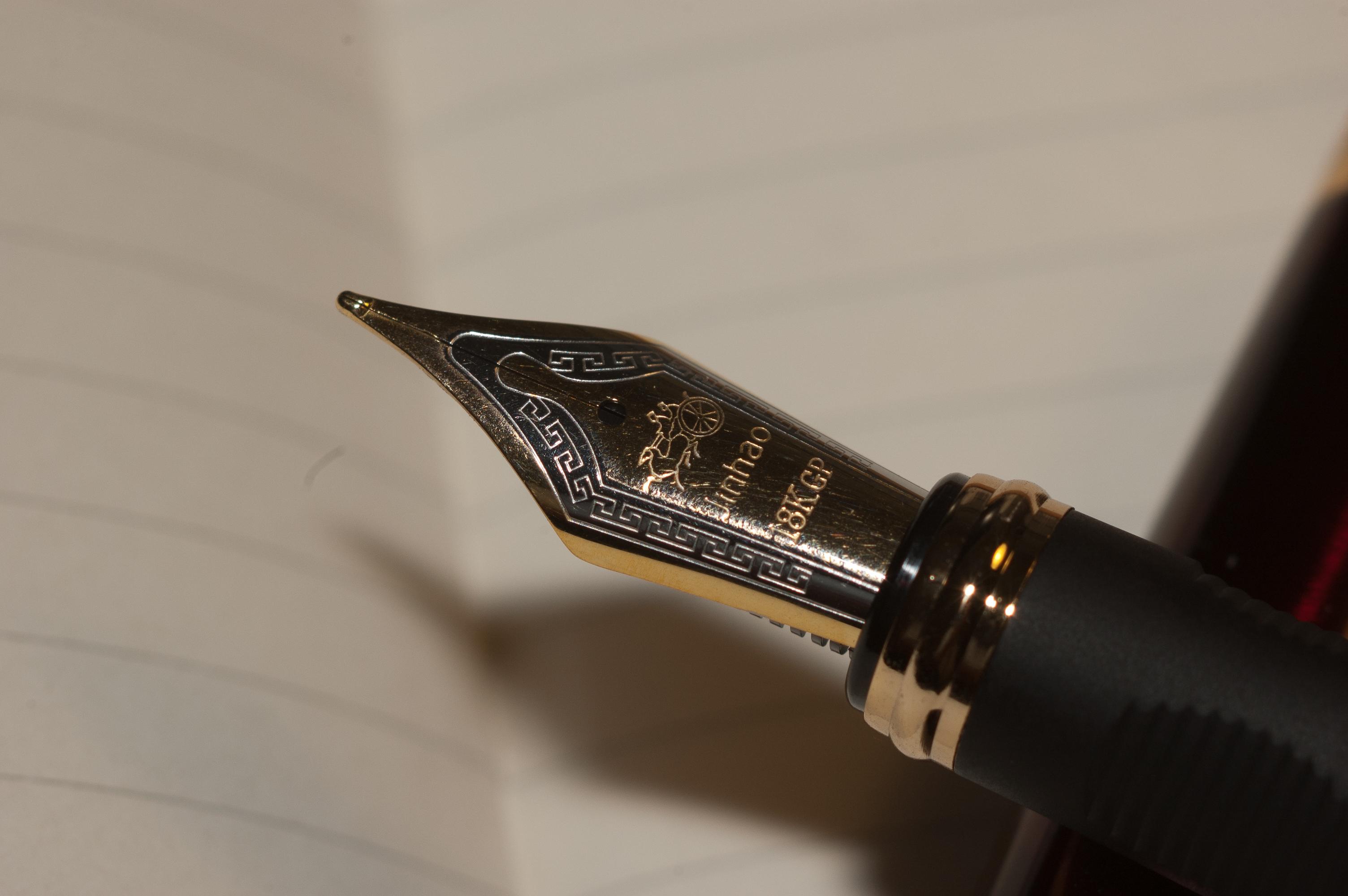
pen

Two Poems in Kindle Magazine (Kolkata)

egg

The link to my two poems appearing in Kindle Magazine was damaged and readers were unable to access them. Kindle Magazine has kindly corrected the link to make them available again. These poems, with two others, also appear in the print collection Gossamer: An Anthology of World Poetry, published by Kindle Magazine this past December.

cloud

Sheng-yu’s Lament (after Mei Yao-ch’en)

DSC_1243

Sheng-yu’s Lament (after Mei Yao-ch’en)

First heaven took my wife,
and now, my son.
These eyes will never dry
and my heart slowly turns to ash.
Rain seeps far into the earth
like a pearl dropped into the sea.
Swim deep and you’ll see the pearl,
dig in the earth and you’ll find water.
But when people return to the source,
we know they’re gone forever.
I touch my empty chest and ask, who
is that withered ghost in the mirror?

The transliteration on Chinese-poems.com reads:

Heaven already take my wife
Again again take my son
Two eyes although not dry
(Disc) heart will want die
Rain fall enter earth in
Pearl sink enter sea deep
Enter sea can seek pearl
Dig earth can see water
Only person return source below
Through the ages know self (yes)
Touch breast now ask who
Emaciated mirror in ghost
SAM_0841

Originally posted in December, 2014.

From Alternative Fiction & Poetry (1987)

file8981286030058

(This first appeared in March 2014).

Quite the interesting mag back in the day. This particular issue saw the likes of Bukowski, Ivan Arguelles, Lyn Lifshin, Norm Moser, Sheila E. Murphy, and, well, me, among others. I was thinner back then, as was my poetry.

no more than
the slow grace
of light turning

the leaf so
patient in the
air and colder

now that sense
of permanence unfurled
it is not

long to wait
as Wang Wei
said in his

letter I listen
for a sound
but hear none

file000517598275

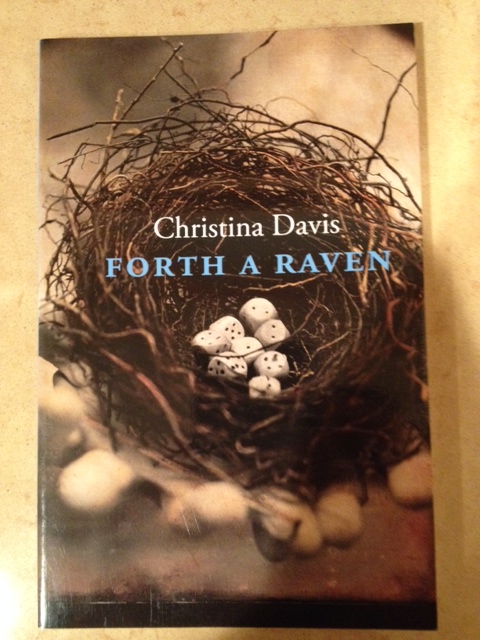
Fifty-Word Review: Forth a Raven, by Christina Davis

(Originally appeared in December 2013)

Christina Davis’s Forth a Raven offers stark, textured, intelligent and lyrical pieces in a stripped-down yet ultimately complex, reflective language. Encompassing the tension of different realms – the spiritual and the secular, the extraordinary and the mundane, her work, quite simply, astounds. Read this book. Seek out her work. It’s sublime.

photo(7)

Not Your Mama’s Carnitas (and not my Mama’s either, but then she was Japanese)

red_green_pepper

This first appeared in December 2013.

The Lovely Wife and her boon companion Apollonia, the 5-lb terror of Texas, are in the country, shooting arrows, fixing weed whackers, burning wood and sipping Chianti with the neighbor, leaving me bereft, alone but for Jackboy, the loyal cattle dog, and forced to fend, alas, for myself. So after a vigorous cardiac rehab session I repaired to my favorite bar, er, grocery store, and while meandering with a “mazy motion” like Kubla Khan’s sacred river through the aisles laden with organic produce, wondrous cheeses, craft beers and dubious dietary supplements, what did I spy but a comely little top round bison roast! I’d never before prepared said roast, but throwing caution to the wind is of course part and parcel to fending for oneself, and it was a breezy day. And while resting at the bar, er beverage sampling station, and sampling the wares (a local German-style pilz), I pondered the piece of meat and eavesdropped among my fellow samplers – talk of shopping conquests, welding, 14th century navigation and hoppy beer. But what to do with the roast? Certainly not an ordinary potato and carrot concoction. Chili? Nah, just had it. Grilled? Are you kidding? And then I overheard the word, the one way, the truth: carnitas, which instantly transported me through various savory stretches of the world and multiple cuisines, initiating salivary gland overload, but leading, in the end, to what I hoped would become a culinary delight, or at least an edible dinner.

I knew that I should braise the meat, as this particular cut of bison was very lean (hell, bison is very lean), but it was late and I was famished. So I did what any bright, hungry, middle-aged sojourner of the kitchen would do: put it off. But thinking it might be nice to enhance the depth of flavor, I threw together a few dry ingredients (salt, sugar, 5-spice powder, ground pepper), sprinkled the mixture on the roast, and set it in the refrigerator to cure overnight.

[To assuage my hunger I fried some leftover rice with ham, green onion, jalapenos, carrots and peas. Tweren’t bad.]

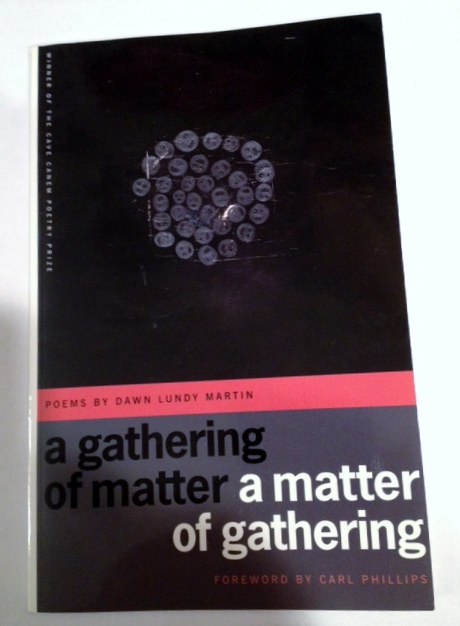
And the next day, after taking The Lovely Wife’s dobro to the repair shop, reading Dawn Lundy Martin’s A Gathering of Matter a Matter of Gathering (amazing poet, incredible poetry) at Hopfield’s gastropub while enjoying the Pascal Burger (medium rare with camembert, cornichons and carmelized onions) and frites accompanied by a delightful tulip of Birra del Borgo’s American Pale Ale,and following this with a productive and pleasant writing session in the poetry shack, I commenced preparing dinner…
photo(7)
…which began with opening a bottle of Parducci Small Lot Blend Pinot, and pondering Dawn Lundy Martin’s book. The collection opens with “Last Days,” a poem of death and grief and what lies before, between and after, consisting of questions and replies. But such questions. Such replies! She begins the poem:

What is the relation between Figure A and Figure B?

This is what the father has become.

And ends it:

How is the pain endured?

A stem of grass imagined when it is not raining.
All those things called intentions. The private / treasures one keeps safe.

The depths, the deliberation, the complexities of language and image brought forth in the replies, astound (confound?) me. So much to consider. And what lies between the opening and ending serves to build, layer by layer, the emotional foundation, adding texture and nuance, providing power in detail and, yes, beauty. Wonderfully complex and masterfully done. But back to the pinot (light, spicy, woody aroma (cedar?), and balanced, though unlike Martin’s work, not complex, but hey, it was only $11), and cooking:

First I inventoried my supplies, starting with veggies: three slightly withered carrots, one whole onion, garlic, three jalapenos, a small knob of ginger, one red pepper, four green onions, half of a small red cabbage, and a poblano pepper that had seen better days. Next, the braising liquid. Hmm. Which primary liquid? Pinot? No, I wanted to drink it and wasn’t willing to share with the bison. Sherry? Nah, use it too often. Chicken broth? Water? Surely you jest. And then I spotted a partially full (empty? was I truly feeling optimistic?) bottle of sake, resting amiably next to its close friend, Ms. Soy Sauce. Braising liquid, check.

I peeled and fine-diced the carrots, sliced the jalapenos lengthwise into thin strips, diced the red pepper and onion, salvaged what I was able of the poblano (about half had gone mushy) and diced that, and minced three cloves of garlic and the knob of ginger, reserving half of the ginger for later use.

Then I patted the roast dry with a paper towel removing the excess moisture drawn out by the rub, after which I seared it in a little oil in a Dutch oven. After judging the roast suitably crusty, I removed it and added the carrots, onion and peppers, sauteed them until softened, added the garlic and ginger, two tablespoons of soy sauce and the rest of the bottle of sake, perhaps three quarters of a cup. I brought this up to a roil, turned down the heat, let it simmer for a few minutes, and then covered and placed the Dutch oven into the oven, where it remained for two and-a-half hours, simmering gently at 350 degrees.

While the bison braised, I shredded the remnants of the red cabbage, sliced the green onions, prepared a dressing consisting of rice vinegar, sesame oil, hoisin sauce, hot mustard, minced garlic and the reserved ginger, and tossed it all together, resulting in an in-your-face but nevertheless tasty slaw.

And after the allotted time, I removed the bison from the oven and shredded it with a fork – yes, it was that tender – placed a bit of it in taco shells (hey, these are MY carnitas, not your mama’s), topped the meat with some of the cooked veggies, dolloped a bit of creme fraiche on that (I’d found a partial container in the fridge, only a month past the “sell by” date), covered that with the slaw, and took a bite. My. Goodness. Wow. More. Want more. All in all, I must proclaim that the Asian-Inspired Bison Carnitas with Hoisin Slaw was a success. I give it two thumbs up, and a few assorted toes.

But I’m still pondering Dawn Lundy Martin, and have turned to her latest (I think) book, Discipline, which looks to be every bit as intriguing as A Gathering of Matter a Matter of Gathering.