The Draft (with recording)


The Draft

All memories ignite, he says, recalling
the odor of accelerants and charred

friends. Yesterday I walked to the sea
and looking into its deep crush

sensed something unseen washing
out, between tides and a shell-cut foot,

sand and the gull’s drift, or the early names
I assign to faces. This is not sadness.

Somewhere the called numbers meet.


* * *

“The Draft” first appeared in Taos Journal of International Poetry & Art.

Osso Buco

file00029145808


Osso Buco

The reconciled, the residue of one’s
virtues displayed or absorbed

that within become the basis for
talk: furtive movements, the knife’s

gentle persuasion, wine
afforded the quality of enhancement.

We must preserve the truth, and other
disingenuous phrases, as if we may

admit our tastes only at great cost
to our politics and sense of being.

And fruitful loss – the reduction
sauce, or stock evaporated – which

attaches in dissipation
the grace of subtlety. To be more

with less. To be apparent yet
concealed. To be, in turn, aware.


file00092920180

“Osso Buco” first appeared here in March 2015.


Variations on a Theme

darkedinburgh_shadow

Variations on a Theme

1. The Long Night

We envy the shadow its attributes, its willingness to subside,
but what of its flesh?

I lay in the field and wept.

Think of the fragrance, the moist leaves
enveloping the still

warm body. In retrospect, I realize that I should never have left, that air
returns to voided space despite all attempts to disavow

light, that wind and rain and soil alike filter through the chest’s
cavity, that stones may bear one’s touch in perpetuity.

At nineteen, death had gifted nothing to my world.
At twenty, little else remained.

So close, so lovely.


2. The Loneliness of Shadows

Light collapsing around a point. The two-headed flower.

In my dreams, no one speaks.

Not the thing itself, the bud bursting forth, petals ablaze with color,
but rather change: the process reinforced.

Sleep seldom shows such kindness.

Or its fruit, redolent of sun and rain, withdrawn and shriveled,
and finally, ingested.

Yesterday I woke damp but unafraid.


3. Alchemy

Stones never talk, but they rise from the earth, appearing as if by invitation.

The way silence lines an unfilled
grave, which is to say as below

so above, an infinite murmur open to the night.
And other notions: transpiration.

Waste.
Sublimation. Calcination and burning.

At times I have withdrawn
like water from the air’s

body, fearful yet reckless in the act.
That evening the moon flickered and the shadows lay at our feet,

and all the words we never framed,
the bitters our tongues could not know, the wasted

music and abandoned caresses, those words,
sighed into the ground, leaving you adrift, alone.

But how else might one transform darkness to light?
Or the reverse.
huey_ef


This originally appeared in Boston Poetry Magazine in April, 2014, and was first posted here in July of 2015.


Driving without Radio

trash-in-tree


Driving without Radio

One minute you’re sipping coffee at the stoplight,
and the next you find yourself six miles

down the road, wondering how you got there,
just two exits before the French bakery

and your favorite weekday breakfast taco stand.
Or while pondering the life of mud,

you almost stomp the brakes when a 40-year old
memory oozes in — two weeks before Thanksgiving,

the windshield icing over (inside), while most definitely
not watching the drive-in movie in Junction City, Kansas,

her warm sighs on your neck and ear, and the art
of opening cheap wine with a hairbrush. How many

construction barrels must one dodge to conjure these
delights, unsought and long misfiled? You turn right

on 29th Street and just for a moment think you’ve seen
an old friend, looking as he did before he died,

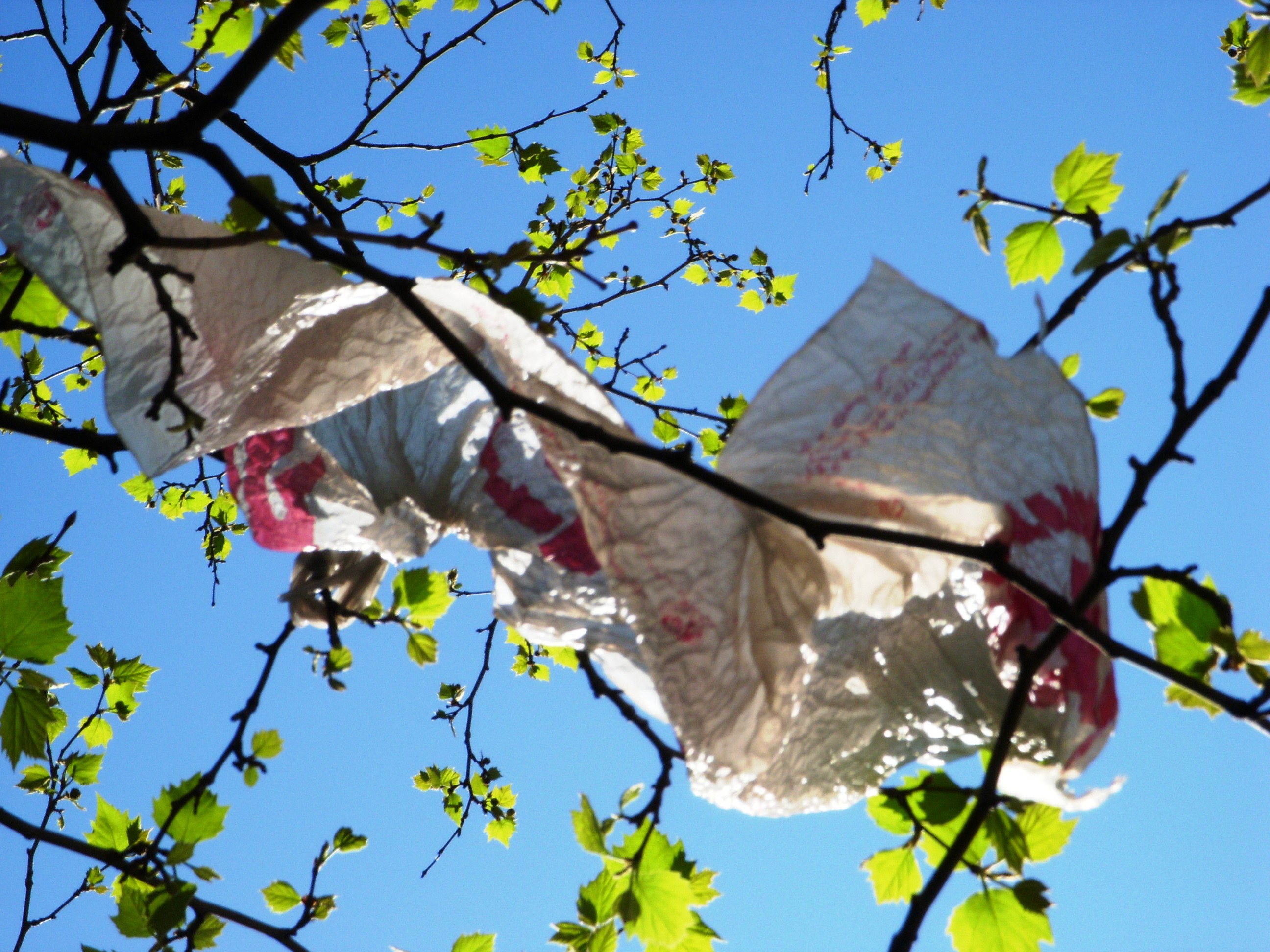
but better, and happier, and of course it’s just a trash bag
caught in a plum tree, waving hello, waving goodbye.


“Driving without Radio” was published at Split Rock Review in November 2016. Many thanks to editor Crystal Gibbins for providing a home for this one.


Scarecrow Pretends

scarecrowfield

Scarecrow Pretends

How may I claim another’s earth for myself? My perpetual
stance invites occlusion of the senses and a certain disregard
for dignity; I flap in the breeze and bits of me scatter across
the fields. Sze asks if we know a bird’s name in ten
languages do we know any more about the bird. I say no,
but I am a species of stitched remnants and expectation,
a race of one. Genderless, my hollow name holds no secrets,
no history. If I called myself Hudson would anyone recognize
my stuffing for what it is not? What flows through my clothing
but rags, straw, the useless and unwanted. Insects and their feces.
The unearned, the unwarranted. The underclass. Folly. Design.
Gift by delusion. Does attracting more crows than I deter negate
my existence? And which am I? A river? A man? An effigy, one
perception, or another? I do not frighten, but welcome. Speak
louder, that we may ignore our insignificance, our true names.


“Scarecrow Pretends” was published in The Slag Review in January 2017, and a few months later was mentioned in an article in the Long River Review’s blog: “Scarecrow Pretends: Robert Okaji’s Metallurgy.


What the Body Gives, Gravity Takes (Cento)

balance


What the Body Gives, Gravity Takes (Cento) 

As if what we wanted
were not the thing
that falls,

as what was given
to answer ourselves with – air

moving, a stone
on a stone,
something balanced momentarily.

Or wheels turning,
spinning, spinning.

The waters would suffer
at being waves,
but nothing of their dream
takes place,

nothing that is complete
breathes. But the world
is peopled with objects.

You grow smaller,
smaller, and always
heavier.

You can think of nothing else.


Credits:

Jane Hirshfield, Gustaf Sobin, George Oppen, Joy Harjo, Alberto de Lacerda, Jacques Dupin, Francis Ponge, Denise Levertov, Jacques Roubaud.

* * *

“What the Body Gives, Gravity Takes” appeared in Issue Four of Long Exposure, in October 2016.
wheels


Knots

knot


Knots

Who you are not seldom rises
beyond midnight’s

sum: one strand thrown over
another, looped through

and pulled taut, achieving
tension and a sour taste

at the back of your throat.
Everyone believes this

doesn’t bleed. I lock the
windows, draw the shades,

twist the cord. Even distracted,
nothing comes undone.


modern light MGD©


“Knots” first appeared here in June 2016.


Roof Charm

roofmoon


Roof Charm

What is home if not exile to the familiar?

A serrated kiss at the closet door.

We duck our heads and cook meals undercover,
the sun’s rays deflected.

And every relentless     day finds
our hands     wanting.

The black shawl, unfolded.
Wax melted on the whetstone.

You say stars shiver despite their light.

You say one hand      mirrors its mate’s      arc.

I say warmth flows through you, the roof     our sky.


glare


“Roof Charm” made its first appearance here in June 2016.


A Brief History of Edges

map


A Brief History of Edges

This road leads nowhere. I live at its end where breezes
wilt and the sun still burns my darkened skin.

I’ve sailed to Oman, but have never seen the Dakotas.
My friend searches for the concealed parable in this truth.

An early clay map depicted Babylon surrounded by a bitter river,
and an island named the sun is hidden and nothing can be seen.

Fitting the limitless within boundaries, she remembers no one.
The lighted sign says boots, but I see books.

Venturing from the shadows, she offers an accord: intersecting borders,
we must retain ourselves, deliver what calls
.

In our place between the hidden and the invisible, consider
that neon gas possesses neither color nor odor.

What lives in creases and at the periphery? The isle called beyond
the flight of birds 
has crumbled from the lower edge.

Where I stand defines my portion of the spherical earth.
Crossing lines, I look to the sky, its bisected clouds.

mapman

“A Brief History of Edges” was first published in Literati.

Human Distance

nautical_tools


Human Distance 

1

Apart from edges, and into deeper darkness,
our scars crawl, remaining aloof.

2

Open windows frame the ache in motion, the
displaced notes between two wavering spaces.

3

Absent light, absent voice. What is the longitude of
grace? Consider errors and their remnants.

4

Navigators measured lunar distance and the height
of two bodies to determine Greenwich time.

5

I study the passing cloud
and its descent, noting the nature of condensation.

6

Desire: the fragmented night and its circumstance.

7

Heavenly form. The moon’s dull glow.
Acquiescence before the body’s silt.

8

Interstellar matter become dust, become
gas, become molecule.

9

Human distance registers no scale.

greenwich_meridian

“Human Distance” was published in Bindlestiff in summer 2016, and has also appeared on this blog.