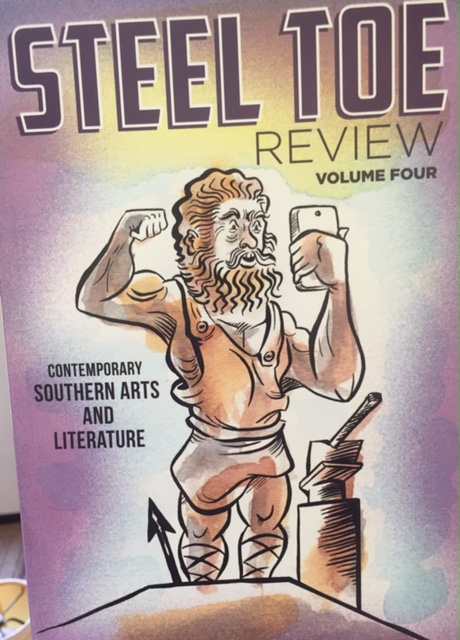
My poems “How to Do Nothing” and “And All Around, the Withered” have been published in Volume Four of Steel Toe Review, available for purchase here.
Many thanks to editor M. David Hornbuckle for taking these pieces.

My poems “How to Do Nothing” and “And All Around, the Withered” have been published in Volume Four of Steel Toe Review, available for purchase here.
Many thanks to editor M. David Hornbuckle for taking these pieces.
Mother’s Day
The dog is my shadow and I fear his loss. My loss.
I cook for him daily, in hope of retaining him.
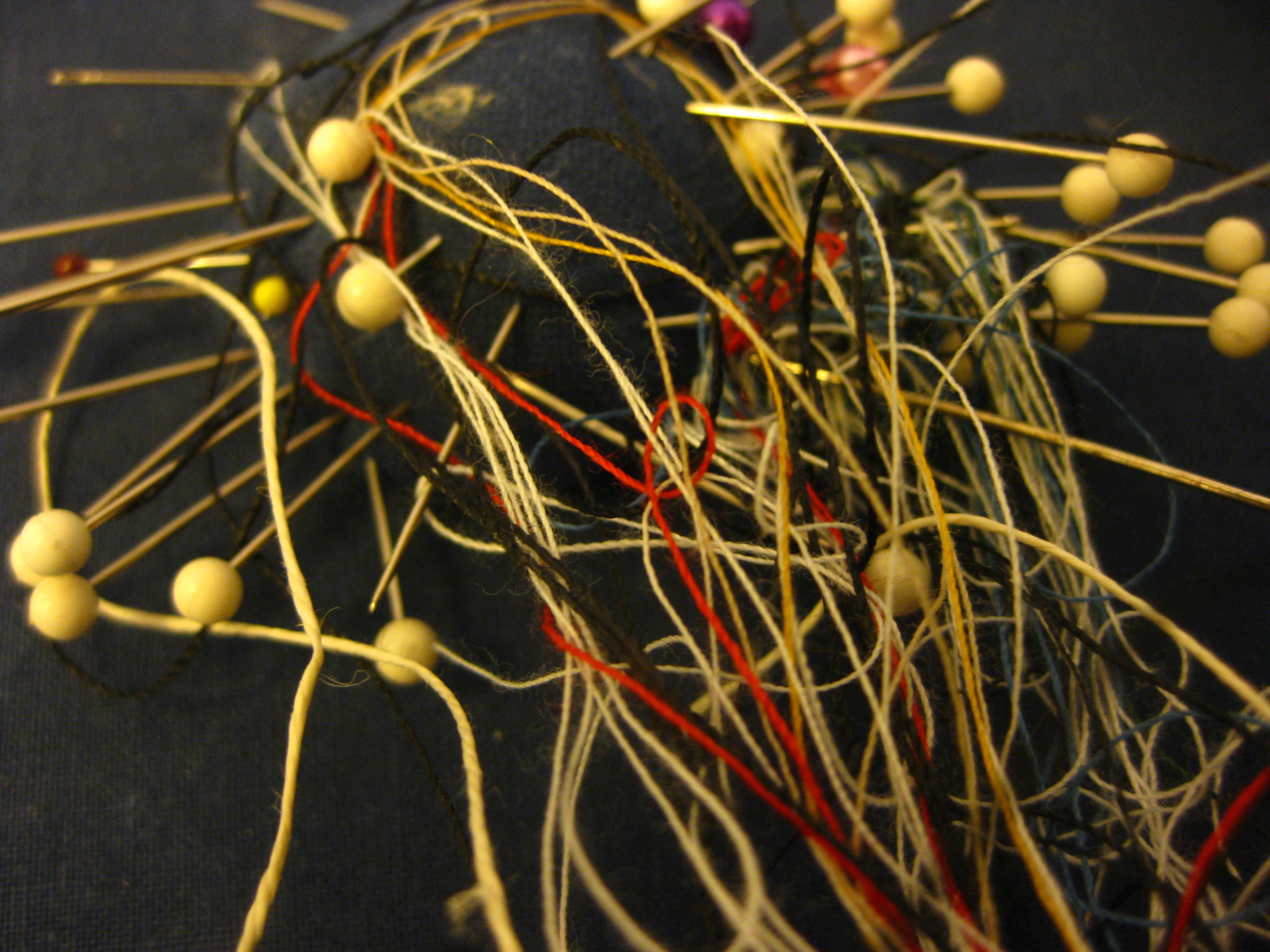
Each regret is a thread woven around the oak’s branches.
Each day lived is one less to live.
Soon the rabbits will be safe, and the squirrels.
As if they were not. One morning
I’ll greet an empty space and walk alone,
toss the ball into the yard, where it will remain.
It is Mother’s Day.
Why did I not weep at my mother’s grave?
I unravel the threads and place them around the dog.
The wind carries them aloft.

“Mother’s Day” first appeared in The Lake in July 2016.

Scarecrow Listens
These silences I hear, are they not
music? Interspersed with sunlight and
air flowing through fragrant grasses,
insects ticking in the leaves or burrowing
towards moist darkness, and my friends
cawing from their perches, if I arrange
their presence in sequence, perhaps
around the day’s bones, will you
know my spirit? And when I interweave
these tunes, independent and unrelated,
shaping them into one separate melody,
will you recognize its heart and shiver
to the beat? Ornette Coleman freed
his playing, celebrating the territories
of the unmeasurable, the unnamed. The
real is, no matter what you call it. Take
this leaf and place it atop three others.
What have you? And what am I if not
a gathering of the unwanted, scraps
melded to serve a thought-free purpose,
another’s need. Fleshless, boneless,
breathless, bloodless, I know only
that I am; having no ears, still I listen.
“Scarecrow Listens” first appeared with two companion pieces in Eclectica in summer 2016.
Balance
Navigating
by stars,
one ball
buried,
another
gathering,
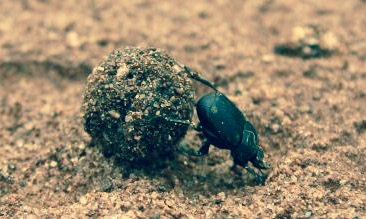
the dung
beetle
straight-lines,
maintains
position,
forever
looking forward
and up.
“Balance” first appeared here in February 2016.

Chef Mario Batali interviews Jim Harrison in this brief Food & Wine article. I particularly enjoyed Harrison’s take on America’s “big curse,” and his reply to the last question is priceless.

Palinode (salt, mask, descent)
Tracing the map to the swaying places, she rises
through the interior world, garnering peace by
syllable. Water, clouds and sand mark her ascent.
The expectation is return, renewal. My friend did not
awaken this morning, and tonight I praise her
passage with drink and song. Matter into spirit,
mountain into sky, redemption, freedom. We bathe in
light, reclaiming the liminal. Our tears evaporate,
leaving salt and untrod paths in our wake.
The paths in our wake delimit the future, but
everything falls. Which do we desire more, the grasp
or its release? That instant preceding fear defines a
yearning particular to its course, a cycle of regression
and progress: ancestors descend into human or
animal form, die, depart to the heavens, and return
anew. Distilled power, a bridge to the spirits, the
mask unshutters and conceals the conscious mind.
Opening my eyes, I release the sun.
I release the sun and observe the results. From sky
to soil, from above to below, to solidity. Spirit
acquires matter, disperses and regroups. Rain and
alluvion, flooded homes, the dark night of childish
laughter. Each to her own path, each to an end. Muting
the string, I touch the harmonic into the world, linking
civility to proportion, lowering dissonance. Everything
falls. Everything. From curve to angle, we resist and
rejoice. In this design parabola, she descends.

“Palinode (salt, mask, descent)” was first published in Otoliths in slightly different form.

While browsing the Poetry Foundation’s articles, I uncovered this piece from 2016. Jim Harrison has long been one of my favorites. His success at prose has perhaps caused some to forget or disregard his poetry, but in my mind, he’s always been a poet first.

My recording of “When to Say Goodbye,” which was recently published in Oxidant Engine.
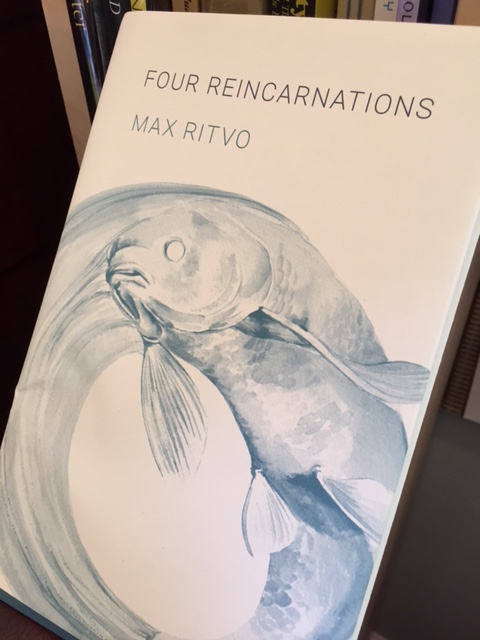
The world will see no more Max Ritvo poems, and for that, I grieve.
Read Helen Vendler’s review of his Four Reincarnations in Poetry. Better yet, read the book. It’ll make you ache.

My poem “When to Say Goodbye,” which was originally written during the August 2015 Tupelo Press 30-30 Challenge, is up at Oxidant Engine.
 O at the Edges