Lace Cactus

vulturesun

Lace Cactus

Small, they grow in the lee stones,
invisible except when blooming.
Just as the vulture’s wings blot the sun
and the moment blinks away
in the bottle tree’s glare.
An incidental flick. A distraction.
Like every unspoken word
tumbling down that long hill.

“Lace Cactus” first appeared in Tistelblomma, a publication out of Sweden. Many thanks to editor Jenny Enochsson for taking this piece.

When Shadows Hide


When Shadows Hide

I breathe when you breathe,
and watching me,
you capture each lost molecule.

This book blinks whenever you turn the page.
I see you between the words, between the white threads.

You are the adored chapter, the one I read in bed before
sleep, and after I wake, before the first wren announces
dawn, then in the afternoon’s highest point, when shadows hide,
and later, as they emerge to stroke your bare shoulder.

What’s on the other side, you ask. What do you hear?

Your breath, I say. Your name.


“When Shadows Hide” was first published in the print anthology Epiphanies and Late Realizations of Love in February 2019.


While Blowing on the Shakuhachi I Think of Birds

While Blowing on the Shakuhachi, I Think of Birds

Yesterday’s sorrow
dissipates in joy.
Though you are not here, I hear your voice,

blow a solitary note in response.
Your philosopher bird carries it to you,
two-thousand miles away,
as the wren brings your song to me.

This is love today
and tomorrow, 
embodied in birdsong and faith.

Next week I will know your touch
as you will mine.

We’ll follow our lists,
starting with lips, while the universe
surges around us, filling the voids we never saw.

Needs, answered.

Perhaps the world will end.

Perhaps the red-tailed hawk will follow its nature.

Perhaps I will stand on the roof and shout your name.

But today, this little bird nesting in all the unsaid spaces,
is all I have, little mouth flickering, forming moons and

new mornings, new shadows, new light.

* * *

“While Blowing on the Shakuhachi I Think of Birds” first appeared in Voices de la Luna in March 2020.

Poem Up at Flying Island Literary Journal

gravefog


My poem “The Flicker” is live at Flying Island Literary Journal. I am grateful to editor Mary M. Brown for accepting this piece.


Sometimes Love is a Dry Gutter


Sometimes Love is a Dry Gutter 

Or a restless leaf, a footprint.

Is fault on a blameless day,
scrawled on a washed-out sky.

My friend’s music orbits his home,
worms through the cracks
in the bluest lines, ever new

and permanent, staining even his hope
long after the lights stutter away.
And the rain’s attenuated sorrows?

They’re coming, he says. Like goats
through a fence. Like lava. Like tomorrow.


* * *

“Sometimes Love is a Dry Gutter” was first featured at Vox Populi in January 2017. I’m grateful to editor Michael Sims for supporting my work.


Love, Scattered (Cento)

image


Love, Scattered (Cento)

I cull and offer this and this,
and these last definite whorls

or later star or flower, such
rare dark in another world,

outdistancing us, madness
upon madness, the crest

and hollow, the lift and fall,
ah drift, so soft, so light,

where rollers shot with blue
cut under deeper blue as the

tide slackens when the roar of
a dropped wave breaks into it,

and under and under, this
is clear—soft kisses like bright

flowers— why do you dart and
pulse till all the dark is home?

I am scattered in its whirl.


* * *

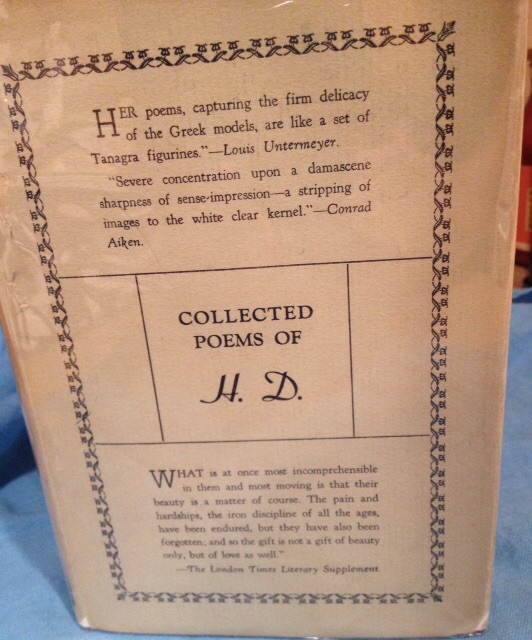
This cento is composed exclusively of lines taken from fifteen pages in the Collected Poems of H.D., 6th printing, 1945. Hilda Doolittle is a fascinating figure in 20th century American poetry. You might look at the Poetry Foundation’s biography for further information:

http://www.poetryfoundation.org/bio/h-d

image


A Cheese Omelet at Midnight

cracking eggs


A Cheese Omelet at Midnight

You can’t ever leave without saying something,
no matter how insipid. That sweater looks good
on you. It’s supposed to rain tomorrow. I’m sorry
I burned the omelet. Nasdaq has plunged 3% 

since last week. And I, in return, can’t let you go without
replying in equal measure. It matches your eyes. I love
to smell rain in August. That cheddar was delicious.
Maybe I’ll start a savings account. Next month.

So I wash dishes when you’re gone, wipe down the
counters, pour salt into the shaker, grab a book, join my
cat in bed. This tune’s been overplayed, the grooves’re
worn down. Maybe next time I’ll say what I mean,

tell you what I want: It would look better in a heap
on the floor. How about a shower here, tonight? Kiss
me and I’ll never think of it again. I don’t give a rat’s
ass about the stock exchange. Step away from that door!

I’ll make your lunch, butter your 7-grain toast, assemble
your IKEA furniture, balance your books, even dye
my hair pink, tattoo a pig on my thigh and drink light beer
in your honor, if you would agree to say what’s on your

mind. On second thought, don’t. Tell me, instead,
what I want to hear, but make it heart-felt. Truthful
and direct. Poached but earnest. Hard-boiled but tender.
I’ll cook your eggs. Invest in me. You’ll earn interest.


* * *

This originally appeared in August 2015, as the 25th offering in the Tupelo Press 30-30 fund raiser. Thank you, Pleasant Street, for sponsoring this.
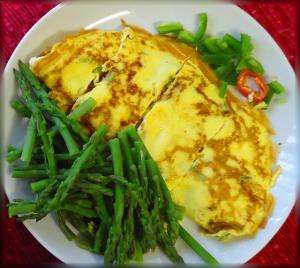
 

Asparagus omelet MGD©

In the Fifth Chamber Lies the Hour’s End

pump


In the Fifth Chamber Lies the Hour’s End

To fairly allocate irrigation resources, the Persians measured time with water,
sinking a bowl in a larger vessel and tallying the count with pebbles.

And what is time but counting, determining the number of units within a set?

The sum of beats between silences and their diminishing echoes?

Its symbol in the West grew from fig and ivy leaves, while early medical
illustrations depicted pine cone-shaped organs.

In most reptilians, the aorta receives only oxygenated blood.

Qanats pump by gravity. The hagfish’s second resides in its tail.

Recognize the empty as full. Squeezed shut, we open.
Contraction and flow, ejection, inflow, relaxation.

Emotion as electrical impulse. Murmuring valves. The color red.

The fifth chamber remains silent and undetected.

The primitive fish’s chambers are arranged sequentially, but in an S-shape.
Ancients believed arteries transported air through the body.

The Buddhist figure, too, originated in leaves, symbolizing not love

but enlightenment. The ache of failure confounds us.


mechanical heart

“In the Fifth Chamber Lies the Hour’s End” was first posted here in May 2016.


Nebraska

Nebraska

What have we crumpled and tossed
into the trashcan across the blacktop

if not decades of forfeited days
and those broken-feathered

regrets pinned under glass. Groaning,
incapable of elegance, still I long

to be those undulating grains by
the roadside in the great between.

Crows caw out of sight as I pump
gas and watch your hair blowing

in the angled light. Sing me your
favorite birdsong. Whisper the cloud’s

name. Tomorrow we’ll dream in Iowa
of corn that is not just corn, but

the emblem of that junction between
innovation and form, function and all

that blisters under the sun’s unforgiving
eye. I want to infiltrate each kernel,

peer through the veiled yellow-white,
recover sweetness, flatten the curve.


“Nebraska” first appeared in the journal ONE ART. Thank you to editor Mark Danowsky for taking this piece. 


Cornfield

Scarecrow Contemplates Pi


 Scarecrow Contemplates Pi

At the moment you snipped away
my reticence, I spoke so eloquently
that even the stones wept at your
indifference. As you arranged my
pose and buttoned the shirt
around the wire and fodder
replenishing my torso, I understood
your roots and mine should never
merge: transcendental, and in
collusion with the irrational, we
circles cannot be squared. And
how must I reconcile my unheard
words? The longer I speak the
greater their magnitude – a balloon
expanding in volume retains its
ratio – one day my words will sift
through your filters and you will
at last receive them. I pull this
particular comfort close – that
patterns and frequencies and
tendencies become law, that the
fleshless and soulless, the mute
and misunderstood, the powerless,
the different, nevertheless will be
heard. But what of love? How may I
contend to feel, to know that which
is your right? A nervous system
conducts electrical and chemical
impulses, yet lacking these, my
coreless heart sags at the thought
of your departure. I am no man.
Is this truly not enough?


“Scarecrow Contemplates Pi” first appeared with two companion pieces in Eclectica in summer 2016.