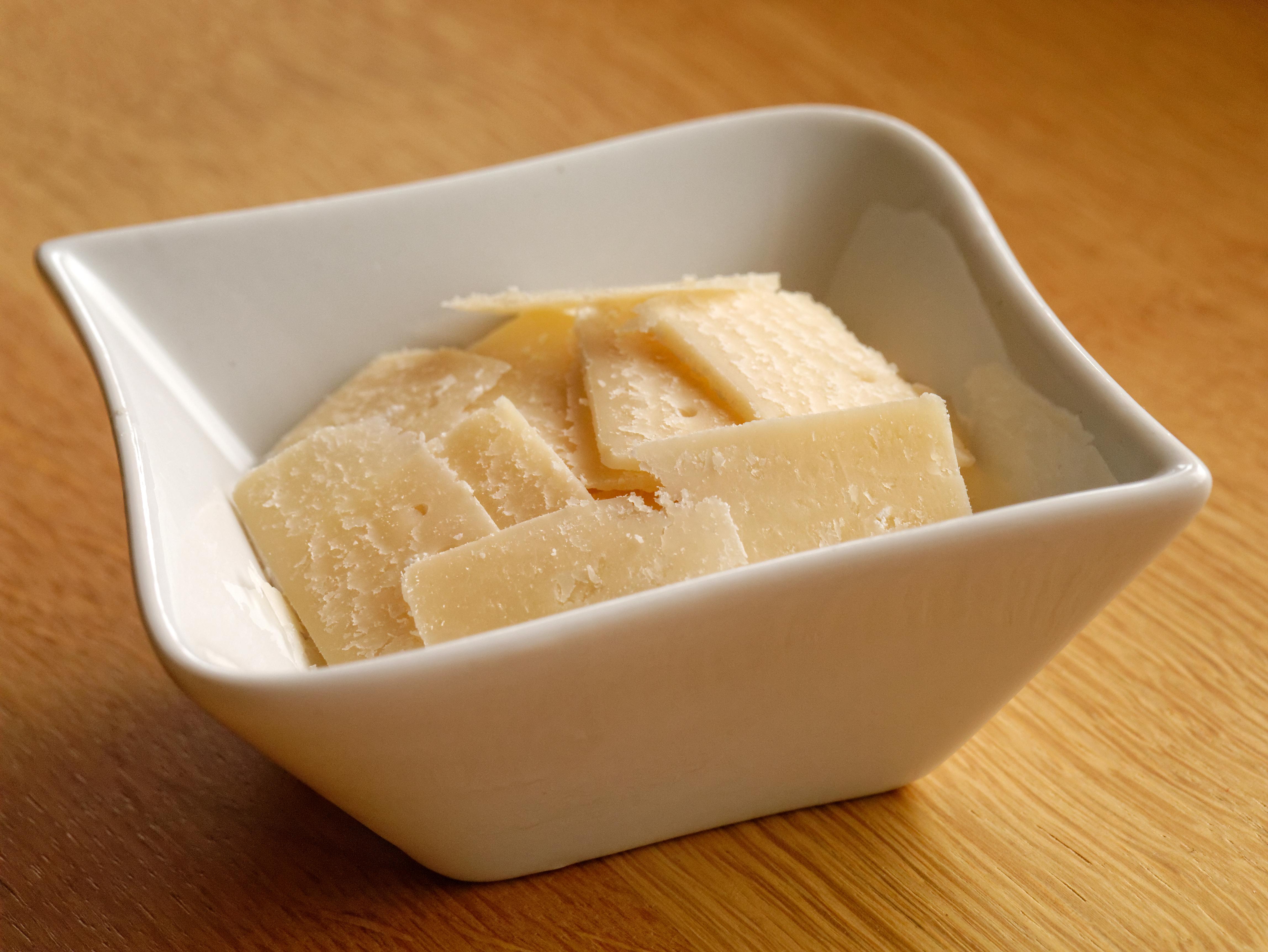
Ramekin


Ramekin

I speak when you speak,
say nothing to your everything.

The world is a ramekin filled with bits of ourselves.

It is a recipe for error,
a list of adorations and illusion.
You take my hand and say when I’m gone
there will be others.

The ingredients include vinegar and salt, but no honey.

You hear what I hear, only more.
Teach me to breathe.

Empty this dish.

Tell me.


“Ramekin” was first published in the online anthology Igxante: An Ontology. I am grateful to editor Kate Morgan for taking this piece.

Gruyere


Gruyere

Thinking of speech and the gruyere sliver
balancing on that blade, which nouns push it over,
which hold it in place. How simplicity defies the complex.
Like the hard-crusted bread of flour, water, salt and yeast.
The elemental surge. A little steam. An incantation
born of emptiness: he speaks but says nothing
as the cheese teeters on the edge, suffering
the plight of the incomprehensible. Funny
that adding more reduces the whole, and less
flavors it. A few words, a spice. A syllable.
Milk and rennet. Verbs. A confident tongue.


“Gruyere” was published in Nthanda Review, an online literary magazine out of Mawali, in January 2019.


When Shadows Hide


When Shadows Hide

I breathe when you breathe,
and watching me,
you capture each lost molecule.

This book blinks whenever you turn the page.
I see you between the words, between the white threads.

You are the adored chapter, the one I read in bed before
sleep, and after I wake, before the first wren announces
dawn, then in the afternoon’s highest point, when shadows hide,
and later, as they emerge to stroke your bare shoulder.

What’s on the other side, you ask. What do you hear?

Your breath, I say. Your name.


“When Shadows Hide” was first published in the print anthology Epiphanies and Late Realizations of Love in February 2019.


The Trains I Know

file000923469902


The Trains I Know

The trains I know
seek solitude
in darkness,

they wear
wind and cold
with pride,

are never
lonely.
Sometimes they

sing too loud,
or mourn
harshly a

star’s fall, but
they never
deny their

purpose: to
draw between
and connect,

to witness and
serve, to bear
and endure

our unsought
burdens
to the end.


* * *

file0001825830910

“The Trains I Know” was first published in RiverLit in 2013.

Rain Haibun


Rain Haibun

Watching that thought slide down the wall
into the grass. Losing it and the next,
celebrating each. How quickly the body
accepts decay. This knee, those arteries.
A fragmented life. Not even the rain
brings us back.


The ticking roof
swells with thunder.
My old friends, waiting.


* * *

“Rain Haibun” first appeared in The Larger Geometry: poems for peace, available at Amazon. This anthology of poems that “uplift, encourage and inspire,” features poets from five countries and three continents. Published by the interfaith peaceCENTER of San Antonio, Texas, a 501(c)(3) nonprofit organization. All proceeds from the sale of this anthology go to benefit the peaceCENTER.

I’m pleased to have had a small role in selecting the poems.

Contributing poets include Lynne Burnett, Charlotte Hamrick, Daryl Muranaka, Stephanie L. Harper, Sudhanshu Chopra, Texas Poet Laureate Carol Coffee Reposa, Michael Vecchio, Rebecca Raphael and others.


Windows: A Theology


 Windows: A Theology

They capture no light, but allow admittance.
Nor is darkness their prisoner.

Opened or closed, their purposes change,
like water trickling downhill, gathering,
absorbing, dwindling, pretending.

Looking at them, you see past, into.

I have taken glass from its source; I have
fallen through the hard edges and emerged

unscathed. Smooth to the touch,
yet transparent. The words mean nothing
or all, and exist only within structure.

So little to believe, everything to defy.


“Windows: A Theology” was first published in the online anthology Igxante: An Ontology. I am grateful to editor Kate Morgan for taking this piece.

While Looking Up at a Working Wasp, I Trip


While Looking Up at a Working Wasp, I Trip

How do these things I once barely acknowledged
now snare toes or twist ankles, causing me to stumble,

spill coffee and curse. Steps, rocks, pavement, curbs.
Door sills. No matter which, without provocation.

Solitary wasps mate not in flight but in the vicinity
of their nesting area. Three years ago a female

violated our unspoken agreement of mutual
existence; my arm purpled and ballooned

to twice its normal size, and I demolished her nest
for fear that attacks would become habit. Today,

another builds in the same spot. I stoop by,
beneath notice, as she labors to make room

for eggs fertilized with stored sperm from a single
drone. Such diligence should earn rewards.

I stroll to the mailbox and marvel at their ability
to manufacture wood pulp for nests, how

certain species avoid mating with siblings
on the basis of chemical signatures, and that

they voluntarily control the sex of their offspring.
Ah, the wonders of nature! Approaching the door,

I look up and observe the growing nest with
admiration, enter the house without stumbling,

and inhale the fragrance of the perfectly arranged
lilies. The books on the table entice me, so I

pour a glass of malbec and thumb through them
with great pleasure. Soon, after sunset, she will die.


* * *

“While Looking Up at a Working Wasp, I Trip” was published in MockingHeart Review in May 2018.

Flood Gauge in the Morning


Flood Gauge in the Morning

It reclines on its side, submerged.
So far, so good, it seems
to say. Still here, still intact.
And the bridge looks so clean
from this angle
underwater.

I toss
a fist-size stone
onto the upstream
side of the road,
and watch it wash away.
Maybe we’ll cross tomorrow.


“Flood Gauge in the Morning” is included in my chapbook, From Every Moment a Second, available for order via Amazon.com and Finishing Line Press.


Scarecrow Contemplates Pi


 Scarecrow Contemplates Pi

At the moment you snipped away
my reticence, I spoke so eloquently
that even the stones wept at your
indifference. As you arranged my
pose and buttoned the shirt
around the wire and fodder
replenishing my torso, I understood
your roots and mine should never
merge: transcendental, and in
collusion with the irrational, we
circles cannot be squared. And
how must I reconcile my unheard
words? The longer I speak the
greater their magnitude – a balloon
expanding in volume retains its
ratio – one day my words will sift
through your filters and you will
at last receive them. I pull this
particular comfort close – that
patterns and frequencies and
tendencies become law, that the
fleshless and soulless, the mute
and misunderstood, the powerless,
the different, nevertheless will be
heard. But what of love? How may I
contend to feel, to know that which
is your right? A nervous system
conducts electrical and chemical
impulses, yet lacking these, my
coreless heart sags at the thought
of your departure. I am no man.
Is this truly not enough?


“Scarecrow Contemplates Pi” first appeared with two companion pieces in Eclectica in summer 2016.

Letter from Kansas

file7201265025021

I was a military brat. My return to the U.S. after attending high school in Italy was, well, interesting. Junction City, Kansas was definitely not bella Napoli. This poem came from that experience, albeit a few years after, and was published in the mid-80s in the Allegheny Review, a national journal of undergraduate creative writing, and was republished by Silver Birch Press in 2017. The kid who wrote it still exists. Somewhere.


Letter from Kansas

Caro amico,
Driving the stretch to Junction City,
I look for familiar faces in the cars
we pass, but see only strange grasses
gliding by. Three weeks ago
I slept on a stone-littered hilltop
overlooking the Bay of Naples.
Now the prairie laps at our front door.
A mile from the house two corralled bison
munch dull hay thrown daily
from a truck’s flat bed, and past that
the Discount Center’s sign
spells America. What I wouldn’t give
for a deep draught of Pozzuoli’s
summer stench and the strong
yellow wine that Michele’s father
makes. We mixed it with the gardener’s
red, creating our own bouquet,
remember? And here they say
I’m too young to buy beer and wine.
Without them the food is flavorless,
like the single language spoken.
I understand it all,
and miss the difficulty. Maybe Texas
will be better. Ci vediamo. Bob


This was one of my first posts on the blog, and as you might expect, very few people saw it. I wrote the poem in the summer of 1983, when I was new to poetry, still tentative, exploring. A few weeks later I attempted the sonnet form, and, well, everything changed. Everything.