Ritual

image

Ritual

Placing the dead is seldom arbitrary.
The Marquis de Sade’s grave in the forest at Malmaison
was planted with acorns so that he might be consumed by
trees, but my wife desires a shady plot in rural Texas,
where no one will claim her. In old Christian
graveyards the unclean were buried at the gospel side for
sinners. When her best friend died, she and his former lover
split a bottle of Johnny Walker Black and listened to Puccini.
The Nuer of Sudan place deformed dead babies by the river,
returning them to their true fathers, the hippos. After the fog
crushed Stevie Ray’s helicopter, I played Texas Flood on the juke
box and quit my job. In China, bones channel feng shui, becoming
part of the active landscape. Though she wanted her ashes to drift
in the Pacific, my mother’s body lies in a national cemetery in
San Antonio. On the northwest coast of Canada, the Kwakiutl
left their dead to the ravens, and my father has proposed
on numerous occasions that we shove a hambone up his ass
and let the dogs drag him off. I do not believe we’ll follow his
suggestion. In old England, suicides were often interred at
crossroads, impaled, to impede their restless wandering spirits.
The Torajans sometimes keep bodies wrapped in layers of absorbent
cloth in their homes for years. I’d like my incinerated, pulverized
remains released in the jet stream, if only to escape economy class for
once. Jellyroll Morton’s grave is in Section N, Lot 347, #4, in the northwest
quadrant of Calvary Cemetery, but some villagers bury stillborn
near a dwelling’s outer wall. Hugh Hefner is rumored to have acquired
the spot next to Marilyn Monroe. Placing the dead is never arbitrary.

Originally published in Middle Gray in 2013, “Ritual” has just been reprinted in the anthology Heron Clan III.

For those who might be interested, a glimpse at the genesis of the poem is included in this interview conducted by Dariel Suarez, the editor of Middle Gray: http://www.themiddlegray.com/mgblog/2013/12/19/robert-okaji
image

Agave

photo(2)
Agave

It might deceive.
Or like a cruel

window, live its life
unopened,

offering a view
yet reserving the taste

for another’s
tongue, ignoring

even the wind.
The roots, as always, look down.

This first appeared in Ijagun Poetry Journal in December 2013, and is also included in my micro-chapbook, You Break What Falls, available for download from the Origami Poems Project: http://www.origamipoems.com/poets/236-robert-okaji

image

Return (El Salvador, 1983)

image

Return (El Salvador, 1983)

Two years with no word.
The stick you planted
sprouted leaves last spring,

restoring hope. We had long
thought it dead. Two leaves
and a bud. A note

scrawled on a dollar bill,
unsigned and smuggled out
by some kindly stranger.

This is not much.
We can do little
but watch the tree grow

while you count steps
and deny the walls of a room
that light never touches.

image

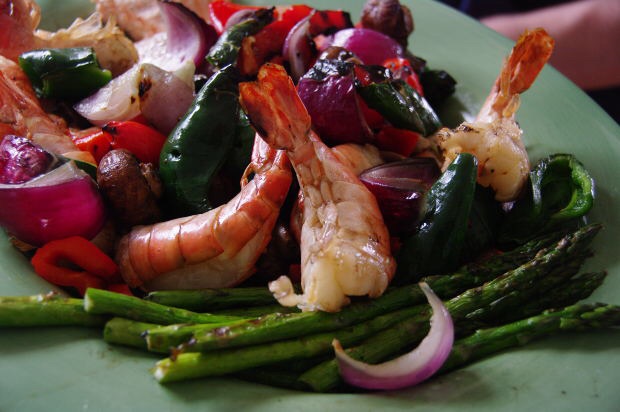
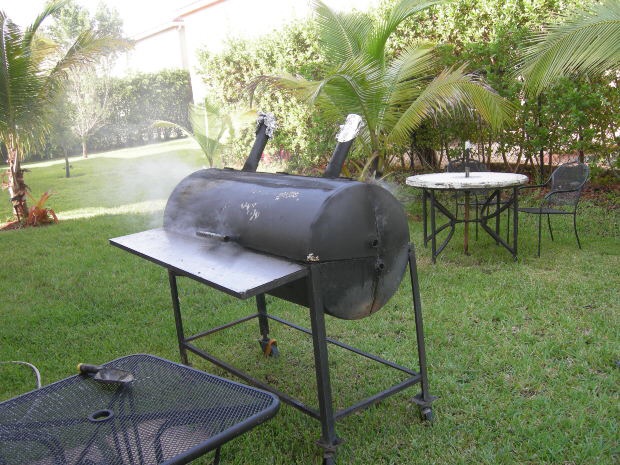
A History of Particles: Ash, Wood, Shrimp

image

A History of Particles: Ash, Wood, Shrimp

Unsettled and predisposed
to flight, they
rise. Or, awaiting the process, receive
the glow as prelude to transformation, a

nocturnal exegesis inscribed in flame
and black swirls. Death in the air,
settling upon us. The bitterest
taste. But how to explain

the tongue’s sweet tremor? And the narrow
margins between the transition

from wood to smoke?
At 250 degrees
their pale shells redden,

become vessels of radiant
heat and its attenuated function,
moisture retained so as

to delay and heighten the
delectable flesh, once freed, become
virtue, become fate

sliding down the throat,
the course of deterioration hastened
and endured in perpetuity.

image

DRAFT: Life among the Prickly Pear

image

Life among the Prickly Pear

Rain’s twofold curse: not enough,
too much. Still, I take comfort
even among the thorns.
There is much to like here.
Its moonlight flowers.
Paddles fried with minced garlic.
Wren’s jubilant shriek.
The fruit’s red nectar.
After a long day I saw it rise
and walk two steps to the west,
uphill, our burdens shared
yet apart. I woke to distant
screech owls purring their desires
on separate slopes. Late spring,
storms on the way, a warning.
I close my eyes and the creek rises.

image

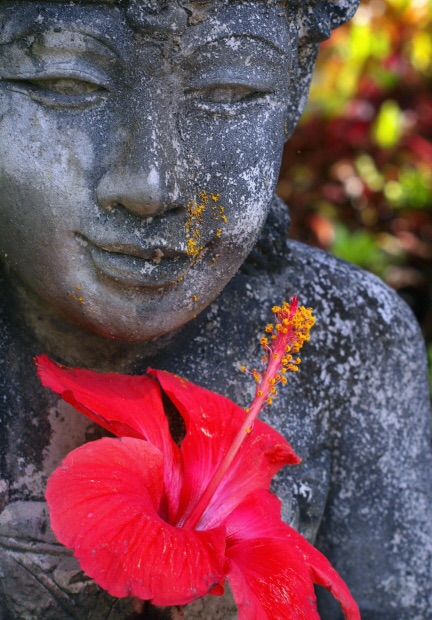
In This I Find You Again

image

In This I Find You Again

If there is truth to be found
let someone find it. The yellow

rose rests in its jar. Day and
night it looks out through the glass

at the world of altered
lines, sensing, perhaps, beauty

through its failure to prevent
fading. Each morning I wake

and think of you. The hibiscus
on our patio readies itself to blossom,

but pauses as if to prolong
the moment, waiting for a reason

to end its denial. Then it unfolds.
You are all I care to find.

image

Shadow’s Tale

image

Shadow’s Tale

If I call,
will you
reply?

Questions
left unwritten
shape
themselves

like words
we see
but don’t
read. Signs

fade then
reappear,
and the oaks

droop
in the still
heat.
No rain

again. If
you call,
will I
reply?

image

Recording of My June 4th Reading with Chip Dameron

image

I felt like this before the reading, but loosened up a bit and enjoyed it. I read ten poems, five from my chapbook, If Your Matter Could Reform, three unpublished pieces, and two that have appeared or are about to appear in publications.

The recording may be found on the Malvern Books YouTube Channel: https://www.youtube.com/watch?v=DmPg_0W0oNw

And please take the time to view Chip Dameron’s reading. He’s a fine poet, very engaging.

Dark Rain Ahead, Hummingbird

image
Dark Rain Ahead, Hummingbird

The black-chinned hummer buzzes my flowered shirt,
bringing to mind the letter H, its history of an inferior life among

letters, and a Phoenician origin signifying fence.

An aspirate dependent upon others, or a line strung between posts,

even whispered, H does not contain itself.
Disconsolate or annoyed, the bird moves on.

Do names depend upon the power of symbols, or do they power the symbols?

In the 6th century A.D., Priscian disparaged H, saying it existed only to accompany.

Clouds shade the way.
The black-chin extends its grooved tongue at a rate of 15 licks per second.

Alone, the H’s voice is barely audible.

Through the trees, across the crushed rock driveway and beyond the barbed wire

and chain link, I hear deadfall snapping under hooves.
At rest, its heart beats an average of 480 beats per minute.

Modern Greek denies its existence.

Say khet, say honor and where. Say hinge, sigh and horse. Say depth.

image

Originally published in Prime Number Magazine, one of my favorite online literary journals, in 2013:

http://www.primenumbermagazine.com/Issue41.html

7:00 p.m. Reading in Austin on June 4 at Malvern Books

An evening with poets Chip Dameron and Robert Okaji

Some of you may want to jet in for this event. Or not. Chip is certainly worth the effort!

DameronOkajiFlyerINHOUSE