Night Journey (after Tu Fu)

IMGP3335
This is not a translation, but rather a version, my “take” on a famous Tu Fu poem. I claim no abilities in translation, neither speak nor read Chinese, and instead depend upon the skills of those who have ventured into these difficult reaches. This is where the poem carries me, a middle-aged Texas hill county dweller, in the Year of the Horse, 2014.

Night Journey (after Tu Fu)

Wind bends the grass along the road.
A lonely truck passes by.
Stars reach down to touch these hills
and the moon drifts behind.

No one will ever know my poems.
I am too old and ill to work.
Circling, floating, who am I
but a vulture looking down.

Here’s a literal translation of the piece (or so I believe), found on chinese-poems.com:

Nocturnal Reflections While Traveling

Gently grass soft wind shore
Tall mast alone night boat
Stars fall flat fields broad
Moon rises great river flows

Name not literary works mark
Official should old sick stop
Flutter flutter what place seem
Heaven earth one sand gull

My goal was to retain the mood, as I understand it, of the original, and to place it into my personal context. An interesting exercise.

Texas Haibun

Originally posted in February, 2014.

This is my first attempt at a haibun. Please forgive my transgressions.

file000227150579

Texas Haibun

I dream of poetry in all its forms, rising and flowing and subsiding without end, much like ice shrugging within itself. Last winter a hard freeze split a valve on the downstream side of the cistern. Had it cracked even a few inches up-line there would have been no need to replace the valve.

captive rain recalls
its journey towards the ground
the garden returns

The well terminates at 280 feet. The water is hard, but cool, and tastes of dark limestone and ancient rains.

Even the gnarled live oaks have dropped their leaves. Grass crunches underfoot and smells like dead insects and dried herbs. Mosquitoes have vanished. Only the prickly pears thrive. Their flowers are bright yellow and bloom a few days each year.

sauteed with garlic
nopalitos on my plate
their thorns, forgiven

I wipe sweat from my forehead with the back of the glove, and wonder how many ounces of fluid have passed through my body this year, how the rain navigates from clouds through layers of soil and stone, only to return, how a cold beer might feel sliding down my throat.

stoking the fire
winter rain whispers to me
forget tomorrow

photo(15)

Which Poet, Which Beer?

file6671234665917
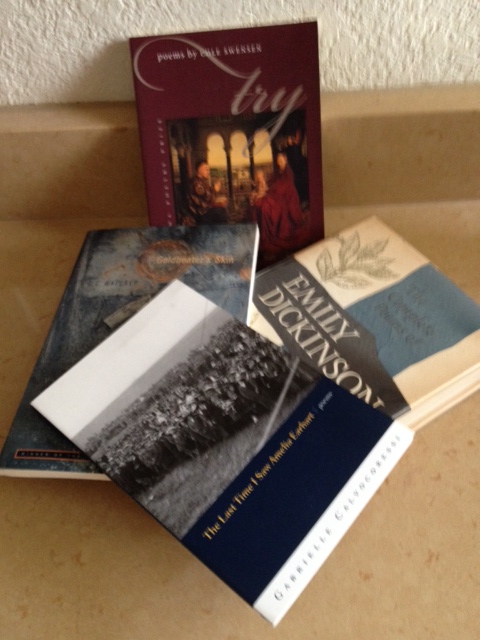
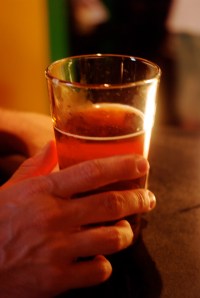
I’m staring at the flight of beers that John has placed in front of me. On the left I find Real Ale Brewing Company’s Phoenixx Double ESB. Next to it rests Ranger Creek’s Saison Oscura, followed by Revolver Brewing’s High Brass Golden Ale, and finally, Southern Tier Brewing’s Creme Brulee Stout. I sip the Phoenixx ESB, and am delighted to find it just as I remembered: dry, but sweet, without being overly bitter. Rich, deceptive, caramely odor, amber color. Overtones, hidden layers. I immediately think of Cole Swensen and her book Try, my real introduction to her work, how she reflects tone and imagery, perception and language, intricately weaving them into patterns, into narrative bits to be experienced and savored. “There’s a world out there that isn’t there,” the Phoenixx, evidently a fan of Cole Swensen, whispers.

I linger over the last sip of the ESB, and move on to the Saison Oscura, which quite frankly, surprises me. And that’s good. My preferences edge towards the bitter, and most of the saisons I’ve tried have finished a tad fruity and sweet for my palate. Not so with Ranger Creek’s rendition. Its beguiling light body, with notes of pepper and spice, end with just the right note of bitterness. But which poet, which book would I pair with this dark saison? Someone who juggles the lyrical with harsh realism, whose voice blends and releases the bitter, the forsaken, in distilled snippets of striking clarity. Ah, yes. I have just the book, The Last Time I Saw Amelia Earhart, by Gabrielle Calvocoressi, and the line:

“The whole world tastes like salt,

crows overhead shout, Gone, gone
gone. She can’t help me any more.
I’ll have to walk.

It’s much more difficult to pair the Revolver Brewing High Brass Golden Ale with a favorite poet, because, sadly, I find it lacking. It’s light in the mouth, and, to take Gertrude’s quote totally out of context, there is no there there. If I’m to choose a blonde ale, I’d much prefer Real Ale Brewing’s Fireman’s #4. But waste not, want not. I down it, and consider which poet would not only transcend this disappointment, but also hand it a one-way ticket to, perhaps, Stein’s lost Oakland? Easy. G.C. Waldrep, whose Goldbeater’s Skin sets its barbed hooks into my flesh each time I open it. And for this particular occasion, I find no poem more appropriately titled than “What Begins Bitterly Becomes Another Love Poem,” in which he writes:

We stood without shadows on asphalt at midday.
What we call patience is only fire again, compressed.

And fire should accompany Southern Tier’s Creme Brulee Stout. A crackling fire fending off the icy, shingle-ripping wind, with Miles Davis echoing in the background, an exquisite meal resting comfortably in the belly, and the pleasure of knowing that the book you’re about to dip into is an endless well.
Quite simply, it’s a liquid dessert. Light coffee, a tad chocolatey, with big vanilla. Medium body, sweet. Smells like creme brulee. Tastes like it. But it’s beer. It tells the truth, but tells it slant! And who better to accompany this frothy delight than Emily Dickinson?

Tell all the truth but tell it slant,
Success in circuit lies,
Too bright for our infirm delight
The truth’s superb surprise…

Onward to the next flight, and more truth. More poetry. More beer. More surprise!
photo(14)

Draft: Valentine’s Day Sonnet

CRW_6222

If You Were a Guitar

If you were a guitar I would play you
till my fingers grew rough from your body’s
touch, till the moisture in the clouds withdrew
and only music rained down. But what breeze

could retain your voice? At night my hands would
dream new chords of light and air, of pearl and
flesh and warm breath suspended over wood.
And as we slept our bodies would demand

completion, and the space would diminish
till nothing lay between us but the sly
notes singing through our veins, replenish-
ing each other’s thirst. When I say hope, I

mean you. When I whisper nothing, my
silence shouts your name. Each breath. Every sigh.

Numbers numbers numbers: NINE

Numbers numbers numbers: NINE
file0002037739398

Early on in my other life I was hand-picked and hired to assist with budgets, to work with numbers. One of the higher-ups remarked that my spelling score was quite good for a “numbers person.” This amused me to no end, as I’d no inkling that a) anyone in the world considered me fluent with numbers, or b) that the mundane labor that comprised my livelihood had been noticed, much less evaluated, by someone beyond my small, three-person office (certainly no one noticed the writing I’d produced and published). More than a quarter century later, I’m still amused. And still working with numbers, which even now remain mysterious, magical, and even inspiring.

Take the number nine. Multiply it by two, and you get 18. Add the two digits that comprise 18, one and eight, and you get 9. Multiply it by three: 27. Total the two digits forming 27, and you get, yes, 9. Multiply it by four, by five, by six, by seven, eight or nine. Add the digits that comprise the sum and you return to nine. Interesting, no?

It appears everywhere. In Islamic cosmology, the universe is built of nine spheres. In Ancient Mexico, the netherworld consisted of nine layers. The magic square consists of nine parts. Beijing was designed as a center with eight streets. Hindu temple foundations contain jewels and nine distinct grains. The human body has nine openings. The number also appears in both sacrificial and healing rites. The River Styx bends nine times. I could go on (we haven’t scratched the surface), but will refrain.

But if this piece piques your curiosity, you might find this poem inspired by zero (a truly fascinating subject) of interest:

http://www.cladesong.com/okaji.withtheseninefigures.html

Another Oldie: Uccello

Originally published in 1987 in a short-lived publication called The Balcones Review, this is the opening of a longer work. Today, as I look out my window at that same tree, I hear the birds, no longer silent.

file000687759623(1)

Uccello

the wind is what
the stillness
desires to say
each instant
collapsing into itself
like a bud
returning
to the seed

listen
the birds in my tree
are silent
as echoes
before their brief
lives are
silent

something thrashes
in the leaves
the feather
spiraling
slowly
is not only what
it is

as the candle
is more
than flame
or a moment

curling
to darkness

the question
is of clarity

I built a frame
but placed
nothing in it

the wind
blows through
quietly as if
between silences
there exists
only silence or

light
the familiar embrace

unfolding

IMG_0602

The formatting isn’t right. Not wanting to waste more time on learning code (hey, I barely have enough time to write), I’ve decided to instead provide a pdf of how the poem should look. It might be interesting to compare the two.

Uccello pdf

Poet’s Pantry

file3911233869642

In my sliver of the world, poetry and cooking share many qualities. When I step into the kitchen, I often have only a vaporous notion of what’s for dinner. A hankering for roasted poblano peppers, the need to use a protein languishing in the refrigerator, the memory of an herbal breeze wafting down a terraced hill near Lago d’Averno, Hell’s entrance, according to Virgil, or even a single intriguing word, may spark what comes next. But the success of what follows depends upon the ingredients at hand, on how we’ve stocked the pantry. Good products beget better results. Let’s take my desire for roasted poblanos. What to do with them? Poking around, I uncover an opened package of goat cheese, a bit of grated grana padano and some creme fraiche, and I immediately think pasta! Looking further I spot arugula, a lemon, a handful of pecans, some cherry tomatoes. Dinner: Pappardelle with a roasted poblano and goat cheese sauce, garnished with toasted pecans, served with an arugula and cherry tomato salad dressed with a lemon vinaigrette. Simple, when you’ve stocked a solid base of quality components.

My writing employs a similar process. Anything – a vague sense of uneasiness, a particular word, the sunlight slanting through the unfortunate dove’s imprint on my window, articles or books I’ve read or perused on a myriad of subjects – may launch a poem. But what truly makes the poem, what bolsters, fills and completes, what ignites and catapults it arcing into the firmament are, of course, the pantry’s ingredients.

Everyone’s needs differ, and I wouldn’t presume to inflict my peculiar sensibilities on anyone, but if you cracked open my burgeoning poetry pantry’s door, you’d certainly unearth dictionaries and a thesaurus, fallen stars, books on etymology and language, curiosity, a guitar or mandolin, at least one window (sometimes partially open), conversations floating in the ether, various empty frames, wind, dog biscuits and dirty socks, a walking stick, sunlight and shadows, more books on such subjects as ancient navigation, the history of numbers, the periodic table, alchemy and olives. You might also spy reams of paper, unspoken words, coffee cups, a scorpion or two, scrawled notes on index cards, wandering musical notes, a pipe wrench, wood ear mushrooms and salvaged fragments of writing, failed ideas moldering in clumps on the floor, a few craft beers and empty wine bottles, a chain saw, and most important of all, a bucketful of patience.

(I cannot over-emphasize the bucket’s contents…)

This is just to say (no, I didn’t eat the plums) that the best equipped poets stock their pantries with the world and all its questions, with logic, with faith, persistence, emotion, science, art, romance and yes, patience. Line your kit with every tool you can grasp or imagine. Keep adding to it. Read deeply. Listen. Breathe. Listen again. Converse. Look outward. Further, past the trees, around the bend and beyond the horizon’s curve, where the unknown lurks. Look again. Don’t stop. Continue.

And if after all this you’re wondering what basks in my kitchen pantry:

photo(13)

Just Published

I have three poems appearing in Ditch, a publication “celebrating the innovative, the non-conforming, the radical, the alternative, the avant-garde, the non-linear, the abstract, the experimental.”

http://www.ditchpoetry.com/robertokaji.htm

IMG_0323

Fifty-Word Review: Greenhouses, Lighthouses by Tung-Hui Hu

Tung-Hui Hu’s Greenhouses, Lighthouses highlights lyrical precision in poems that bounce between such diverse launching points as photographic sequences, Euripedes, union slogans, woodcuts and even an historical seaman’s guide. His language placates and challenges, whispers, cajoles and insinuates, and overflows with layered possibilities and nuance. You must read his work.

photo(10)

Another Oldie: The Garden

file4121261057835

The Garden

But what of this notion
of the romantic?

It rained last night.
I could smell it

before it fell,
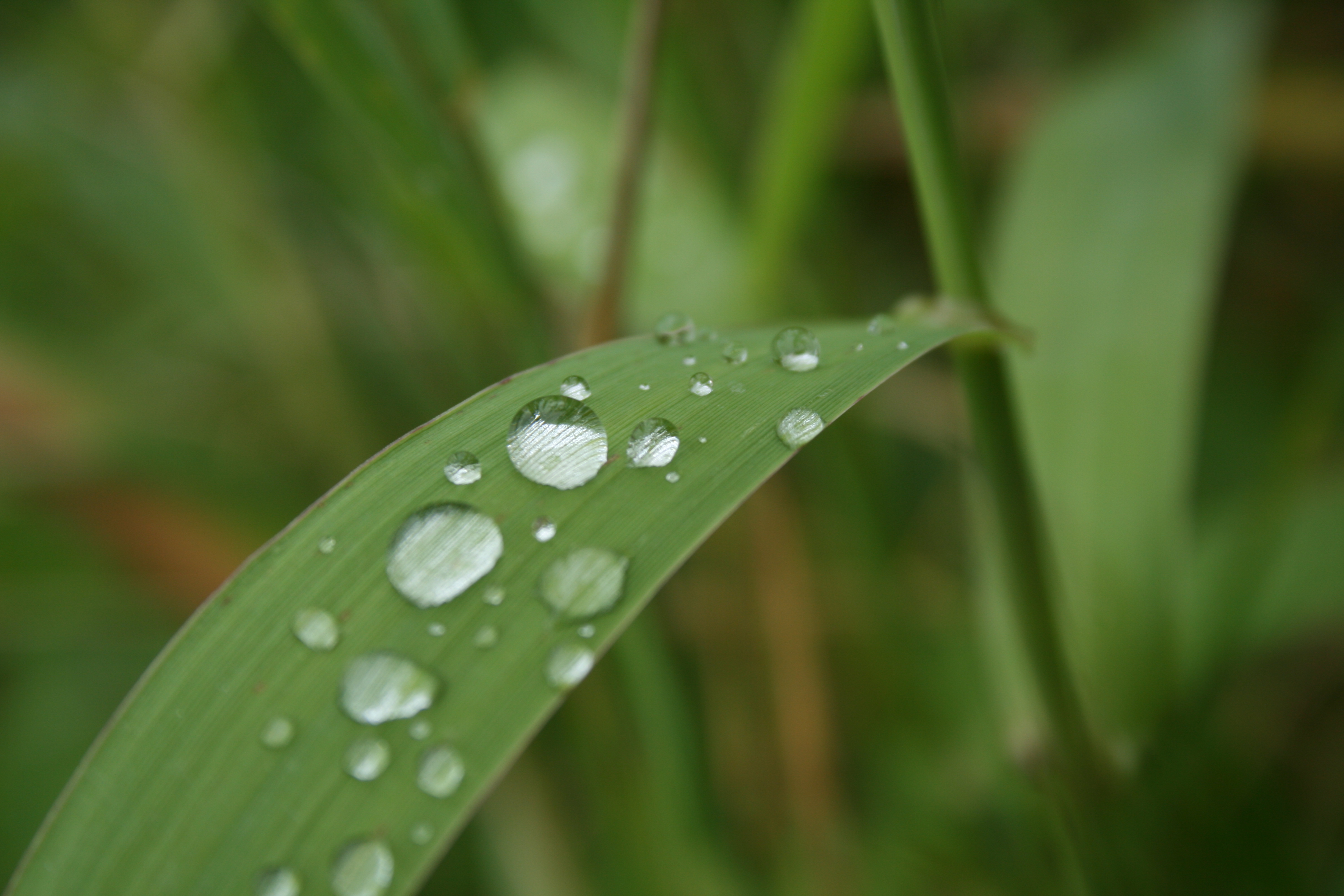
each drop a perfect

sphere until the final
moment. This

is fact, impractical but
lovely for its truth.

I initially posted this in January of 2014, but since so few saw it back then, thought it deserved another airing. The poem first appeared many years ago as a poetry postcard offered by the literary journal Amelia. I admit to being wrong about the shape of raindrops. But hey, they start out spherical…