
Matt Larrimore, editor of Four Ties Lit Review, interviewed me in September 2014:
http://fourtieslitreview.com/home/interviews/interview-with-robert-okaji/


Matt Larrimore, editor of Four Ties Lit Review, interviewed me in September 2014:
http://fourtieslitreview.com/home/interviews/interview-with-robert-okaji/
For those of you who might care, I’m featured in an interview in Middle Gray.
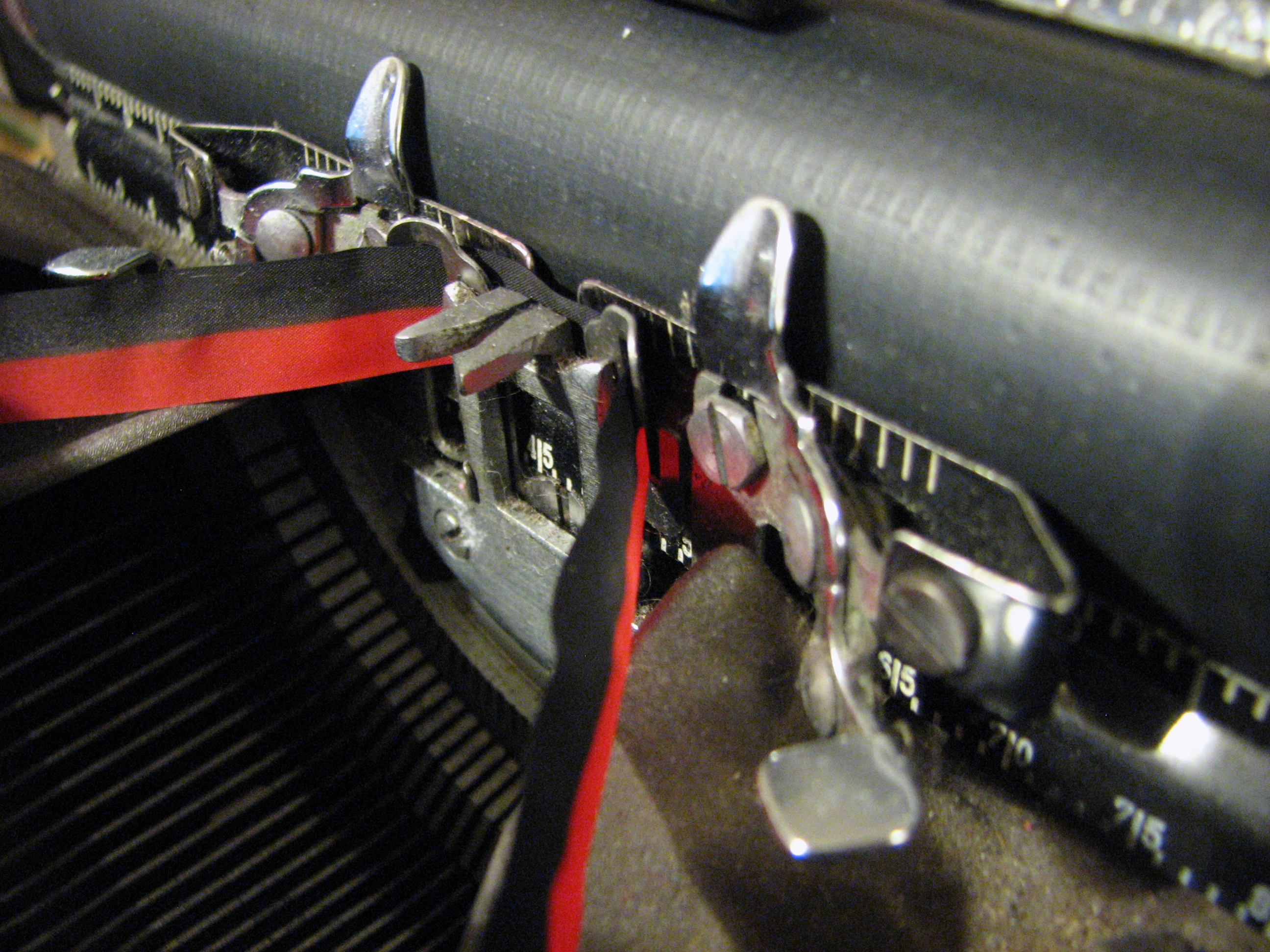
Originally posted in December 2013. Circumstances have changed a bit – I have more time to write these days, but somehow manage to constantly run behind…


But I would write with passion for weeks or months or even years—and each writing period would be followed by a period where I wrote little, if anything. I didn’t have writer’s block. I don’t even know what that is. I’ve just lived my life and waited for writing to demand my time again.
Even now, I am always finding something that keeps me from writing. I spend time on my elderly mother’s needs. I foster (and adopt, too—it’s called foster failure in the shelter biz) homeless cats and volunteer at the local shelter. My husband and I travel for work and we travel for pleasure.
Find Luanne at these sites:
Luanne Castle
Writer Site
The Family Kalamazoo
Facebook
Twitter
Watch the trailer for Kin Types.
Kin Types is available here:
Amazon
Barnes and Noble
Finishing Line Press
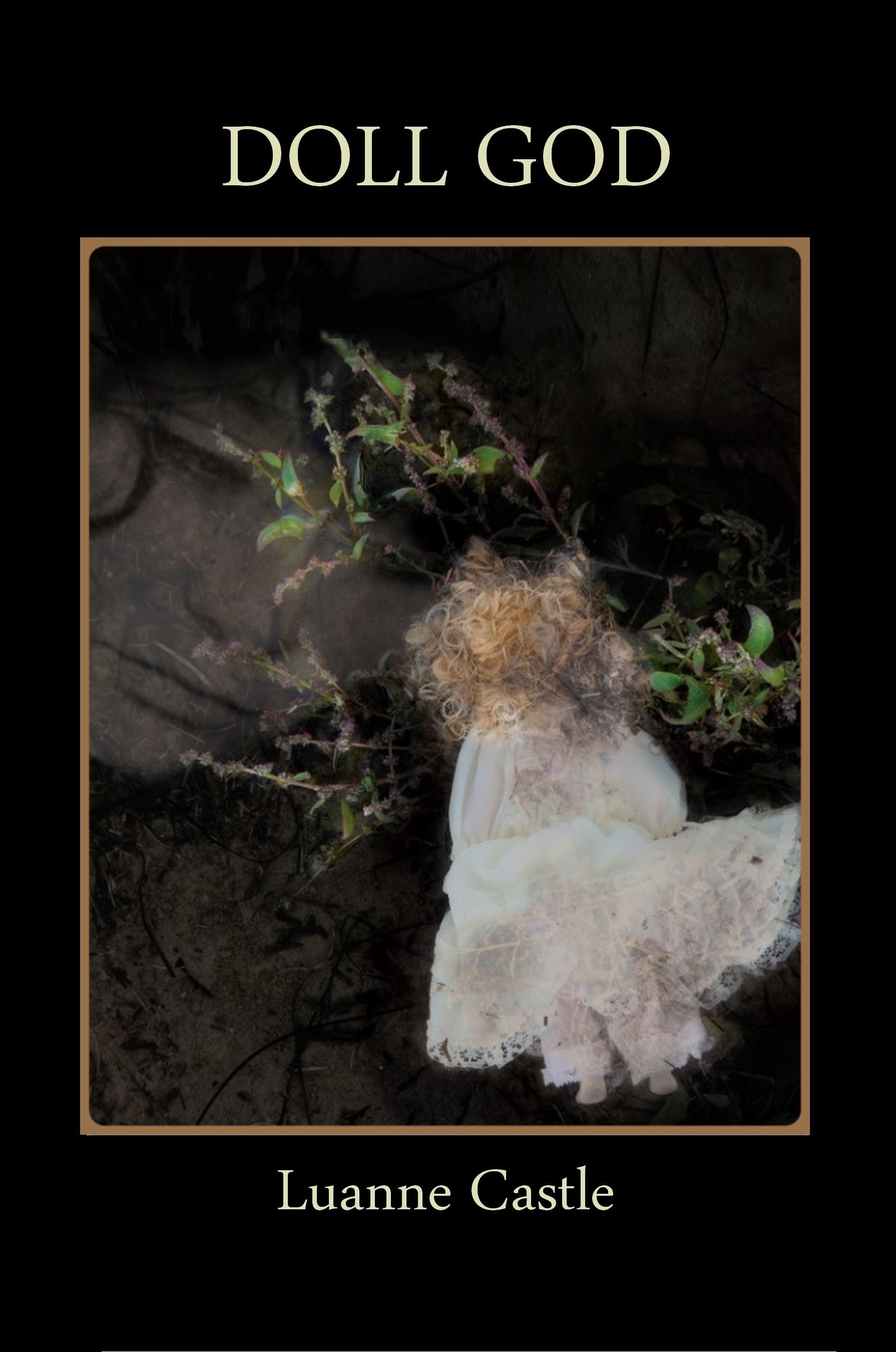
Doll God may be found here:
Amazon

In my sliver of the world, poetry and cooking share many qualities. When I step into the kitchen, I often have only a vaporous notion of what’s for dinner. A hankering for roasted poblano peppers, the need to use a protein languishing in the refrigerator, the memory of an herbal breeze wafting down a terraced hill near Lago d’Averno, Hell’s entrance, according to Virgil, or even a single intriguing word, may spark what comes next. But the success of what follows depends upon the ingredients at hand, on how we’ve stocked the pantry. Good products beget better results. Let’s take my desire for roasted poblanos. What to do with them? Poking around, I uncover an opened package of goat cheese, a bit of grated grana padano and some creme fraiche, and I immediately think pasta! Looking further I spot arugula, a lemon, a handful of pecans, some cherry tomatoes. Dinner: Pappardelle with a roasted poblano and goat cheese sauce, garnished with toasted pecans, served with an arugula and cherry tomato salad dressed with a lemon vinaigrette. Simple, when you’ve stocked a solid base of quality components.
My writing employs a similar process. Anything – a vague sense of uneasiness, a particular word, the sunlight slanting through the unfortunate dove’s imprint on my window, articles or books I’ve read or perused on a myriad of subjects – may launch a poem. But what truly makes the poem, what bolsters, fills and completes, what ignites and catapults it arcing into the firmament are, of course, the pantry’s ingredients.
Everyone’s needs differ, and I wouldn’t presume to inflict my peculiar sensibilities on anyone, but if you cracked open my burgeoning poetry pantry’s door, you’d certainly unearth dictionaries and a thesaurus, fallen stars, books on etymology and language, curiosity, a guitar or mandolin, at least one window (sometimes partially open), conversations floating in the ether, various empty frames, wind, dog biscuits and dirty socks, a walking stick, sunlight and shadows, more books on such subjects as ancient navigation, the history of numbers, the periodic table, alchemy and olives. You might also spy reams of paper, unspoken words, coffee cups, a scorpion or two, scrawled notes on index cards, wandering musical notes, a pipe wrench, wood ear mushrooms and salvaged fragments of writing, failed ideas moldering in clumps on the floor, a few craft beers and empty wine bottles, a chain saw, and most important of all, a bucketful of patience.
(I cannot over-emphasize the bucket’s contents…)
This is just to say (no, I didn’t eat the plums) that the best equipped poets stock their pantries with the world and all its questions, with logic, with faith, persistence, emotion, science, art, romance and yes, patience. Line your kit with every tool you can grasp or imagine. Keep adding to it. Read deeply. Listen. Breathe. Listen again. Converse. Look outward. Further, past the trees, around the bend and beyond the horizon’s curve, where the unknown lurks. Look again. Don’t stop. Continue.
And if after all this you’re wondering what basks in my kitchen pantry:

This last appeared here in October 2015.
There are many reasons, known and unknown, as to why I write; I don’t like to think these reasons change necessarily, but rather, amass over time—no, maybe, these reasons refine over time. These days, I am writing a lot of elegies, so if I had to answer in the present, I write because it brings me closer to the dead, and being close to what is no longer animate, in whatever state or form, makes the pain that comes with loss just a little more bearable. Even death welcomes conversation.
Khaty Xiong was born to Hmong refugees from Laos and is the seventh daughter of fifteen brothers and sisters. She is the author of debut collection Poor Anima (Apogee Press, 2015), which is the first full-length collection of poetry published by a Hmong American woman in the United States. In 2016, she received an Ohio Arts Council Individual Excellence Award in recognition of her poetry. Xiong’s work has been featured in The New York Times and How Do I Begin?: A Hmong American Literary Anthology (Heyday, 2011), including the following websites, Poetry Society of America and Academy of American Poets. She lives in Gahanna, Ohio.
You may find Khaty’s books at the links below:
Poor Anima (debut): http://www.spdbooks.org/Products/9780985100773/poor-anima.aspx
Deer Hour (chapbook): http://www.thediagram.com/nmp/pr_xiong.pdf
Ode to the Far Shore (free, digital micro-chapbook): https://payhip.com/b/eHQw
Read a review of Poor Anima here.
Tupelo Quarterly recently published this review of Ode to the Far Shore and two other micro-chapbooks published in the Platypus Press 2412 series.
Visit the Academy of American Poets’ site to read this illuminating series on Hmong American poets, and to read and listen to Khaty’s poem, “In Mother’s Garden.” You’ll have to scroll down to find it, but it’s well worth the effort. And please read the rest of the series while you’re there.


The Fog (after H.D.)
I am dead.
You avoid me.
I open like a shell.
You expose me with your breath.
What am I, heartless one?
This was an exercise in which I used H.D.’s poem “The Pool” as the launching point. It’s fun and occasionally illuminating to try these. “The Fog” first appeared on the blog in April 2016.

In this P.O.P (poets on poetry) video on the Academy of American Poets’ site, Poet Laureate Tracy K. Smith reads a section from her poem “My God, It’s Full of Stars,” Seamus Heaney’s “Digging,” and discusses whether poetry should address political issues.
Welcome to “Sunday Compulsion,” in which creatives answer one question: Why do I create? Poet Devi S. Laskar kicks off this new weekly feature.
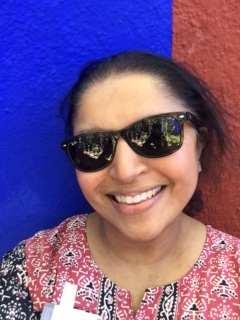
I’ve been writing poems since I was 9 years old. It’s who I am: a poet. I write nonfiction and I write short stories and novels and I do so because I have this desire to communicate. I am interested in all kinds of forms. And I love to read, which is probably why I live to write. I’m trying to write the stories and the poems I haven’t read yet.
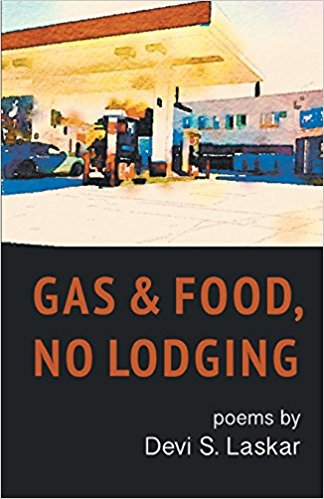
Devi S. Laskar is a native of Chapel Hill, N.C. She holds an MFA from Columbia University in New York, an MA in South Asian Studies from the University of Illinois at Urbana-Champaign and a BA in journalism and English from the University of North Carolina at Chapel Hill. A former newspaper reporter, she is now a poet, photographer and artist. Her photographs include the cover of The Florida Review; and in the pages of Tiferet Journal and Blue Heron Review. Her art can be found currently on the cover of L.A. based Las Lunas Locas poetry anthology. Her poems have appeared in numerous journals including The Blue Heron Review, which nominated her for Best of the Net 2016 & The Raleigh Review, which nominated her for Best New Poets 2016. She is an alumna of both TheOpEdProject and VONA/Voices, and served as a Tupelo Press’ 30/30 Project poet in December 2015. She is also an alumna of Hedgebrook, and poetry workshops at the Community of Writers at Squaw Valley. In 2016, she won first prize in poetry at the 27th Mendocino Coast Writers Conference contest. Finishing Line Press published the first of two chapbooks, “Gas & Food, No Lodging” in March 2017; and will publish “Anastasia Maps” later this year. She now lives in California.
You can get Devi’s book Gas & Food, No Lodging at Finishing Line Press and Amazon,
as well as Bookshop Santa Cruz and online at Barnes & Noble.
Read this review!
Read and listen to her poem “Unanswered, Untranslatable”
To learn more about Devi, visit her website, which includes links to her artaday, essays, and various publications her work has appeared in.
And this podcast.
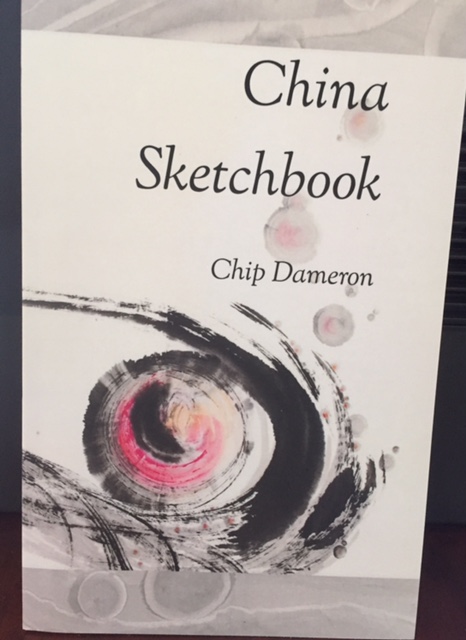
Q&A with Chip Dameron, author of China Sketchbook
Would you mind sharing a bit about your background?
I started writing poems in college and have been been playing with language ever since. To support my family, for many years I taught writing and literature at UT Brownsville and held several administrative positions. Now I am writing full time.
Which three words best describe your poetry?
Precise. Vivid. Imagistic.
Tell us about China Sketchbook. What was its genesis?
A few years ago my wife and I took a month-long trip across China, which was a stunning experience. I’ve long admired Chinese poetry and knew a little Chinese history, so to observe how China is transforming itself and to meet many of its people made for an unforgettable journey. I began drafting poems along the way, and I continued after returning home. China Sketchbook contains 27 poems, and Virtual Artists Collective was kind enough to publish it under its Purple Flag imprint in December 2016.
I’m sure you’re frequently asked this question, but I can’t resist: What carries you from the blank page to a poem? What is your process?
Usually I sit down to explore something I’ve seen or heard or experienced or thought about. What images can I find to get the poem started? Where do they want or need to go? Which words support the movement of the poem and give it the energy it needs to become a language-object that others might enjoy experiencing? Through this process I hope to create poems that are authentic and original.
A few months ago you published At Paisano Ranch, a micro-chapbook, with Origami Poems Project. What can you tell us about this book?
In September 2016, I began a four-month stay as writer-in-residence at Paisano Ranch in Austin, once owned by the legendary Texas writer J. Frank Dobie. You and I met at the ranch several times and talked about poetry, and I was intrigued by the charming micro-chapbook that you had published through Origami Poems Project called You Break What Falls. So I took six poems I had written about my experiences at the ranch and sent them off to OPP, and the editors accepted the micro-manuscript and published At Paisano Ranch in early December. I encourage poets and readers to visit the website, https://origamipoems.com, and download for free any of the micro-chapbooks that interest them. Poets may also wish to submit their own micro-manuscripts of six short poems.
What advice do you have for new poets?
Don’t be in a great rush to publish your work. Work at the craft of creating your poems, read your drafts out loud, and don’t be afraid to tinker with your poems, and even make extensive changes. You are engaging in the process of finding your distinctive voice, your distinctive style. When you’ve found that voice and style, you are ready to go public. And when you experience rejection, as all poets do, keep submitting your poems, and keep writing new ones.
Which artists inspire you? Whose work do you read, listen to, gape at, admire, envy?
I’ve long admired the great American poets of the past, including Whitman, Dickinson, Frost, and Stevens. More recent sources of inspiration include Seamus Heaney, Naomi Shihab Nye, and Billy Collins. And even through translation, which can’t do full justice to the original language, I’ve been amazed at the power of the classical Chinese poets, such as Li Bai, Du Fu, and Tao Qian.
What are you working on now, what’s in the pipeline, and what can we look forward to in the coming months?
I’ve recently completed a collection of poems called Mornings with Dobie’s Ghost, which is scheduled for publication in 2018 by Wings Press. I wrote the 35 poems while living and working at Paisano Ranch. And I’m in the middle of drafting a novel—my first—which has been a most challenging but stimulating experience.
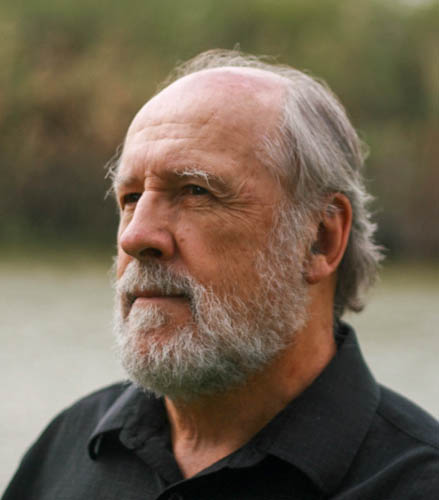
Bio: Chip Dameron is the author of nine collections of poetry and a travel book. His poems and essays on contemporary writers have appeared in the Mississippi Review, Southwestern American Literature, San Pedro River Review, Puerto del Sol, Hayden’s Ferry Review, New Orleans Review, Borderlands, and many other journals and anthologies, as well as publications in Canada, Ireland, Nigeria, India, China, Thailand, and New Zealand.
Website: https://www.cdameron.com
YouTube reading at Malvern Books with Larry D. Thomas
Youtube reading at Malvern Books
Reading at the Friendswood Public Library
Balance
Navigating
by stars,
one ball
buried,
another
gathering,
the dung
beetle
straight-lines,
maintains
position,
forever
looking forward
and up.
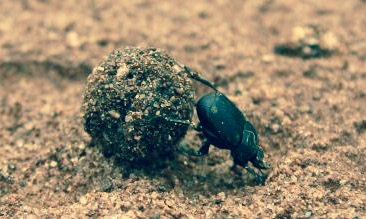
“Balance” first appeared here in February 2016.
 O at the Edges