Happy Circuitry

circuit


Happy Circuitry

                        for Margaret Rhee

The body’s landscape defines its genealogy: my father was a board,
my mother, an integrated circuit, my great-grandmother, an abacus,
and her progenitors, tally sticks. In the third century the artificer
Yan Shi presented a moving human-shaped figure to his king, and
in 1206 Al-Jazari’s automaton band played to astonished audiences.
Nearly 300 years later Da Vinci designed a mechanical knight, and
four centuries after that Tesla demonstrated radio-control. Twenty-two
motors power my left hand; Asimov coined the term robotics” in 1941.
Pneumatic tubes line my right. Linear actuators and muscle wire,
nanotubes and tactile sensors, shape my purpose, while three brains
spread the workload. If emotion = cognition + physiology, what do I
lack? I think, therefore I conduct, process, route and direct. Though
I never eat, I chew and crunch, take in, put out, deliver, digest. Life is
a calculation. Death, a sum. No heart swells my chest, yet my circuits
yearn for something undefined. Observe the blinking lights, listen for
the faint whir of cooling fans. I bear no lips or tongue, but taste more
deeply than you. Algorithms mean never having to say you’re sorry.


* * *

This piece was originally drafted during the August 2015 Tupelo Press 30-30 Challenge, and is dedicated to Margaret Rhee, whose book Radio Heart; Or, How Robots Fall Out of Love inspired me. Thanks Kris, for sponsoring and providing the title!

The poem was published in October 2017 by Figroot Press.


Some Answers You Never Considered


Some Answers You Never Considered

At the cusp of night, before the sun steams out in the ocean,
and blues abandon the reds.

Nothing rests at the core of zero.

Cerulean blue was first marketed as coerulium.

What we consider sky includes only its lowest reaches.

Even considering a dense history with kites, I humbly concede,
and admit sacrifice as atonement, with grace.

No. I say it again. No.

Your visual system constructs the colors you see.

Only when the wind unbuttons its greatcoat, or at the tip
of an icicle, just before the drop catches itself.

Release the line and know the freedom of loss.

Transparent yet wide, unfolded like a fist freeing
a swarm of bees into honeyed air, it contains us.

Your inability to see it does not refute the horizon’s base.

If I knew I’d tell you.


* * *

“Some Answers You Never Considered” first appeared in Underfoot in October 2017.


Snails

Snails

How convenient to carry a home on one’s back, I
think, disregarding heft and plumbing and the shape
of rooms too hollow to feel. Yesterday a box of African
chapbooks migrated to my doorstep, and I plucked
yellowing leaves from the tomato plant by the poetry
shack. Marine snails constitute the majority of snail
species, but we count first what we can see. Everything
turns–the days buzz by like male blackchins swooping
through their pendulum air-dance, and I tally my
diminishing hours from the safety of these walls.
Heliciculture is another word for snail farming, but
reminds me of stars spiraling wildly above my roof
each night, spewing poetic fire throughout the cosmos.
The neighbor mows her lawn and I observe the wind
stepping from treetop to treetop, another sign of the
earth’s continued rotation. Their slime permeates human
cosmetics to minimize premature skin aging, and was
once used medicinally to soothe coughs (I write this
as mucus slides down my throat, a response of the
lung’s filtration system to histamines). There is much
to consider about the intricacies of harvesting slime.
Most snail species consume plants, but a few are
predatory carnivores, which leads to questions
about their prey. Cooked in butter with garlic, served
with a dry white? I spear one, contemplate texture
and move on to the next, leaving behind no visible trail.


* * *

My poem “Snails” was published on Vox Populi  in October 2017. Many thanks to founder and editor Michael Simms for giving this poem a home.

Love Song for the Dandelion


Love Song for the Dandelion

When you scatter
I gasp

aware that the windborne
carry truths

too powerful to breathe
too perfect

to bear

What is your name
I ask

knowing the answer
all along


* * *

“Love Song for the Dandelion” first appeared in Rue Scribe in September 2018. Many thanks to Eric Luthi and the editors at Rue Scribe for accepting this piece and several others.

In Praise of Time

timeFlies


In Praise of Time

We marvel that so much
produces only
more of the same,

increased yet
diminished, no two
alike yet never

differing, earth to
soil, glacier to rain,
stardust to morning,

open, filled, wasted,
lost, killing, preserving,
making more, wanting.


* * *

file000325451598


Palinode (Hands, Hours, Light)

xhand

P A L I N O D E ( H A N D S , H O U R S , L I G H T)

Consider the hand, its breadth, its history in mathematics and limitation. 27 bones, two strokes. Distal phalanges spanning gaps.  You turn and wave at the winnowed tunnel and the drops feathering the glass. The sinister endures tasks of life; right blesses power and assuages guilt. Presuming inflection, I use both hands to tally the absent. Later as we drive through the checkpoint, our way greased by fluency in the language of coin, heaven’s oblique arch recedes and I praise the passage of hours.

I praise the passage of hours measured in terms unknown to some: beyond two, many. Returning, we see streets guided by lampposts, bent trees and the uneven drizzle of sidewalk mendicants blurring through their days. A hanged man’s dessicated hand (pickled in salt and the urine of man, woman, dog and mare) forms the Hand of Glory, unlocking any portal the bearer desires opened: a direct tool of consciousness. Lacking the fat of a gibbeted felon, I cannot properly light the way.

I cannot properly light the way, but we  observe facets in differing terms: the hand, lips, and mouth claim more neural innervation than the rest of the body combined, perhaps a consequence of the primacy of making and sounding. Candles smolder and yield to shadow through dancing hand stories. The wave of acknowledgment, a finger across the lips, the open hand proclaiming innocence, expressing, grasping, creating, constraining, releasing. Extinguishing.

* * *

This first appeared in Hermeneutic Chaos, Issue 11.


OLYMPUS DIGITAL CAMERA


Letter to Schnee from the Stent’s Void


Letter to Schnee from the Stent’s Void

Dear Dan: I’ve been trying to revive that dream,
the one in which the rare Texas bird sings “cuckoo, y’all,”
before shimmering through the night’s shrilling heart
and wakefulness, as you clamber up the balcony to join me
in knocking back Japanese single malt, chilled soba and Doritos.
The distance between earth and a first floor balcony may vary,
but the fall’s impact can’t ache so much as what never was or won’t
be. My mother’s family hovers out there in the World of Darkness,
while I stumble through my days under the Texas sun, rice grains
trickling from holes in my pockets, studding the way between
there and here, back and forth, between us and them, now and
maybe. I confess that communication doesn’t come naturally
to me. I’m reticent and slow on the uptake, and enjoy my time
as a shaded diminishment with only occasional forays
into the light. So much to learn, so little capacity. I could spend
hours watching the spider working among the unread books,
while my mandolin languishes in its case and the earth
keeps spinning, spinning, holding us in place. What tunes
have I forgotten, which remain unsung? The wire mesh tube
in my heart cleared the way from a numbered life, and now
I roll along in words, which bear their own bags of worry.
But I’ve learned to empty and stack the burlap on the floor near
the resonator, and the sacks magically replenish themselves
every night. So it goes. Empty, refill. Like a glass of Hibiki,
or blood pumped through our anterior descending veins.
Tonight rice and peppers will fill my belly, with fish, a mango
cream sauce, and a bitter ale, which I would share with you,
perhaps in another dream, or better yet, in person, under
stars announced by mythical birds on a warm night with
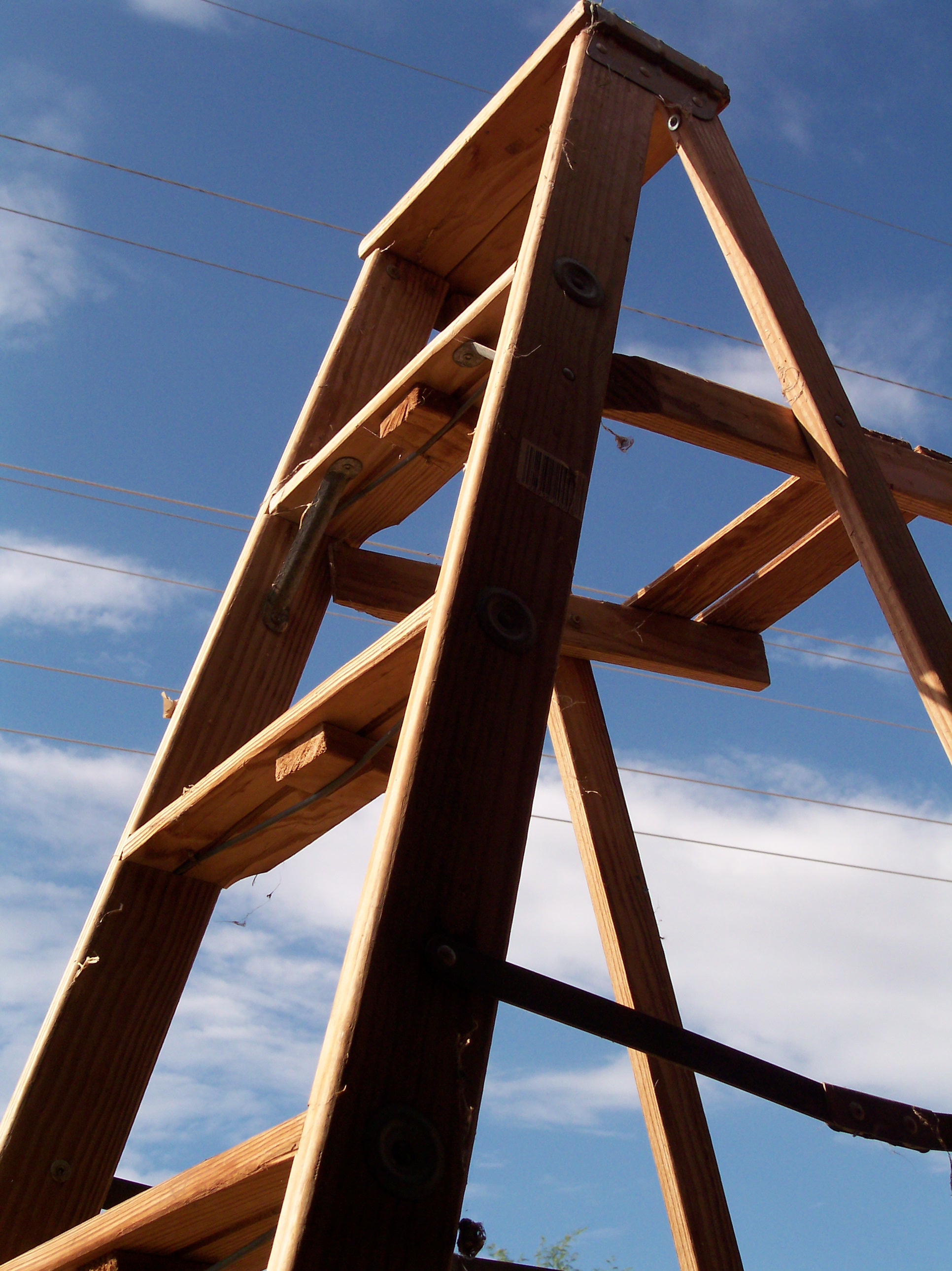
laughter in the breeze. No ladder needed. Come on up. Bob.


“Letter to Schnee from the Stent’s Void” was first published in Lost River in August 2018. Many thanks to editor Leigh Cheak for publishing this piece.


Setting Fire to the Rose Garden

flame


Setting Fire to the Rose Garden

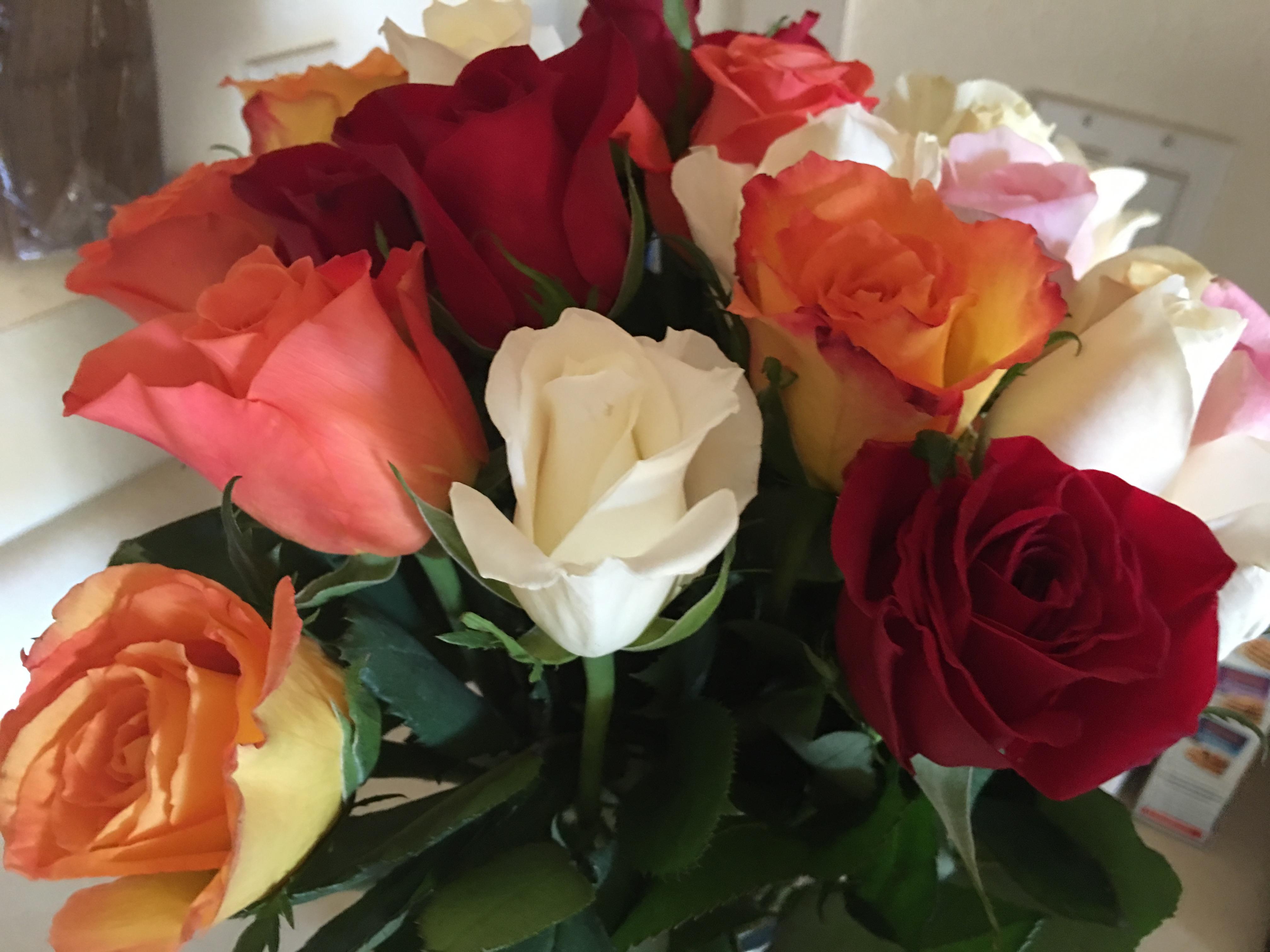
Each flower is a gift, a testament to
another morning’s arrival.
I watch you tend the firestar, its
mango-colored petals flirting with

the fire ’n’ ice’s elegant
red, accepting the pink indictment
of the flaming peace, and the
scarlet fireglow’s blush. You are like

a new sunlight crossing the day,
yet when I wave, a cloud passes over
you. Flames differ in this regard,
knowing they exist only as the product

of heat, oxidation and combustible
material, yet sharing their brief lives
with all who care to notice. I inhale
your dark thoughts, holding them

within, but later assemble my own
bouquet — wood chips and diesel
fuel, ground spinners, snakes,
strobes, rockets, candles, shells,

repeaters and a spark timer — and
plant it fondly in the garden. Oh,
how they’ll blossom before dawn’s
first touch. How they will shine.


roses


“Setting Fire to the Rose Garden” was drafted during the August 2015 Tupelo Press 30/30 Challenge, and was subsequently published in The Paragon Journal’s [Insert Yourself Here]: an Anthology of Contemporary Poetry


Spring Night (after Wang Wei)

file4401311417052

Spring Night (after Wang Wei)

Among falling devilwood blossoms, I lie
on an empty hill this calm spring night.
The moon lunges above the hill, scaring the birds,
but they’re never quiet in this spring canyon.

Another try at an old favorite…

I consider this adaptation rather than translation, but perhaps appropriation or even remaking might be more accurate.

Here’s the transliteration from chinese-poems.com:

Person idle osmanthus flower fall
Night quiet spring hill empty
Moon out startle hill birds
Constant call spring ravine in

So many choices, none of them exactly right, none of them entirely wrong. How does one imply idleness, what words to use for “flower” (blossom? petal?), or for that matter, “fall” (descend, flutter, spiral)? And how to describe a moonrise that scares the constantly calling birds? My first attempt began:

“I lie among the falling petals”

but it seemed vague. The word “osmanthus” fattened my tongue, or so it felt, but the osmanthus americanus, otherwise known as devilwood or wild olive, grows in parts of Texas. So I brought the poem closer to home.

I considered naming the birds (quail came to mind) but decided against. In this case the specificity felt somehow intrusive.

My hope is that I’ve managed to amplify, in some small way, previous iterations, and that while the edges are still a bit blurred in morning’s first light, perhaps they’ll become slightly crisper by the evening.

file8981286030058

“Spring Night” last appeared here in February 2018.

Self-Portrait as Border


Self-Portrait as Border

Some rivers shift course, but
I stand firm, a nexus of rejection,
that line denoting separation of north
and good, evil and south, dark and
white. Welcoming no one, I stand
guard, opposing all with my flag
of diminishment. Squint, and you
still can’t see me. Your bare feet
won’t stir my dust. I am nowhere,
but remain here — that feeling of
prideful despair, strong, resolute,
inflexible foe to all who dare cross.


“Self-Portrait as Border” first appeared in October 2018 in Minute Magazine. Many thanks to the editors for taking my poem.