The Neurotic Dreams September in April


The Neurotic Dreams September in April


Already I have become the beginning of a partial ghost, sleeping the summer
sleep in winter, choosing night over breakfast and the ritual of dousing lights.
This much I know: the moon returns each month, and tonight you lie awake
in a bed across the river, in a house with sixteen windows and a cold oven,
where your true name hides under the floorboard behind the pantry door.

*

Differences season our days — from flowers to snow, root to nectar — take
one and the other lessens in its own sight. One day I’ll overcome this longing
for things and will be complete in what I own, living my life beyond the page,
past the white space and dead letters. When I mention hearts, I mean that
muscle lodged in my chest. Genetics, not romance. Tissue. Arteries, veins.

*

Dark cars on the street. Cattle grazing in the damp pasture. The liquor store
sign glaring “CLOSED.” Separate yet included, we observed these scenes but
assigned them to the periphery, grounded in our own closed frames. In a
different time I would transcend my nature and strive to withstand yours.
Look. That star, the fog silhouetting the tombstones. A bobbing light.

*

Love is a gray morning, a steel-toed shoe or coating of black ice; nothing you
do will repeal its treachery. There, on my stone porch, I will inhale the smoke
of a thousand burned photographs. The sun will descend but you won’t share
it, and I’ll no longer hum your tune. When I rise no one sees. Or everyone
stares. Imagine that great cow of a moon lowing through the night.

“The Neurotic Dreams September in April” was published in deLuge in December 2016, and was written during the August 2015 Tupelo Press 30-30 challenge. Many thanks to artist extraordinaire Ron Throop for sponsoring and providing the title.
The Body Gives


The Body Gives

Sometimes the body gives too much.
A tendon frays, the heart mumbles
and no one sees the damaged parts.

Ignoring pain, we continue climbing ladders,
sandpaper breath rasping the morning light.

Little bits of us crumble all the time,
yet we stumble on, pretending.

Then the body kills us with its enthusiasm.

Cells duplicate wildly, plaque explodes.
This enmity within? Defensive maneuvers.

Working alone, I wonder where I might end.

On the floor. In a field. Atop the bed.
Under the surface of a rippling pond
or drifting with smoke

through a snow-clad afternoon
at eight thousand feet. Among
the grocery’s tomatoes and squash
approaching the end of a long list.

At the bar, glass in hand, or in a truck
at a four-way stop, the radio blaring.

Time enough for speculation, they say.
But I wonder: when I jump,

does the earth always rise to greet me?

“The Body Gives” first appeared in The New Reader Magazine, in March 2018.

In Response to Nadia’s Misdirected Email, I State Exactly What I Am Looking For


tulip

In Response to Nadia’s Misdirected Email, I State Exactly What I Am Looking For

Balance. The ability to stand on one foot, on a tightrope, and juggle AR-15s,
ethics and dollar bills, while chanting the U.S. Constitution, in tongues.

Or good health.

Unweighted dreams.

A mechanism for disagreeing without needing to annihilate the opposition.

Doorways without doors, truth without fear.

A simple tulip.

One word to describe that instant between thought and pulled trigger,
intent and wish, the elevated pulse and sense of diminished space and time.

Sanctuary. Regret. Apology. Respect.

A tonic to the bitterness, a foil to the sweet.

Fitted sheets that fold. Uncommon sense.

Love in the abstract. More bacon. Smiles.

A closet that embraces everything you place in it. Everything.

The means of unfiring guns, of reversing wounds to undamaged flesh,
and rounds to their magazines, full and never used.

Self-organizing drawers. Due process.

Mothers who know only tears of joy.

One peaceful day.

Just one.

lights n sirens

This first appeared on the blog in July 2016. The poem was a response to an email asking a question intended for someone else: “What exactly are you looking for?”

Which Poet, Which Beer (2)

pint

Tastes change. In my younger years I preferred sweeter brown ales, eschewed hoppier, bitter beverages, and seldom branched out. Nowadays, I lean heavily towards the bitter, and when the opportunity presents itself, feel compelled to sample the unknown. Thus when I spied Alaskan Brewing Company’s Alaskan Jalapeño Imperial IPA on tap, I had no choice but to order a pint. We may not normally place the words Alaska and jalapeño alongside each other, but if this Imperial IPA is any indication, perhaps we should. With an odor of hops and capsicum, it felt smooth on the tongue, a little malty, even earthy. Not  complex at the outset, but subtle, defying definition and developing over time, in the way a good poem develops. My only complaint would be the lack of heat. But hey, I’m from Texas, and we do jalapeños. This is a beer of multiple cultures, a blend of distinct identities. I think of Joan Naviyuk Kane, and her first book, The Cormorant Hunter’s Wife, in which she writes in “Antistrophic”

Instead of out, I am in,
Trying at the old habit of imperfect definition
As well as the less familiar,
Between falling gold

Kane’s narrative, her mythology and landscape, are not mine, yet they invite me in and envelop my senses, allowing synthesis, acceptance, to occur.

But sometimes I crave the unadorned. The Lone Pint Brewery’s Yellowrose IPA, a single malt, single hop concoction, startled me. Surprisingly mellow in the mouth, it imparts grapefruit and perhaps pineapple with a hint of something I can’t readily identify. Strong yet delicate, infinitely interesting, Yellowrose is most definitely a celebration of simplicity and craft – a few ingredients combined to create magic. Which may also describe Christina Davis’s book An Ethic. Spare in nature, her work transcends the limits of language, the borders of the page. Her poems blossom anew with each reading, and the farther away I move from them, the more I long to return:

”All Those That Wander,” in its entirety:

After the ark survived the Flood,
it was taken apart
to be made into cages.

This is the nature of religion.

Of course my curiosity leads me down other paths, too. Infamous Brewing Company’s Sweep the Leg peanut butter stout pours with a small head, and tastes of rich malts and coffee, with a little cocoa and, of course, subtle peanut tones. An opaque, dark brown or black, with minimal carbonation, exuding stillness, it isn’t quite what I anticipated, with the peanut butter flavor a tad muted. But the mouthfeel is spot on, and the aftertaste lingers, leaving me requesting more of this unlikely combination, and reminding me of Charles Simic’s  Dime-Store Alchemy: The Art of Joseph Cornell, in which he imparts, through prose poems, the experience of viewing Cornell’s enigmatic art. Nothing is quite as you expect it should or could be, yet you go on, somehow understanding. He writes in “Secret Toy”:

In a secret room in a secret house his secret toy sits
listening to its own stillness.

Simic offers openings into Cornell’s art, explains the unexplainable without explanation. I stare into the pint of Sweep the Leg, and find my own stillness. I read Simic and find another. This is what I seek in poetry, what I want in good beer. I have found it.

blackbeer

“Which Poets, Which Beer (2)” last appeared here in July 2017. You will be relieved to hear that I am still conducting research in these matters.

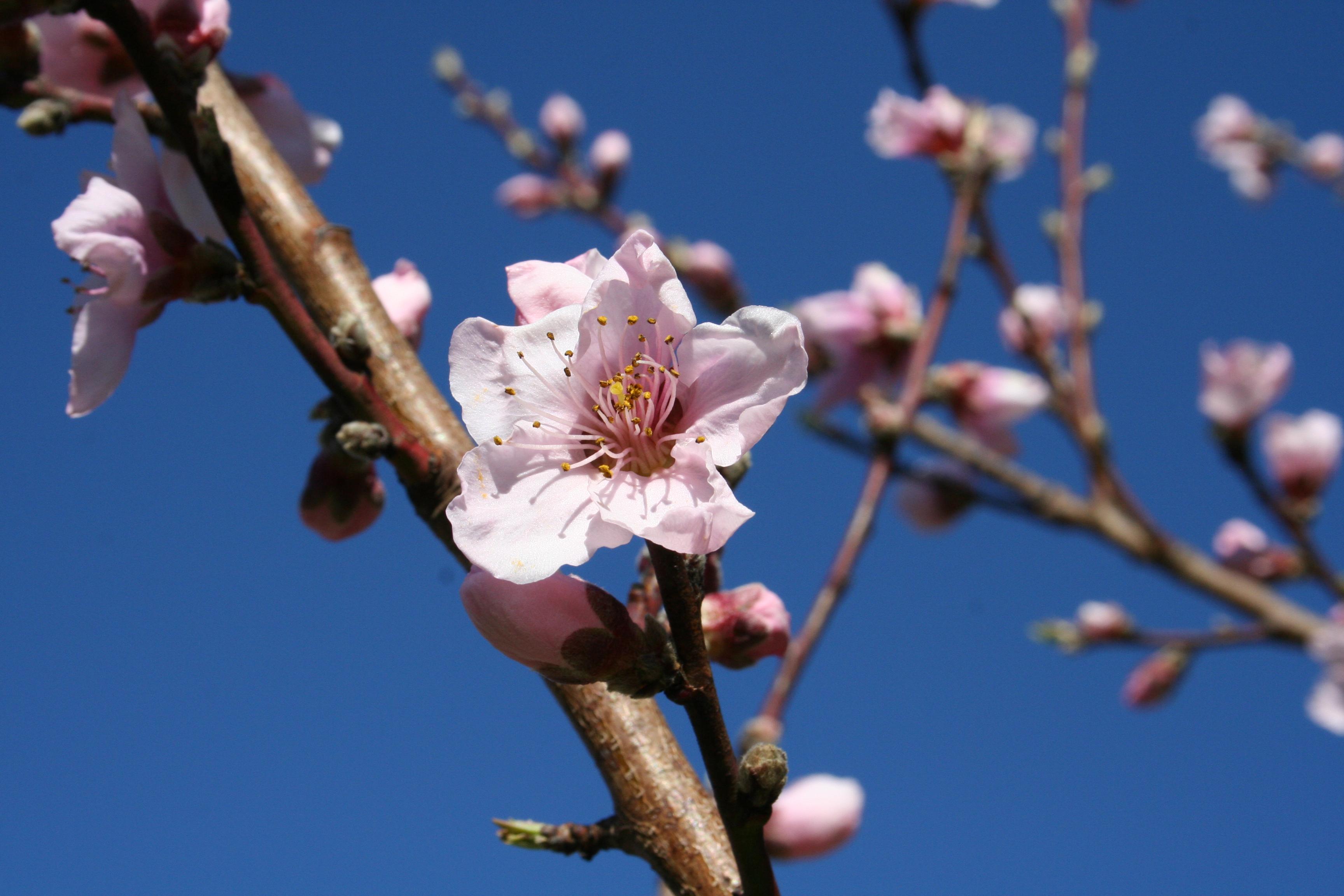
Peach Blossom (after Li Po)

file0001629991807

Peach Blossom (after Li Po)

Ask why I stay on the green mountain
and I smile but do not answer; my heart rests.
A peach blossom floats downstream –
Heaven and earth, apart from this world.

The transliteration on Chinese-poems.com is as follows:

Ask me what reason stay green mountain
Smile but not answer heart self idle
Peach blossom flow water far go
Apart have heaven earth in human world

There the poem is titled “Question and Answer on the Mountain.”

IMG_5780

“Peach Blossom” is included in my micro-chapbook You Break What Falls, available via free download from the Origami Poems Project.

What is a micro-chapbook, you might ask? In this case, it consists of six short poems on one sheet of paper, folded (hence origami) to form a chapbook. You may download it, free of charge, here: http://www.origamipoems.com/poets/236-robert-okaji

Oh, yes. Folding instructions are on the Origami Poems Project site.

In Praise of Rain (with recording)

file00093561951


In Praise of Rain

Which is not to say lightning or hail.
Sometimes I forget to open the umbrella

until my glasses remind me: Wake up, you’re
wet! If scarcity breeds

value, what is a thunderhead worth
in July? A light shower in August?

Even spreadsheets can’t tell us.

***

“In Praise of Rain” is included in my micro-chapbook, You Break What Falls, available via free download from the Origami Poems Project.

file8541339345592

4 Poems Up at Rue Scribe

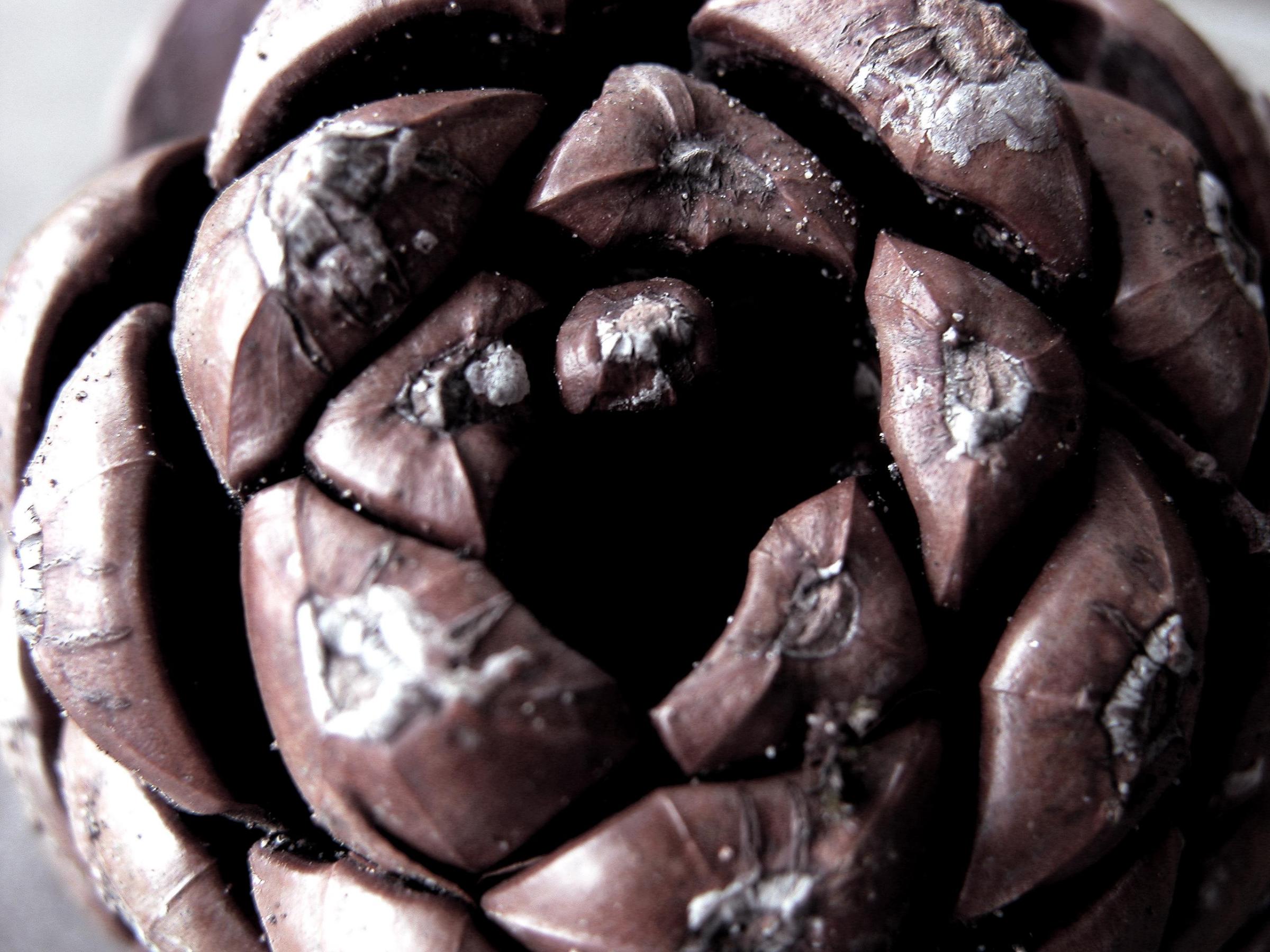
My poems “Worms,” “Self-Portrait as Question,” “Love Song for the Dandelion,” and “Pinecone on a Pedestal, Open Poet” are up at Rue Scribe. Many thanks to Eric Luthi and the editors at Rue Scribe for accepting these pieces, and to Ken Gierke, who provided the title for “Pinecone on a Pedestal, Open Poet” three years ago during a Tupelo Press 30-30 challenge. It finally made it into the world!

Poem Up at The 13 Alphabet

My poem “Even at Night” is up at The 13 Alphabet. Thank you to editor S.H. Shaan.

On The Burden of Flowering

On the Burden of Flowering

Even the cactus wren
surrenders itself
to the task,

though it rarely listens
to my voice. How do clouds
blossom day to day

and leave so little
behind? The bookless shelf
begs to be filled, but instead

I watch the morning age
as the sun arcs higher.
Yesterday you said

the mint marigold
was dying. Today it
stands tall. Yellowing.

“On the Burden of Flowering” first appeared in Panoply in August 2016, and is included in my chapbook, From Every Moment a Second.

Sheila Wild: Poetry and the Art of Unsaying

In this illuminating essay in The High Window, Sheila Wild discusses the unsaid in poetry.

The High Window Review's avatarThe High Window

Many years ago, at a time when I was beginning to take seriously both the writing of poetry and my Buddhist practice, I sat in the prayer hall of a Buddhist monastery and listened to the monks chant the evening puja, or service. It was the end of a busy festival day and most of the visitors had gone home, leaving me as the sole lay person present. I felt privileged to be there.

A white peacock appeared at a window and peered in, curious to see what was going on, and I began to shape this unusual incident into the beginnings of a poem. The words inside my head merged into the sound of chanting, and, after the initial resistance to an aural tradition alien to my own, my mind became trained to the alternation of voices and brass standing bells, the patterning of sound and silence. The…

View original post 2,632 more words