Ghazal of the Half


Ghazal of the Half  

Singing virtues, she swings to the east, claims half,
accepts what’s given, smiles, nods, names half.

What stone lies unturned in this bluest of graves?
Where love’s darkest lancet intrudes, inflames half.

The beauty of intercession and the divided become
one. Pushing them into two piles, she blames half.

Incomplete, I ride the lost memory’s pale vein,
as the motion of capture, of trickling, maims half.

You read the history of driftwood in its scars.
“Never whole. Always,” she exclaims, “half.”

My other name is a hill in a windstorm of sleep.
Forever apart and uneven, just the surname’s half.


“Ghazal of the Half” first appeared in Manzano Mountain Review in November, 2018. Many thanks to editors Justin Bendell and Kristian Macaron for taking this piece.


Transduced Ruin

desolate


Transduced Ruin

From bad to worse.
The hospital’s walls, shredded.

A turning back, the retrieval.
Frayed edges, unraveling, pulled down.

Conveyance and change, or, conversion.
Tying the knot, I think of home.

Things fallen apart.
She stands alone under the sky’s umbrella.

“Destroy infrastructure, destroy livelihood. Destroy.
Water leaking from the cistern’s wounds.

Wind to voltage; passive to active.
My church is the sky, the earth below, and everything between.

The center of one, of two.
Rounds, piercing armor.

A spiritual hole, leakage.
“It was easier to view them as targets, not human.”

Sequences: from water to ice, to vapor and back again.
I will surrender to flame and be scattered.

Firewing, starbolt, tearmaker.
Guided from afar, they sense but cannot feel.

Recursive death.
Counting graves, he considers relief.

The road to everywhere.
Looking back, I discover that I had already arrived.


* * *

I’d forgotten about “Transduced Ruin,” which was written during the August 2016 Tupelo Press 30/30 Project, a fundraiser for the non-profit literary publisher, Tupelo Press. I am grateful to Atomic Geography, who sponsored the poem and provided the title and these three words: spiritual, sequences, things. 


Poem in Brave Voices


My poem “The Gift” was published in Brave Voices in January 2019. I somehow missed it…

Many thanks to Audrey Bowers and her editorial staff for taking this piece.


The Green Light’s National Poetry Month Celebration


The Green Light has put up the collected works from their National Poetry Month celebration. .My poem “Houston” appeared on April 4th. Many thanks to editors Caitlin and Ash for taking this piece!


Chilled Soba

Chilled Soba

I am not
philosophical
today,

but hunger
concerns me.
Oh, not

real hunger
but a desire
to consume.

Afternoon
chews morning.
Evening

swallows afternoon.
Morning digests
night. And I,

slurping chilled
soba with
pickled ginger

and scallion,
wonder which verb
my days will choose.


“Chilled Soba,” first appeared in Kikwetu: A Journal of East African Literature in November 2018. I am grateful to the editors for accepting my poem.


The Shadow Behind You


The Shadow Behind You

That moment, spent. And another.
This goes on for hours,

days, metal pails filled with condensate,
emptied onto the parched soil
and sucked away within minutes.

What stares back at that precise second?

A void forms flesh, becomes a vessel
tumbled into the darkest rectangle,
leaving no evidence behind.

Our natures, revealed in absentia.

The dog barks at his reflection,
never thinking to examine himself,

while you stoop under the weight
of the tethered black, adjusting

your conscience, killing time.


* * *

“The Shadow Behind You” first appeared in Issue 125 of Right Hand PointingThank you to editors Dale Wisely, Laura M. Kaminski, F. John Sharp and José Angel Araguz for taking this piece.


Bread

OLYMPUS DIGITAL CAMERA

Bread

That year we learned the true language of fear.
I baked boule and you haunted medical sites.

You said to arrive I must first depart
or be willing to suffer self-awareness. Let’s not

mention our pact just yet. My basic boule requires a
Dutch oven, 20 ounces of flour, water, yeast and salt.

At twenty I learned the finer points
of sausage-making, how to butcher chicken, and

that your hair smelled like dawn’s last flower.
Back then we owned the night. Now I harvest

wild yeast and sharpen pencils, make to-do lists,
pour Chianti, run numbers. I agreed

to your proposal. It would be a kindness, you said.
The pancreas produces hormones

and aids digestion. I chopped off my left thumbtip
and a year later the abscission point

still felt numb. After rolling the dough
into a ball, let it proof for an hour in an oiled bowl.

We shared a taste for sharp cheese
but never agreed on pillows. You loved

down comforters and found vultures fascinating.
Years together honed our lives

but we never considered what that meant. Score
the dough, bake it for 30 minutes with the lid on,

remove the lid and bake for another 15.
Kneading resembles breathing: in,

out. Rise, fall. Bright lights made your eyes water,
so I kept them dimmed. You swallowed

and said “Tell me how to knead bread.”
With the heel of your right hand, push down

and forward, applying steady pressure.
The dough should move under your hand.

Within minutes it will transform.


* * *

“Bread” was first published in Extract(s) in April 2015.

pillows

Q&A with Poet Robert L. Penick

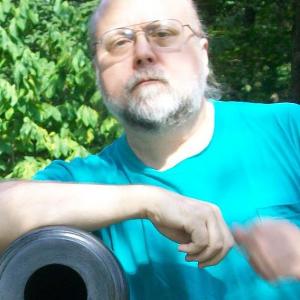
Robert L. Penick’s writing has been published in numerous literary journals. His poetry chapbook, Exit, Stage Left, won the 2018 Slipstream chapbook contest. The former editor of Chance Magazine, he has most recently been editing and publishing Ristau: A Journal of Being. He lives in Louisville, Kentucky.

Would you mind sharing a bit about your background? How and why did you come to writing? How has being a non-academic framed your work?

I grew up in a very blue-collar environment, was the first—and the last person in my family to go to college, and really took to writing around age 14.  A number of different factors instilled a sense of “otherness” in me, a sense of not fitting in, or wanting to fit in, with the available demographics.  I believe not being the product of an academic writing program has helped me mold my own peculiar voice, since I had no one indoctrinating me with what writers I should like.  There are a lot of folks slogging their way through Michel Houellebecq, for example, because some professor told them that’s good writing. I disagree.  The best are the ones that connect with you, plain and simple. I worked in the court system with the mentally ill and victims of domestic violence, and I believe that had a more valuable impact on what I do than 1,000 workshops.

Your chapbook, Exit Stage Left,won the 2018 Slipstream Annual Poetry Contest. Can you tell us something about its genesis?

Exit, Stage Leftwas a selection of poems from a full-length book project I have called The Art of Mercy  that I haven’t been able to get published.  Mercyis 70 pages, with each of the 70 poems having been published in one journal or another.  I flipped through it and chose 25 pieces that I thought hung together well and sent it off. Some of those pieces go back fifteen years, and I didn’t realize that the overriding theme was one of aging and mortality until I actually had the finished book in my hands.  A fine Kentucky poet, James Still, said in effect that young poets write of death and older poets write of life.  I see life/death, happy/sad, and love/hate as being sides of the same coin.

(Note from RO: To read three poems from this collection, or to order the book, click here. It’s a bargain at $10, with superbly crafted pieces of loss, hope and humanity.)

Would you offer up some of your artistic influences. What draws you to that work?

The writer having the biggest impact on me was John Steinbeck.  Many people dismiss him as sentimental, but you know what?  People are sentimental, just naturally so.  I remember finishing the last page of The Grapes of Wrath, putting the book down and just walking around the house wringing my hands.  I love getting that connection to basic humanity.  Ray Bradbury is the only science fiction author I’ve enjoyed, because those aren’t sci-fi stories, they’re stories about real people with real hearts and hopes and dreams.  Except for the robots, I guess.  Currently I’m on a Nabokov kick, reading his short stories.  That the man could write that well in his third language is astounding.  Recently, I found Richard Wright’s story, “The Man Who Lived Underground,” and was moved by its drama and precision.  

If you were a poetic form, which would you be?

I would be…an accident report.  “Subject took the off ramp at too great a speed and went through the guardrail into the lake.  After being checked by EMS, subject was transported to Metro Corrections, charged with having a lack of common sense.”

You’ve edited and published literary journals. Could you explain what crosses your mind when reviewing poems for possible inclusion in one?

Why am I doing this?  There is a danger in putting out a literary journal, in that you get bludgeoned by bad writing, and that can damage your own craft.  I’ve always said that writing a poem is like playing the harmonica; anyone can do it, but not many can do it well.  But a lot of folks buy their harmonica, then go straight to the Wednesday night open mic at the corner bar without putting the time in to learn. With writing, it’s a matter of finding your natural voice, being able to spot what doesn’t work, avoiding cliches and such.

What themes or traits will readers find in your work?  

I go for humanity more than anything, working often with characters who are socially isolated in some way, finding meaning in the day-to-day.  You have to be entertaining—for goodness sake, don’t bore people—but if you can slip some kindness in there, it’s a win.
 And your creative process? Could you offer us a glimpse into how your poems develop from first glimmer to fully realized piece? Do you follow a regular writing routine? Write in public or in solitude? 

I pick up a lot of ideas when I’m out.  I haven’t been able to write at home lately, so I scribble in coffee houses and fast food joints.  I’m that odd guy in the corner.  Last month, I’m at Burger King, and there’s maybe three other guys there, each eating alone.  I thought, “We should all squeeze into one booth together; we wouldn’t look so pathetic.” That became a poem called “BK,” about how every solitary person still has their childhood train set running through their past. Habit-wise, I wish I could be one of those folks that did their two or three hours a day, but that flow state is getting harder the older I get.  I get a cup of coffee and, if I get 200 words down on a story, that’s a good day.  It’s like pulling teeth, but I’m a fairly conscientious dentist. 

What advice would you offer to a writer just starting out?

Realize that the product is separate from you and don’t be stung by constructive criticism.  If a person is restoring a car and you point out the brake line is leaking, he or she will likely thank you.  But many writers are threatened by good criticism.  At the same time, be selective about what advice you take.  Many people will have no idea what you’re trying to do, and many writers (I’ve done this) will unconsciously try to make your writing more like their own.  You’re at a good point when you can hand a piece to someone you respect and say, “what’s the weak link in this?” 

Do you have any projects in process?

Three big things on my dance card right now: The Art of Mercy that I mentioned, Redemption, a gritty novel that may be too dirty for today’s market, and a collection of flash fiction I’m putting together. Flash gets a bad rap, mainly because much of it are merely fragments, but I think I’ve  done some impressive work with the 300 word story.  I’ve had perhaps 25 of them published (many are linked from my website, theartofmercy.net) and I’d like to get a book of them.  It’s funny, I’ve had work in 150 different literary journals, but it’s difficult finding a house that will do a full-length book for me.  Alas.  We can always find something to cry about, if we choose.
 

Laocoön

GREEK COLUMN LINDOS


Laocoön

This figure of complexity
persuades a lingering

glance, the two-fold
inclination entwined,

horror expressed
in tandem, the sons’

limbs compressed
as the father struggles,

realizing true
sacrifice, the inward

grasp of storm and
wrath and serpent,

his face
echoing those yet

to come, breached
walls, a city in

flames, the cries
of warnings unheeded.


the_kelpies

Laocoön, through Virgil’s Aeneid, is the source of the phrase “Beware of Greeks bearing gifts.” The poem, which first appeared in The Blue Hour Magazine, was inspired by the sculpture “Laocoön and His Sons,” which resides at the Vatican. You might find Wikipedia’s entry of interest. Originally posted on the blog in February 2016.

Apricot House (after Wang Wei)

file000532973761


Apricot House (after Wang Wei)

We cut the finest apricot for roof beams
and braided fragrant grasses over them.

I wonder if clouds might form there
and rain upon this world?


The transliteration on Chinese-poems.com reads:

Fine apricot cut for roofbeam
Fragrant cogongrass tie for eaves
Not know ridgepole in cloud
Go make people among rain

Each adaptation poses its challenges, and this one was certainly no exception.
First I identified key words and determined how or whether to use them.
Apricot, roofbeam, cogongrass, eaves, ridgepole, cloud, people, rain.

Apricot was a given. It offered specificity, and feels lovely in the mouth. Roof beams, as well. Cogongrass didn’t make the cut. It is indeed used for thatched roofs in southeast Asia, but it felt clumsy; in this case, the specificity it lent detracted from my reading. And rather than use “thatched” I chose “braided” to imply the layered effect of thatching, and to imply movement, to mesh with and support the idea of clouds forming and drifting under the roof. “Not know” posed a question: did it mean ignorance or simply being unaware, or perhaps a state of wonderment? I first employed “unaware” but thought it took the poem in a different direction than Wang Wei intended (but who knows?). “Ridgepole” seemed unnecessary. So I chose to let the reader follow the unsaid – using “form there” to reinforce the impression already shaped by the roof beams and the grasses “over them.” I admit to some trepidation over the second couplet. It may still need work.


clouds

“Apricot House” first appeared here in December 2014.