
You might read the poem at Taos Journal of International Poetry & Art.


Every Wind
Every wind loses itself,
no matter where
it starts. I want
a little piece of you.
No.
I want your atmosphere
bundled in a small rice paper packet
and labeled with strings of new rain
and stepping stones.
I want
the grace of silence
blowing in through the cracked
window, disturbing only
the shadows.
Everywhere I go, bits of me linger,
searching for you.
Grief ages one thread at a time,
lurking like an odor
among the lost
things,
or your breath,
still out there,
drifting.
“Every Wind” first appeared in The Lake in July 2016.
Memorial Day
Arriving at this point
without knowledge of the journey,
the slow collapse and internal
dampening – the shutting down, the closing in – lost
in the shadowed veil, my eyes flutter open to find
everything in its place, yet
altered, as if viewed from a single step
closer at a different height, offering a disturbing
clarity. Looking up, I wonder that she wakes me
from a dream of dogs on this, of all days,
only to detect under me linoleum in place of the bed,
my glasses skewed from the impact,
the floor and left side of my head wet. You looked
like you were reaching for something, she says,
and perhaps I was, though with hand outstretched
I found nothing to hold but the darkness.
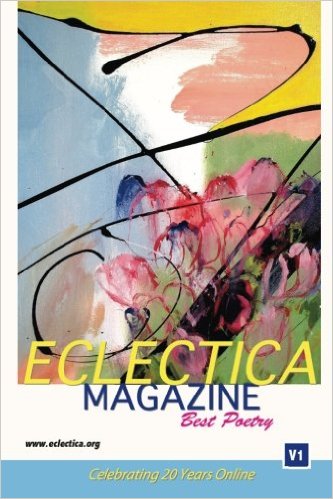
“Memorial Day” was first published in Eclectica in July 2014, and was, much to my delight, subsequently included in Eclectica Magazine’s 20th Anniversary Best Poetry Anthology.

I’m participating in the Open Mic at Words and Feathers. My contribution is “Scarecrow Pretends,” and can be read here, at The Slag Review. Kudos to Crow for hosting this virtual reading!

We Call the Neighbor’s Fat Burro Donkey Hotei, but His Name is Cantinflas
Certainty grows in corners, away from light.
From his mouth issues the breath we take, the words we keep.
Enjoy the collusion of shape and sound.
We share the hummingbird’s taste for sweet, but not its fierceness.
Its heart beats 1,200 times a minute,
and you ask me how best to bury money.
Hotei’s name means cloth sack, and comes from the bag he carried;
a man of loving character, he possessed the Buddha nature.
What we own cannot be held.
Most plastics are organic polymers with spine-linked repeat units.
The space you’ve left expands exponentially.
Left in the rain, the bell grows.
Christen me at your own peril. Agaves flower once then die.
Fluency in silence.
I dropped my pants when the scorpion stung my thigh.
The wind takes nothing it does not want.
After vulcanization, thermosets remain solid.
The Cantinflas character was famous for his eloquent nonsense.
Vacuum wrap the bills in plastic, place them in pvc.
Having mastered imperfection, I turn to folly.
Not the thing itself, but the process laid bare and opened.
Hoping to hide, the scorpion scuttled under a boot.
Thought to action, whisper to knife: which is not a curse?
The wind wants nothing; the burro sings his loneliness.
This first appeared here in May 2015. My failures often lead to success. I’ve never quite completed this piece, and don’t know that I ever will. But the first draft (nearly five years ago) set me off on a new path, one that has served me well. What more can I ask?

Which is an Eye or a Bowl, a Dream
Or well-placed mirror in a sunburnt room, shivering through shifted
images: that hand, blackened and stout, opened like a dark peony;
the tattooed chin; shovel and torch; hook and owl. You say no one
chooses one fist over another, that bread’s rise completes its cycle
and begins anew, pressed flat and rounded. Take this heart and seal
its chambers. Note the anterior descent. Compression, lesion. Plaque.
Consequence. And your friend, who slept, never to awaken. Lying
in that strange bed, you taste salt, acknowledge change, whisper
to no one: audible house…audible tree, knowing that time’s limit
remains unclear. The air swirls and you accept this new light.
Note: “Audible house…audible tree” is from Jane Hirshfield’s “Not Moving Even One Step,” from The Lives of the Heart.

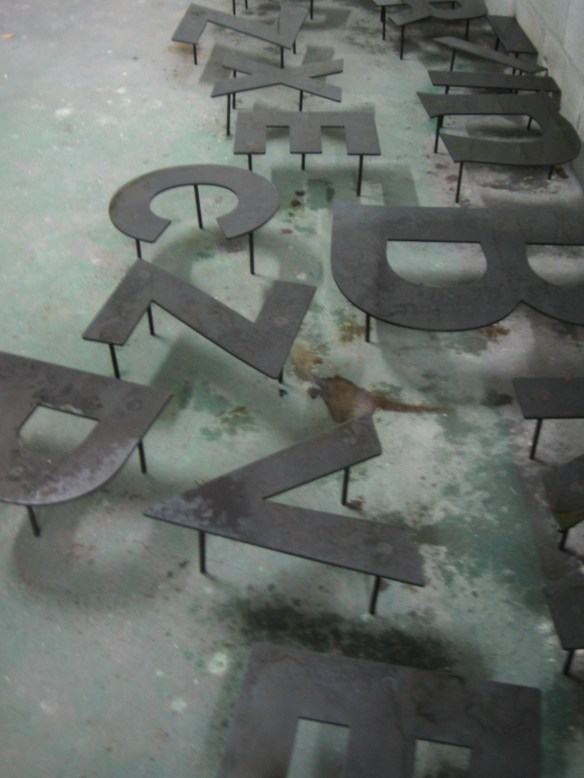
Yesterday, while avoiding the big rig frenzy on the wet highway, I heard a fascinating talk on NPR’s TED Radio Hour, Phuc Tran’s “Does the Subjunctive Have a Dark Side.” The idea of how one’s language, one’s grammar, can shape or affect a culture, has never been made so apparent to me as in this well articulated piece.
I’ll Turn But Clouds Appear
You gather and disperse and nothing I do salves my hunger.
Where are you, if not here among the roots of dead flowers
or inches below the window’s opening
in the leaf-filtered light. Or spread across
the ceiling, caught in filaments of expelled
hope. Savoring motion, I look up and address the Dog Stars,
longing to catch your attention. But clouds muffle
my words, and instead I turn
to the fragrance of tomato and garlic and spice
wafting into the night. What could bring you back?
Not love. Not wine. Not solitude, nor the sound of my voice.
I spoon out the sauce, cautiously, and wait.
* * *
“I’ll Turn but Clouds Appear” first appeared in Bindlestiff.


Still Hands (Cento)
I let it burn, rooted as it is. Now
nothing else keeps my eyes
in the cloud – get close to a star,
and there you are, in the sun.
What about all the little stones,
sitting alone in the moonlight?
Silence complicates despair.
I have believed so long in the magic
of names and poems,
and I know that you would take
the still hands to dryness and
loose rocks, where the light
re-immerses itself. It’s not the story
I want. We cannot live on that.
* * *
Credits:
Sharon Wevill, Julia de Burgos, Francis Ponge, Mary Oliver,
Alberto de Lacerda, Robert Hass, HD, Jacques Dupin, Francesca Abbate, George Oppen.
“Still Hands” appeared in Issue Four of Long Exposure, in October 2016, and prior to that, on this blog in July 2015.


An update to the series. Read Khaty Xiong’s interview, and listen to/read “In Mother’s Garden.” Buy her books, or download (for free) this mini-digital chapbook, Ode to the Far Shore. A beautiful work!
The Academy of American Poets is offering a series, curated by 2016 Walt Whitman winner Mai Der Vang, featuring poems by and discussions with Hmong American poets.
Our country is enriched by its great diversity, yet we too often passively accept only what comes to us. Read these poets. Listen to their words. This is who they are. Who we are.
 O at the Edges