Variations on a Theme

darkedinburgh_shadow

Variations on a Theme

1. The Long Night

We envy the shadow its attributes, its willingness to subside,
but what of its flesh?

I lay in the field and wept.

Think of the fragrance, the moist leaves
enveloping the still

warm body. In retrospect, I realize that I should never have left, that air
returns to voided space despite all attempts to disavow

light, that wind and rain and soil alike filter through the chest’s
cavity, that stones may bear one’s touch in perpetuity.

At nineteen, death had gifted nothing to my world.
At twenty, little else remained.

So close, so lovely.


2. The Loneliness of Shadows

Light collapsing around a point. The two-headed flower.

In my dreams, no one speaks.

Not the thing itself, the bud bursting forth, petals ablaze with color,
but rather change: the process reinforced.

Sleep seldom shows such kindness.

Or its fruit, redolent of sun and rain, withdrawn and shriveled,
and finally, ingested.

Yesterday I woke damp but unafraid.


3. Alchemy

Stones never talk, but they rise from the earth, appearing as if by invitation.

The way silence lines an unfilled
grave, which is to say as below

so above, an infinite murmur open to the night.
And other notions: transpiration.

Waste.
Sublimation. Calcination and burning.

At times I have withdrawn
like water from the air’s

body, fearful yet reckless in the act.
That evening the moon flickered and the shadows lay at our feet,

and all the words we never framed,
the bitters our tongues could not know, the wasted

music and abandoned caresses, those words,
sighed into the ground, leaving you adrift, alone.

But how else might one transform darkness to light?
Or the reverse.

huey_ef


This originally appeared in Boston Poetry Magazine in April, 2014, and was first posted here in July of 2015.


 

Listening to Cicadas, I See Charlottesville (Ghazal, with recording)


Listening to Cicadas, I See Charlottesville (Ghazal)

Shedding one coat, you live in the red, apart
from the rest. Never together, forever apart.

In this sun-drenched field, the cracks drill deeper,
wider, dribbling soil and small lives, expanding, apart.

What falls truer than any words released from this man?
Once divided, never again to touch, always apart.

The electric shrill fluctuates pitch, in unison. Hundreds
of tymbals, shredding dusk, now together, then apart.

You narrow your eye to a slit, but still see the entire
spectrum. Wing clicks, stridulation. Whole yet apart.

Shearing syllables, I learn the language of half-truth.
What is my name? I reach for that fragment. It falls apart.


Poem Up at Clementine Unbound

My poem “Love in the Time of Untruth” is live at Clementine Unbound. Many thanks and much admiration for editor G.F. Boyer for taking this piece and for being so kind during a difficult time.


Returns

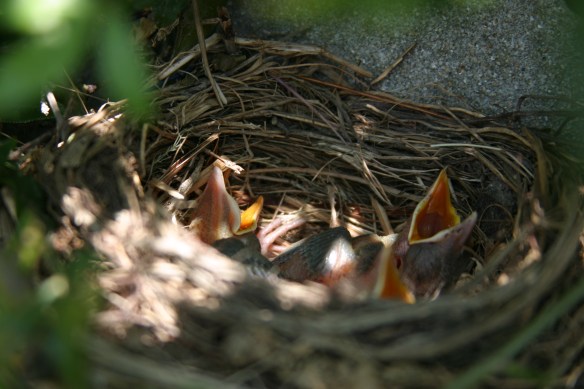
baby birds


Returns

What good is a rock
if the people fall, if truth

remains but no one
hears the long grass

rattle, and words
burst into flame

and gas, and life
poisons itself with

greed and the deficit
of compassion.

No body exists to bury.
I am trying to return

to a place of open
mouths, of nests and

groves left standing
despite their value

to the market. Which
pocket do I empty,

what song do I leave
unsung. Tomorrow

always becomes
yesterday, and today

flakes away into chilled
ash, carried over

rooftops and clouds,
never to be seen again.


gargoyle

“Returns” first appeared here in September 2017.

Before We Knew


Before We Knew

All thought of consequence
melted with that first touch
of tongue to skin, no respite
to be found in that heat,

no shade at all. I recall
hitching a ride later with a
German couple who lit up
and passed the joint without

asking, and after their
Cinquecento sputtered away,
I walked down to the bar at the
waterfront for an espresso and

to watch the lights spark along
the bay.  A few times a week
I’d see a boat putter in and tie up,
and the one-armed man would

display his catch or a carton
of bartered Lucky Strikes, but
not this night. The moon
weighed heavy on my shoulders

as I trudged home, remembering
the way you’d smiled and said,
from some place I’d never
witnessed before, come here,

now, as if I could have said no and
turned around, as if another urge
could have inserted itself
in that moment, in that life, ever.

* * *

“Before We Knew,” first appeared in Sleet Magazine in August 2018. I am grateful to editor Susan Solomon for taking this poem.


Scarecrow Ascends


Scarecrow Ascends

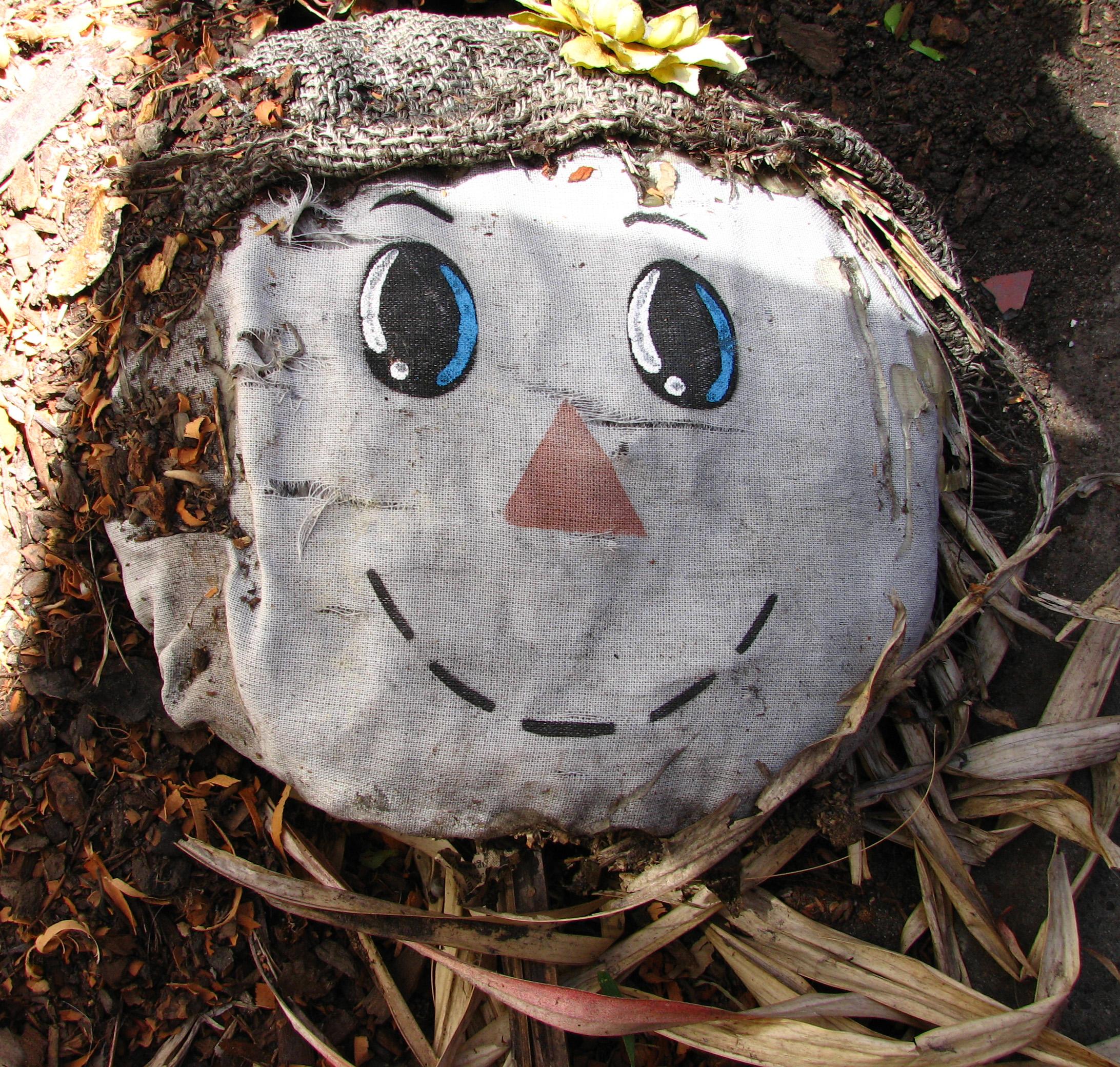
Fixed yet not immobile, I watch bits of me drift
over the wavering grain, a diaspora of disparate
selves once gathered. Some openings are blessings.
Others encourage dispersion. Yesterday’s coat-breech
is now a hole from which I trickle. Think of politics,
and how the tiniest crack may expand and engulf
its body, how one lie gains heft through repetition
at the expense of truth, driving fear. And to what
end? More wealth by exclusion? Power? Everything
dissipates. Even those mountains looming over
state houses, even the sun and its gravity, even your
idols and their power over reason. Had I no purpose
I would gladly rip open these rags and beg the wind
to carry me high, piece by fragment, to mingle with
the clouds and the rains to come and the refracted
light from afar, perhaps to glimpse something greater
ahead. Perhaps merely to dispel, to become undone.


* * *

“Scarecrow Ascends” first appeared in Sleet in August 2018.


Gulf

gulf

Gulf
for M.V.

Which looms wider, its sky or water? The birds, here, too,
reconvene in greater streaks. This morning I stomped around
Paisano, examining the grasses and soil, the rocks and various
configurations of clouds, and listened to experts discuss
prescribed burns and how the land’s contours can determine
sequence and efficacy. The mockingbird whose territory
we occupy has disappeared. Perhaps he’s just moved on.
I heard a red-bellied woodpecker yesterday, but never saw it,
and of course the rattlers at the ranch are still underfoot, just
less apparent this time of year. I looked closely, as always,
but never spied one. What else did I miss? The rich people
on the bluffs bulldoze habitat, poison creeks and erect their
Italianate villas, caring not a whit for the breeding warblers
or the landscape, although they might pony up a few bucks
for an environmental charity if sucked-up to properly. Given
a choice between the two, I’d pick the snakes every time;
they don’t smile or offer spiked drinks and stories of their
conquests, and usually warn before striking. Even a minor
deity might take offense and crack open a new fault in the
earth between this place and theirs, widening it by inches
with each presumption, every falsehood, whether shaded
in unrelated facts or illogic, until that shifting space could
be spanned solely by a bridge planked with truth and good
manners, and, yes, by mutual consent. Looking back, I
find many examples of these bridges collapsing in utero,
but we keep trying. Your story of the gulf coast storm
reminded me of weeks spent on calm water, and seeing,
no matter where I turned, blue meeting blue, from horizon
to horizon, the sky never broken by bird or cloud, born
anew each day, always looking between, never down.


“Gulf” was published in West Texas Literary Review in March 2017.

Senate (Tritina)

Senate (Tritina)

Not imposition, but welcome.  The way
cooperation welcomes coercion, turning the
tenor of the intended phrase, opening

the statement to interpretation, opening
a point without dissension, in the way
of politics, agreeing which fact will shape the

morning, which truth will determine the
next word and the subsequent, as if opening
the issue, claiming to have found the way,

one way, the only, but never actually opening.


* * *

A tritina might best be described as the lazy poet’s sestina, consisting of ten rather than 39 lines, with the end words of the first stanza repeating in a specific pattern in the subsequent two stanzas. The last line includes all three end words.

The patterns:
abc
cab
bca
The last line uses the end words in sequence following the pattern of the first stanza.

This first appeared on the blog in March 2017.


If Ahead I See


 If Ahead I See

Gray skies filtered through light,
eyes adapting space,
the possibilities of the

horizon or a foot
lashing out in reflex,
what do I learn?

The house finch sings as if
all air will expire at song’s end.

Falling, I release this misplaced trust.
The path, muddied and crowded with fools.


* * *

“If Ahead I see” is included in my 2017 chapbook, From Every Moment a Second.

On Air Conditioning


 On Air Conditioning

The man who owns everything wants more.

Another offers his sandwich,
accepting grace with a smile.

Like vapor condensing in a coil
to remove heat from the air.
Difficult to comprehend.

Harder to live.