Wherein the Book Implies Source

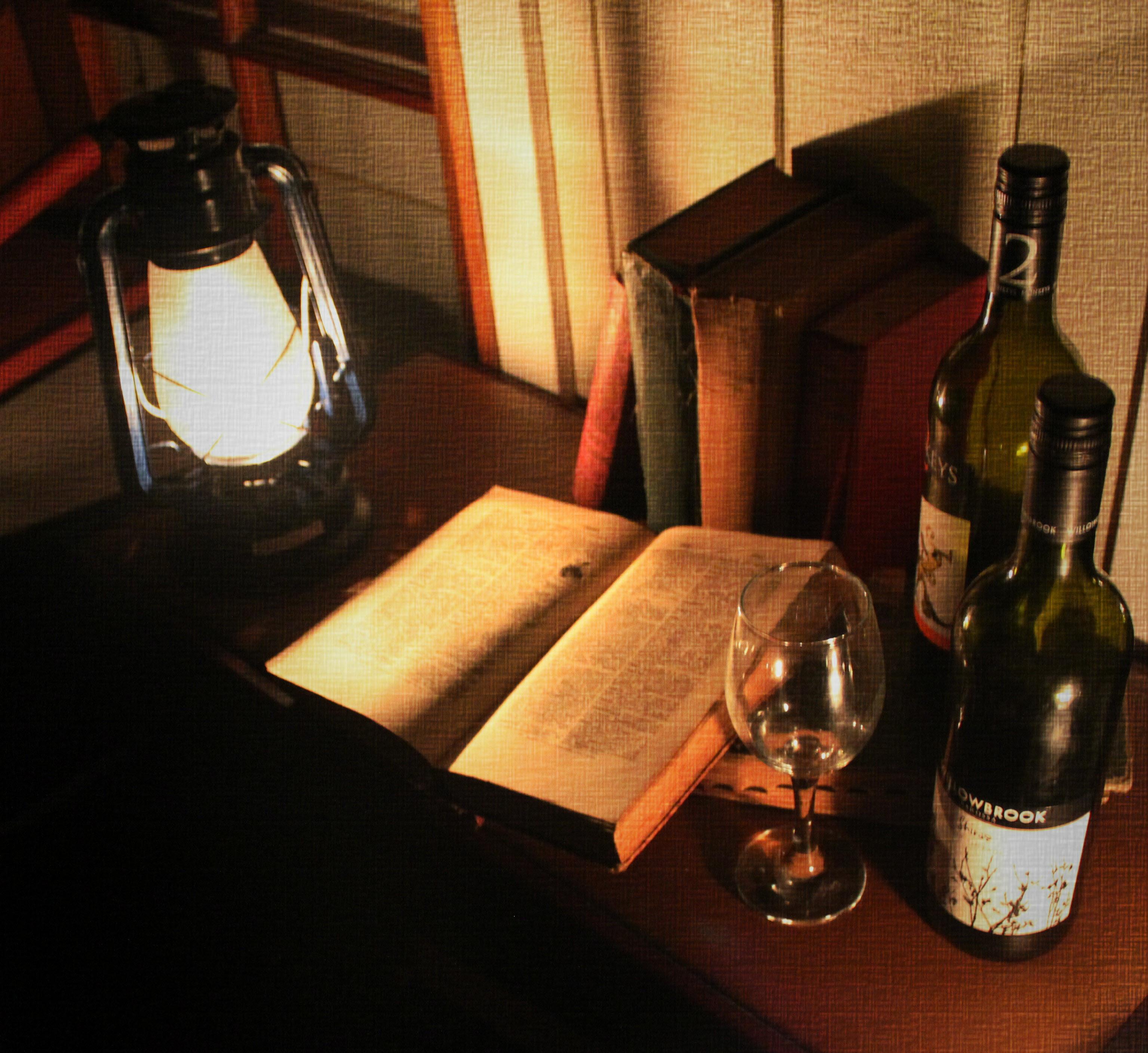
book


Wherein the Book Implies Source 

And words form the vessel by which we traverse centuries, the river
stitched across the valley’s floor, easing access.

Accession by choice. Inorganic memory.

Vellum conveys its origin: of a calf.

How like an entrance it appears, a doorway to a lighted space.
Closed, it resembles a block of beech wood.

To serve as conveyance, to impart without reciprocity.

Framing the conversation in space, immediacy fades.

The average calfskin may provide three and a half sheets of writing material.
Confined by spatial limitation, we consider scale in terms of the absolute.

The antithesis of scroll; random entry; codex.

A quaternion equalled four folded sheets, or eight leaves: sixteen sides.

Reader and read: each endures the other’s role.
Pippins prevented tearing during the drying and scraping process.

Text first, then illumination.

Once opened, the memory palace diminished.


* * *
This originally appeared in April 2014 as part of Boston Review’s National Poetry Month Celebration, and is included in The Circumference of Other, my offering in the Silver Birch Press chapbook collection, IDES, published in 2015.

ides front cover 92915

White Mules and a Column of Smoke

vinyl


White Mules and a Column of Smoke

I am thinking of a place I’ve never seen or visited,
much like Heaven or Jot ‘Em Down, Texas, but with better
beverages and the advantage of hindsight and seasoning,
a glance back or to the peripheral, with a side of memory
and sliced, pickled jalapeños topping a pile of imagination.

And how do we so clearly remember what never occurred?
That book I read in 1970 was first published three years
later. A drowned childhood acquaintance ordered a beer
and sat next to me at a party in college. The open fields
I recall from the garden walls in France, where homes stood.

If only we carried with us slide shows or grooved vinyl
to trace back our lives – photos and recordings of those daily
remembrances – detailed notes indexed on cards, or data
embedded in our palms and accessed by eye twitches.
Would such evidence improve our lives?

Which filters shutter moments and thoughts, twist them
into balloon animals we no longer recognize? False
accusations and convictions aside, can we trust what we
know to be true? That oak stands where it has for four
decades. I bleed when cut. The sky still leers above us.


“White Mules and a Column of Smoke” was drafted during the August 2016 Tupelo Press 30/30 challenge. I am grateful to Natalie Butler, who sponsored the poem and whose photo inspired me.


The Resonance of No (with recording)

dishes


 The Resonance of No

Yes, yes, we’ve heard. The dishwasher wastes less
and cleans better. But Kenk­ō believed in the beauty
of leisure, and how better to make nothing
while standing with hands in soapy water, thoughts
skipping from Miles Davis’s languid notes to the spider
ascending to safe shelter under the sill (after I blow
on her to amuse myself), washing my favorite knife
and wondering if I should hone it, not to mention
my skills on the six-string or the potato peeler.
And if I linger at the plates, even the chipped one,
admiring their gleam after hot water rinses away
the soap residue, who could question the quick gulp
of ale or the shuffle of an almost-but-not-quite
dance step-or-stumble while arranging them on the
ribbed rack, back-to-back, in time to Coltrane’s
solo. Then the forgotten food processor’s blade
bites my palm, and I remember that I’ve outgrown
the dark suit, the cut branches still need bundling
and none of the words I’ve conjured and shaped
over decades and miles will extend their comfort
when I stand at my father’s grave this week or next.


“The Resonance of No,” was published in December 2016 in Gravel, and is included in my chapbook, From Every Moment a Second.

Daniel Schnee wrote about this poem here.

Music Credit: Cool Vibes Kevin MacLeod (incompetech.com)
Licensed under Creative Commons: By Attribution 3.0 License
http://creativecommons.org/licenses/by/3.0/


While Looking Up at a Working Wasp, I Trip


While Looking Up at a Working Wasp, I Trip

How do these things I once barely acknowledged
now snare toes or twist ankles, causing me to stumble,

spill coffee and curse. Steps, rocks, pavement, curbs.
Door sills. No matter which, without provocation.

Solitary wasps mate not in flight but in the vicinity
of their nesting area. Three years ago a female

violated our unspoken agreement of mutual
existence; my arm purpled and ballooned

to twice its normal size, and I demolished her nest
for fear that attacks would become habit. Today,

another builds in the same spot. I stoop by,
beneath notice, as she labors to make room

for eggs fertilized with stored sperm from a single
drone. Such diligence should earn rewards.

I stroll to the mailbox and marvel at their ability
to manufacture wood pulp for nests, how

certain species avoid mating with siblings
on the basis of chemical signatures, and that

they voluntarily control the sex of their offspring.
Ah, the wonders of nature! Approaching the door,

I look up and observe the growing nest with
admiration, enter the house without stumbling,

and inhale the fragrance of the perfectly arranged
lilies. The books on the table entice me, so I

pour a glass of malbec and thumb through them
with great pleasure. Soon, after sunset, she will die.


* * *

“While Looking Up at a Working Wasp, I Trip” was published in MockingHeart Review in May 2018.

Maps


Maps

If we fold the map just so, the journey’s path
shrinks considerably. Sacramento enters the Hudson
Valley, Toronto meets Santa Fe, and Lee County,
Mississippi merges with Tupelo, Texas, joining music
to fruitcakes in a celebratory feast.  Stroll down one
road and find a lost car. Exit a theater to enter bliss
or a good bar with craft beer on tap, where no one
discusses mileage and you may eavesdrop on
conversations about ancient nautical battles, the
history of chili, and radiation. Unfold the map
twice to find yourself in Swamp Angel, Kansas,
named after a Civil War field gun and not a spiritual
being, and wander to the next intersection near
Barstow, where Joshua trees tickle the sky’s belly
and I ate the best chili dog in my young life’s
experience in 1968. Look to the edges, where the
best places crowd and nowhere lives in a corner.
Jump from Busan to Venice, drive to Perth and
beyond. Slowly crease the page. Do this again.
Point blindly. There. Your destination waits.


My poem “Maps” iwas publishedin February 2019 at Riggwelter. Thank you, Amy Kinsman, for taking this piece, which was originally drafted during the August 2016 Tupelo Press 30-30 Challenge. I owe its existence to Ken Gierke, who sponsored the poem and provided the title (which I changed) that sparked this piece.


Q&A with Poet Robert L. Penick

Robert L. Penick’s writing has been published in numerous literary journals. His poetry chapbook, Exit, Stage Left, won the 2018 Slipstream chapbook contest. The former editor of Chance Magazine, he has most recently been editing and publishing Ristau: A Journal of Being. He lives in Louisville, Kentucky.

Would you mind sharing a bit about your background? How and why did you come to writing? How has being a non-academic framed your work?

I grew up in a very blue-collar environment, was the first—and the last person in my family to go to college, and really took to writing around age 14.  A number of different factors instilled a sense of “otherness” in me, a sense of not fitting in, or wanting to fit in, with the available demographics.  I believe not being the product of an academic writing program has helped me mold my own peculiar voice, since I had no one indoctrinating me with what writers I should like.  There are a lot of folks slogging their way through Michel Houellebecq, for example, because some professor told them that’s good writing. I disagree.  The best are the ones that connect with you, plain and simple. I worked in the court system with the mentally ill and victims of domestic violence, and I believe that had a more valuable impact on what I do than 1,000 workshops.

Your chapbook, Exit Stage Left,won the 2018 Slipstream Annual Poetry Contest. Can you tell us something about its genesis?

Exit, Stage Leftwas a selection of poems from a full-length book project I have called The Art of Mercy  that I haven’t been able to get published.  Mercyis 70 pages, with each of the 70 poems having been published in one journal or another.  I flipped through it and chose 25 pieces that I thought hung together well and sent it off. Some of those pieces go back fifteen years, and I didn’t realize that the overriding theme was one of aging and mortality until I actually had the finished book in my hands.  A fine Kentucky poet, James Still, said in effect that young poets write of death and older poets write of life.  I see life/death, happy/sad, and love/hate as being sides of the same coin.

(Note from RO: To read three poems from this collection, or to order the book, click here. It’s a bargain at $10, with superbly crafted pieces of loss, hope and humanity.)

Would you offer up some of your artistic influences. What draws you to that work?

The writer having the biggest impact on me was John Steinbeck.  Many people dismiss him as sentimental, but you know what?  People are sentimental, just naturally so.  I remember finishing the last page of The Grapes of Wrath, putting the book down and just walking around the house wringing my hands.  I love getting that connection to basic humanity.  Ray Bradbury is the only science fiction author I’ve enjoyed, because those aren’t sci-fi stories, they’re stories about real people with real hearts and hopes and dreams.  Except for the robots, I guess.  Currently I’m on a Nabokov kick, reading his short stories.  That the man could write that well in his third language is astounding.  Recently, I found Richard Wright’s story, “The Man Who Lived Underground,” and was moved by its drama and precision.  

If you were a poetic form, which would you be?

I would be…an accident report.  “Subject took the off ramp at too great a speed and went through the guardrail into the lake.  After being checked by EMS, subject was transported to Metro Corrections, charged with having a lack of common sense.”

You’ve edited and published literary journals. Could you explain what crosses your mind when reviewing poems for possible inclusion in one?

Why am I doing this?  There is a danger in putting out a literary journal, in that you get bludgeoned by bad writing, and that can damage your own craft.  I’ve always said that writing a poem is like playing the harmonica; anyone can do it, but not many can do it well.  But a lot of folks buy their harmonica, then go straight to the Wednesday night open mic at the corner bar without putting the time in to learn. With writing, it’s a matter of finding your natural voice, being able to spot what doesn’t work, avoiding cliches and such.

What themes or traits will readers find in your work?  

I go for humanity more than anything, working often with characters who are socially isolated in some way, finding meaning in the day-to-day.  You have to be entertaining—for goodness sake, don’t bore people—but if you can slip some kindness in there, it’s a win.
 And your creative process? Could you offer us a glimpse into how your poems develop from first glimmer to fully realized piece? Do you follow a regular writing routine? Write in public or in solitude? 

I pick up a lot of ideas when I’m out.  I haven’t been able to write at home lately, so I scribble in coffee houses and fast food joints.  I’m that odd guy in the corner.  Last month, I’m at Burger King, and there’s maybe three other guys there, each eating alone.  I thought, “We should all squeeze into one booth together; we wouldn’t look so pathetic.” That became a poem called “BK,” about how every solitary person still has their childhood train set running through their past. Habit-wise, I wish I could be one of those folks that did their two or three hours a day, but that flow state is getting harder the older I get.  I get a cup of coffee and, if I get 200 words down on a story, that’s a good day.  It’s like pulling teeth, but I’m a fairly conscientious dentist. 

What advice would you offer to a writer just starting out?

Realize that the product is separate from you and don’t be stung by constructive criticism.  If a person is restoring a car and you point out the brake line is leaking, he or she will likely thank you.  But many writers are threatened by good criticism.  At the same time, be selective about what advice you take.  Many people will have no idea what you’re trying to do, and many writers (I’ve done this) will unconsciously try to make your writing more like their own.  You’re at a good point when you can hand a piece to someone you respect and say, “what’s the weak link in this?” 

Do you have any projects in process?

Three big things on my dance card right now: The Art of Mercy that I mentioned, Redemption, a gritty novel that may be too dirty for today’s market, and a collection of flash fiction I’m putting together. Flash gets a bad rap, mainly because much of it are merely fragments, but I think I’ve  done some impressive work with the 300 word story.  I’ve had perhaps 25 of them published (many are linked from my website, theartofmercy.net) and I’d like to get a book of them.  It’s funny, I’ve had work in 150 different literary journals, but it’s difficult finding a house that will do a full-length book for me.  Alas.  We can always find something to cry about, if we choose.
 

Flood Gauge in the Morning


Flood Gauge in the Morning

It reclines on its side, submerged.
So far, so good, it seems
to say. Still here, still intact.
And the bridge looks so clean
from this angle
underwater.

I toss
a fist-size stone
onto the upstream
side of the road,
and watch it wash away.
Maybe we’ll cross tomorrow.


“Flood Gauge in the Morning” is included in my chapbook, From Every Moment a Second, available for order via Amazon.com and Finishing Line Press.


Flame


Flame 

Drifting, she passes through the frame.

Reshapes borders, edges.

The way smoke scribes a letter in the sky with
gases and particulates. Intractable. Impermanent.

But not like a risen corpse
yet to accept its body’s stilling, or
the flooded creek’s waters taking
a house and the family within. Some things

are explainable. This morning you drained
the sink, and thunder set off a neighbor’s alarm.

From every moment, a second emerges.

Picture a man lighting a candle where a home once stood.


* * *

“Flame” was published in Poppy Road Review in February 2019 and is included in my chapbook, From Every Moment a Second, available for order via Amazon.com and Finishing Line Press.

Tell it Slant: How to Write a Wise Poem, essay by Camille Dungy

OLYMPUS DIGITAL CAMERA


Few essays on writing poetry grab me by the collar, slam me against the wall, and say “Listen, dammit!” But this one did.

Camille Dungy’s words sear through the fog. She tells it slant. She tells it true. She explains how some masters have done it. If you’ve not read her poetry, seek it out. You’re in for a treat. If you have the good fortune to attend a lecture or reading by her, do so. She’s energetic, wise and kind. She knows.

http://www.poetryfoundation.org/article/247926

FIrst posted here in 2014..


Insomnia


Insomnia

Lying awake
at two in the morning,

wondering
how a dog would suffer

sleeplessness –
silently, or with little

growls and snuffles,
scratching at its

padded bed
in exasperation,

circling, turning
back, again.

I roll to the left,
then to the right,

and flat on my back,
groaning at the pain

in my hip and the anger
of the day’s impending

bull on my shoulders,
and the looming

banshee cry
of that damned alarm.