My New Chapbook to be Published by Finishing Line Press

From Every Moment a Second

The prepublication sales period for my new chapbook, From Every Moment a Second, begins tomorrow, June 13, and runs through August 11. The book’s tentative release date is October 6. Please note:  prepublication sales determine the print run, which means this stage is crucial in terms of how many copies will be printed and how many copies I’ll receive as payment. So if you feel inclined to help, and are able, please order your copy during this period. I will post the order link when it becomes available.

Many thanks to the members of this blog community for supporting my writing. I sit alone in my shack to write, but you are there with me, just a keyboard away. I am truly grateful for your wisdom and humor and willingness to help me traverse the strange and wonderful worlds of poetry and publication.

Review: You Break What Falls – Robert Okaji

Dani, from Only Books and Horses, has reviewed my 2015 micro-chapbook, You Break What Falls.

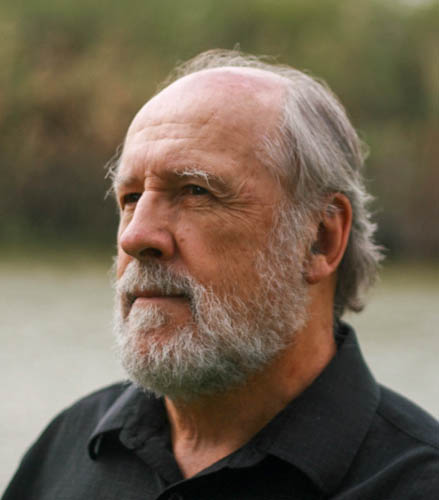
Q&A with Poet Chip Dameron

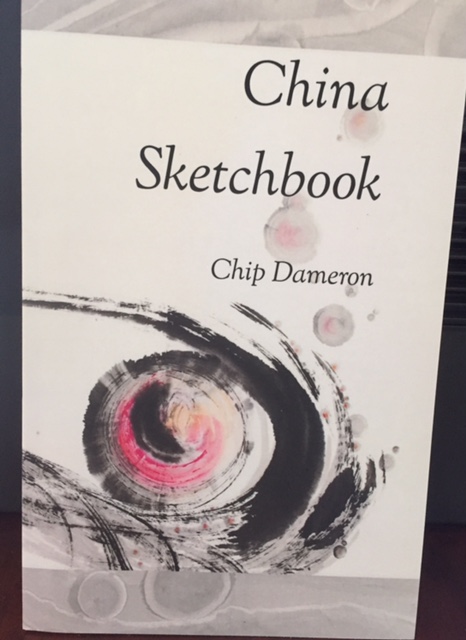
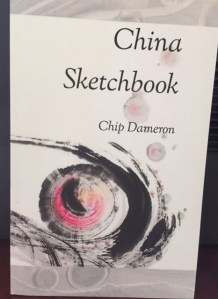
Q&A with Chip Dameron, author of China Sketchbook

Would you mind sharing a bit about your background?

I started writing poems in college and have been been playing with language ever since. To support my family, for many years I taught writing and literature at UT Brownsville and held several administrative positions. Now I am writing full time.

Which three words best describe your poetry?

Precise. Vivid. Imagistic.

Tell us about China Sketchbook. What was its genesis?

A few years ago my wife and I took a month-long trip across China, which was a stunning experience. I’ve long admired Chinese poetry and knew a little Chinese history, so to observe how China is transforming itself and to meet many of its people made for an unforgettable journey. I began drafting poems along the way, and I continued after returning home. China Sketchbook contains 27 poems, and Virtual Artists Collective was kind enough to publish it under its Purple Flag imprint in December 2016.

I’m sure you’re frequently asked this question, but I can’t resist: What carries you from the blank page to a poem? What is your process?

Usually I sit down to explore something I’ve seen or heard or experienced or thought about. What images can I find to get the poem started? Where do they want or need to go? Which words support the movement of the poem and give it the energy it needs to become a language-object that others might enjoy experiencing? Through this process I hope to create poems that are authentic and original.

A few months ago you published At Paisano Ranch, a micro-chapbook, with Origami Poems Project. What can you tell us about this book?

In September 2016, I began a four-month stay as writer-in-residence at Paisano Ranch in Austin, once owned by the legendary Texas writer J. Frank Dobie. You and I met at the ranch several times and talked about poetry, and I was intrigued by the charming micro-chapbook that you had published through Origami Poems Project called You Break What Falls. So I took six poems I had written about my experiences at the ranch and sent them off to OPP, and the editors accepted the micro-manuscript and published At Paisano Ranch in early December. I encourage poets and readers to visit the website, https://origamipoems.com, and download for free any of the micro-chapbooks that interest them. Poets may also wish to submit their own micro-manuscripts of six short poems.

What advice do you have for new poets?

Don’t be in a great rush to publish your work. Work at the craft of creating your poems, read your drafts out loud, and don’t be afraid to tinker with your poems, and even make extensive changes. You are engaging in the process of finding your distinctive voice, your distinctive style. When you’ve found that voice and style, you are ready to go public. And when you experience rejection, as all poets do, keep submitting your poems, and keep writing new ones.

Which artists inspire you? Whose work do you read, listen to, gape at, admire, envy?

I’ve long admired the great American poets of the past, including Whitman, Dickinson, Frost, and Stevens. More recent sources of inspiration include Seamus Heaney, Naomi Shihab Nye, and Billy Collins. And even through translation, which can’t do full justice to the original language, I’ve been amazed at the power of the classical Chinese poets, such as Li Bai, Du Fu, and Tao Qian.

What are you working on now, what’s in the pipeline, and what can we look forward to in the coming months?

I’ve recently completed a collection of poems called Mornings with Dobie’s Ghost, which is scheduled for publication in 2018 by Wings Press. I wrote the 35 poems while living and working at Paisano Ranch. And I’m in the middle of drafting a novel—my first—which has been a most challenging but stimulating experience.

Bio: Chip Dameron is the author of nine collections of poetry and a travel book. His poems and essays on contemporary writers have appeared in the Mississippi Review, Southwestern American Literature, San Pedro River Review, Puerto del Sol, Hayden’s Ferry Review, New Orleans Review, Borderlands, and many other journals and anthologies, as well as publications in Canada, Ireland, Nigeria, India, China, Thailand, and New Zealand.

Website: https://www.cdameron.com

YouTube reading at Malvern Books with Larry D. Thomas

Youtube reading at Malvern Books

Reading at the Friendswood Public Library

My Poem, “Even the Light” Is in La Presa

 My poem, “Even the Light,” has been published in the May issue of La Presa.

 Many thanks to editor Lee Gould for taking this piece.

Scarecrow Takes a Holiday

Scarecrow Takes a Holiday

Having neither organs nor neural impulses,
I no longer ask why or how I hear and smell,
taste and see, feel. This morning I woke
to magpie song and onion breeze, in
a body not mine, yet mine, at peace
on Jeju Island, far from my crows, yet
still among friends singing the same
language. I know this: home lives
within, and no matter where we travel,
it rides with us. Like the man who
spoke to me, bald, bearded, a pale
foreigner in this land, comfortable
here, at home. He listened for my reply,
but unfortunately I’d not been given
a mouth, and my words dropped to the
ground and were rolled away by
beetles before he noticed them.
Perhaps I should have written a note,
but he wished to gamble and how
could I refuse? I am hollow, but not
empty, whole, yet not complete,
away but here. He took a coin
from his pocket, flipped it. I saw…

A response to Daniel Paul Marshall’s “Scarecrow Travels (after Robert Okaji)”

To the Lovely Green Beetles Who Carried My Notes into the Afternoon

To the Lovely Green Beetles Who Carried My Notes into the Afternoon

Such beauty should not be bound,
thus I tied loose knots,

knowing you would slip free
and shed my words

as they were meant,
across browned lawns,

just over the cedar fence
or at the curb’s edge,

never to be assembled,
and better for it.

* * *

This appeared in riverSedge Volume 29, Issue 1, released in October 2016. I first encountered riverSedge in 1983, and vowed that one day my poetry would be published in this journal. It took a while…

Rice

image

Rice

Yesterday’s rain informs me I’m born of luck and blended
strands, of hope and words forged before a common tongue emerged.

Of my first two languages only one still breathes.

The other manifests in exile, in blurred images and hummed tunes.

Rice is my staple. I eat it without regarding its English etymology,
its transition from Sanskrit to Persian and Greek, to Latin, to French.

Flooding is not mandatory in cultivation, but requires less effort.

Rice contains arsenic, yet I crave its polished grains.

In my monolingual home we still call it gohan, literally cooked rice, or meal.
The kanji character, bei, also means America.

Representing a field, it symbolizes abundance, security, and fertility.

Three rice plants tied with a rope. Many. Life’s foundation.

To understand Japan, look to rice. To appreciate breadth, think gohan.
Humility exemplified: sake consists of rice, water and mold.

The words we shape predicate a communion of aesthetics.

Miscomprehension inhabits consequence.

* * *

“Rice” appeared here in June 2015, and in my chapbook, The Circumference of Other, which is included in Ides, a one-volume collection of fifteen chapbooks published by Silver Birch Press and available on Amazon.com.

image

Optimal Daily Word Count

I reread Mek’s fascinating post on the optimal daily word count. It’s more pointed to prose writers, but relevant to poets, too.

10000hoursleft's avatarWork in Progress

photo of a stack of magnetic poetry words to illustrate story on optimal daily word quota for a writer Photo by Steve Johnson

The habits of famous writers are a source of fascination and perhaps inspiration for book lovers and aspiring writers: aesthetics of their writing retreat; curios in their space; rituals performed before sitting down to work; writing tools; and, perhaps ‘easiest’ for the aspiring writer to replicate: their daily word quota.

Should we follow Michael Crichton’s gruelling 10,000 words per day, or keep it easy breezy at Ernest Hemingway’s 500?

To answer this question, I looked at available data on 39 famous writers and drew inferences on:

– Relationship between daily word quota and rewards

– Gender influence on daily word quota and rewards

– Perceived value of effort and output, and its influence on the writer’s psyche

– Optimal daily word count

View original post 1,790 more words

Two Poems in Steel Toe Review

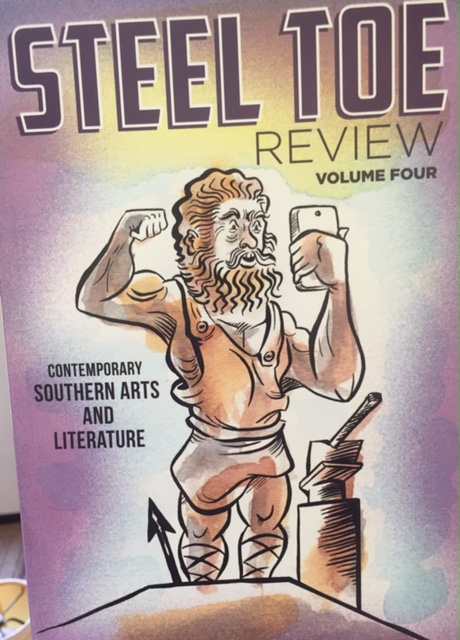
My poems “How to Do Nothing” and “And All Around, the Withered” have been published in Volume Four of Steel Toe Review, available for purchase here.

Many thanks to editor M. David Hornbuckle for taking these pieces.


Two Poems in GFT Presents: One in Four

My poems “The Boy Who Wouldn’t Hoe Corn” and “Scarecrow Believes” are included in GFT Presents: One in Four, a semiannual, print literary journal published by GFT Press, and available for purchase here.