Calvin Coolidge — Live or Memorex?

image

This poem is dedicated to the memory of haiku master and good friend Ron Evans, who provided and sponsored the title for the Tupelo Press 30/30 fundraiser challenge I participated in during August 2015. Ron passed away in September 2018. I miss our pun-filled exchanges, his zany sense of humor and our wide-ranging discussions. Life continues, but the light has dimmed…

Calvin Coolidge — Live or Memorex?

They say the wind in Alvarado bypasses closed doors, slips through
book-laden walls and plate glass and into your dreams where it circles
and accumulates, whirling, whirling, steadily gaining force, gathering
loose pages and errant thoughts and memories too combustible to
burn, ignoring time’s compression and the gravity of dying suns, forever
counting, talking, thinking, looking up and out between the long nights.

unable to sleep           he opens a window          daring the wind

The 30th President of the United States breathes and writes at the junction
of an invisible house and a wheat field in Alvarado, in the guise of a
74-year old haiku poet. No longer the solemn ass, Cal laughs and speaks
and observes his two birthdays, recalling Harding’s scandals and Dorothy
Parker’s “How can they tell?” with equal relish. Sometimes he dresses
in tails and top hat, and speaks in 17-syllable phrases. Sometimes.

spitting out sake            in the shadow’s glare            death forestalled

Alvarado’s laureate is leaving it all behind – the presidency, the books,
the kolaches – catching the next breeze out of town, a silver-tongued
dust devil riding the word, spewing puns all the way to Indiana. But
buried in a waterproof box near Oswald’s grave, 314 cassette tapes
capable of shattering crystal carry his voice further than their unwound
lengths, whirring incessantly, celebrating life, praising the long wind.

standing in the sun          wisdom blows by          no questions today

alamo3

White Mules and a Column of Smoke

vinyl


White Mules and a Column of Smoke

I am thinking of a place I’ve never seen or visited,
much like Heaven or Jot ‘Em Down, Texas, but with better
beverages and the advantage of hindsight and seasoning,
a glance back or to the peripheral, with a side of memory
and sliced, pickled jalapeños topping a pile of imagination.

And how do we so clearly remember what never occurred?
That book I read in 1970 was first published three years
later. A drowned childhood acquaintance ordered a beer
and sat next to me at a party in college. The open fields
I recall from the garden walls in France, where homes stood.

If only we carried with us slide shows or grooved vinyl
to trace back our lives – photos and recordings of those daily
remembrances – detailed notes indexed on cards, or data
embedded in our palms and accessed by eye twitches.
Would such evidence improve our lives?

Which filters shutter moments and thoughts, twist them
into balloon animals we no longer recognize? False
accusations and convictions aside, can we trust what we
know to be true? That oak stands where it has for four
decades. I bleed when cut. The sky still leers above us.


“White Mules and a Column of Smoke” was drafted during the August 2016 Tupelo Press 30/30 challenge. I am grateful to Natalie Butler, who sponsored the poem and whose photo inspired me.


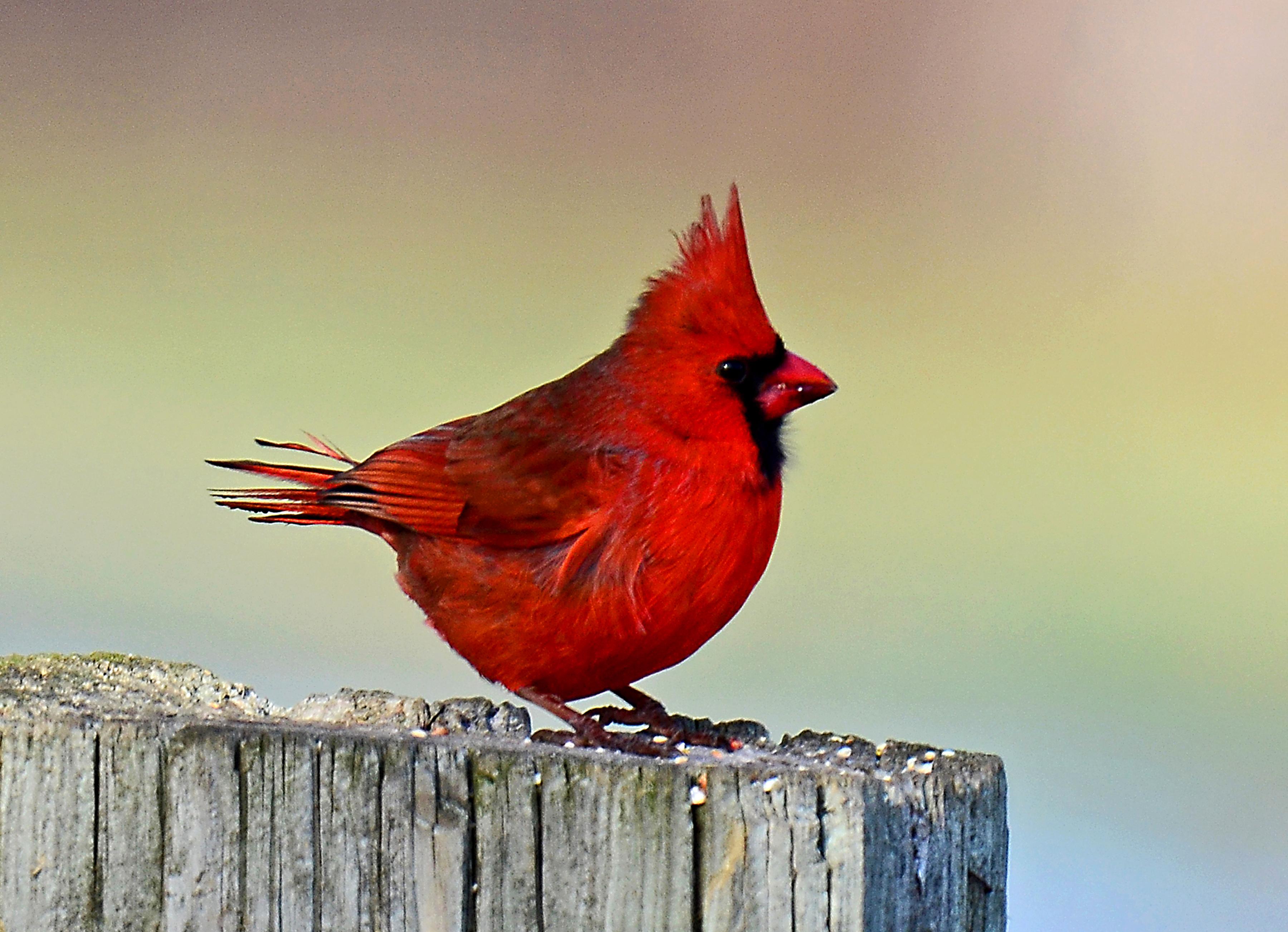
Cardinal


Cardinal

Question: what is air if not
the means by which we

see and feel? Sound creates only
itself, another version of the original

sense. I move from shadows to a deeper
darkness, hoping to find that point where absence
ends. But there is no end, only

continuation, a cry for those
who offer their hands in ambiguity. Sometimes
a cardinal’s call fills our

morning with questions. So
little of all we touch
is felt. We are the air. The air is.


Another poem from the 80s. I was obsessed with birds even back then…

The Resonance of No (with recording)

dishes


 The Resonance of No

Yes, yes, we’ve heard. The dishwasher wastes less
and cleans better. But Kenk­ō believed in the beauty
of leisure, and how better to make nothing
while standing with hands in soapy water, thoughts
skipping from Miles Davis’s languid notes to the spider
ascending to safe shelter under the sill (after I blow
on her to amuse myself), washing my favorite knife
and wondering if I should hone it, not to mention
my skills on the six-string or the potato peeler.
And if I linger at the plates, even the chipped one,
admiring their gleam after hot water rinses away
the soap residue, who could question the quick gulp
of ale or the shuffle of an almost-but-not-quite
dance step-or-stumble while arranging them on the
ribbed rack, back-to-back, in time to Coltrane’s
solo. Then the forgotten food processor’s blade
bites my palm, and I remember that I’ve outgrown
the dark suit, the cut branches still need bundling
and none of the words I’ve conjured and shaped
over decades and miles will extend their comfort
when I stand at my father’s grave this week or next.


“The Resonance of No,” was published in December 2016 in Gravel, and is included in my chapbook, From Every Moment a Second.

Daniel Schnee wrote about this poem here.

Music Credit: Cool Vibes Kevin MacLeod (incompetech.com)
Licensed under Creative Commons: By Attribution 3.0 License
http://creativecommons.org/licenses/by/3.0/


In the Fifth Chamber Lies the Hour’s End

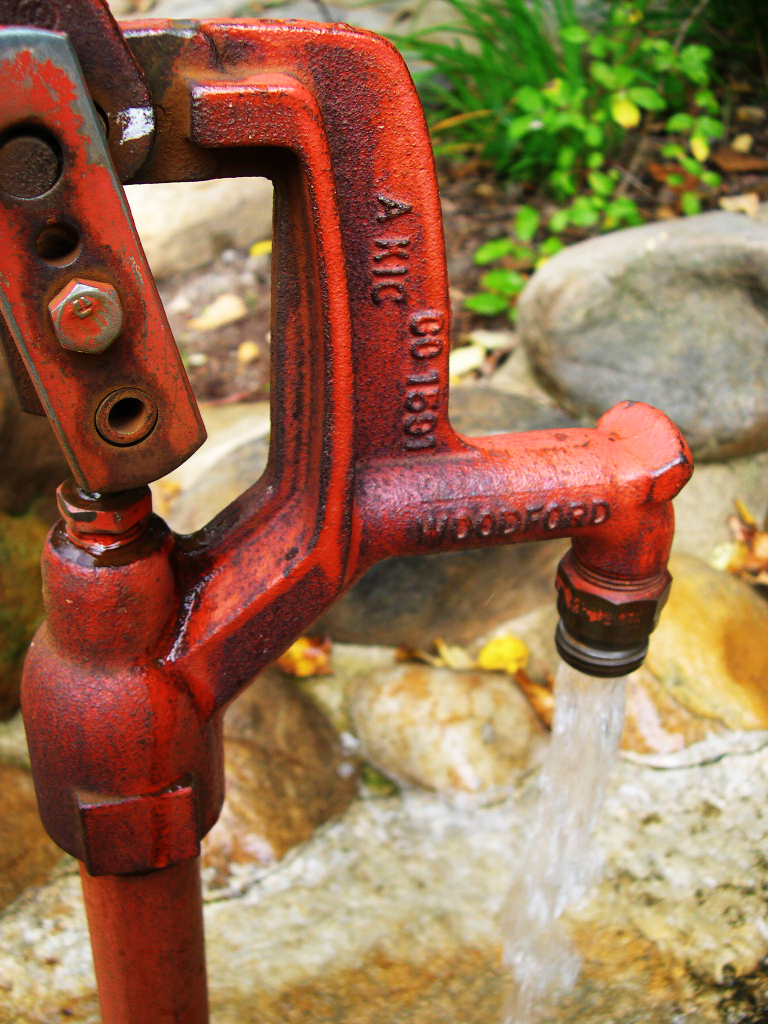
pump


In the Fifth Chamber Lies the Hour’s End

To fairly allocate irrigation resources, the Persians measured time with water,
sinking a bowl in a larger vessel and tallying the count with pebbles.

And what is time but counting, determining the number of units within a set?

The sum of beats between silences and their diminishing echoes?

Its symbol in the West grew from fig and ivy leaves, while early medical
illustrations depicted pine cone-shaped organs.

In most reptilians, the aorta receives only oxygenated blood.

Qanats pump by gravity. The hagfish’s second resides in its tail.

Recognize the empty as full. Squeezed shut, we open.
Contraction and flow, ejection, inflow, relaxation.

Emotion as electrical impulse. Murmuring valves. The color red.

The fifth chamber remains silent and undetected.

The primitive fish’s chambers are arranged sequentially, but in an S-shape.
Ancients believed arteries transported air through the body.

The Buddhist figure, too, originated in leaves, symbolizing not love

but enlightenment. The ache of failure confounds us.


mechanical heart

“In the Fifth Chamber Lies the Hour’s End” was first posted here in May 2016.


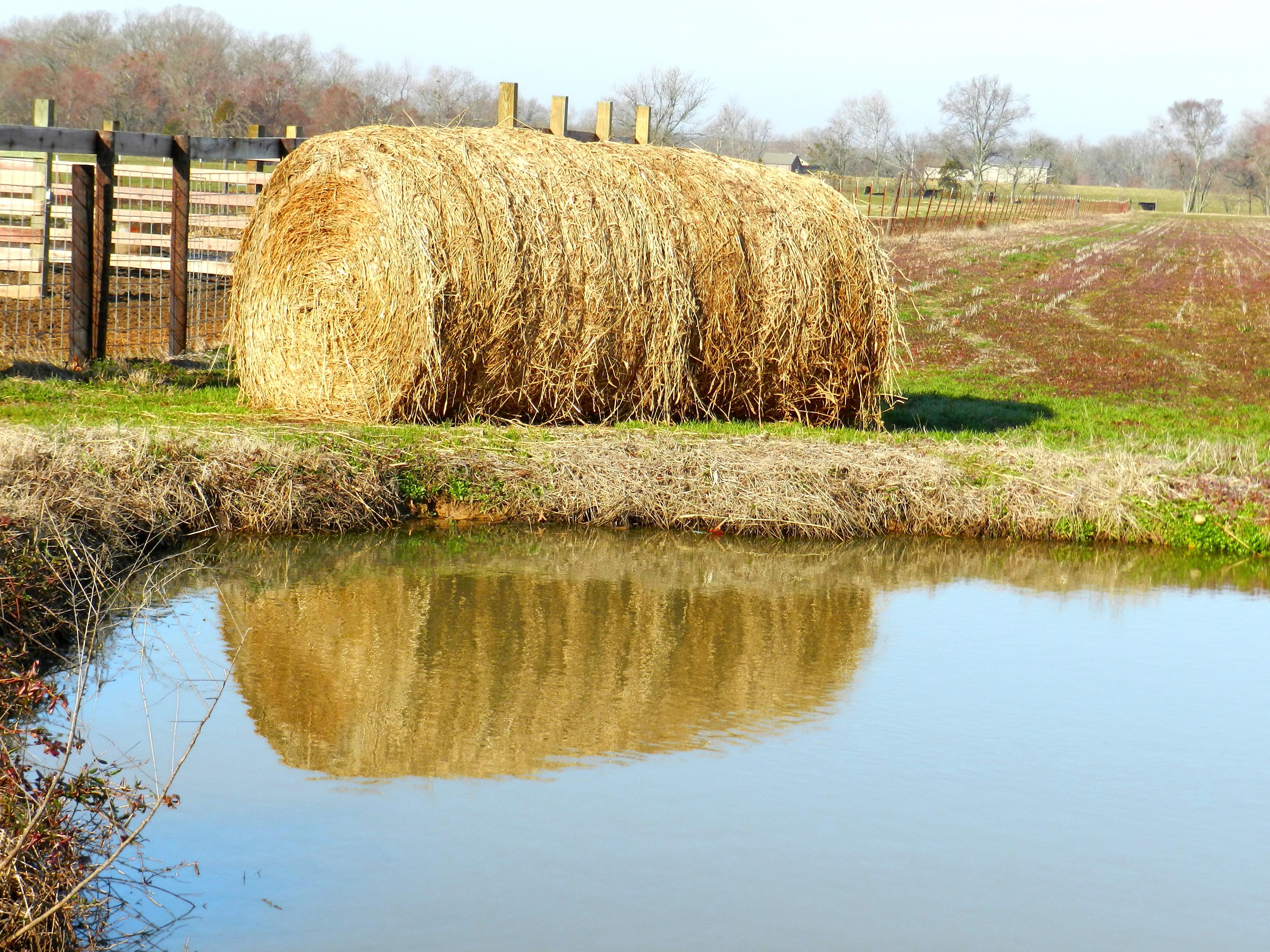
Landscape

DSCN8501

Landscape

Utterance
within the parameters set
by form

expressionless
save motion

the lone branch
brought to the fore
and in the distance

stock ponds collecting rain

the word is
forget, as in the imperative
as in function, as in

you must have

file000783361490

This first appeared here in December 2014.

Scarecrow Calls Out the Man

Scarecrow Calls Out the Man

These things I cannot name: that finger of night
between fear and peace, in which darkness both cloaks
and hugs the wide-eyed. A snake, in the open. And that space
behind the watcher? Perhaps it is easier to call it something
else – a gasp, or the immeasurable measure. A presidential
folly. My friends, ever cautious, swoop in and away, taking
with them only those grains they need, unlike you. What use
is a hoarded larder if it rots? How does one come to want
everything and nothing at the same time? A gilded house
spotlights wealth, not right. Is this edifice your legacy,
your monument to self? The heart monitor’s blip paints one
forever, your pursed lips, another. But even the concrete
you cringe behind lacks permanency; regard your hands
and all they can’t stuff into your pockets. Loosen that
coiled tie lest it choke you. Accept what the mirror sees,
and await karma. Though you will not hear my voice,
I offer this: may the combined weight of your lies and
larcenies, your unpaid debts and power plays, rapes,
casual racism, privilege and coarse, childish taunts, merge
into one fist-size bankroll placed upon your chest, and
fueled by the gravitational forces of forty-four black holes,
slowly, with each turn of the earth’s axis, press down and
down and down in search of that shriveled organ, and finding
it, pluck out and replace it with one resembling that of a
genuine human, one honoring respect and love, empathy
and humility. I am the sum of integrated, discarded
pieces assembled to observe and warn, collecting only
diminishment and the means to become less. Wanting
little, the world welcomes me. It arrives free, honest, on
wings, bringing wealth beyond your reach, your greed.
I own nothing. I know nothing. But this: I name you
Scourge, and laugh at the smallness of you. I name you
Farce. I name you Empty. I name you Gone.

* * *

And there are those who still follow him…

“Scarecrow Calls Out the Man” first appeared on Vox Populi in August 2017.

In This Shack a Cold Wind Blows


In This Shack a Cold Wind Blows

In this shack a cold wind blows,
shuffling papers and ideas before settling

on the floor. Leaves rustling. Tea,
cooling. You recall the peace of near

death, fear circling the drain,
giving in to breath, labored but certain,

one exiting another and again,
then laughing at the improbability: you

are nothing. You were nothing.
Nothing will come of you. You say

yesterday, and think tomorrow. Today.


* * *

“In This Shack a Cold Wind Blows” was first published in April 2019 by The Elixir Magazine out of Yemen.


While Looking Up at a Working Wasp, I Trip


While Looking Up at a Working Wasp, I Trip

How do these things I once barely acknowledged
now snare toes or twist ankles, causing me to stumble,

spill coffee and curse. Steps, rocks, pavement, curbs.
Door sills. No matter which, without provocation.

Solitary wasps mate not in flight but in the vicinity
of their nesting area. Three years ago a female

violated our unspoken agreement of mutual
existence; my arm purpled and ballooned

to twice its normal size, and I demolished her nest
for fear that attacks would become habit. Today,

another builds in the same spot. I stoop by,
beneath notice, as she labors to make room

for eggs fertilized with stored sperm from a single
drone. Such diligence should earn rewards.

I stroll to the mailbox and marvel at their ability
to manufacture wood pulp for nests, how

certain species avoid mating with siblings
on the basis of chemical signatures, and that

they voluntarily control the sex of their offspring.
Ah, the wonders of nature! Approaching the door,

I look up and observe the growing nest with
admiration, enter the house without stumbling,

and inhale the fragrance of the perfectly arranged
lilies. The books on the table entice me, so I

pour a glass of malbec and thumb through them
with great pleasure. Soon, after sunset, she will die.


* * *

“While Looking Up at a Working Wasp, I Trip” was published in MockingHeart Review in May 2018.

Who Will Know


Who Will Know

If I drip like snow from the roof who will know?
When I throw stones at dead men who will know?

The mother’s ghost rests in a razor-filled moat.
He purses his lips, laughs, says who will know?

You are the night sky above the red-cloud horizon.
When I fade like twilight, tell me who will know.

Which vein traces love, which proffers denial
as our blood starts flowing, and who will know?

Unanswered prayers line his frozen pockets.
When he unclenches his tiny hands, who will know?

This man’s tongue repels truth no matter the hour.
If we hear only what he allows, then who will know?


* * *

“Who Will Know” made its first appearance in May 2019 at The Local Train Magazine, a publication out of Bangladesh.