Nocturne with Flame

Closeup of campfire.

Nocturne with Flame

Not imposition, but welcome.

Another’s stirred embers, banked
and forming the kindling’s base.

Thus the licked paper curling with smoke,
stars shooting into the blackness,
and finally, exploding light
transformed to heat.

From one’s loss, another’s gain.

The flickering on my cheek.
Inhaled bitterness and memory.
The wait, the period before.

Like the owl in the live oak,
or the mice under our floor
returning, I celebrate the cycle,
and grow warm.

mouse

“Nocturne with Flame” appeared in The Galway Review in December 2016.

The Ecstatics

chimney


The Ecstatics

Divisions and separations, a summing of consequences,
the brother whose ashes remained forever lost. Two cities
and their survivors’ shame. The loud, kind young man
whose words fell to the restaurant’s floor, unbidden.
What came next in the drift, untoward and misspent,
in the grammar of between? Darkness, suppressed.
Smoke. Pleasure and fear, unclothed.


sorrow bw

“The Ecstatics” first appeared here in January 2016. It’s an odd piece, part of a larger sequence that I put on hold several years ago. Perhaps I’ll return to it someday.

Memorial Day


Memorial Day

Arriving at this point
without knowledge of the journey,

the slow collapse and internal
dampening – the shutting down, the closing in – lost

in the shadowed veil, my eyes flutter open to find
everything in its place, yet

altered, as if viewed from a single step
closer at a different height, offering a disturbing

clarity. Looking up, I wonder that she wakes me
from a dream of dogs on this, of all days,

only to detect under me linoleum in place of the bed,
my glasses skewed from the impact,

the floor and left side of my head wet. You looked
like you were reaching for something
, she says,

and perhaps I was, though with hand outstretched
I found nothing to hold but the darkness.


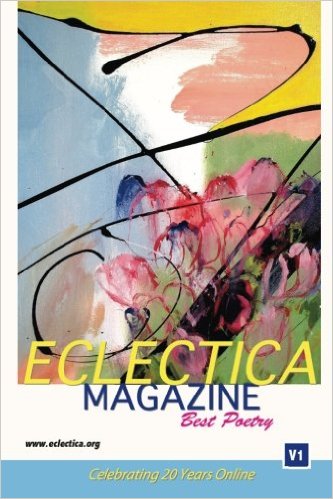
“Memorial Day” was first published in Eclectica in July 2014, and was, much to my delight, subsequently included in Eclectica Magazine’s 20th Anniversary Best Poetry Anthology.

Confession to Montgomery, Asleep on the Church Steps

bagels and cream cheese MGD©


Confession to Montgomery, Asleep on the Church Steps

If I walk quietly by
it is not to avoid disturbing you,

but rather myself. What
could I give you

but another bagel, the
boiled dough of nothingness

rising in cloudy water,
delaying, perhaps, another

guilty twinge. You have no
answers but when you

speak to the air, sometimes
a smile creaks through

the broken words, and I
think even in this cloistered

darkness we may close
the circle between halves

and might-have-beens,
an understanding, if only

in the language of bread
and coffee and the

disregarded. But today I stride
on, without pause, counting

on nothing that can’t be
pocketed or spoken aloud,

my steps echoing down
the alley and its secrets,

along the crosswalk’s painted
guides, under the sagging

power lines and through
your streetlight’s dim halo.


Homeless


This first appeared on the blog in January 2016, and was published in Compassion Anthology in March 2019. I have not seen the man who inspired this poem in over three years. I hope he has found shelter and kindness.


Maps


Maps

If we fold the map just so, the journey’s path
shrinks considerably. Sacramento enters the Hudson
Valley, Toronto meets Santa Fe, and Lee County,
Mississippi merges with Tupelo, Texas, joining music
to fruitcakes in a celebratory feast.  Stroll down one
road and find a lost car. Exit a theater to enter bliss
or a good bar with craft beer on tap, where no one
discusses mileage and you may eavesdrop on
conversations about ancient nautical battles, the
history of chili, and radiation. Unfold the map
twice to find yourself in Swamp Angel, Kansas,
named after a Civil War field gun and not a spiritual
being, and wander to the next intersection near
Barstow, where Joshua trees tickle the sky’s belly
and I ate the best chili dog in my young life’s
experience in 1968. Look to the edges, where the
best places crowd and nowhere lives in a corner.
Jump from Busan to Venice, drive to Perth and
beyond. Slowly crease the page. Do this again.
Point blindly. There. Your destination waits.


My poem “Maps” iwas publishedin February 2019 at Riggwelter. Thank you, Amy Kinsman, for taking this piece, which was originally drafted during the August 2016 Tupelo Press 30-30 Challenge. I owe its existence to Ken Gierke, who sponsored the poem and provided the title (which I changed) that sparked this piece.


Q&A with Poet Robert L. Penick

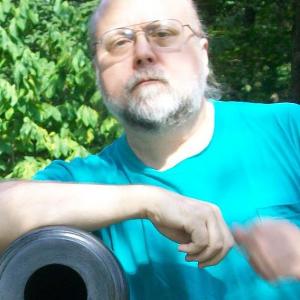
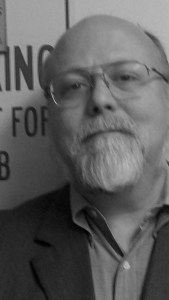
Robert L. Penick’s writing has been published in numerous literary journals. His poetry chapbook, Exit, Stage Left, won the 2018 Slipstream chapbook contest. The former editor of Chance Magazine, he has most recently been editing and publishing Ristau: A Journal of Being. He lives in Louisville, Kentucky.

Would you mind sharing a bit about your background? How and why did you come to writing? How has being a non-academic framed your work?

I grew up in a very blue-collar environment, was the first—and the last person in my family to go to college, and really took to writing around age 14.  A number of different factors instilled a sense of “otherness” in me, a sense of not fitting in, or wanting to fit in, with the available demographics.  I believe not being the product of an academic writing program has helped me mold my own peculiar voice, since I had no one indoctrinating me with what writers I should like.  There are a lot of folks slogging their way through Michel Houellebecq, for example, because some professor told them that’s good writing. I disagree.  The best are the ones that connect with you, plain and simple. I worked in the court system with the mentally ill and victims of domestic violence, and I believe that had a more valuable impact on what I do than 1,000 workshops.

Your chapbook, Exit Stage Left,won the 2018 Slipstream Annual Poetry Contest. Can you tell us something about its genesis?

Exit, Stage Leftwas a selection of poems from a full-length book project I have called The Art of Mercy  that I haven’t been able to get published.  Mercyis 70 pages, with each of the 70 poems having been published in one journal or another.  I flipped through it and chose 25 pieces that I thought hung together well and sent it off. Some of those pieces go back fifteen years, and I didn’t realize that the overriding theme was one of aging and mortality until I actually had the finished book in my hands.  A fine Kentucky poet, James Still, said in effect that young poets write of death and older poets write of life.  I see life/death, happy/sad, and love/hate as being sides of the same coin.

(Note from RO: To read three poems from this collection, or to order the book, click here. It’s a bargain at $10, with superbly crafted pieces of loss, hope and humanity.)

Would you offer up some of your artistic influences. What draws you to that work?

The writer having the biggest impact on me was John Steinbeck.  Many people dismiss him as sentimental, but you know what?  People are sentimental, just naturally so.  I remember finishing the last page of The Grapes of Wrath, putting the book down and just walking around the house wringing my hands.  I love getting that connection to basic humanity.  Ray Bradbury is the only science fiction author I’ve enjoyed, because those aren’t sci-fi stories, they’re stories about real people with real hearts and hopes and dreams.  Except for the robots, I guess.  Currently I’m on a Nabokov kick, reading his short stories.  That the man could write that well in his third language is astounding.  Recently, I found Richard Wright’s story, “The Man Who Lived Underground,” and was moved by its drama and precision.  

If you were a poetic form, which would you be?

I would be…an accident report.  “Subject took the off ramp at too great a speed and went through the guardrail into the lake.  After being checked by EMS, subject was transported to Metro Corrections, charged with having a lack of common sense.”

You’ve edited and published literary journals. Could you explain what crosses your mind when reviewing poems for possible inclusion in one?

Why am I doing this?  There is a danger in putting out a literary journal, in that you get bludgeoned by bad writing, and that can damage your own craft.  I’ve always said that writing a poem is like playing the harmonica; anyone can do it, but not many can do it well.  But a lot of folks buy their harmonica, then go straight to the Wednesday night open mic at the corner bar without putting the time in to learn. With writing, it’s a matter of finding your natural voice, being able to spot what doesn’t work, avoiding cliches and such.

What themes or traits will readers find in your work?  

I go for humanity more than anything, working often with characters who are socially isolated in some way, finding meaning in the day-to-day.  You have to be entertaining—for goodness sake, don’t bore people—but if you can slip some kindness in there, it’s a win.
 And your creative process? Could you offer us a glimpse into how your poems develop from first glimmer to fully realized piece? Do you follow a regular writing routine? Write in public or in solitude? 

I pick up a lot of ideas when I’m out.  I haven’t been able to write at home lately, so I scribble in coffee houses and fast food joints.  I’m that odd guy in the corner.  Last month, I’m at Burger King, and there’s maybe three other guys there, each eating alone.  I thought, “We should all squeeze into one booth together; we wouldn’t look so pathetic.” That became a poem called “BK,” about how every solitary person still has their childhood train set running through their past. Habit-wise, I wish I could be one of those folks that did their two or three hours a day, but that flow state is getting harder the older I get.  I get a cup of coffee and, if I get 200 words down on a story, that’s a good day.  It’s like pulling teeth, but I’m a fairly conscientious dentist. 

What advice would you offer to a writer just starting out?

Realize that the product is separate from you and don’t be stung by constructive criticism.  If a person is restoring a car and you point out the brake line is leaking, he or she will likely thank you.  But many writers are threatened by good criticism.  At the same time, be selective about what advice you take.  Many people will have no idea what you’re trying to do, and many writers (I’ve done this) will unconsciously try to make your writing more like their own.  You’re at a good point when you can hand a piece to someone you respect and say, “what’s the weak link in this?” 

Do you have any projects in process?

Three big things on my dance card right now: The Art of Mercy that I mentioned, Redemption, a gritty novel that may be too dirty for today’s market, and a collection of flash fiction I’m putting together. Flash gets a bad rap, mainly because much of it are merely fragments, but I think I’ve  done some impressive work with the 300 word story.  I’ve had perhaps 25 of them published (many are linked from my website, theartofmercy.net) and I’d like to get a book of them.  It’s funny, I’ve had work in 150 different literary journals, but it’s difficult finding a house that will do a full-length book for me.  Alas.  We can always find something to cry about, if we choose.
 

Bread

OLYMPUS DIGITAL CAMERA

Bread

That year we learned the true language of fear.
I baked boule and you haunted medical sites.

You said to arrive I must first depart
or be willing to suffer self-awareness. Let’s not

mention our pact just yet. My basic boule requires a
Dutch oven, 20 ounces of flour, water, yeast and salt.

At twenty I learned the finer points
of sausage-making, how to butcher chicken, and

that your hair smelled like dawn’s last flower.
Back then we owned the night. Now I harvest

wild yeast and sharpen pencils, make to-do lists,
pour Chianti, run numbers. I agreed

to your proposal. It would be a kindness, you said.
The pancreas produces hormones

and aids digestion. I chopped off my left thumbtip
and a year later the abscission point

still felt numb. After rolling the dough
into a ball, let it proof for an hour in an oiled bowl.

We shared a taste for sharp cheese
but never agreed on pillows. You loved

down comforters and found vultures fascinating.
Years together honed our lives

but we never considered what that meant. Score
the dough, bake it for 30 minutes with the lid on,

remove the lid and bake for another 15.
Kneading resembles breathing: in,

out. Rise, fall. Bright lights made your eyes water,
so I kept them dimmed. You swallowed

and said “Tell me how to knead bread.”
With the heel of your right hand, push down

and forward, applying steady pressure.
The dough should move under your hand.

Within minutes it will transform.


* * *

“Bread” was first published in Extract(s) in April 2015.

pillows

In Response to Nadia’s Misdirected Email, I State Exactly What I Am Looking For


tulip


In Response to Nadia’s Misdirected Email, I State Exactly What I Am Looking For

Balance. The ability to stand on one foot, on a tightrope, and juggle AR-15s,
ethics and dollar bills, while chanting the U.S. Constitution, in tongues.

Or good health.

Unweighted dreams.

A mechanism for disagreeing without needing to annihilate the opposition.

Doorways without doors, truth without fear.

A simple tulip.

One word to describe that instant between thought and pulled trigger,
intent and wish, the elevated pulse and sense of diminished space and time.

Sanctuary. Regret. Apology. Respect.

A tonic to the bitterness, a foil to the sweet.

Fitted sheets that fold. Uncommon sense.

Love in the abstract. More bacon. Smiles.

A closet that embraces everything you place in it. Everything.

The means of unfiring guns, of reversing wounds to undamaged flesh,
and rounds to their magazines, full and never used.

Self-organizing drawers. Due process.

Mothers who know only tears of joy.

One peaceful day.

Just one.


lights n sirens


This first appeared on the blog in July 2016. The poem was a response to an email asking a question intended for someone else: “What exactly are you looking for?”


Scarecrow Believes

Scarecrow Believes
 

What is a ghost if not misplaced energy,
an apprehension or the sum of invisible integers
and the properties they possess? I preside over
this sea of maize, tracking clouds, noting patterns
up high and among the flowing stalks, absorbing
minutiae, assigning connections, piecing together bits,
moment to thought, soil to trickle, flutter to gain.
Energy. Inertia. Waves, converted. If I had a bed
I would not neglect to look under it. The closet door
would remain open, a nightlight positioned nearby
with perhaps a mirror or two angled to offer clarity,
and the radio tuned always to jazz, providing little
purchase to any ill-intentioned spirit. The power of
beauty transfixes, even as it carries me far from my
station, from hilltop to plains to glowering moon.
If neither place nor reason, what consumes
our spiritual remnants, what directs our currents
to the next, and each successive, landing? Crows
have long been considered conduits to the afterlife,
but they exist here, in the now. I do not perspire but
fix my gaze on numbers and their tales, on zero and
the history of nothing, on unseen fingers walking up
my spine, shedding a residue of snow, of mercury
and latent images and dormant seeds in the world
underfoot, acknowledging the wonders of what
can’t be proven, what won’t be held or seen. Still, I
add and subtract, unclench my fingers and accept the
quiet, caught forever within the limits of the boundless,
under the sky, in space, within the improbable.

“Scarecrow Believes” was first published in May 2017 in GFT Presents: One in Four, a semiannual, print literary journal, and was subsequently published by Vox Populi.


Flood Gauge in the Morning


Flood Gauge in the Morning

It reclines on its side, submerged.
So far, so good, it seems
to say. Still here, still intact.
And the bridge looks so clean
from this angle
underwater.

I toss
a fist-size stone
onto the upstream
side of the road,
and watch it wash away.
Maybe we’ll cross tomorrow.


“Flood Gauge in the Morning” is included in my chapbook, From Every Moment a Second, available for order via Amazon.com and Finishing Line Press.