In the Fifth Chamber Lies the Hour’s End

pump


In the Fifth Chamber Lies the Hour’s End

To fairly allocate irrigation resources, the Persians measured time with water,
sinking a bowl in a larger vessel and tallying the count with pebbles.

And what is time but counting, determining the number of units within a set?

The sum of beats between silences and their diminishing echoes?

Its symbol in the West grew from fig and ivy leaves, while early medical
illustrations depicted pine cone-shaped organs.

In most reptilians, the aorta receives only oxygenated blood.

Qanats pump by gravity. The hagfish’s second resides in its tail.

Recognize the empty as full. Squeezed shut, we open.
Contraction and flow, ejection, inflow, relaxation.

Emotion as electrical impulse. Murmuring valves. The color red.

The fifth chamber remains silent and undetected.

The primitive fish’s chambers are arranged sequentially, but in an S-shape.
Ancients believed arteries transported air through the body.

The Buddhist figure, too, originated in leaves, symbolizing not love

but enlightenment. The ache of failure confounds us.


mechanical heart

“In the Fifth Chamber Lies the Hour’s End” was first posted here in May 2016.


Sault Ste. Marie


Sault Ste. Marie

Too often you see yourself and wonder
which bodies ancestors navigated

to gather such glorious scars and wrinkles
in one place, both noticeable and unseen,

little waves in a great lake of flesh.
The mirror is not unkind, you think,

with proper lighting — in candlelight
or late evening’s peppery glow,

after a few drinks. Then you recall
crossing the equator three decades

past, how the deck’s non-skid surface
scratched your knees as you scrubbed

the twists and currents that’d buffeted
you to that imagined line on the globe,

and later, the following points and clock
faces withering down the long queue

of jobs, the spilled beer and incomplete life
sentences. Even now, Superior washes

through its locks, filling, denying, allowing
one’s depths into another’s space with equal

regard, promoting passage, flooding past with
future, present with then, balancing tomorrow, now.


“Sault Ste. Marie” won LCk Publishing’s Spring Poetry Contest in April 2017.

Offering

Cate Terwilliger recognizes God’s proxies…and more in this beautiful poem.

Cate's avatarMeditatio Ephemera

peanut

Each day I leave my offering —
a roasted peanut unsalted unshelled —
at the threshold of the squirrel’s home
a gesture of goodwill and gratitude
for another day in which I might
recognize God’s proxies and

walk then to the running track
where this morning I found —
improbably — in my lane
a can of my favorite tuna
wild-caught dolphin-safe
chunk-light in water and

maybe it was theft but
I took it anyway sensing
instead another enactment of
the world’s mysterious alchemy
in which peanuts become
tuna grief and joy poems and

the ghost of every once-
solid thing dissipates to
materialize again as
something you would not
expect and better than you
could ever imagine

as when God’s
clever hands
assume fur
as when a thief
might be a poet

and you —
seeing —
can scarcely contain
your delight

tuna

View original post

The Resonance of No (with recording)

dishes


 The Resonance of No

Yes, yes, we’ve heard. The dishwasher wastes less
and cleans better. But Kenk­ō believed in the beauty
of leisure, and how better to make nothing
while standing with hands in soapy water, thoughts
skipping from Miles Davis’s languid notes to the spider
ascending to safe shelter under the sill (after I blow
on her to amuse myself), washing my favorite knife
and wondering if I should hone it, not to mention
my skills on the six-string or the potato peeler.
And if I linger at the plates, even the chipped one,
admiring their gleam after hot water rinses away
the soap residue, who could question the quick gulp
of ale or the shuffle of an almost-but-not-quite
dance step-or-stumble while arranging them on the
ribbed rack, back-to-back, in time to Coltrane’s
solo. Then the forgotten food processor’s blade
bites my palm, and I remember that I’ve outgrown
the dark suit, the cut branches still need bundling
and none of the words I’ve conjured and shaped
over decades and miles will extend their comfort
when I stand at my father’s grave this week or next.


“The Resonance of No,” was published in December 2016 in Gravel, and is included in my chapbook, From Every Moment a Second.

Daniel Schnee wrote about this poem here.

Music Credit: Cool Vibes Kevin MacLeod (incompetech.com)
Licensed under Creative Commons: By Attribution 3.0 License
http://creativecommons.org/licenses/by/3.0/


Letter to a Ghost

box2


Letter to a Ghost

Had I not dreamed your death, I would have praised this day.
Your name rests in a wooden box on a desk

in a room far away and twice as old as we were then.
My penance in this phase: to continue.

I gather words close and refrain from admissions.
The clock on the wall seldom chimes,

like one whose vows circumvent convenience, or
a shade allowing the barest sliver of light

through the window. That tock preceding
a long silence. Snow blanketing the mounded earth.

Your scent never lingers past sleep, where you remain.
At last I no longer covet those sheets you’ve shared.

Your name rests in a box. I gather words and refrain.


ghost

“Letter to a Ghost” last appeared herein 2017.

Cardinal


Cardinal

Question: what is air if not
the means by which we

see and feel? Sound creates only
itself, another version of the original

sense. I move from shadows to a deeper
darkness, hoping to find that point where absence
ends. But there is no end, only

continuation, a cry for those
who offer their hands in ambiguity. Sometimes
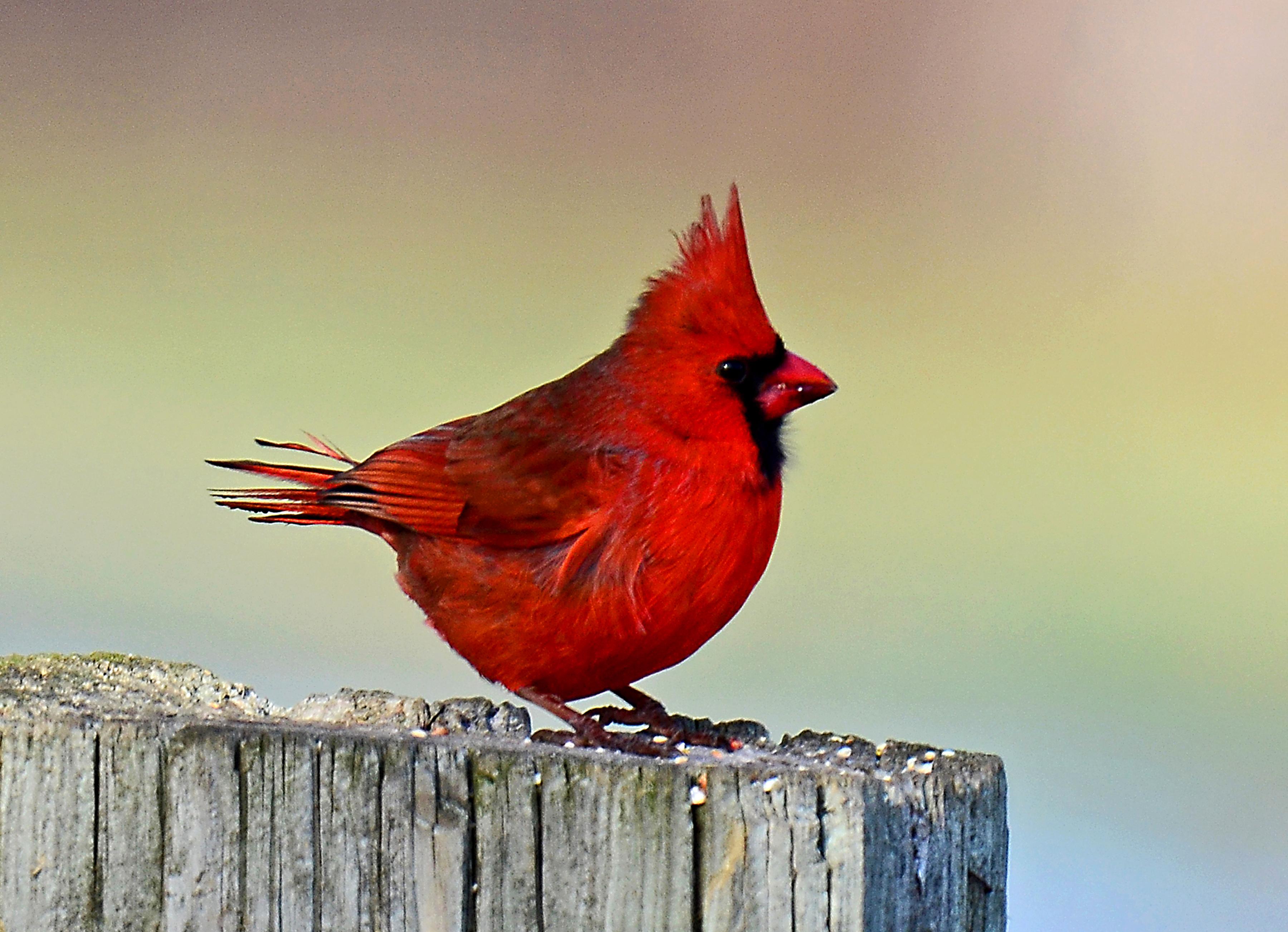
a cardinal’s call fills our

morning with questions. So
little of all we touch
is felt. We are the air. The air is.


Another poem from the 80s. I was obsessed with birds even back then…

Chili, Chocolate and Chihuahuas

image

Chili, Chocolate and Chihuahuas

I am comfortably nestled in this house, sorting the pages of an unruly poetry manuscript in the company of Apollonia, the six-pound terror of Texas, and Ozymandias, her doting, but worried, twelve-pound shadow. As noon departs I note hunger’s first tentative touch, and head to the grocery store for supplies. I’m craving chili, but not having a particular recipe in mind, decide to see what strikes my fancy.

Ah, the sun at last!
No more rain, the yard’s drying.
Our dogs, shivering.

For my chili base I’ll sometimes toast dried ancho peppers, rehydrate and puree them, but I’ve recently replenished my chile powder stock (ancho, chipotle, New Mexico, cayenne, smoked paprika) and feel just a tad lazy, so I’ll use the powdered stuff. But I pick up a poblano, some jalapeños and two onions, and on my way to the meat counter, grab a 28-ounce can of diced tomatoes and some spiced tomato sauce. I examine the beef and nothing entices me (ground beef is anathema, and don’t even mention beans!), but a few paces away I spy a small pork roast, and place it in my cart alongside a 16-oz bottle of Shiner Bock and a bag of chocolate chips.

Knowing my plans, the
cashier smiles and shakes her head.
Milk chocolate chips?

Shuffling the manuscript pages, I ask the dogs for their input, but Apollonia declines, preferring to nap in a sunbeam, and Ozzie is too busy pacing to bother with poetry. So I turn to the impending dinner, chop onion, dice peppers, mince garlic, measure out the various chile powders, cumin and oregano, cube the pork, and brown it in the Dutch oven.

Ozymandias
sits by the front door and moans.
Wind rattles the house.

Once the meat is seared, I saute the veggies, dump in the canned tomatoes and chile powder mixture, add the meat, coating it with the spices, and then pour in the Shiner Bock and heat it all to a near-boil before reducing the temperature and allowing it to simmer for an hour, at which point I stir in about four ounces of the chocolate chips and a teaspoon of garam masala. I let the chili simmer for another hour, then remove half of the pork, shred it with a fork (it’s very tender), and return it to the pot, stir, taste, and add a little salt. Done. I ladle out a bowl, pour a La Frontera IPA, and eat. Not bad, I think. Not bad at all for the first chili of the season.

Beer in hand, I burp,
the dogs stirring underfoot.
Oh, this wondrous world!


* * *

I first posted this in December 2015. The recent snowfall and frigid weather is making me think about chili. Mmmmm.

image

Poem Up at Cacti Fur


My poem “I Danced with a Platypus Twenty Years Back” is up at Cacti Fur. It was originally drafted during the August 2016 Tupelo Press 30-30 challenge. Many thanks to editor Jim Thompson for taking this poem, and to Kris B. for sponsoring the poem and providing the title.

Wherein the Book Implies Source

book


Wherein the Book Implies Source 

And words form the vessel by which we traverse centuries, the river
stitched across the valley’s floor, easing access.

Accession by choice. Inorganic memory.

Vellum conveys its origin: of a calf.

How like an entrance it appears, a doorway to a lighted space.
Closed, it resembles a block of beech wood.

To serve as conveyance, to impart without reciprocity.

Framing the conversation in space, immediacy fades.

The average calfskin may provide three and a half sheets of writing material.
Confined by spatial limitation, we consider scale in terms of the absolute.

The antithesis of scroll; random entry; codex.

A quaternion equalled four folded sheets, or eight leaves: sixteen sides.

Reader and read: each endures the other’s role.
Pippins prevented tearing during the drying and scraping process.

Text first, then illumination.

Once opened, the memory palace diminished.


* * *
This originally appeared in April 2014 as part of Boston Review’s National Poetry Month Celebration, and is included in The Circumference of Other, my offering in the Silver Birch Press chapbook collection, IDES, published in 2015.

ides front cover 92915

Obsession: Books, or, Poetry Finds Me

photo 2


In another life books framed my days. I slept with them, dreamt about them, woke to their presence stacked by the bed and in various corners throughout the house, read them, handled them, discussed their merits with friends, co-workers, beer-drinking buddies, bartenders, customers, strangers, relatives, and even enemies. Traced my fingers slowly down their spines, identified some by odor alone, others by weight and feel. Bought, sold, cleaned, lent, skimmed, traded, gave, borrowed, collected, repaired, preserved, received. Traveled to acquire more, returned home to find still others languishing in never-opened, partially read or barely touched states. There were always too many. There were never enough.

The relationship began innocently. I’ve been an avid reader since the age of five, and over the years developed a knack for uncovering uncommon modern first editions. I’d walk into a thrift shop and spot a copy of William Kennedy’s first novel, The Ink Truck, snuggling up to Jane Fonda’s workout book, for a buck. Or at a small town antique store, something especially nice, perhaps a near-fine first edition of Cormac McCarthy’s Outer Dark, would leer at me from a dark shelf – $1.50. John Berryman’s Poems (New Directions, 1942) found me at a garage sale, for a quarter. Good Will yielded Pynchon’s Gravity’s Rainbow. There were others, of course. Many others.

I partnered with a few like-minded friends and opened a store, and when that didn’t work out, started my own home-based book business, which eventually expanded into a small brick-and-mortar shop, a true labor of love. And I mean labor. The forlorn space we rented was cheap and had housed for years a low-end, illicit massage parlor. Cleaning it out was, oh, shall we say interesting? I’ll never forget the furry massage table, the naked lady lamp or the various implements left behind after the joint was finally forced to close. But we hauled out the filthy carpeting, stripped and refinished the hardwood floors, fixed, painted and patched what we could, and hid what we couldn’t. It was exhausting, but well worth the toil.

My work schedule ran from Monday through Sunday, a minimum of eighty hours a week – in a seven-year period, I took off only two long weekends. It consumed me, but in the end I emerged mostly intact, a little more aware of my proclivities, of an unhealthy tendency to immerse myself wholly into an enthusiasm, to the detriment of family and friends. When we sold our store’s wares, I embraced the change; some dreams simply deplete you. But the itch remained.

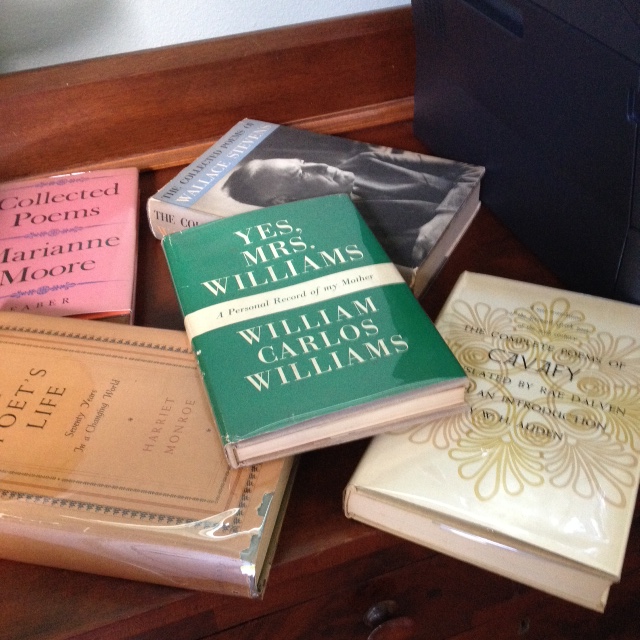
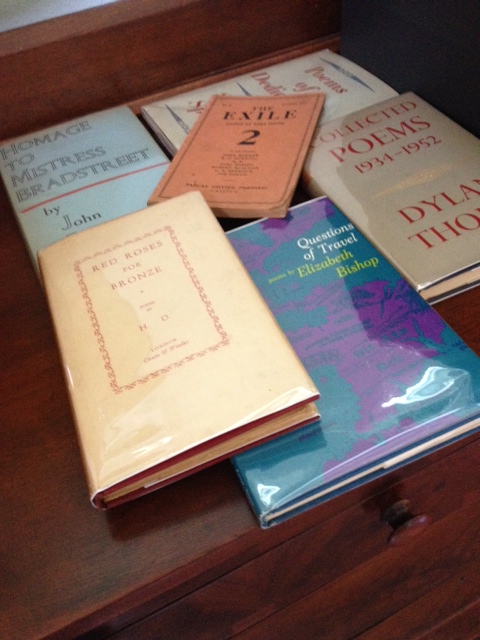
Just a few weeks ago I found myself perusing an accumulation of books in a storage facility across the street from a junk shop in Llano, Texas, a small county seat an hour’s drive west of my home on the outskirts of Austin. The shop’s owner had purchased an English professor’s estate, and judging by the collection, the professor had specialized in poetry. My first thought was “I want it all,” but reason set in (I could very well imagine my wife’s reaction were I to arrive home with a trailerful of books) so I glanced over the criticism, fiction, drama, essays and biographies, and concentrated on the poetry. In the end I walked away with thirty-one books, including H.D.’s Red Roses for Bronze (Chatto & Windus, 1931), Randall Jarrell’s Little Friend, Little Friend, Elizabeth Bishop’s Collected Poems and Questions of Travel, a brace of Berrymans – His Toy, His Dream, His Rest and Homage to Mistress Bradstreet – both the U.S. and U.K. first editions, which differ – and Love & Fame. A good haul, to say the least, but one that left me only partially satisfied and contemplating a return. But I remain resolute. So far.

As I said, the itch remains…


* * *

This first appeared here in April 2015, and yes, the itch is still there. Yesterday I walked into a wonderful bookshop (Black Dog Books) in Zionsville, Indiana, a few miles from my home in Indianapolis, and I felt instantly at home. Ah, the world of books! And yes, I returned home with a small stack of books.
 

photo 1(1)