Self-Portrait as Compost


Self-Portrait as Compost

Beneath the surface find warmth,
the fruit of decay and mastication,
of layered mixes and intermingled
juices. Disintegrated or whole,
still I strive to speak. Bits of me
meld, to be absorbed slowly; I
process and am processed: here,
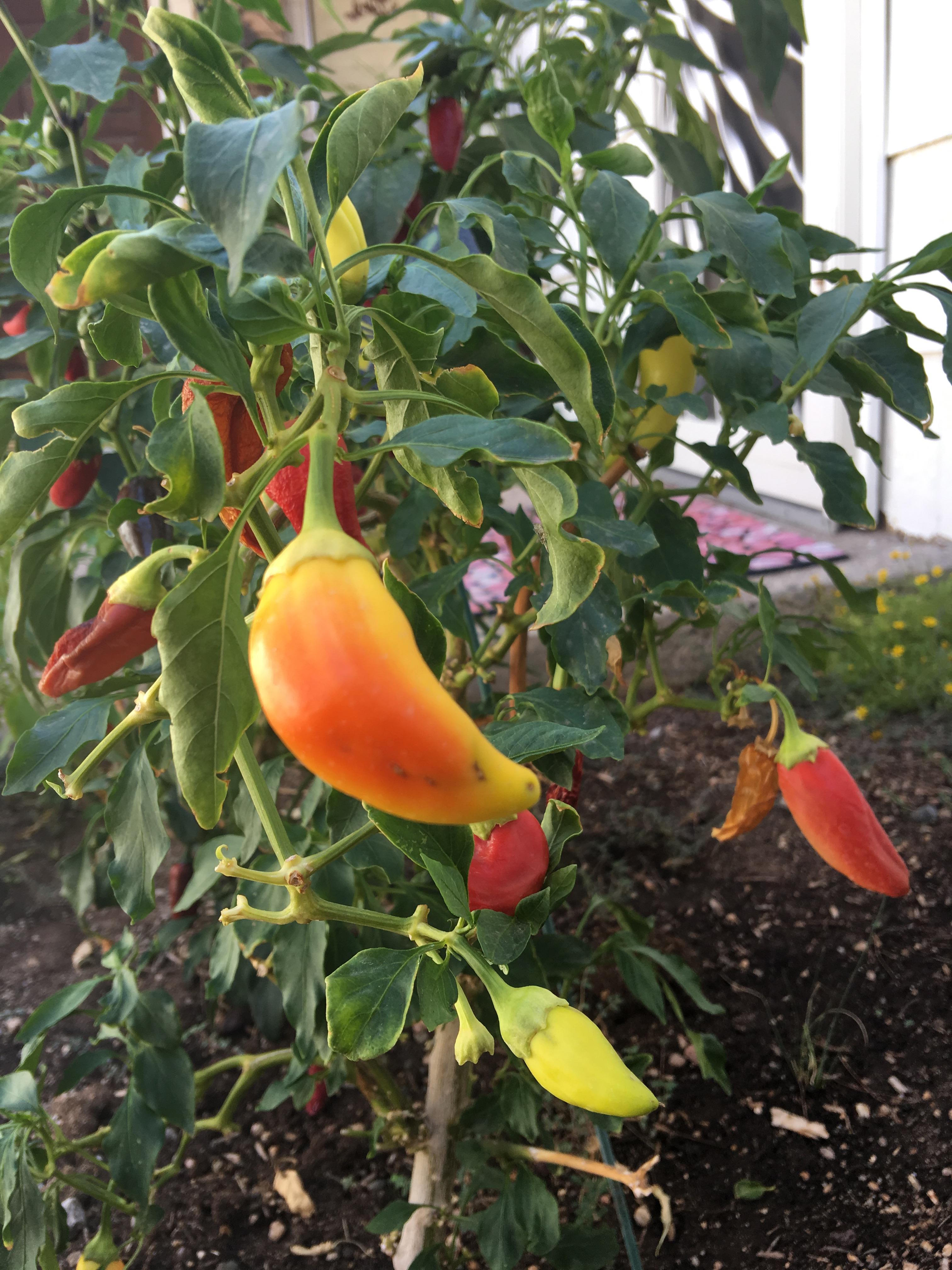
within the pepper bush’s deep red
berries, there among the dianthus.
Scattered, deliberately placed,
having been, I shall emerge again,
forever changed, limitless, renewed.


* * *


“Self-Portrait as Compost” was first published in Issue 125 of Right Hand PointingThank you to editors Dale Wisely, Laura M. Kaminski, F. John Sharp and José Angel Araguz for taking this piece.


Dry Well


Dry Well 

I trace the symbols.

In the dirt, among the grubs and crooked
weeds. Writing of loss. Of missing things.

Wondering if words will fill my mouth
with wool or grit. With pebbles and salt.

If truth is what I want.


* * *


“Dry Well” first appeared in Vox Populi in August 2019. I’m grateful to editor Michael Simms for his steadfast support.


Which Poet, Which Beer (3)

beer


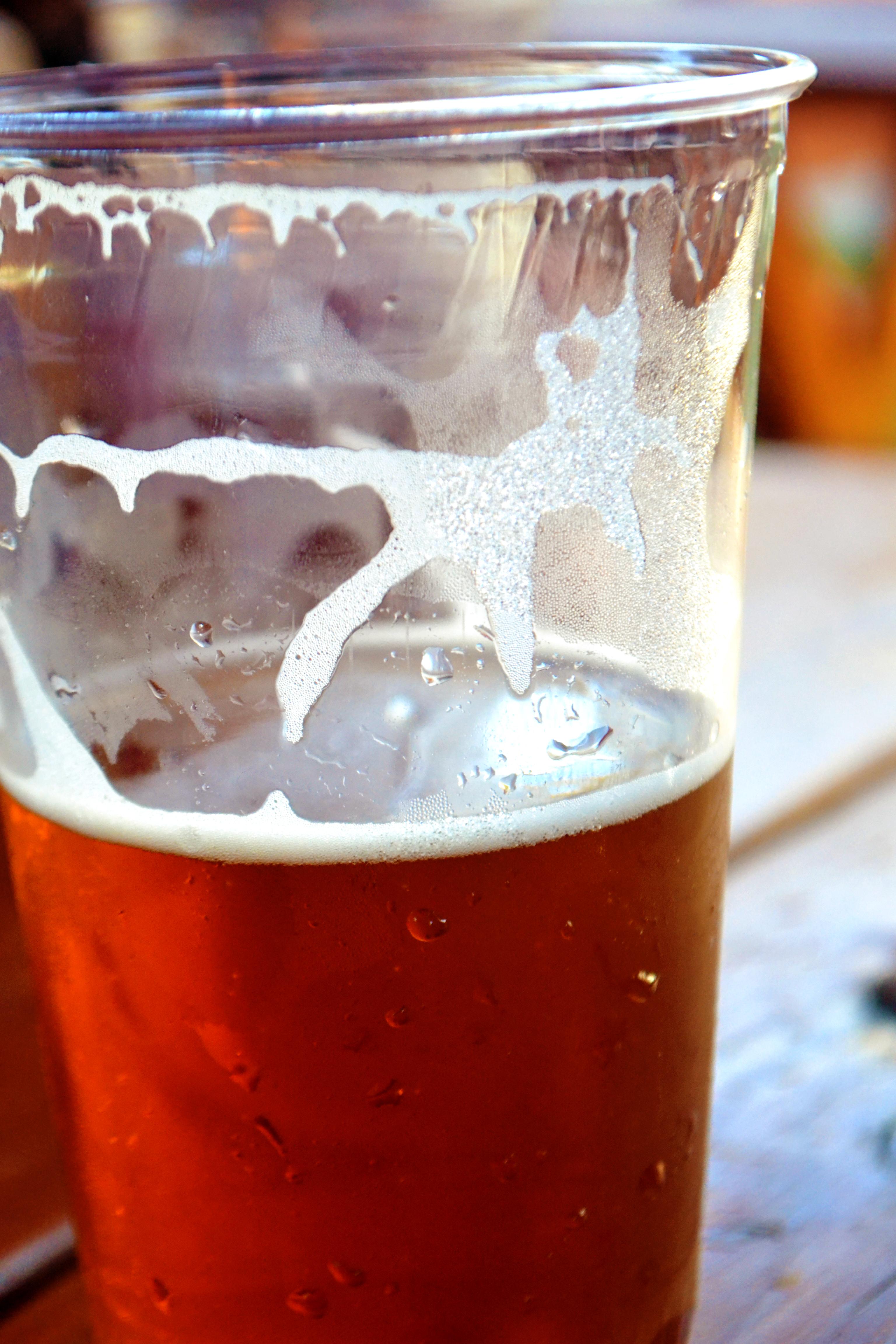
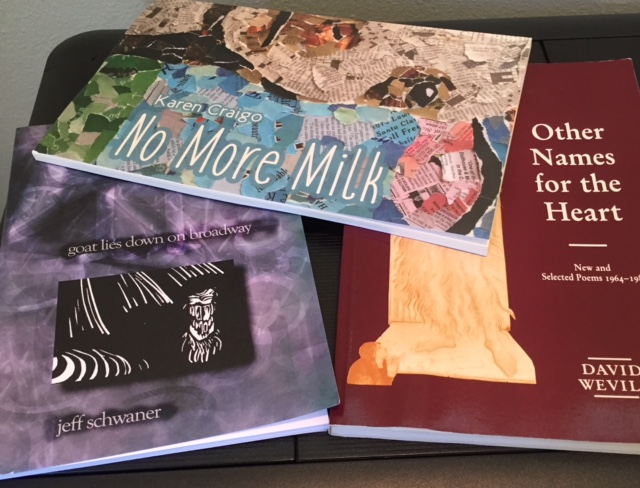
Nebraska Brewing Company’s Melange a Trois, a strong Belgian-Style Blonde ale, aged for six months in French Oak Chardonnay barrels, carries a good bit of the wine, with citrus and a hint of vanilla. A little musty, with an excellent frothy head, which, I believe, could describe me most mornings. But I digress. Deceptively strong (11+ ABV) with a pleasant bitterness. I would pair this with a plate of cured meat and David Wevill’s Other Names for the Heart: New and Selected Poems 1964-1984.

He writes in “Grace”:

… Sometimes lately

a bird you can’t identify has flitted close
and sung from the branches of his hands.

He leaves us touching ourselves.

Over the past thirty years, much of Wevill’s writing has left me with unrequited questions, with an itch to branch out, to learn more, to delve deeper into what makes us human.

But there are those days when introspection flies out the back door into the overgrown backyard, and all you want to do is sit back, watch the football game, relax, be entertained, escape. On those days I’ll break out a few cans of Austin Beerworks Pearl Snap, a German-style pilsner, moderately malty, straw-colored, with citrusy hops evident. A clean, palate-cleansing drink, good with nachos or chips, or hell, even with a Greek salad (heavy on the feta and olives, please). And if you’re like me and can’t devote yourself fully to the game, multitask – dip into Jeff Schwaner’s Goat Lies Down on Broadway, and absorb “Goat Reads the Signs”:

The sun rises like music
every morning. Wind goes
around the world and comes
back in a week or two. Goat
waits on top of a hill, judging…

As do we. Don’t stop there. Continue. Turn off the tube – one team will win, the other will lose. But Goat never wins. Goat never loses. Goat befriends Jerry Falwell. Goat eats Jerry’s tie. Goat ingests Sartre. Goat dies. “Goat is never dead.” A lively read, to say the least.

And speaking of lively, Independence Brewery’s Lupulust is a traditional Belgian-style tripel with a touch of modern hoppiness. It pours with a big head and spicy, floral notes, with a dry finish, reminding me of Karen Craigo’s No More Milk, in which she speaks of life – ordinary life – which, in her hands, becomes like that floral scented, big, hoppy beer. In “Scat with Mourning Dove” the narrator wakes “to syncopated song” and marvels at the bird’s jazz refrains from her place in bed with “a body warm against mine,” celebrating

how God made us, made jazz,
made an instrument of a dove.

Sip this book. Share it with friends. Take it to bed with a glass of warm milk. Savor it.

no-more-milk


“Which Poet, Which Beer (3)” first appeared here in September 2016.

Which Poet, Which Beer (4)


I come here to sit quietly, emerging from my shack, if only briefly, to eavesdrop and observe, to sip beer and participate in the world of commerce. Ah, yes. The grocery store. If only all of them housed craft-beer bars. I place cilantro and shallots in my basket, add arugula, asparagus and a lime, and wander over to the fish case where two small fillets of Chilean sea bass, the commercial name for Patagonian toothfish, catch my eye.

Finally at the bar, I order Lone Pint Brewery’s Zeno’s Pale Ale, and overhear a disquisition on hydration and landscaping, and a conversation on war and snipers and gratitude. The ale arrives with a light, lacey head, exudes a bready malt profile upfront, and a pine-citrus punch at the back. I can’t quite uncover the truth of the flavor, but enjoy the search, and amidst the swirling combination of voices and beer I somehow think of Veronica Golos’ “Snow in April,” a ghazal in her stunning book Vocabulary of Silence.

“Has my flock of flowers died? An ambush, a bullet-shot
of cold. Undone beneath the snow, what’s truth, in April?”

What is the sniper’s truth? What gratitude might we find within April’s layers? I have no answers, only more questions, and with more questions comes thirst.

My second beer is a curious blend of old and new – a Belgian-style quadrupel that, don’t laugh, smells a bit like a cola, but in a good way. Unibroue’s Trois Pistoles is dark brown, let’s call it mahogany, with a fruity but mellow flavor and a toasty malt finish. And well balanced – with an alcohol content of 9%, it’s strong, but not too strong. Historical undercurrents flow through this brew, yet it also brings with it an appreciation of the new and popular, which leads to thoughts of one of my favorite poets, Frank Bidart, whose work often refers to and resonates with historical figures (in the book at hand, Watching the Spring Festival, Tu Fu and Catullus come to mind), and his poem “Sanjaya at 17,” referencing an American Idol contestant:

“There is a creature, among all others, one,
within whose voice there is a secret voice
which once heard
unlocks the door that unlocks the mountain.”

Today the mountain does not swing open for me. Perhaps a second Trois Pistoles might have done the trick, but instead, knowing I have to prepare dinner, starting with a compound butter of shallot, cilantro, garlic and lime zest, I request a mere taste of Founder’s Breakfast Stout, because, well, the idea of stout for breakfast has a certain appeal, though in my case would not be practical, as it would likely put me to sleep. And yes, it contains both chocolate and coffee (Sumatra and Kona), tastes a bit smoky, is smooth and luxurious in the mouth, and makes me long for a lonely, cold winter’s night in a far-off country, a fire crackling with just a hint of madness, and the full moon leering down at all of us, but particularly the dead genius that was Thomas James, whose poem “Wild Cherries,” from his one and only book Letters to a Stranger, ends:

I watch you eat, tasting yourself perhaps,
Some bitterness that is a part of you,
And I accept it gratefully. When you smile,
I see you dying in that single instant.
Walking back home, into ourselves, we enter
A far-off country neither of us wanted.”

Oh, those things we want and don’t want. To feel. To write. To cook, to sing. To share. To love. To be alone. To be numb. To do nothing. To do everything…


This first appeared on the blog in September 2017.


Salad Suizen


Salad Suizen

Like the lone slice of cucumber
in the dinner salad,
I fear that I am not worthy
of such distinction.

No bottled dressing could mask my ineptitude.
I am that wedge of unripe winter tomato,
those pieces of lettuce bred for travel,
the black olive rounds fresh from the can.

So much to enjoy in mediocrity.

My wind sputters and fizzles.
Fingers struggle to cover the holes.
Failures accrue like compound interest
and still I persist.

Perhaps I might add croutons, red onion.
More space. Crumbled feta. Silence.


“Salad Suizen” first appeared in Ethel in August 2019.

Window Open, Closed

black-curtains2


Window Open, Closed

We enter daylight in the shape
of praise, little words

billowing through wire mesh. Across
the highway a busboy questions time

and the concept of never, while
someone plucks leaves from the bay

tree and plans her day. Roger Bacon
longed to manipulate the inner essence

of inanimate objects, to harness their force,
and a lonely man swallows prescription drugs

deliberately, releasing their attributes over time.
My eyes redden from juniper pollen as the moon

spins invisibly above our roofs, tugging at the
clouds. I once traced in a building of music

the organ’s sound to the woman I longed
to attract. Now, the window prevents the passage

of solids, but waves penetrate. I spread my fingers
across the glass, but feel no vibrations. Distant

sirens announce a procession of cause and intent,
of carelessness and indecision. Somewhere a voice rises.


* * *

This originally appeared during Bonnie McClellan’s 2015 International Poetry Month celebration, and is included in The Circumference of Other, my offering in the Silver Birch Press chapbook collection, IDES, available on Amazon. A recording of the poem may be found on Bonnie’s site.

ides front cover 92915


Self-Portrait with Umeboshi (with recording)

file0001818876295(1)


Self-Portrait with Umeboshi

Our resemblance strengthens each day.

Reddened by sun and shiso,
seasoned with salt,

we preside, finding
comfort in failure. Or does
the subjugation of one’s flavor for another’s

define defeat? The bitter, the sour, the sweet
attract and repel

like lovers separated by distances
too subtle to see.
Filling space becomes the end.
What do you learn when you look through the glass?

Knowing my fate, I say fallen. I say earth.


Ah, simplicity! When I was a child my mother would occasionally serve rice balls in which a single mouth-puckering umeboshi rested at the center. These have long been a favorite, but I admit that umeboshi might be an acquired taste. Commonly called “pickled plums,” ume aren’t really plums but are more closely related to apricots. I cherish them.

“Self-Portrait with Umeboshi” first appeared in the Silver Birch Press Self-Portrait Series (August 2014), was included in the subsequent print anthology, Self-Portrait Poetry Collection, and also appears in my chapbook, If Your Matter Could Reform.


file0001977442406

Music: “Senbazuru” Kevin MacLeod (incompetech.com)
Licensed under Creative Commons: By Attribution 3.0 License
http://creativecommons.org/licenses/by/3.0/