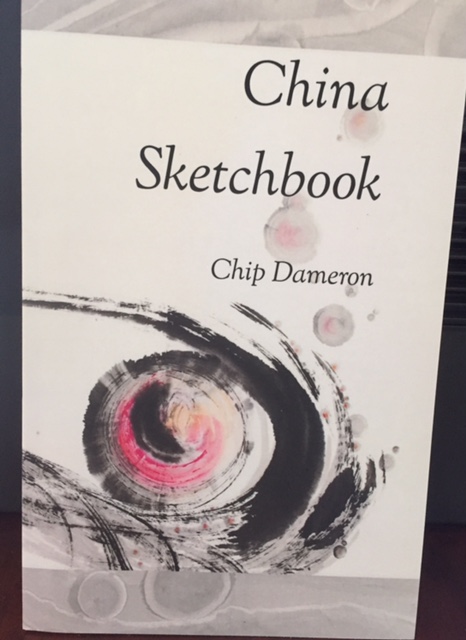
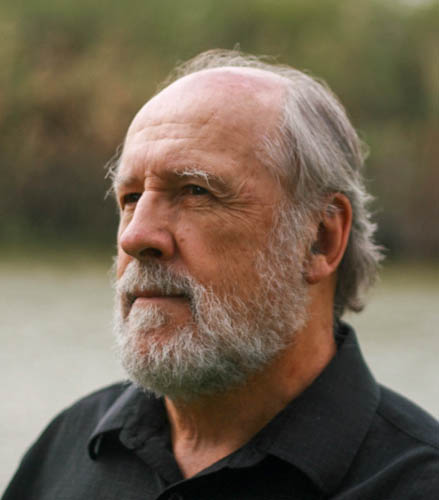
Q&A with Poet Chip Dameron

Q&A with Chip Dameron, author of China Sketchbook

Would you mind sharing a bit about your background?

I started writing poems in college and have been been playing with language ever since. To support my family, for many years I taught writing and literature at UT Brownsville and held several administrative positions. Now I am writing full time.

Which three words best describe your poetry?

Precise. Vivid. Imagistic.

Tell us about China Sketchbook. What was its genesis?

A few years ago my wife and I took a month-long trip across China, which was a stunning experience. I’ve long admired Chinese poetry and knew a little Chinese history, so to observe how China is transforming itself and to meet many of its people made for an unforgettable journey. I began drafting poems along the way, and I continued after returning home. China Sketchbook contains 27 poems, and Virtual Artists Collective was kind enough to publish it under its Purple Flag imprint in December 2016.

I’m sure you’re frequently asked this question, but I can’t resist: What carries you from the blank page to a poem? What is your process?

Usually I sit down to explore something I’ve seen or heard or experienced or thought about. What images can I find to get the poem started? Where do they want or need to go? Which words support the movement of the poem and give it the energy it needs to become a language-object that others might enjoy experiencing? Through this process I hope to create poems that are authentic and original.

A few months ago you published At Paisano Ranch, a micro-chapbook, with Origami Poems Project. What can you tell us about this book?

In September 2016, I began a four-month stay as writer-in-residence at Paisano Ranch in Austin, once owned by the legendary Texas writer J. Frank Dobie. You and I met at the ranch several times and talked about poetry, and I was intrigued by the charming micro-chapbook that you had published through Origami Poems Project called You Break What Falls. So I took six poems I had written about my experiences at the ranch and sent them off to OPP, and the editors accepted the micro-manuscript and published At Paisano Ranch in early December. I encourage poets and readers to visit the website, https://origamipoems.com, and download for free any of the micro-chapbooks that interest them. Poets may also wish to submit their own micro-manuscripts of six short poems.

What advice do you have for new poets?

Don’t be in a great rush to publish your work. Work at the craft of creating your poems, read your drafts out loud, and don’t be afraid to tinker with your poems, and even make extensive changes. You are engaging in the process of finding your distinctive voice, your distinctive style. When you’ve found that voice and style, you are ready to go public. And when you experience rejection, as all poets do, keep submitting your poems, and keep writing new ones.

Which artists inspire you? Whose work do you read, listen to, gape at, admire, envy?

I’ve long admired the great American poets of the past, including Whitman, Dickinson, Frost, and Stevens. More recent sources of inspiration include Seamus Heaney, Naomi Shihab Nye, and Billy Collins. And even through translation, which can’t do full justice to the original language, I’ve been amazed at the power of the classical Chinese poets, such as Li Bai, Du Fu, and Tao Qian.

What are you working on now, what’s in the pipeline, and what can we look forward to in the coming months?

I’ve recently completed a collection of poems called Mornings with Dobie’s Ghost, which is scheduled for publication in 2018 by Wings Press. I wrote the 35 poems while living and working at Paisano Ranch. And I’m in the middle of drafting a novel—my first—which has been a most challenging but stimulating experience.

Bio: Chip Dameron is the author of nine collections of poetry and a travel book. His poems and essays on contemporary writers have appeared in the Mississippi Review, Southwestern American Literature, San Pedro River Review, Puerto del Sol, Hayden’s Ferry Review, New Orleans Review, Borderlands, and many other journals and anthologies, as well as publications in Canada, Ireland, Nigeria, India, China, Thailand, and New Zealand.

Website: https://www.cdameron.com

YouTube reading at Malvern Books with Larry D. Thomas

Youtube reading at Malvern Books

Reading at the Friendswood Public Library
Recording of “Untitled from 1988”

file2281274629261

This first appeared in 1988, in Aileron. At the time I was experimenting with movement and breath and line, and wrote quite a few of these meditations in this form, some more successful than others.

* * *

where breath begins
it ends consider
light its secret

structure the sense
of limit defined
if a hand

recalls what the
eye cannot which
is the source

of remembrance one
touches more deeply
or allows itself

to be touched
a difference only
in the approach

file9071336337066

Untitled from 1988

file2281274629261

This was first published in 1988, in Aileron. At the time I was experimenting with movement and breath and line, and wrote quite a few of these meditations in this form, some more successful than others.

where breath begins
it ends consider
light its secret

structure the sense
of limit defined
if a hand

recalls what the
eye cannot which
is the source

of remembrance one
touches more deeply
or allows itself

to be touched
a difference only
in the approach

file9071336337066

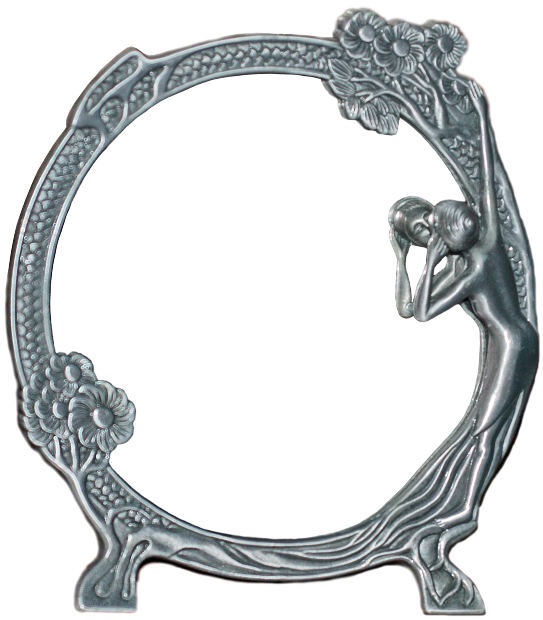
Mirror

image

Mirror

The attraction is not
unexpected. We see

what is placed
before us, not

what may be.
The mirror is empty

until approached.

One of six short poems included in my micro-chapbook, You Break What Falls. Available for download here: http://www.origamipoems.com/poets/236-robert-okaji

image

“Mirror” first appeared here in May 2015.

Threes

image

Threes

Difficulties arrive in waves,
lending weight to the theory of threes,

the plunging fund, a failed engagement, the self’s
doubt, all combined to inflict the particular

misery of the ongoing, the continued, inelegant fate
that declares us human. Look,

she says, the hummingbird flits from leaf to
flower, its wings beating 58 times a second,

a fact not to be trifled with, for what may we duplicate,
contemplate, even, at that pace?

Say the hedge gets clipped, the ring whirs off the finger
and back to the jeweler, and all you know for certain

is that you don’t know. There is no why, no how. No
way. Or life’s reel unwinds and plays only in

reverse. Where do you stop and splice it, forming new,
uncharted worries? And what about that damned

bird, buzzing around your head in territorial fury? Yes,
yes, I know. These things are not my concern. Not really.

But they arrive in unending repetition, one after
the other, in clumps of three – lovely, lonely,

triple-threaded lines of vicissitude lapping at our ankles,
saying nothing, saying everything, saying it used to be so easy.

* * *

Originally published in Eclectica in July 2014, and first appeared on this blog in July 2015.

image

“We Real Cool” Video

2017 marks the 100th anniversary of the birth of the great Gwendolyn Brooks. Check out this really cool video featuring her best known work “We Real Cool.”

How to Do Nothing

OLYMPUS DIGITAL CAMERA

How to Do Nothing

First you must wash the window to observe more clearly
the dandelion seed heads bobbing in the wind. Next,

announce on Facebook and Twitter that you will be offline
for the next two days, if not forever. Heat water for tea.

Remember the bill you forgot to pay, and then cleanse
your mind of all regret. Consider industrial solvents

and the smoothness of sand-scoured stone, the miracle
of erasure. Eliminate all thought, but remember

the water. Hitch a ride on a Miles Davis solo and float
away on a raft of bluesy notes and lions’ teeth,

and wonder how to sabotage your neighbor’s leaf blower,
but nicely, of course. She’s a widow with a gun.

Now it is time to empty yourself. Close your eyes.
Become a single drop of dew on a constellation of petals.

Evaporate, share the bliss. Stuff that dog’s bark
into a lock box alongside the tapping at the door,

the phone’s vibration, the neighbor’s rumbling bass,
and the nagging, forgotten something that won’t

solidify until three in the morning, keeping you awake.
But don’t ignore the whistling. You must steep the tea.
* * *

“How to Do Nothing” was published in Volume 4 of Steel Toe Review, available for purchase here.


steel toe

Ikebana

leaf on stone

Ikebana (You without You)

Between frames, between presence and negation, authority.

If your body lies in the earth, why are you here?

Limits admired and sought: the way of the flower.

I pluck leaves from the lower half to achieve balance.

Shape and line detach, yet comprise the whole.

My father, awake in his chair, mourns quietly.

A naked twig forms one point of the scalene triangle.

Starkness implies silence, resonates depth.

Heaven, earth, man, sun and moon invoke your absence.

As you trickle through the interval’s night.

* * *

Ikebana is the art of Japanese flower arrangement.

chair

This first appeared on the blog in March 2016, and is included in my mini-digital chapbook, Interval’s Night, published by Platypus Press in December 2016, and available via free download.

For My Mother

Anna Marie Sewell rips open the morning with this poem. Perhaps we should all tend the garden.

prairiepomes's avatarPrairiepomes

April 17: Nocturne: Tiny Now

She is tiny now, my mother

and jokes in the morning, when

her teeth aren’t in, how she whistles

like a little bird. And i want to reach

back to the nights when

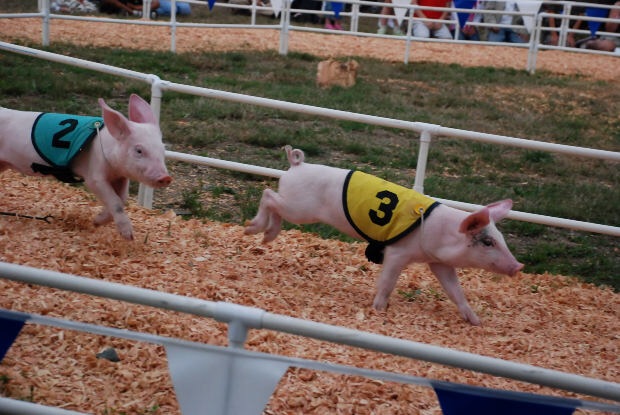
she brought the piglets in

laid them in the woodstove oven

so tiny, but she believed in them

and in that warm cradle, the spark

of life rekindled in them. How

do i cradle her? now

she is so tiny, softly

drawing nearer to

the Western Door.

This poem won’t do it.

This poem is for me

a piglet grown, with

my snout astonished

at discovery, how the power

that built a world for me still

reveals itself, blue

slight, soft, tiny.

My mother went home to God on May the 5th. I was honoured to be with her then, to recite for her the prayers she loved. One day, it will…

View original post 159 more words