Apricot House (after Wang Wei)

file000532973761

Apricot House (after Wang Wei)

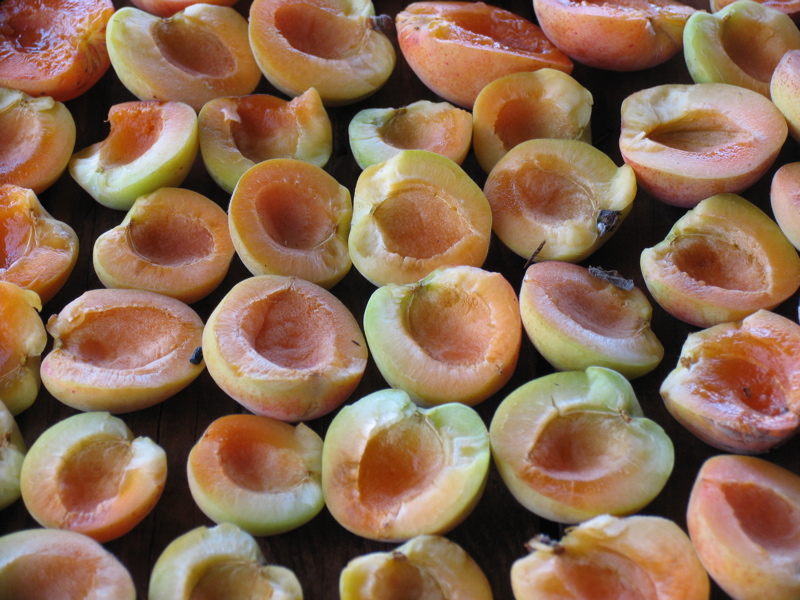
We cut the finest apricot for roof beams
and braided fragrant grasses over them.

I wonder if clouds might form there
and rain upon this world?

The transliteration on Chinese-poems.com reads:

Fine apricot cut for roofbeam
Fragrant cogongrass tie for eaves
Not know ridgepole in cloud
Go make people among rain

Each adaptation poses its challenges, and this one was certainly no exception.
First I identified key words and determined how or whether to use them.
Apricot, roofbeam, cogongrass, eaves, ridgepole, cloud, people, rain.

Apricot was a given. It offered specificity, and feels lovely in the mouth. Roof beams, as well. Cogongrass didn’t make the cut. It is indeed used for thatched roofs in southeast Asia, but it felt clumsy; in this case, the specificity it lent detracted from my reading. And rather than use “thatched” I chose “braided” to imply the layered effect of thatching, and to imply movement, to mesh with and support the idea of clouds forming and drifting under the roof. “Not know” posed a question: did it mean ignorance or simply being unaware, or perhaps a state of wonderment? I first employed “unaware” but thought it took the poem in a different direction than Wang Wei intended (but who knows?). “Ridgepole” seemed unnecessary. So I chose to let the reader follow the unsaid – using “form there” to reinforce the impression already shaped by the roof beams and the grasses “over them.” I admit to some trepidation over the second couplet. It may still need work.

clouds

“Apricot House” first appeared here in December 2014.

A Poem from My Recently Published Micro-Chapbook has been Nominated for a Pushcart Prize

no-eye

The editors of the Origami Poems Project have nominated “Parting from Wang Wei,” a poem from my recently published micro-chapbook, No Eye But the Moon’s: Adaptations from the Chinese, for a Pushcart Prize. Many thanks to Jan and Kevin Keough for this honor. The chapbook is available via free download from Origami Poems Project. And please peruse their site for other titles and folding instructions.


Sheng-yu’s Lament (after Mei Yao-ch’en)

DSC_1243

Sheng-yu’s Lament (after Mei Yao-ch’en)

First heaven took my wife,
and now, my son.
These eyes will never dry
and my heart slowly turns to ash.
Rain seeps far into the earth
like a pearl dropped into the sea.
Swim deep and you’ll see the pearl,
dig in the earth and you’ll find water.
But when people return to the source,
we know they’re gone forever.
I touch my empty chest and ask, who
is that withered ghost in the mirror?

* * *

“Sheng-yu’s Lament” is included in my micro-chapbook, No Eye But The Moon’s, available via free download at Origami Poems Project.

The transliteration on Chinese-poems.com reads:

Heaven already take my wife
Again again take my son
Two eyes although not dry
(Disc) heart will want die
Rain fall enter earth in
Pearl sink enter sea deep
Enter sea can seek pearl
Dig earth can see water
Only person return source below
Through the ages know self (yes)
Touch breast now ask who
Emaciated mirror in ghost

SAM_0841

Parting from Wang Wei (after Meng Haoran)

P1010508


Parting from Wang Wei (after Meng Haoran)

These quiet days are ending
and now I must leave.

I miss my home’s fragrant grasses
but will grieve at parting – we’ve

eased each other’s burdens on this road.
True friends are scarce in life.

I should just stay there alone, forever
behind the closed gate.

* * *

“Parting from Wang Wei” is included in my micro-chapbook, No Eye But The Moon’s, available via free download at Origami Poems Project.

The transliteration on Chinese-poems.com reads:

Quiet end what wait
Day day must go return
Wish seek fragrant grass go
Grieve with old friend separated
On road who mutual help
Understanding friend life this scarce
Only should observe solitude
Again close native area door

file5971307479422

My New Micro-Chapbook is Available via Free Download

no-eye

My micro-chapbook, No Eye But the Moon’s: Adaptations from the Chinese, is now available via free download from Origami Poems Project. And please peruse their site for other titles and folding instructions.


Peach Blossom (after Li Po)

file0001629991807
Another adaptation, which first appeared in April, 2014.

Peach Blossom (after Li Po)

Ask why I stay on the green mountain
and I smile but do not answer; my heart rests.
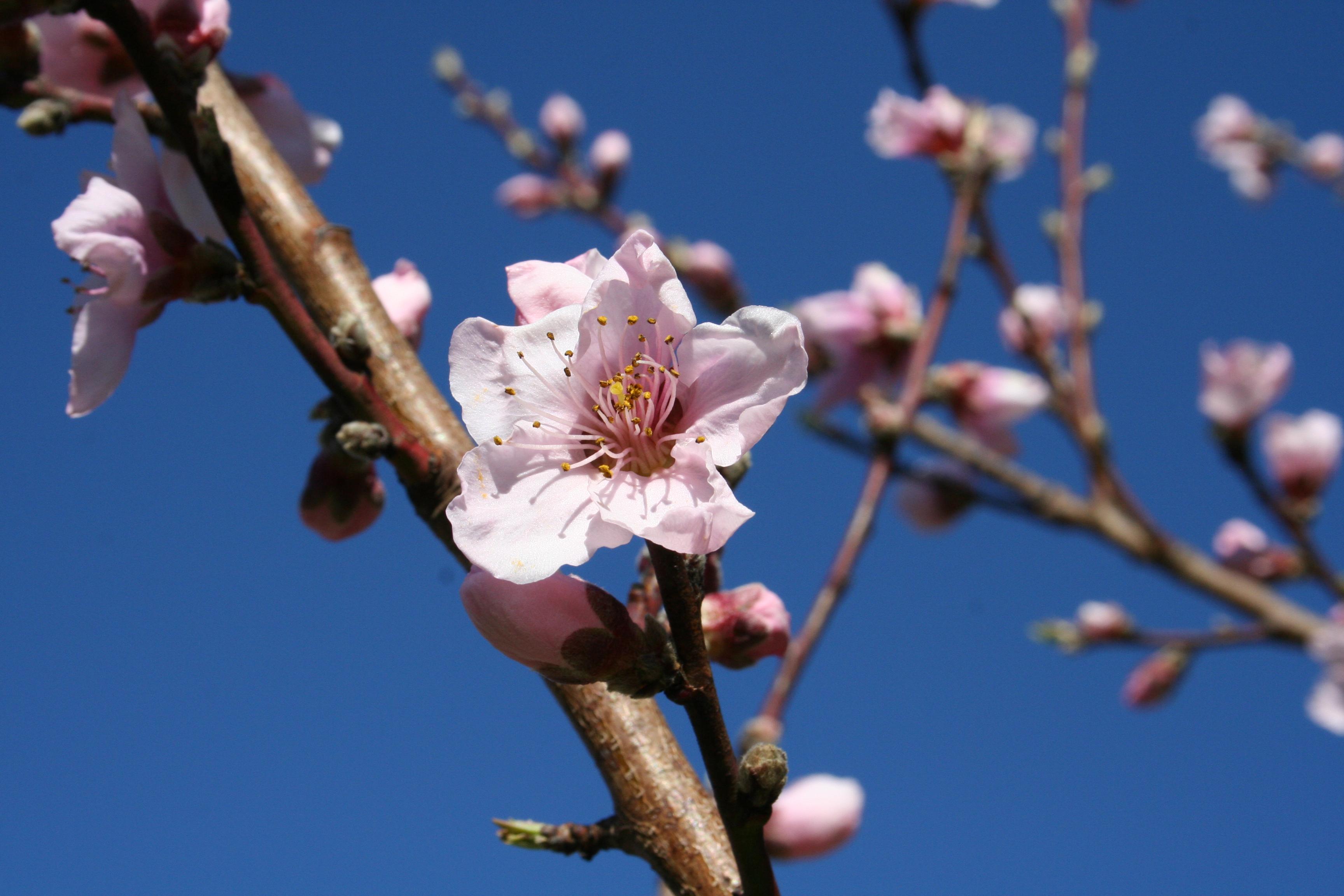
A peach blossom floats downstream –
Heaven and earth, apart from this world.

The transliteration on Chinese-poems.com is as follows:

Ask me what reason stay green mountain
Smile but not answer heart self idle
Peach blossom flow water far go
Apart have heaven earth in human world

There the poem is titled “Question and Answer on the Mountain.”

IMG_5780

Sheng-yu’s Lament (after Mei Yao-ch’en)

DSC_1243

Sheng-yu’s Lament (after Mei Yao-ch’en)

First heaven took my wife,
and now, my son.
These eyes will never dry
and my heart slowly turns to ash.
Rain seeps far into the earth
like a pearl dropped into the sea.
Swim deep and you’ll see the pearl,
dig in the earth and you’ll find water.
But when people return to the source,
we know they’re gone forever.
I touch my empty chest and ask, who
is that withered ghost in the mirror?

The transliteration on Chinese-poems.com reads:

Heaven already take my wife
Again again take my son
Two eyes although not dry
(Disc) heart will want die
Rain fall enter earth in
Pearl sink enter sea deep
Enter sea can seek pearl
Dig earth can see water
Only person return source below
Through the ages know self (yes)
Touch breast now ask who
Emaciated mirror in ghost
SAM_0841

Originally posted in December, 2014.

New Broadside from St. Brigid Press is in Progress!

image

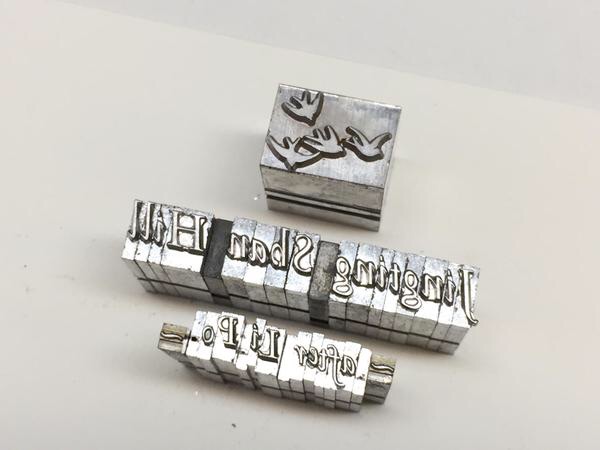
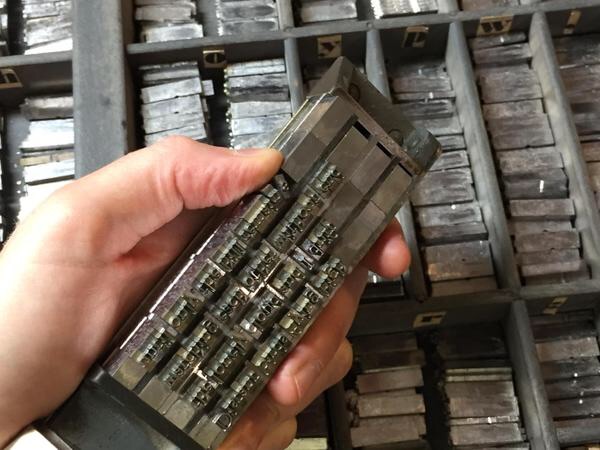
I am pleased to announce that Emily Hancock, extraordinary letter press printer and proprietor of St. Brigid Press, is hand-setting a small broadside of one of my Chinese adaptations.

It will be available in August as a fundraising premium for a non-profit press (more details about that later), and the remainder will be offered for sale in September.

image

Bright Autumn Moon (after Su Shi)

AWcaQQ1a

Bright Autumn Moon (after Su Shi)

Clouds gather on the horizon, but here
it’s clear and cold as the silent Milky Way
and the stone of heaven, turning.
My life, like this night, will not last long.
Where will the bright moon find me next year?

The transliteration on Chinese-poems.com reads:

Mid-Autumn Moon

Sunset cloud gather far excess clear cold
Milky Way silent turn jade plate
This life this night not long good
Next year bright moon where see

Jade was also known as the “stone of heaven” and was considered a bridge
between heaven and earth. It made more sense to me in this context. I’m clearly
taking license here…

NIGHT SKY 3

Thinking of Li Po at Sky’s End (after Tu Fu)

file0001618675507

Thinking of Li Po at Sky’s End (after Tu Fu)

Cold wind rises at the sky’s end.
What does he consider?
And when will the geese arrive?
The rivers and lakes are full this autumn
but poets’ fates are seldom pleasant.
Demons love to see us fail.
Let’s think of dead Ch’u Yuan
and offer poems to the river.

The transliteration on Chinesepoems.com reads:

Thinking of Li Po at the End of the Sky

Cold wind rise sky end
Gentleman thought resemble what?
Goose what time come?
River lake autumn water much
Literature hate fate eminent
Demons happy people failure
Respond together wronged person language
Throw poems give Miluo

According to the notes at Chinesepoems.com, the wild goose is a symbol of autumn, letters and travellers in difficulties. The wronged person is Qu Yuan, a poet of the fourth century BC who drowned himself in the Miluo river – another exiled poet later threw some verses into the river as an offering to him.

file000294402551