Which is an Eye or a Bowl, a Dream

eyes3


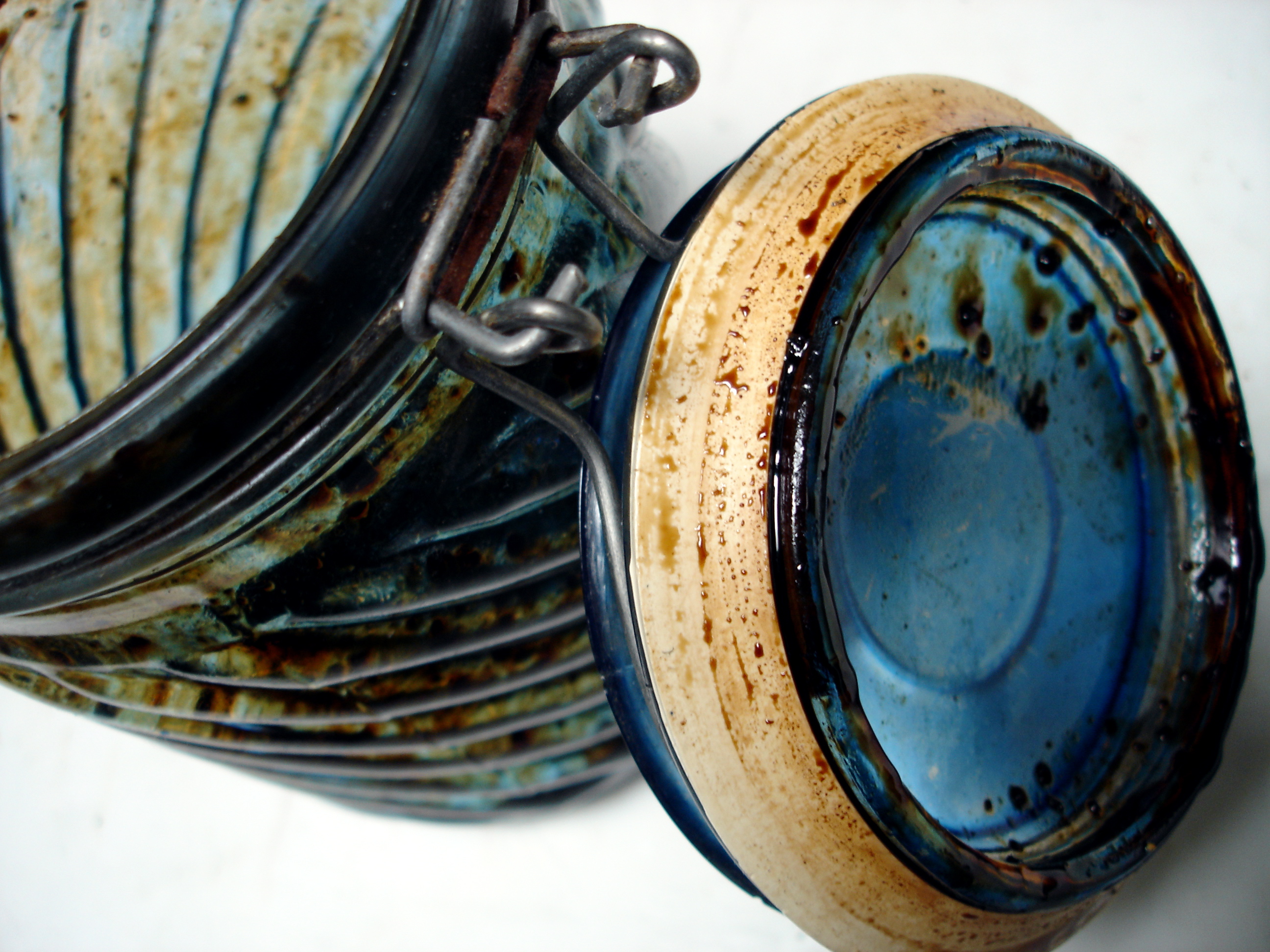
Which is an Eye or a Bowl, a Dream

Or well-placed mirror in a sunburnt room, shivering through shifted
images: that hand, blackened and stout, opened like a dark peony;
the tattooed chin; shovel and torch; hook and owl. You say no one
chooses one fist over another, that bread’s rise completes its cycle
and begins anew, pressed flat and rounded. Take this heart and seal
its chambers. Note the anterior descent. Compression, lesion. Plaque.
Consequence. And your friend, who slept, never to awaken. Lying
in that strange bed, you taste salt, acknowledge change, whisper
to no one: audible house…audible tree, knowing that time’s limit
remains unclear. The air swirls and you accept this new light.


Note: “Audible house…audible tree” is from Jane Hirshfield’s “Not Moving Even One Step,” from The Lives of the Heart.

bowlnhashi

Self-Portrait with Umeboshi (with recording)

file0001818876295(1)


Self-Portrait with Umeboshi

Our resemblance strengthens each day.

Reddened by sun and shiso,
seasoned with salt,

we preside, finding
comfort in failure. Or does
the subjugation of one’s flavor for another’s

define defeat? The bitter, the sour, the sweet
attract and repel

like lovers separated by distances
too subtle to see.
Filling space becomes the end.
What do you learn when you look through the glass?

Knowing my fate, I say fallen. I say earth.


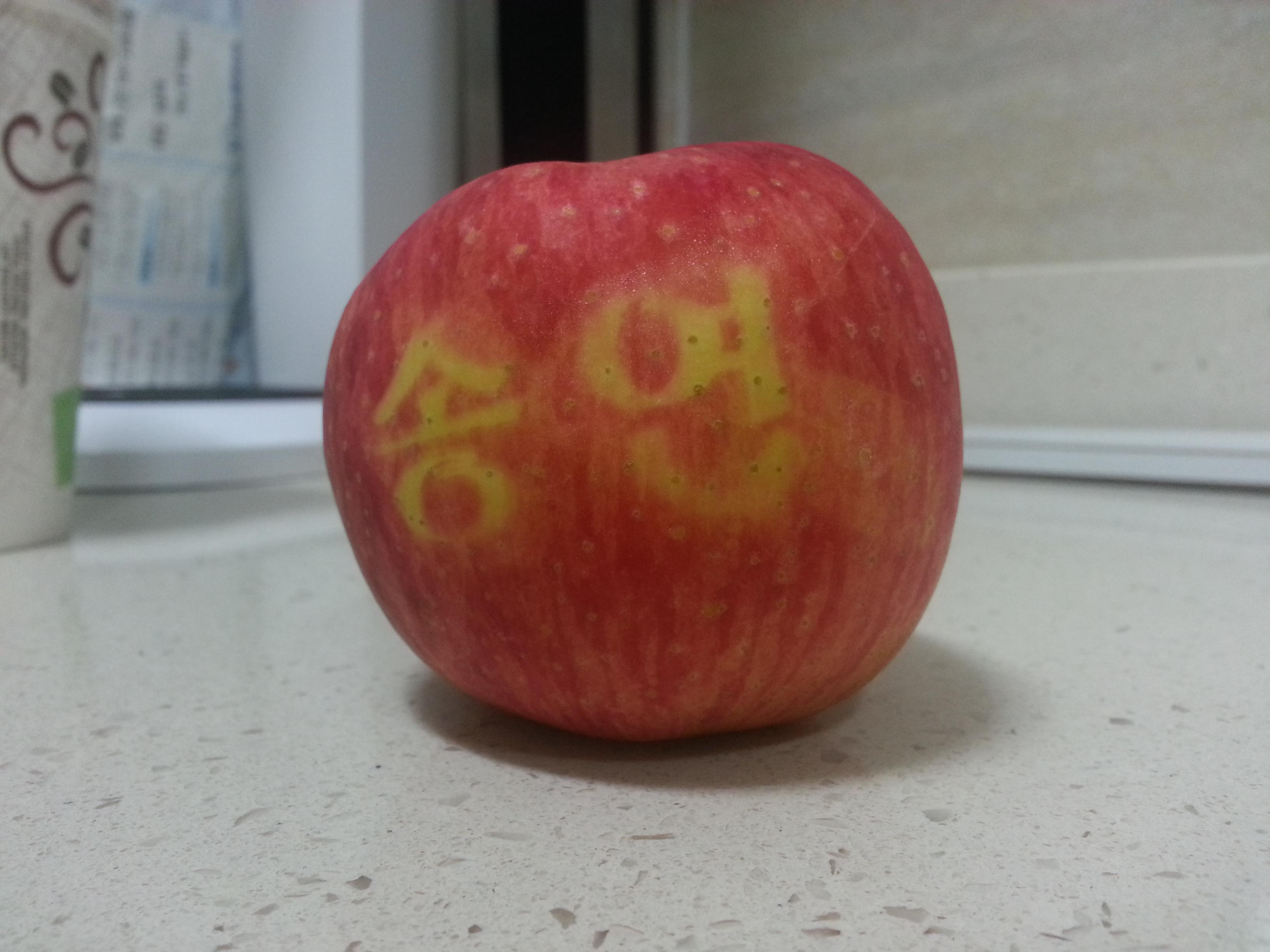
Ah, simplicity! When I was a child my mother would occasionally serve rice balls in which a single mouth-puckering umeboshi rested at the center. These have long been a favorite, but I admit that umeboshi might be an acquired taste. Commonly called “pickled plums,” ume aren’t really plums but are more closely related to apricots. I cherish them.

“Self-Portrait with Umeboshi” first appeared in the Silver Birch Press Self-Portrait Series (August 2014), was included in the subsequent print anthology, Self-Portrait Poetry Collection, and also appears in my chapbook, If Your Matter Could Reform.


file0001977442406

Music: “Senbazuru” Kevin MacLeod (incompetech.com)
Licensed under Creative Commons: By Attribution 3.0 License
http://creativecommons.org/licenses/by/3.0/

Chill (Cento)

silhouette


Chill (Cento) 

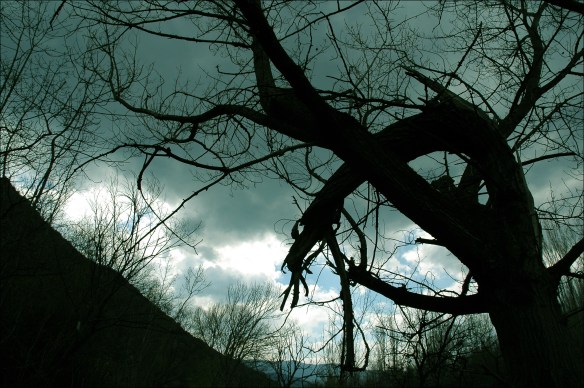
I shiver a little, with the evening,
and you print a shadow like a thin twig.

Wait for my death, then hear me again.
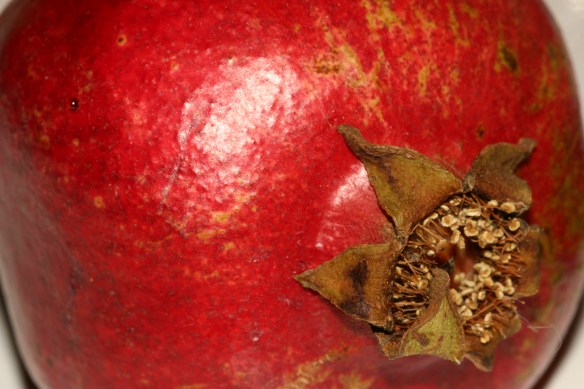
He believes a pomegranate is a thesaurus,

the thundercloud, tomorrow’s puddle. Is
this hunger unlike that of others?

When a drowning man calls out,
his voice follows him downstream.

Why am I grown so cold?


A cento is composed of lines borrowed from other poets. “Chill” owes its existence to: James Wright, H.D., Ingeborg Bachmann, Eduardo C. Corral, Blaga Dimitrova, Forrest Gander, Yusuf Komunyakaa, and Adelaide Crapsey.

pom.jpg

“Chill” first appeared on the blog in March, 2016, and was subsequently published in Long Exposure in October 2016.


Letter to Marshall from the Scarecrow’s Pocket


Letter to Marshall from the Scarecrow’s Pocket

Dear Daniel: How fortunate we are to tap into this medium of ether
and zeros and ones and all the combinations employed in our paperless
context. I am drawn to the concept of text as textile, as an entity
woven into the fabric of communication. Who knew that simple lines,
dots, dashes and squiggles would someday depict so well our
abstract beginnings and fingered desires, from counted goats and
jars of oil to the tattoo on a beloved’s inner thigh. The gap between
thought and graphic representation, whether on paper or glowing
screen, seems heightened these days, in spite of their ubiquitous
presences. I scratched my name onto the frozen creek’s surface,
only to watch it subsume as the mercury rose. I report this only
because you’ve scribed too well that feeling of treading on uncertain
surfaces, of words expanding in meaning and dragging us along
separate byways, fork into fork, under and through what we
never considered. That is our fate – to emerge from the pocket,
folded, wrinkled and smudged, smelling of makkoli and fish
markets and unwritten phrases stored in rice jars, our personal
creases expanding as we inspect the characters found there, some
crimped, others elongated, still others nearly invisible but apparent
through indentation. Translate these and what have you but a history
of glorious failures and unfelt victories in marks, on white,
somehow of note, if only to oneself. Success is a stranger’s smile,
an omelet cooked to order and eaten with gusto. It pulses
in the doing, in the unsteady drip from the faucet with a desiccated
washer, and the ink staining the page symbol by line. I know only
what I know, which ain’t much, but I keep trying to learn, to
cobble together these odd symbols into assemblages greater than
myself. As if anyone would notice. Say hello to the marred, the
cracked and disheveled of Jeju, and I’ll return the favor from
my hideaway in the Texas hills. As always, believe. Bob.


“Letter to Marshall from the Scarecrow’s Pocket” first appeared on Vox Populi in July 2018. I am grateful to Michael Simms for publishing this piece (and others).


Summer 1966: After France & Remembering Bobby, Who One Day Would Learn to Multiply and Divide, Write Love Poems, Define Home, Fight Unfairly and Live with as Much Gusto as a 7-Year Old. Perhaps.


Summer 1966: After France & Remembering Bobby,
Who One Day Would Learn to Multiply and Divide,
Write Love Poems, Define Home, Fight Unfairly and
Live with as Much Gusto as a 7-Year Old. Perhaps.

From left coast to right, or the wide arc between,
which place claimed you? In New York you marveled
at the building’s backs scratched by clouds, and all your
pale cousins in Baltimore spoke strangely and couldn’t fathom
your nuclear family’s private lingo, while the drive to Texas
and its red ants and iced tea blossomed into adventures between
pages in the back seat of the VW bug. By the second week you
learned that Texans sweat as much as the French, and swear even
more, that you couldn’t fight one twin without taking on the other,
sometimes both at once. There was no question of fairness then,
just brotherhood, but the librarian would slip you the choicest
donated fiction, and you played baseball every day in the vacant lot
until sundown called the players home to black and white body
counts and cigarette commercials on the three channels received.
Sometimes you lay in bed under the half-light of the whirring
fan blades, and dreamt of heroes and ornithopters, zebras
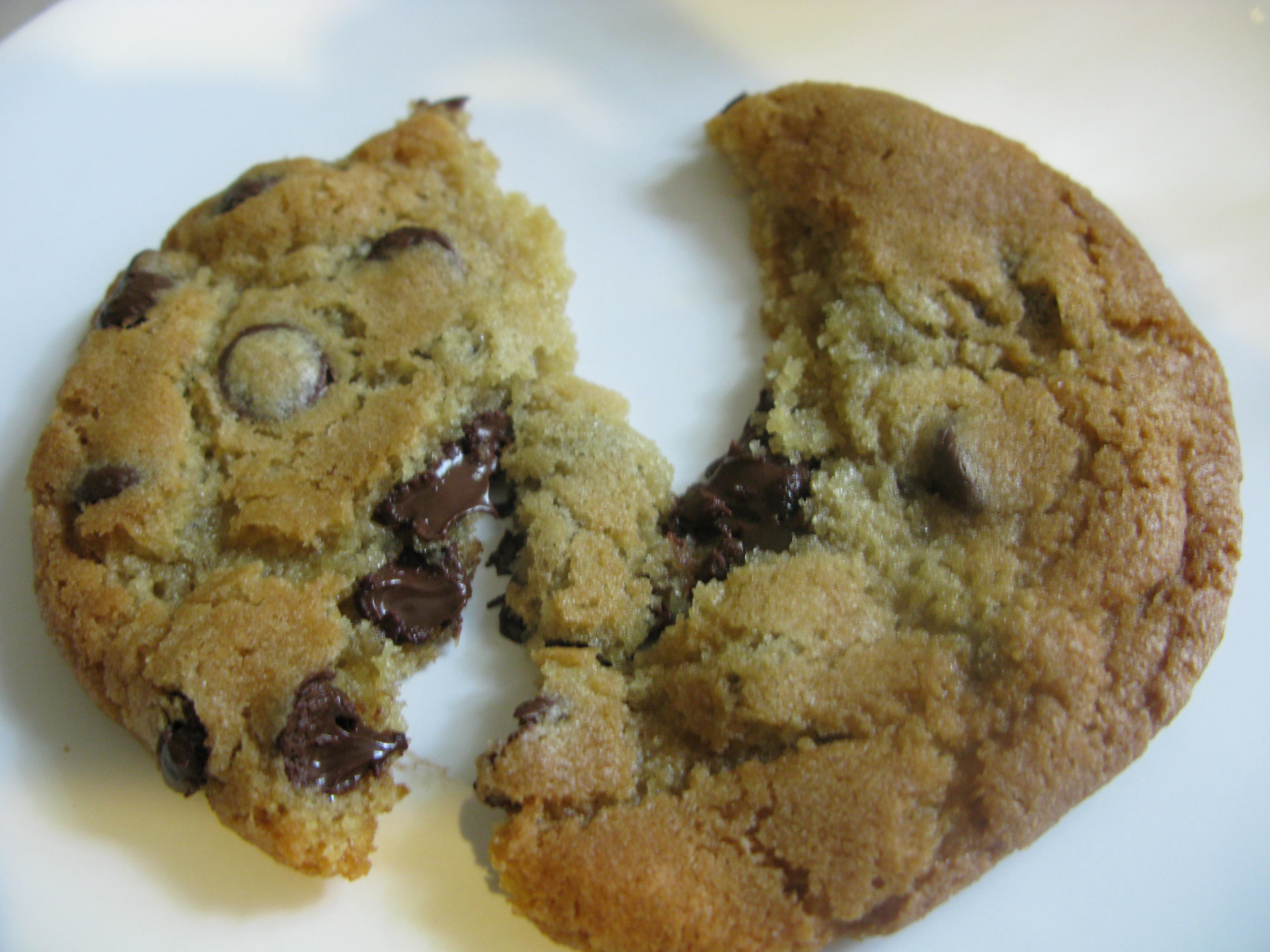
and the scent of chocolate chip cookies in the oven. Other nights
you wondered how words could rest so calmly on one page yet
explode off the next, or why a man would climb a tower in Austin
to kill fourteen people when opportunities for mayhem and murder
burgeoned across the sea. Wasn’t living a matter of simple
subtraction? One by one the days parted and you walked through
that dwindling heat, eyes squinting, questions in hand, emerging
fifty years later having suffered additions and division and the
cruelties of love and success, honor and truth, still asking why
and how, home or house, where it went, your shoulders slumping
under the heft of those beautiful, terrible summers stacked high
like so many life-gatherings of unread books awaiting a bonfire.


This was first published in theSilver Birch Press “Moving” series, and an earlier version titled “Bonjour, Texas” appeared on the blog A Holistic Journey.


Parting from Wang Wei (after Meng Haoran)

P1010508


Parting from Wang Wei (after Meng Haoran)

These quiet days are ending
and now I must leave.

I miss my home’s fragrant grasses
but will grieve at parting – we’ve

eased each other’s burdens on this road.
True friends are scarce in life.

I should just stay there alone, forever
behind the closed gate.


* * *

“Parting from Wang Wei” is included in my micro-chapbook, No Eye But The Moon’s, available via free download at Origami Poems Project.

The transliteration on Chinese-poems.com reads:

Quiet end what wait
Day day must go return
Wish seek fragrant grass go
Grieve with old friend separated
On road who mutual help
Understanding friend life this scarce
Only should observe solitude
Again close native area door

file5971307479422

And: A Mythology


And: A Mythology

Balancing the chair on two legs,
you claim no past,
and gravity,
though complicit in the future,
aligns itself with the mass.
No connections fuse the two.
Or, lying there, you bridge gaps,
clasping hands with distant cousins,
awake in the moment
yet ready to drift and continue,
a solitary seed awaiting nourishment,
steady, existing only between.


“And: a Mythology” first appeared in May 2020 at Literati Magazine. Many thanks to editor Renée Sigel for taking this and several other pieces.

.

This Turning

turning


This Turning

what one says
depends not on
words the wind

begins it does
not end but
lends itself to

an end this
turning may be
an answer the

sound of intent
so concealed a
word displayed is

only a word
not an end
nor the beginning


magnets

Another oldie from the eighties. It seems that even my poetry was thinner then.

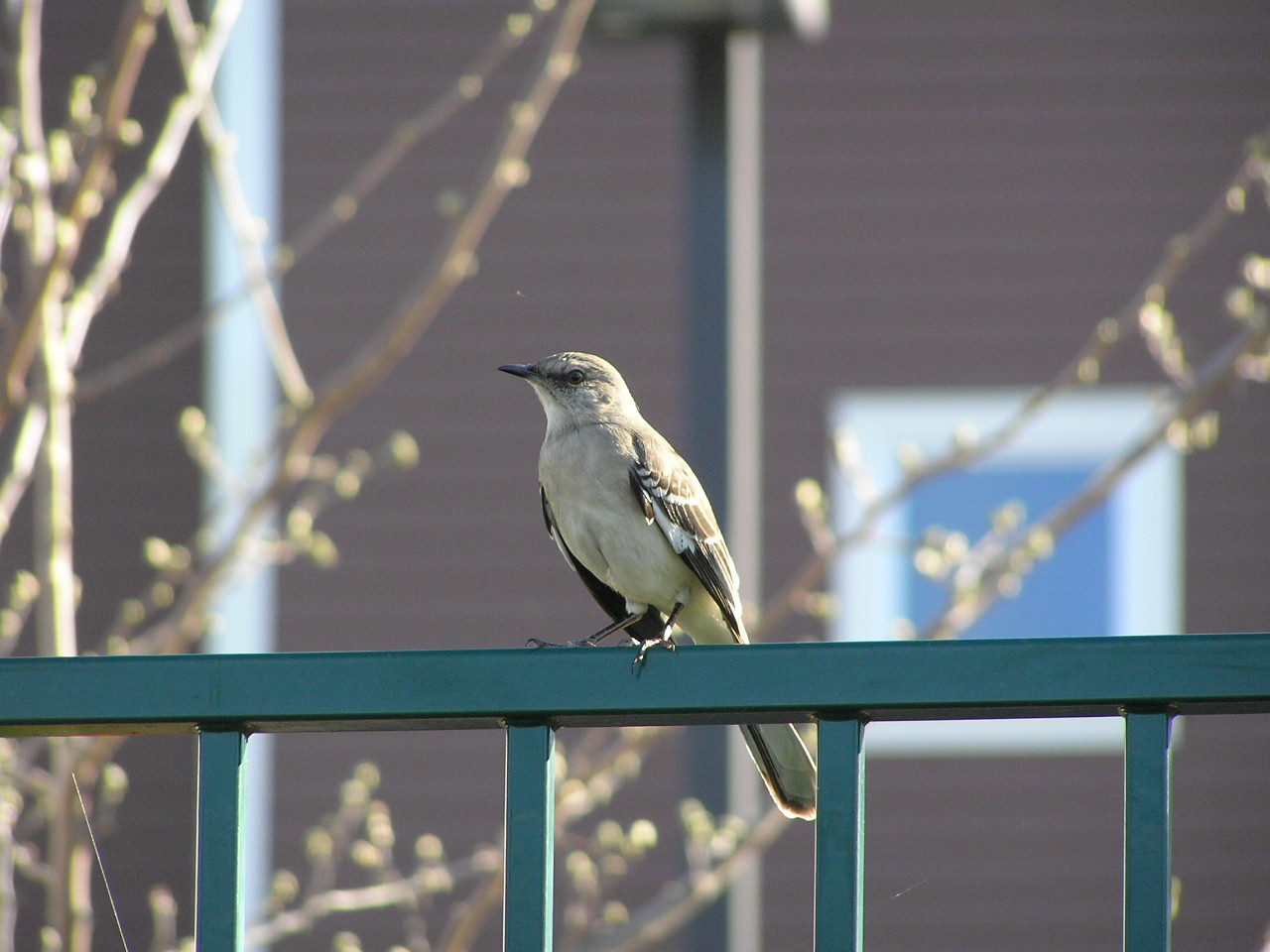
Mockingbird III

OLYMPUS DIGITAL CAMERA


Mockingbird III

Songs, returned
to their space

within the sphere of
movement, the patterns inscribed
as if to touch the face of every

wind: here one moment, then
gone. This quickness delights us.
How, then, do we so often forget

those things we share? Night
comes and goes to another’s
phrase, yet each note is so precisely

placed, so carefully rendered
that we hear only the voice, not its source.


* * *

Another piece from the 80s. This first appeared here in March 2015, and would likely be a much longer poem if I were to write it today.


20131129_140442


Poet’s Pantry

file3911233869642

In my sliver of the world, poetry and cooking share many qualities. When I step into the kitchen, I often have only a vaporous notion of what’s for dinner. A hankering for roasted poblano peppers, the need to use a protein languishing in the refrigerator, the memory of an herbal breeze wafting down a terraced hill near Lago d’Averno, Hell’s entrance, according to Virgil, or even a single intriguing word, may spark what comes next. But the success of what follows depends upon the ingredients at hand, on how we’ve stocked the pantry. Good products beget better results. Let’s take my desire for roasted poblanos. What to do with them? Poking around, I uncover an opened package of goat cheese, a bit of grated grana padano and some creme fraiche, and I immediately think pasta! Looking further I spot arugula, a lemon, a handful of pecans, some cherry tomatoes. Dinner: Pappardelle with a roasted poblano and goat cheese sauce, garnished with toasted pecans, served with an arugula and cherry tomato salad dressed with a lemon vinaigrette. Simple, when you’ve stocked a solid base of quality components.

My writing employs a similar process. Anything – a vague sense of uneasiness, a particular word, the sunlight slanting through the unfortunate dove’s imprint on my window, articles or books I’ve read or perused on a myriad of subjects – may launch a poem. But what truly makes the poem, what bolsters, fills and completes, what ignites and catapults it arcing into the firmament? The pantry’s contents.

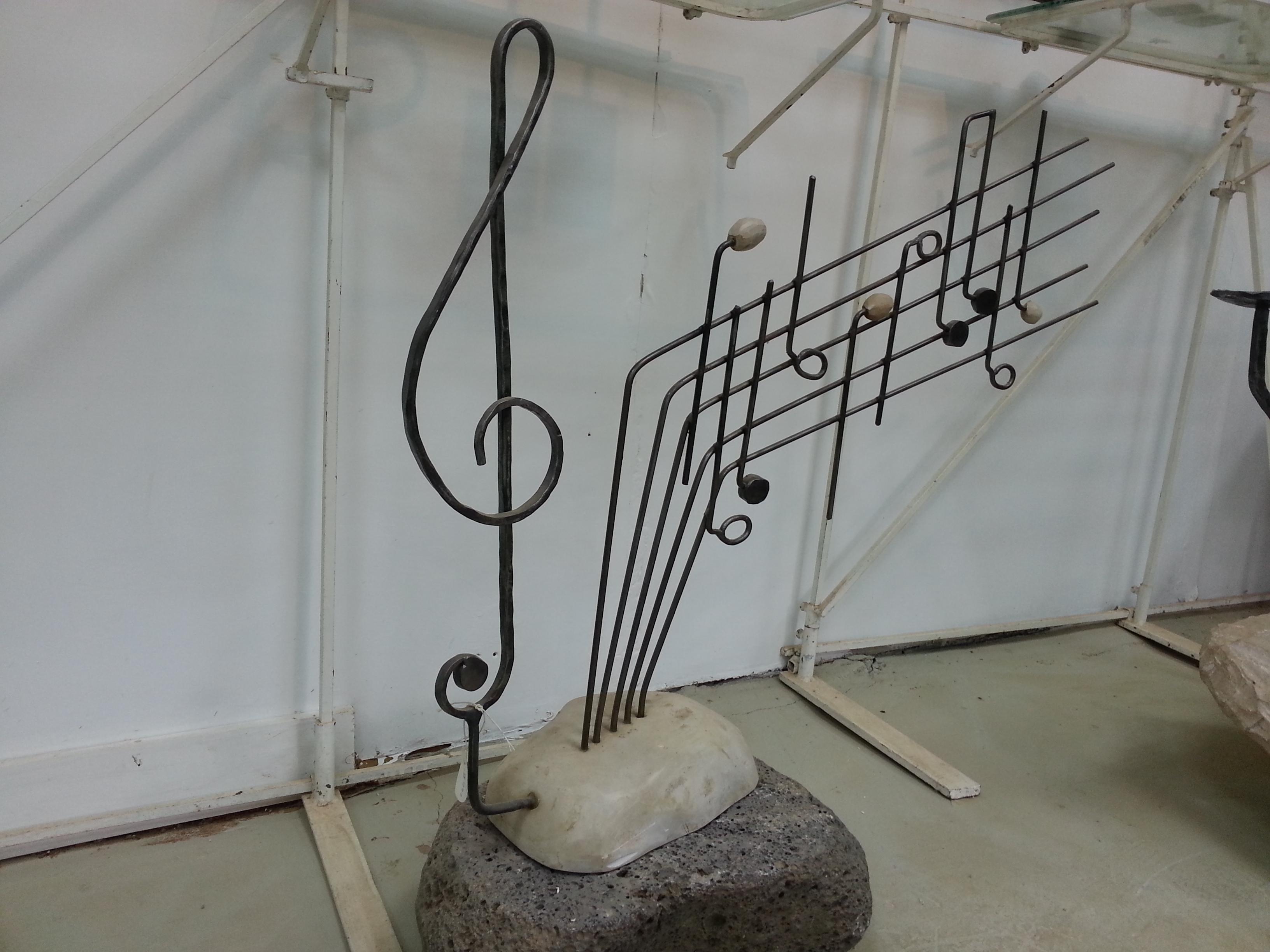
Everyone’s needs differ, and I wouldn’t presume to inflict my peculiar sensibilities on anyone, but if you cracked open my burgeoning poetry pantry’s door, you’d certainly unearth dictionaries and a thesaurus, fallen stars, books on etymology and language, curiosity, a guitar or mandolin, at least one window (sometimes partially open), conversations floating in the ether, various empty frames, wind, dog biscuits and dirty socks, a walking stick, sunlight and shadows, more books on such subjects as ancient navigation, the history of numbers, the periodic table, alchemy and olives. You might also spy reams of paper, unspoken words, coffee cups, a scorpion or two, scrawled notes on index cards, wandering musical notes, a pipe wrench, wood ear mushrooms and salvaged fragments of writing, failed ideas moldering in clumps on the floor, a few craft beers and empty wine bottles, a chain saw, and most important of all, a bucketful of patience.

(I cannot over-emphasize the bucket’s contents…)

This is just to say (no, I didn’t eat the plums) that the best equipped poets stock their pantries with the world and all its questions, with logic, with faith, persistence, emotion, science, art, romance and yes, patience. Line your kit with every tool you can grasp or imagine. Keep adding to it. Read deeply. Listen. Breathe. Listen again. Converse. Look outward. Further, past the trees, around the bend and beyond the horizon’s curve, where the unknown lurks. Look again. Don’t stop. Continue.

And if after all this you’re wondering what basks in my kitchen pantry:
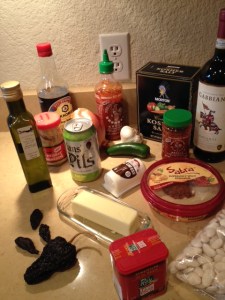
photo(13)

This first appeared here in January  2014.