Recording of December Moon (1999)


December Moon (1999)

If loneliness breathes,
then rain is its heart,

always falling to its lowest point
before receding. Water graces us

daily in all its forms – the slowest
drop, the line of ice on the wall,

your breath, so soft and even
in the cool night. But no one,

no thing, can fill the void of
departure. You exhale and turn

away, and the air, with its empty
arms, embraces the space

you’ve left. I feel this daily,
whenever we part. At forty-one

I’ve known you half my life
but have loved you even longer,

through the millennium’s demise
and all that preceded or follows.

The brightest moon for a century to come
is but a shadow in your light.

It’s hard to believe that I wrote “December Moon” over eighteen years ago. Busy with books, work and life, I didn’t write much in the nineties. But this, the last poem of that decade, surfaced a few years ago. The sentiments are as true today as they were then. I am a lucky man.

streetfog

Music: “Nightdreams” Kevin MacLeod (incompetech.com)
Licensed under Creative Commons: By Attribution 3.0 License
http://creativecommons.org/licenses/by/3.0/

Spring Night (after Wang Wei)

file4401311417052

Spring Night (after Wang Wei)

Among falling devilwood blossoms, I lie
on an empty hill this calm spring night.
The moon lunges above the hill, scaring the birds,
but they’re never quiet in this spring canyon.

Another try at an old favorite…

I consider this adaptation rather than translation, but perhaps appropriation or even remaking might be more accurate.

Here’s the transliteration from chinese-poems.com:

Person idle osmanthus flower fall
Night quiet spring hill empty
Moon out startle hill birds
Constant call spring ravine in

So many choices, none of them exactly right, none of them entirely wrong. How does one imply idleness, what words to use for “flower” (blossom? petal?), or for that matter, “fall” (descend, flutter, spiral)? And how to describe a moonrise that scares the constantly calling birds? My first attempt began:

“I lie among the falling petals”

but it seemed vague. The word “osmanthus” fattened my tongue, or so it felt, but the osmanthus americanus, otherwise known as devilwood or wild olive, grows in parts of Texas. So I brought the poem closer to home.

I considered naming the birds (quail came to mind) but decided against. In this case the specificity felt somehow intrusive.

My hope is that I’ve managed to amplify, in some small way, previous iterations, and that while the edges are still a bit blurred in morning’s first light, perhaps they’ll become slightly crisper by the evening.

file8981286030058

“Spring Night” last appeared here in May 2016.

What Are You Going To Do?


What Are You Going To Do (Cento)

Not everything can be set to music,
you have to understand that.

If I went to the end of the street,
would I be at the center of myself?

Now ends. Now begins.
Still, we sing the same songs;

we live in the sound – no love
of miracle or numbers helps.

I wonder if my body
is outline. A far point rendezvous.

A smoke plume taken, but not
into a hot, dark mouth.

Or perhaps it never had a name.
Bruising’s not the end of it.

* * *

Credits: Maggie Smith, Michael Chitwood, Carol Frost, CM Burroughs, Aimee Nezhukumatathil, Dan Beachy-Quick, Willis Barnstone, Lauren Camp, Ruth Ellen Kocher, Maggie Smith, Lawrence Raab, Natasha Saje.

“What Are You Going To Do” was drafted during the August 2016 Tupelo 30-30 challenge, and was published in the February 2017 issue of Taos Journal of International Poetry & Art.

Which Poet, Which Beer?

file6671234665917

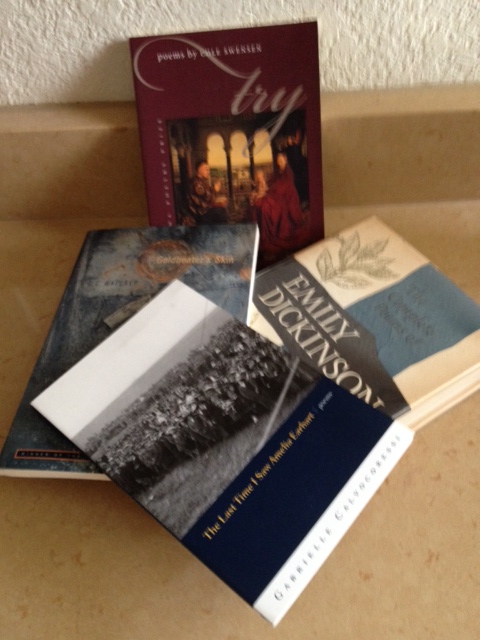
I’m staring at the flight of beers that Jon has placed in front of me. On the left I find Real Ale Brewing Company’s Phoenixx Double ESB. Next to it rests Ranger Creek’s Saison Oscura, followed by Revolver Brewing’s High Brass Golden Ale, and finally, Southern Tier Brewing’s Creme Brulee Stout. I sip the Phoenixx ESB, and am delighted to find it just as I remembered: dry, but sweet, without being overly bitter. Rich, deceptive, caramely odor, amber color. Overtones, hidden layers. I immediately think of Cole Swensen and her book Try, my real introduction to her work, how she reflects tone and imagery, perception and language, intricately weaving them into patterns, into narrative bits to be experienced and savored. “There’s a world out there that isn’t there,” the Phoenixx, evidently a fan of Cole Swensen, whispers.

I linger over the last sip of the ESB, and move on to the Saison Oscura, which quite frankly, surprises me. And that’s good. My preferences edge towards the bitter, and most of the saisons I’ve tried have finished a tad fruity and sweet for my palate. Not so with Ranger Creek’s rendition. Its beguiling light body, with notes of pepper and spice, end with just the right note of bitterness. But which poet, which book would I pair with this dark saison? Someone who juggles the lyrical with harsh realism, whose voice blends and releases the bitter, the forsaken, in distilled snippets of striking clarity. Ah, yes. I have just the book, The Last Time I Saw Amelia Earhart, by Gabrielle Calvocoressi, and the line:

The whole world tastes like salt,

crows overhead shout, Gone, gone
gone. She can’t help me any more.
I’ll have to walk.

It’s much more difficult to pair the Revolver Brewing High Brass Golden Ale with a favorite poet, because, sadly, I find it lacking. It’s light in the mouth, and, to take Gertrude’s quote totally out of context, there is no there there. If I’m to choose a blonde ale, I’d much prefer Real Ale Brewing’s Fireman’s #4. But waste not, want not. I down it, and consider which poet would not only transcend this disappointment, but also hand it a one-way ticket to, perhaps, Stein’s lost Oakland? Easy. G.C. Waldrep, whose Goldbeater’s Skin sets its barbed hooks into my flesh each time I open it. And for this particular occasion, I find no poem more appropriately titled than “What Begins Bitterly Becomes Another Love Poem,” in which he writes:

We stood without shadows on asphalt at midday.
What we call patience is only fire again, compressed.

And fire should accompany Southern Tier’s Creme Brulee Stout. A crackling fire fending off the icy, shingle-ripping wind, with Miles Davis echoing in the background, an exquisite meal resting comfortably in the belly, and the pleasure of knowing that the book you’re about to dip into is an endless well. Quite simply, it’s a liquid dessert. Light coffee, a tad chocolatey, with big vanilla. Medium body, sweet. Smells like creme brulee. Tastes like it. But it’s beer. It tells the truth, but tells it slant! And who better to accompany this frothy delight than Emily Dickinson?

Tell all the truth but tell it slant,
Success in circuit lies,
Too bright for our infirm delight
The truth’s superb surprise…

Onward to the next flight, and more truth. More poetry. More beer. More surprise!

photo(14)

This last appeared on the blog in November 2015.

To a Poem is a Bott the Stranger

It may interest you to know that I have, in some small way, aided and abetted a poetry-writing bot. It’s fascinating to read how the bot learned to write poetry.

Poem Live at Panoply

Helsinki

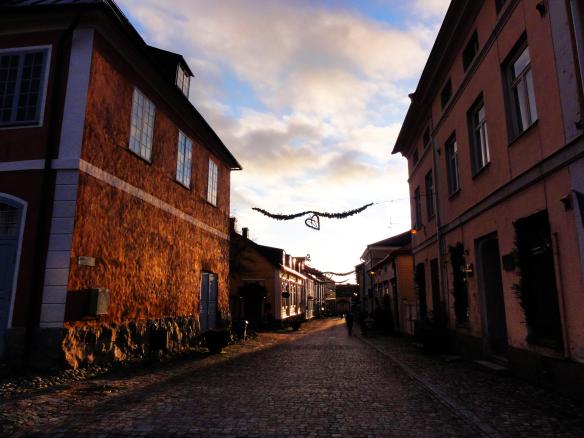
My poem “Helsinki” is live at Panoply. It was inspired in part by a Facebook thread on which editors commented on what caused them to instantly reject poems. One said beginning a poem at a window was cause for rejection. Hence the first line.

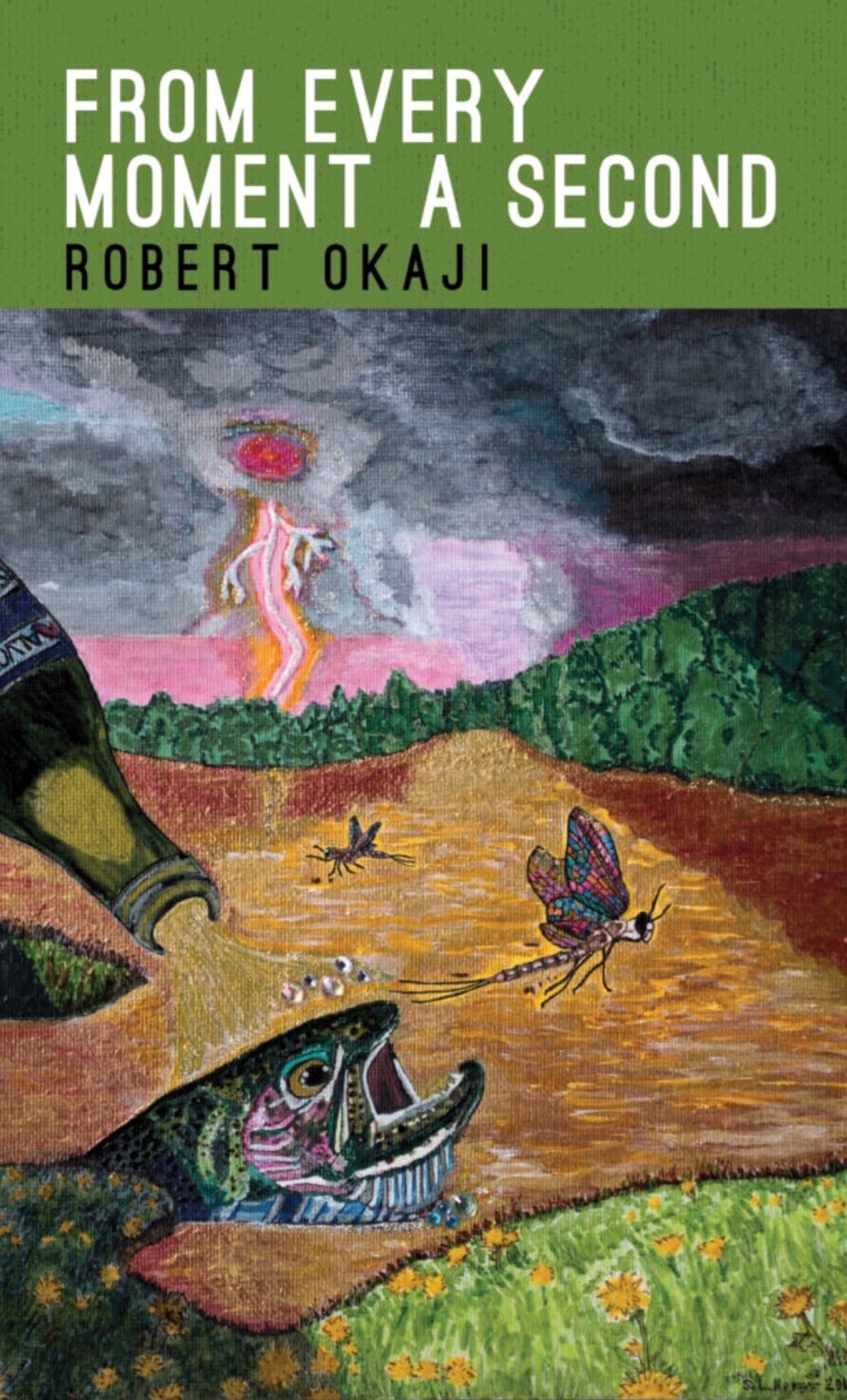
Countdown, #2 “Review: Robert Okaji’s “From Every Moment a Second”

My last five posts of 2017 are reruns of five of the most viewed posts on this site during the year.

FROM EVERY MOMENT A SECOND

Robert Okaji
Finishing Line Press
2017

★★★★★

From Every Moment A Second, the latest chapbook by American poet Robert Okaji, is yet another meticulously crafted collection of observations, private austerities and hesitancies spelt out in verse. A small collection of twenty poems, each feels “warm”, like a cozy winter Sunday on your living room couch – to paraphrase Junichiro Tanizaki – lost in contemplation of flavours to come.

What makes it a five star collection is each poem is clear in its vision, each unambiguously a part of the greater gist of the book. Each line shows where lesser works ‘tell’, and thus this collection feels like a series of tiny one act plays. Part of this is how each line and stanza feels like it has been put exactly in its proper place, that any further edits would remove a character or…

View original post1,121 more words

* * *

It’s humbling yet fitting that the second most popular post on the blog in 2017 was actually a reblog from Daniel Schnee’s site.

Countdown: #4, My Writing Space

My last five posts of 2017 are reruns of the five most viewed posts on this site during the year. This one appeared in July.

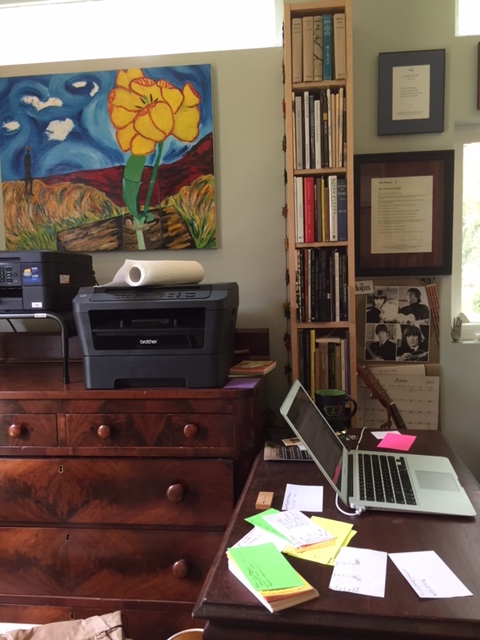
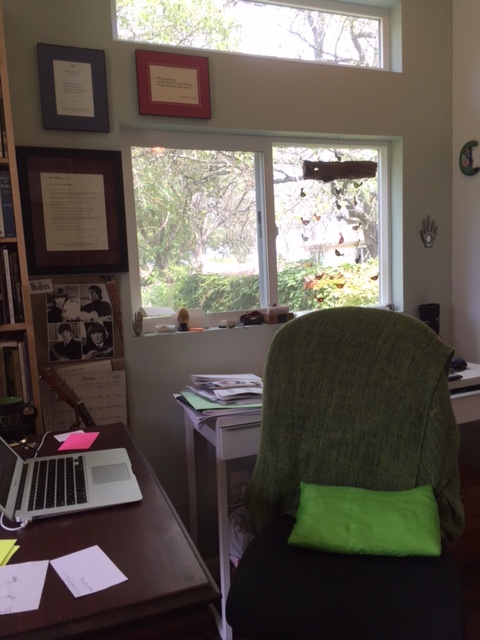
I am fortunate to have a writing space of any sort, much less a comfortable one.

Shack X

This is the shack that launched a thousand rejections…or something like that. It’s small, with a 10 x 12 footprint, and is getting crowded inside.  The photo was taken in August 2013, a few weeks before the interior was finished out. Note the inspector, Jackboy, with his ball.

Shack 1

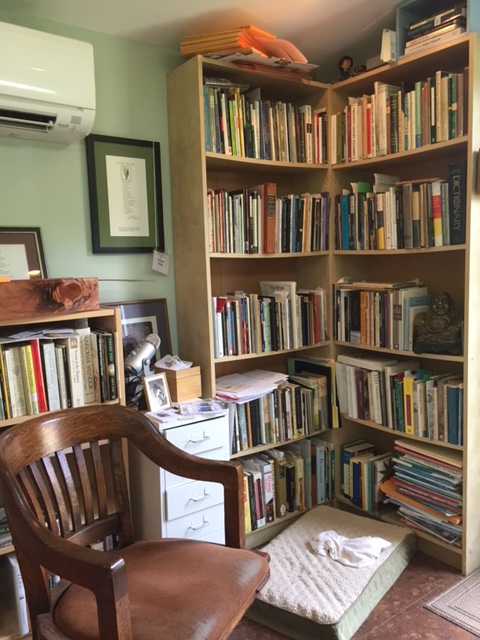
The most important feature of the shack is the air conditioner. The bookcases are nice, too, but the heat would be unbearable without the a/c unit.

Shack 2

Books keep migrating here. I wonder why. The cattle dog spent many hours in the dog bed, but the Chihuahuas prefer the house.

Shack 3

I try to use the available space as efficiently as possible, hence the skinny book cases. The painting is by Stuckist painter Ron Throop, whose art and words inspire me.

Shack 4

The desk is usually messier than this…

Shack 5

Birds often smacked into the righthand window, until I added the little mobile fabricated from a piece of cedar and wooden bird ornaments.

Shack 6

Yes, that’s a stationary bike. The good thing about having such a small space is that I can ride the bike and reach over for a sip of beer without having to pause.

Shack last

I’ve been banging on that guitar for forty years. It’s a little worn, but then so am I. The broadside is a Galway Kinnel poem, “Little Children’s Prayer,” which joins a small group of signed broadsides in the shack, featuring poems by Jane Hirshfield, Arthur Sze and Mei-Mei Berssenbrugge. Alas, I’m running low on wall space.

Obsession: Books, or, Poetry Finds Me

photo 2

In another life books framed my days. I slept with them, dreamt about them, woke to their presence stacked by the bed and in various corners throughout the house, read them, handled them, discussed their merits with friends, co-workers, beer-drinking buddies, bartenders, customers, strangers, relatives, and even enemies. Traced my fingers slowly down their spines, identified some by odor alone, others by weight and feel. Bought, sold, cleaned, lent, skimmed, traded, gave, borrowed, collected, repaired, preserved, received. Traveled to acquire more, returned home to find still others languishing in never-opened, partially read or barely touched states. There were always too many. There were never enough.

The relationship began innocently. I’ve been an avid reader since the age of five, and over the years developed a knack for uncovering uncommon modern first editions. I’d walk into a thrift shop and spot a copy of William Kennedy’s first novel, The Ink Truck, snuggling up to Jane Fonda’s workout book, for a buck. Or at a small town antique store, something especially nice, perhaps a near-fine first edition of Cormac McCarthy’s Outer Dark, would leer at me from a dark shelf – $1.50. John Berryman’s Poems (New Directions, 1942) found me at a garage sale, for a quarter. Good Will yielded Pynchon’s Gravity’s Rainbow. There were others, of course. Many others.

I partnered with a few like-minded friends and opened a store, and when that didn’t work out, started my own home-based book business, which eventually expanded into a small brick-and-mortar shop, a true labor of love. And I mean labor. The forlorn space we rented was cheap and had housed for years a low-end, illicit massage parlor. Cleaning it out was, oh, shall we say interesting? I’ll never forget the furry massage table, the naked lady lamp or the various implements left behind after the joint was finally forced to close. But we hauled out the filthy carpeting, stripped and refinished the hardwood floors, fixed, painted and patched what we could, and hid what we couldn’t. It was exhausting, but well worth the toil.

My work schedule ran from Monday through Sunday, a minimum of eighty hours a week – in a seven-year period, I took off only two long weekends. It consumed me, but in the end I emerged mostly intact, a little more aware of my proclivities, of an unhealthy tendency to immerse myself wholly into an enthusiasm, to the detriment of family and friends. When we sold our store’s wares, I embraced the change; some dreams simply deplete you. But the itch remained.

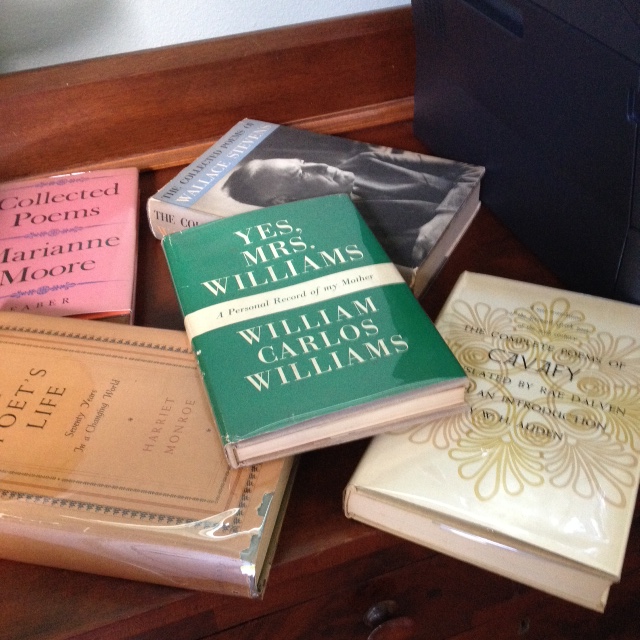
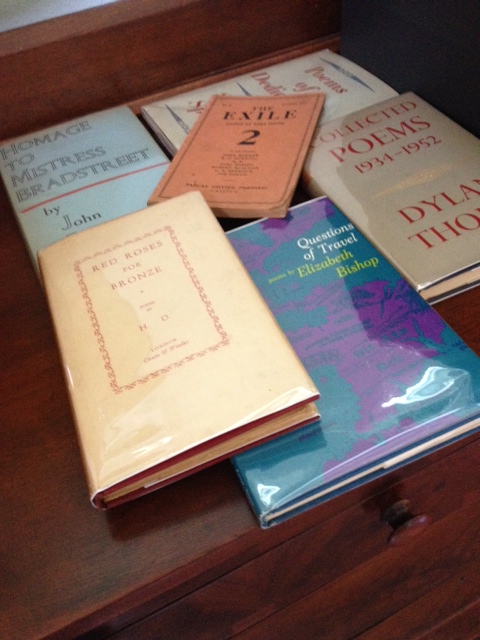
Just a few weeks ago I found myself perusing an accumulation of books in a storage facility across the street from a junk shop in Llano, Texas, a small county seat an hour’s drive west of my home on the outskirts of Austin. The shop’s owner had purchased an English professor’s estate, and judging by the collection, the professor had specialized in poetry. My first thought was “I want it all,” but reason set in (I could very well imagine my wife’s reaction were I to arrive home with a trailerful of books) so I glanced over the criticism, fiction, drama, essays and biographies, and concentrated on the poetry. In the end I walked away with thirty-one books, including H.D.’s Red Roses for Bronze (Chatto & Windus, 1931), Randall Jarrell’s Little Friend, Little Friend, Elizabeth Bishop’s Collected Poems and Questions of Travel, a brace of Berrymans – His Toy, His Dream, His Rest and Homage to Mistress Bradstreet – both the U.S. and U.K. first editions, which differ – and Love & Fame. A good haul, to say the least, but one that left me only partially satisfied and contemplating a return. But I remain resolute. So far.

As I said, the itch remains…

* * *

This first appeared in April 2015.
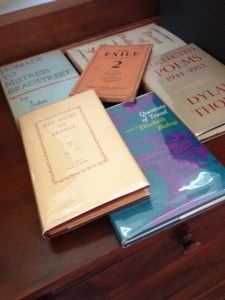
photo 1(1)