A Fire to Light Our Tongues: Texas Writers on Spirituality

A Fire to Light Our Tongues

Some publications are well worth the wait: I submitted poems to this project in 2017, and about seven months later was informed that two had been accepted. And then, silence for nearly two years. But the editors had diligently been working behind the scenes, and despite the pandemic and the tragic death of Donna Walker-Nixon, one of the lead editors, A Fire to Light Our Tongues: Texas Writers on Spirituality has recently been released by TCU Press. Featuring work by such luminaries as Naomi Shihab Nye (the title is taken from her introduction to Sailing the Ocean: 100 Poems by Young Poets), Christian Wiman, A.G. Mojtabai, Rick Bass, Nan Cuba, Mary Helen Specht, Kevin Prufer and other well known Texas writers, it is “an eclectic work exploring spirituality, faith, and disbelief…” As serendipity (and maybe karma) would have it, I was touched to discover that my poem “La Grange,” on page 176, faces “A Stockyard Liturgy,” on page 177, a poem by my late friend D.G. Geis. The last time I saw Greg, we met at a restaurant in Bandera, Texas for a “losers’ lunch,” celebrating the fact that neither of us had won a poetry competition in which we’d both been named finalists.

Since I have poems in this anthology, I’m not going to offer a detailed review. But in all honesty I must state that A Fire to Light Our Tongues: Texas Writers on Spirituality is an exquisitely curated collection of fiction, creative nonfiction and poetry. Order it through your local bookstore, or through Amazon.

Edited by Elizabeth Joan Dell and Donna Walker-Nixon.
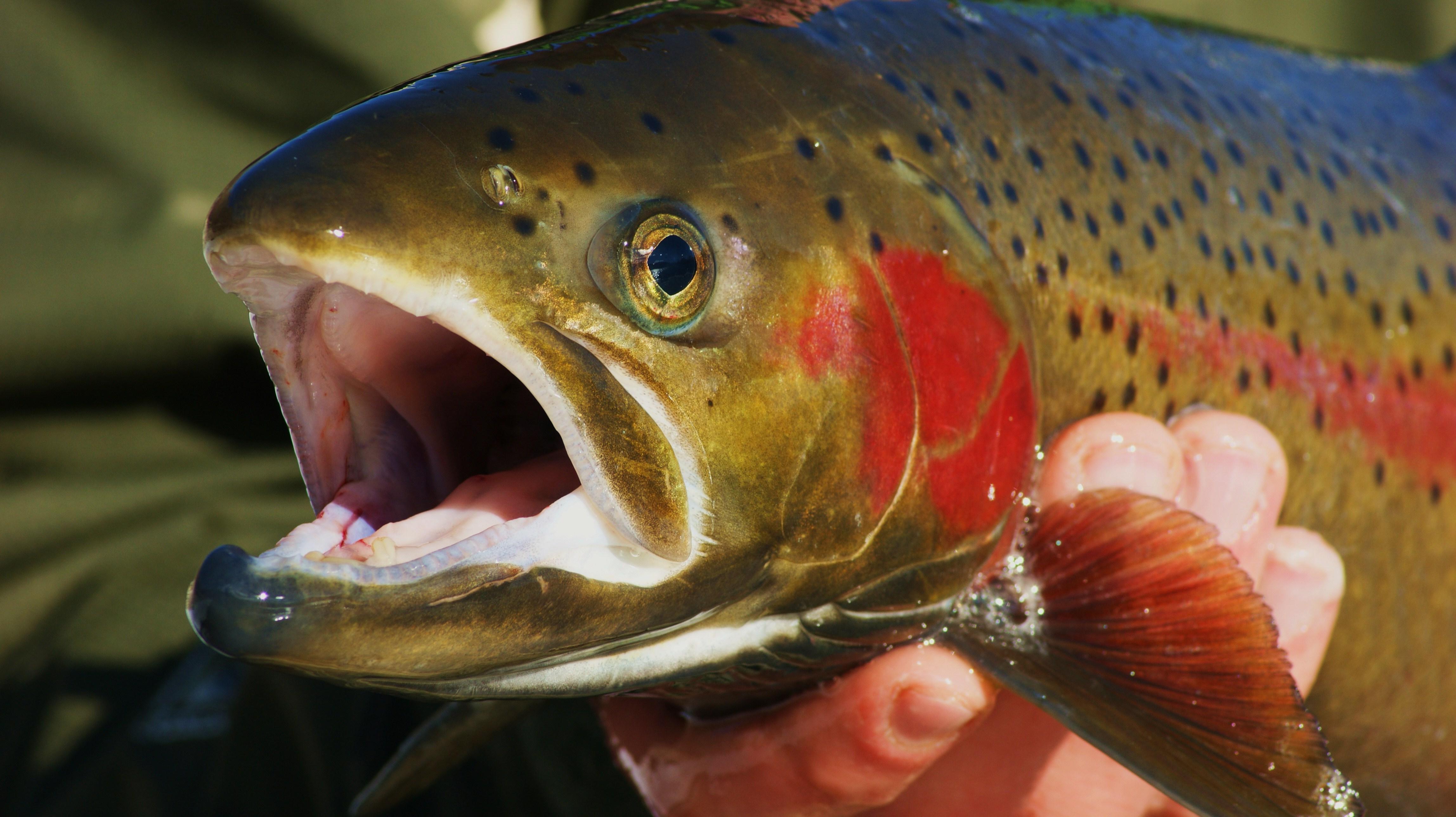


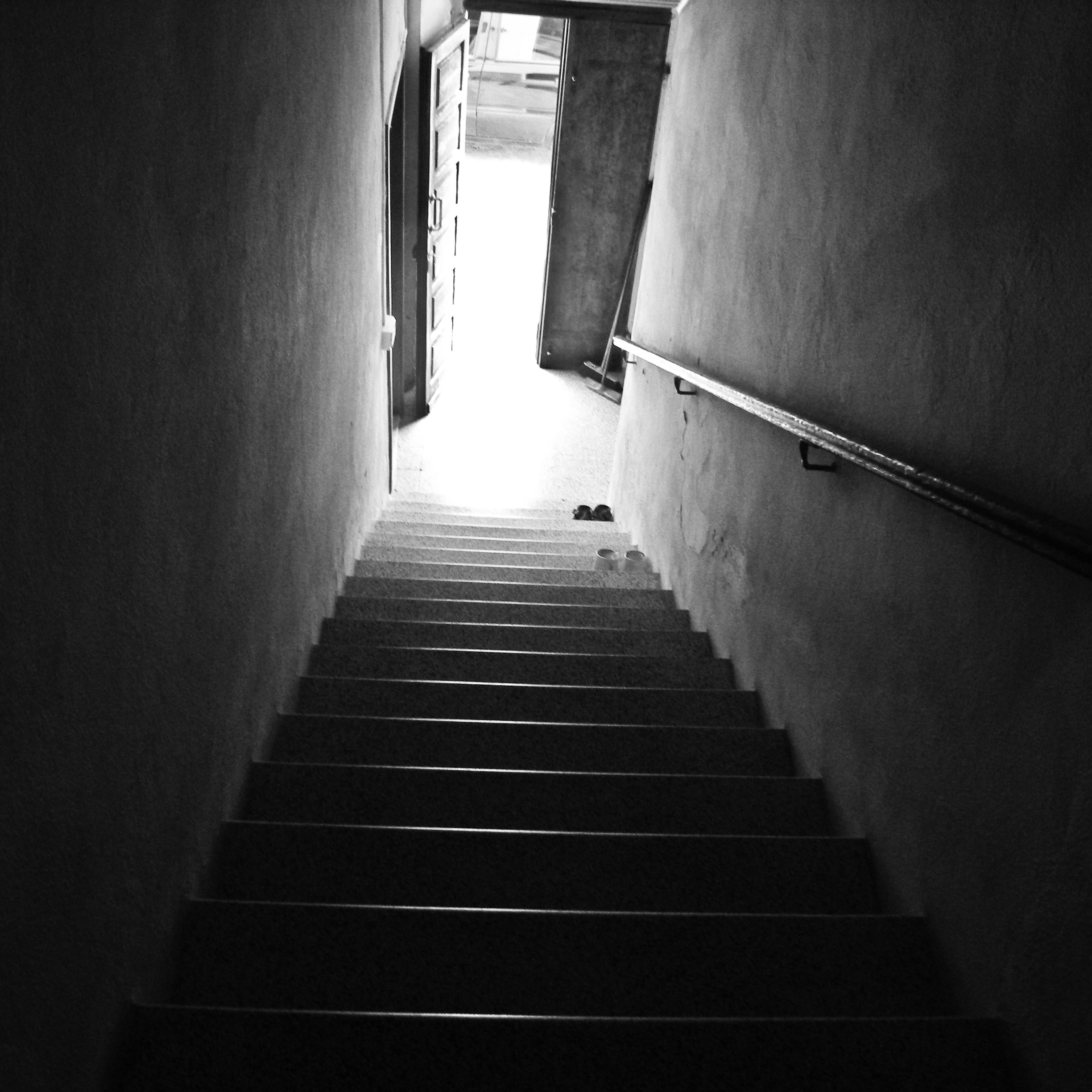
Truchas (Elevation 8,000 Feet)

trout

Truchas (Elevation 8,000 Feet)

Climbing
these stairs,

I resemble
a trout

flopping
in dry air,

another gasp
and a ratcheting

heart rate, up,
out, and through

that opening,
into the pale glow.

steep

Maybe we’ll get back there someday…

Some Answers You Never Considered


Some Answers You Never Considered

At the cusp of night, before the sun steams out in the ocean,
and blues abandon the reds.

Nothing rests at the core of zero.

Cerulean blue was first marketed as coerulium.

What we consider sky includes only its lowest reaches.

Even considering a dense history with kites, I humbly concede,
and admit sacrifice as atonement, with grace.

No. I say it again. No.

Your visual system constructs the colors you see.

Only when the wind unbuttons its greatcoat, or at the tip
of an icicle, just before the drop catches itself.

Release the line and know the freedom of loss.

Transparent yet wide, unfolded like a fist freeing
a swarm of bees into honeyed air, it contains us.

Your inability to see it does not refute the horizon’s base.

If I knew I’d tell you.


* * *

“Some Answers You Never Considered” first appeared in Underfoot in October 2017.


Palinode (Hands, Hours, Light)

xhand

P A L I N O D E ( H A N D S , H O U R S , L I G H T)

Consider the hand, its breadth, its history in mathematics and limitation. 27 bones, two strokes. Distal phalanges spanning gaps.  You turn and wave at the winnowed tunnel and the drops feathering the glass. The sinister endures tasks of life; right blesses power and assuages guilt. Presuming inflection, I use both hands to tally the absent. Later as we drive through the checkpoint, our way greased by fluency in the language of coin, heaven’s oblique arch recedes and I praise the passage of hours.

I praise the passage of hours measured in terms unknown to some: beyond two, many. Returning, we see streets guided by lampposts, bent trees and the uneven drizzle of sidewalk mendicants blurring through their days. A hanged man’s dessicated hand (pickled in salt and the urine of man, woman, dog and mare) forms the Hand of Glory, unlocking any portal the bearer desires opened: a direct tool of consciousness. Lacking the fat of a gibbeted felon, I cannot properly light the way.

I cannot properly light the way, but we  observe facets in differing terms: the hand, lips, and mouth claim more neural innervation than the rest of the body combined, perhaps a consequence of the primacy of making and sounding. Candles smolder and yield to shadow through dancing hand stories. The wave of acknowledgment, a finger across the lips, the open hand proclaiming innocence, expressing, grasping, creating, constraining, releasing. Extinguishing.

* * *

This first appeared in Hermeneutic Chaos, Issue 11.


OLYMPUS DIGITAL CAMERA


You Are the Wind That Trusted

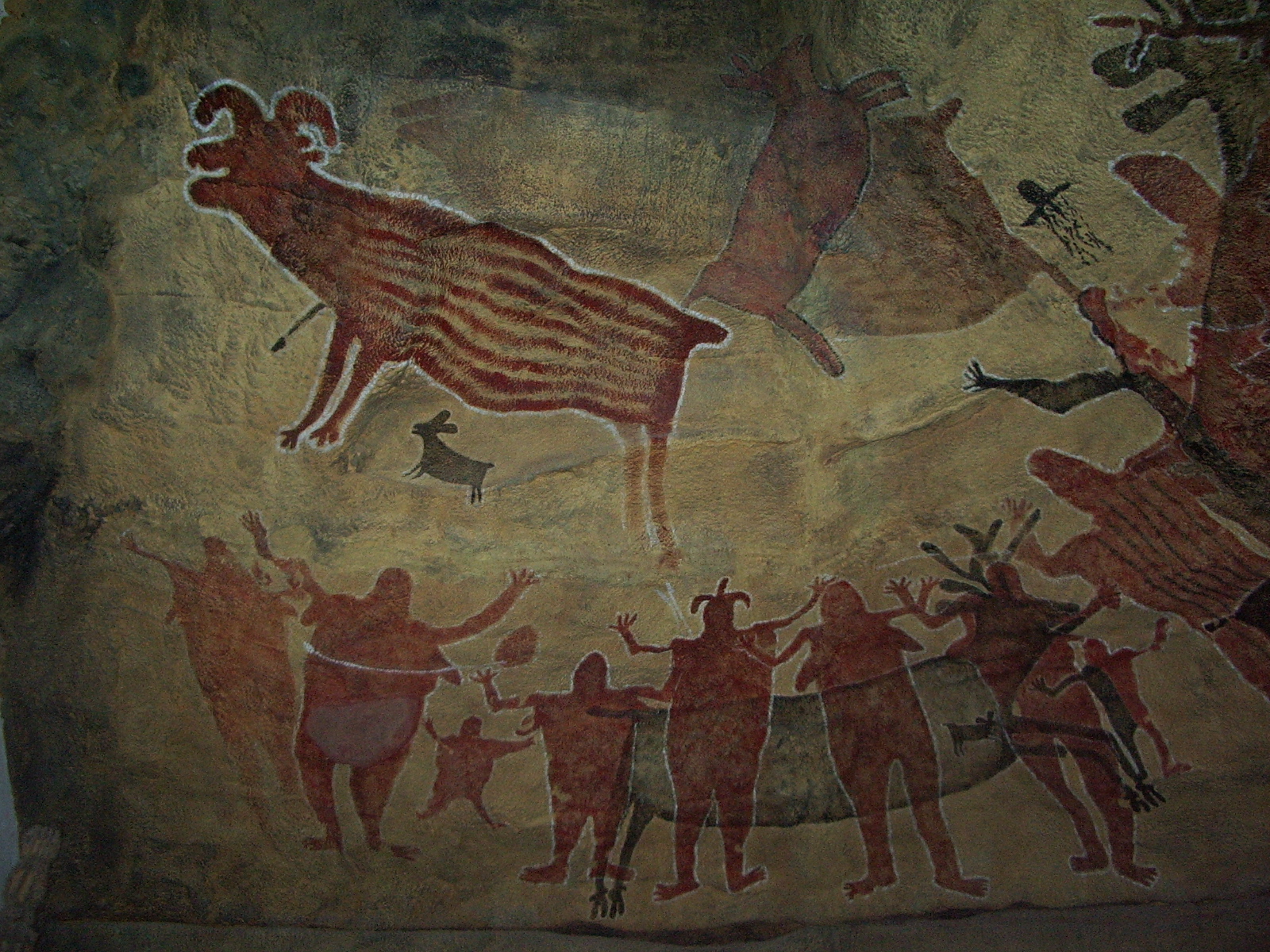
cave painting

You Are the Wind That Trusted

The barriers I could not place, the incomplete lines and unmouthed
verbs registered in stone, saying I am here,

as if taw were born in evil, and not the fruit of the need to mark.

At what velocity must sand scour these walls to obliterate the hand’s
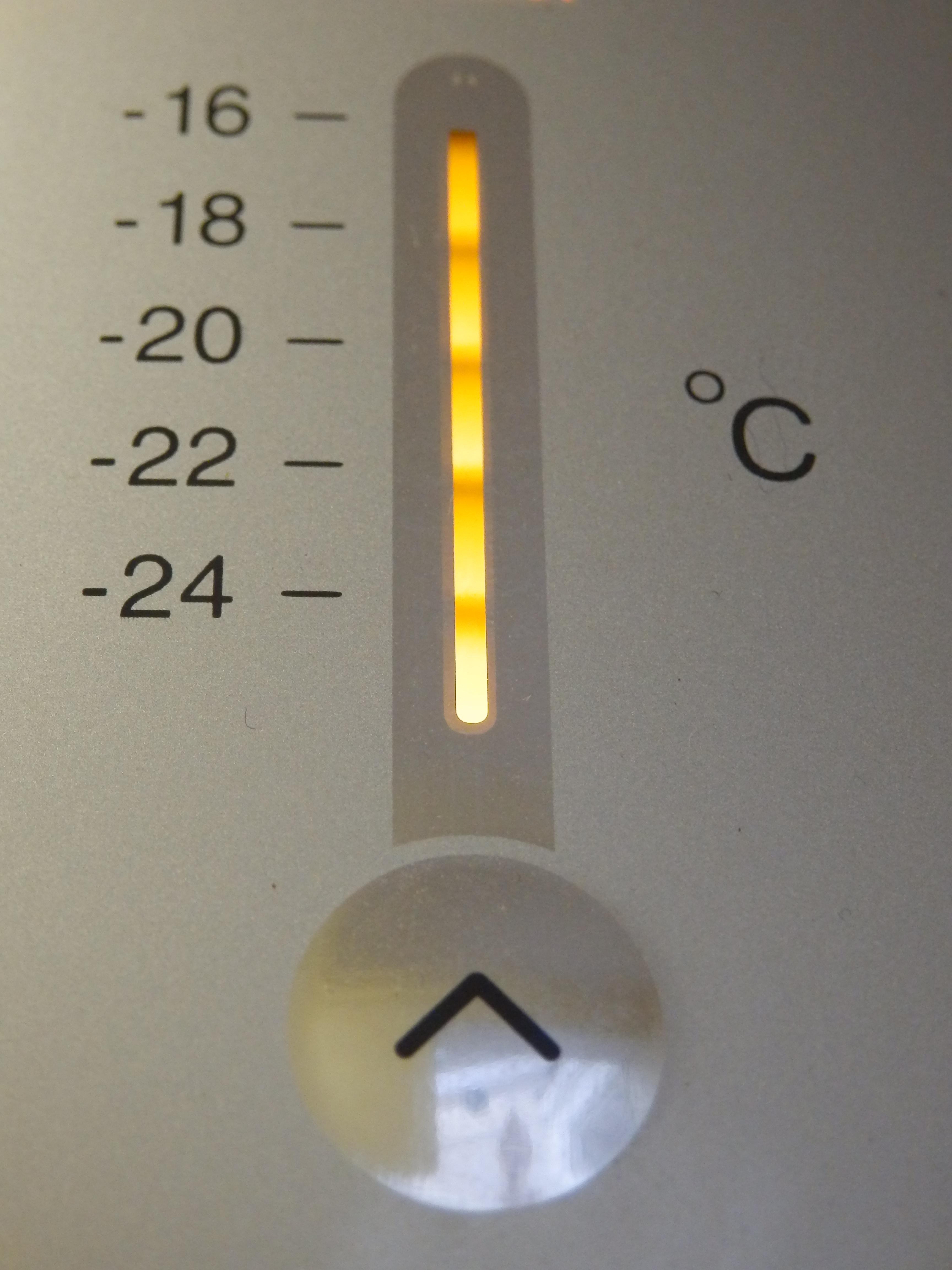
intent? How may we gauge design? Galileo’s thermoscope

crudely measured temperature variation, but in 1612 Santorio added a numerical scale.

For centuries, T did not produce a miniscule and stood tall in its singular representation.

Hydrated iron oxide, mixed with bone marrow and charcoal, yields
ochre, a formula that predates writing.

Development, not invention.

T’s varying structure may be one of sequence and slippage.

Thermoscopes were open ended tubes dependent upon air pressure.
Celsius originally proposed a scale with 0 at the boiling point.

A cruciform. The capped spike. Blended tongues.

Complexity intrudes with every step: smoke-darkened ceiling.

***

This appeared on the blog in February 2016. A slightly different version appeared in Otolith in fall 2013.

thermo

Landscape with Jar


Landscape with Jar
(after Wallace Stevens)

What vanishes more readily than the breakable
and transparent? Not here, not now, it says,

never voluble in the morning. I have work.
The horizon exists simply in perception.

Try to touch it – the hill meets the sky
only from afar, offering discordance

up close, no measurement possible.
And among the trees and vines, a glimmer

of spite, twisted open. Moving closer, we see
through. We see rocks, a bird. We see air.


“Landscape with Jar” was first published in Birch Gang Review in July 2017.


The Simplest Coercion

image


The Simplest Coercion

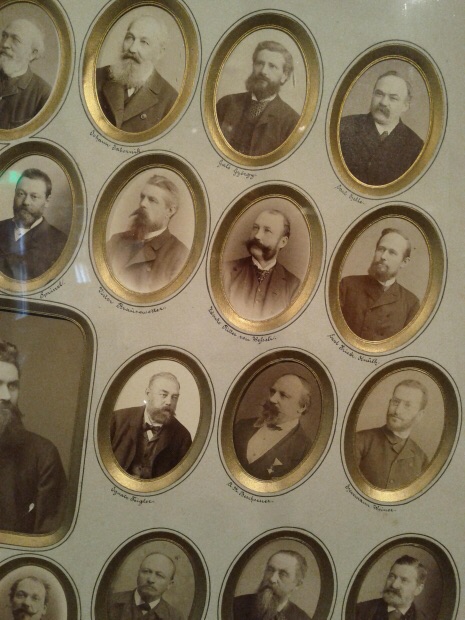
Each portrait betrays a similar
attraction: faces

swallowed by the artist’s
eye, his sight being

beyond optic, that assumption
inherent in every expression

but one. Yet this, the self-
portrait, reveals a hint

of secrets – an unwillingness
to confront,

the simplest coercion.


* * *


Another piece from the 80s…

image


This first appeared on the blog in May 2015.

Two Anthologies


Last year I was fortunate to have work included in two anthologies. The first, Indie Blu(e) Publishing’s As the World Burns: Writers and Artists Reflect on a World Gone Mad, is a 348-page “anthology of poetry, prose, essay, and art inspired by the unprecedented events of the year 2020.” Featuring 114 writers and artists from ten countries, As the World Burns chronicles the madness and horrors of the past year. The voices are diverse — raw and polished, young and old, experienced and new — and they reflect a populace whose needs have been unmet and ignored all too long. In time this volume will stand as one of the most powerful literary artifacts of this mad year.

Edited by Kindra M. Austin, Candice Louisa Daquin, Rachel Finch, and Christine E. Ray.

Available through Amazon in paperback and via Kindle.

Unlike As the World BurnsNo More Can Fit Into the Evening: An Anthology of Diverse Voices is not a collection of themed pieces. Rather, its purpose is to offer a substantial grouping of poems (5-10) by each contributor, allowing readers to obtain a more nuanced flavoring of the poets’ work. Thus the 350+ page anthology presents only 39 poets. The anthology includes well known writers like Terence Winch, Kimberly Blaeser, James Janko and John Looker, as well as lesser knowns like, well, me. This is a perfect winter’s evening read. Dip into it and perhaps you’ll find a new favorite poet. At the very least you’ll find hours of entertainment, and much food for thought.

Edited by Thomas Davis and Standing Feather

The book is being distributed by Ingram, and should be available (if not in stock, through special order) through bookstores in the U.S., Great Britain, Australia, Canada and New Zealand. It’s also available through Amazon.


Even the Light


Even the Light

You look out and the sunbeam blinks –
a difference in brightness
on the drooping seeds.

Some days nothing gets done.
We live with the unwashed,
with stacks of mail, the unfolded,

the incomplete. Phrases pop out
only to crawl away, and later,
reincarnated in other forms,

embed themselves just under
the skin, calcifying. Scratch
as you might, no relief appears.

Your tongue grows heavy
from shaping these words.
Even the light subtracts.


* * *


“Even the Light” was published in the May 2017 issue of La Presa.


(Hotel Eden) In Full Light We Are Not Even a Shadow

file5691252161803m


(Hotel Eden) In Full Light We Are Not Even a Shadow

Which is to say clarity persists in
increments, in the silent space between
color and lens, within parables seen
in the incomplete: straw, hand. Imagine

white valued more than manner as hidden
thought remains obscured. Lower your eyes, lean
forward. Perspectives tilt towards the mean,
suggesting purpose. When we examine

intent, do we find it? The irony
of bottled cork, of sullied paradise,
a coiled wire, the parrot whose voice,

unheard, implicates us. What felony
must we commit to admit the device
in play? Pull or release? The mimic’s choice.


* * *

Notes: “In full light we are not even a shadow” is a line from Antonio Porchia’s Voices.

Hotel Eden is the title of a piece of art by Joseph Cornell. An image may be found here:
http://www.wikiart.org/en/joseph-cornell/untitled-the-hotel-eden-1945

DSC_1972

This made its first appearance here in March 2015.