I’ll Turn But Clouds Appear

spaghetti


I’ll Turn But Clouds Appear

You gather and disperse and nothing I do salves my hunger.
Where are you, if not here among the roots of dead flowers

or inches below the window’s opening
in the leaf-filtered light. Or spread across

the ceiling, caught in filaments of expelled
hope. Savoring motion, I look up and address the Dog Stars,

longing to catch your attention. But clouds muffle
my words, and instead I turn

to the fragrance of tomato and garlic and spice
wafting into the night. What could bring you back?

Not love. Not wine. Not solitude, nor the sound of my voice.
I spoon out the sauce, cautiously, and wait.

* * *

“I’ll Turn but Clouds Appear” first appeared in Bindlestiff.

treecloud

Ashes

file0001138262091


Ashes

To sweeten the dish, add salt. To bear the pain,
render the insoluble. She envied

the past its incursions, yet the past yields to all,
avoidance to acceptance, trees to smoke.

My mother brought to this country a token of her death to come.

Now it sits on my shelf bearing implements of music.
In her last days I played Sakura on the mandolin,

trusting that she might find comfort
in the blossoms fluttering through the failing notes,

a return to mornings
of tea and rice, of
warmth and paper walls and deep laughter.

Today the rain spells forgive

and every idea becomes form, every shadow a symptom,
each gesture a word, a naming in silence.

Scatter me in air I’ve never breathed.

* * *

“Ashes,” first appeared in Extract(s) in 2013, was reprinted on The Reverie Poetry Journal, and is included in my chapbook, If Your Matter Could Reform.

DSC_0206

Sheng-yu’s Lament (after Mei Yao-ch’en)

DSC_1243

Sheng-yu’s Lament (after Mei Yao-ch’en)

First heaven took my wife,
and now, my son.
These eyes will never dry
and my heart slowly turns to ash.
Rain seeps far into the earth
like a pearl dropped into the sea.
Swim deep and you’ll see the pearl,
dig in the earth and you’ll find water.
But when people return to the source,
we know they’re gone forever.
I touch my empty chest and ask, who
is that withered ghost in the mirror?

* * *

“Sheng-yu’s Lament” is included in my micro-chapbook, No Eye But The Moon’s, available via free download at Origami Poems Project.

The transliteration on Chinese-poems.com reads:

Heaven already take my wife
Again again take my son
Two eyes although not dry
(Disc) heart will want die
Rain fall enter earth in
Pearl sink enter sea deep
Enter sea can seek pearl
Dig earth can see water
Only person return source below
Through the ages know self (yes)
Touch breast now ask who
Emaciated mirror in ghost

SAM_0841

Setting Fire to the Origami Crane

origami

Setting Fire to the Origami Crane (the one floating on Muscongus Bay) at Sunset

Who is to say which comes first, the flaming crane
or the sunset’s burst just over the horizon

and under the clouds? There are causes and causations,
an illness named bad air and another attributed to wolf

bites, neither accurate. There is the paraffin to melt,
and the folded paper resting comfortably nearby, with

a small, unopened tin of shoe polish and the sound of
tears striking newsprint. You know the myth of the

Viking burial — the burning ship laden with treasure
and the deceased clothed in all his finery. But pyres

are lighted to make ash of bodies, to ease the soul’s
transition to the heavens. Think of how disturbing

it would be to come upon the charred lumps of your
loved one washed ashore. And other myths — various

versions of the afterlife created to bend wills and
foster hope where little exists — to which have you

departed? There are no returns in your future, no more
givings, and your ashes have dispersed among the clouds

and in the water. They’ve been consumed by earth and
sky, inhaled and swallowed, digested, coughed out but

never considered for what they were. So I’ve printed
your name a thousand times on this sheet, and will

fold and launch it, aflame, watching the letters that
comprise you, once again, rise and float, mingle

and interact, forming acquaintances, new words,
other names, partnerships, loves, ascending to the end.


This was written for the August 2015 Tupelo Press 30/30 Challenge. To read the story behind the poem’s title (which I was unaware of), you might visit Jilanne Hoffman’s blog.

Lament for Five White Cat (after Mei Yao-ch’en)

file3461249385398

Lament for Five White Cat (after Mei Yao-ch’en)

Five White cat always made sure
no rats gnawed my books,
but this morning Five White died.

On the river I offered up rice and fish,
and buried you in its lazy currents,
chanting my lament. I could never neglect you.

One time you caught a rat
and carried it squealing around the yard
to frighten all the other rats
and keep my cottage clear of them.

We’ve shared space aboard this boat,
and although the food is meager
it’s free of rat piss and droppings
because you were so diligent,
more so than any chicken or pig.

Some people speak highly of horses,
saying nothing compares to them or donkeys.
But we’re done with that discussion!

My tears prove it so.

The transliteration from Chinese-poems.com:

Self have 5 white cat
Rat not invade my books
Today morning 5 white die
Sacrifice with rice and fish
See off it at middle river
Incantation you not you neglect
Before you bite one rat
Hold in mouth cry around yard remove
Want cause crowd rat frightened
Thought will clear my cottage
From board boat come
Boat in together room live
Dry grain although its thin
Evade eat drip steal from
This real you have industriousness
Have industriousness surpass chicken pig
Ordinary person stress spur horse drive
Say not like horse donkey
Already finish not again discuss
For you somewhat cry

A Song Dynasty poet, Mei Yao-ch’en (or Mei Yaochen) died in 1060. His great poems live on.

This adaptation first appeared in November 2014, and is for one of my favorite poets, Jeff Schwaner, whose Mei Yao-ch’en sequence has entertained, inspired and enlightened me. You can find the sequence here: http://jeffschwaner.com/mei-yao-chen-sequence/

DSC_1646

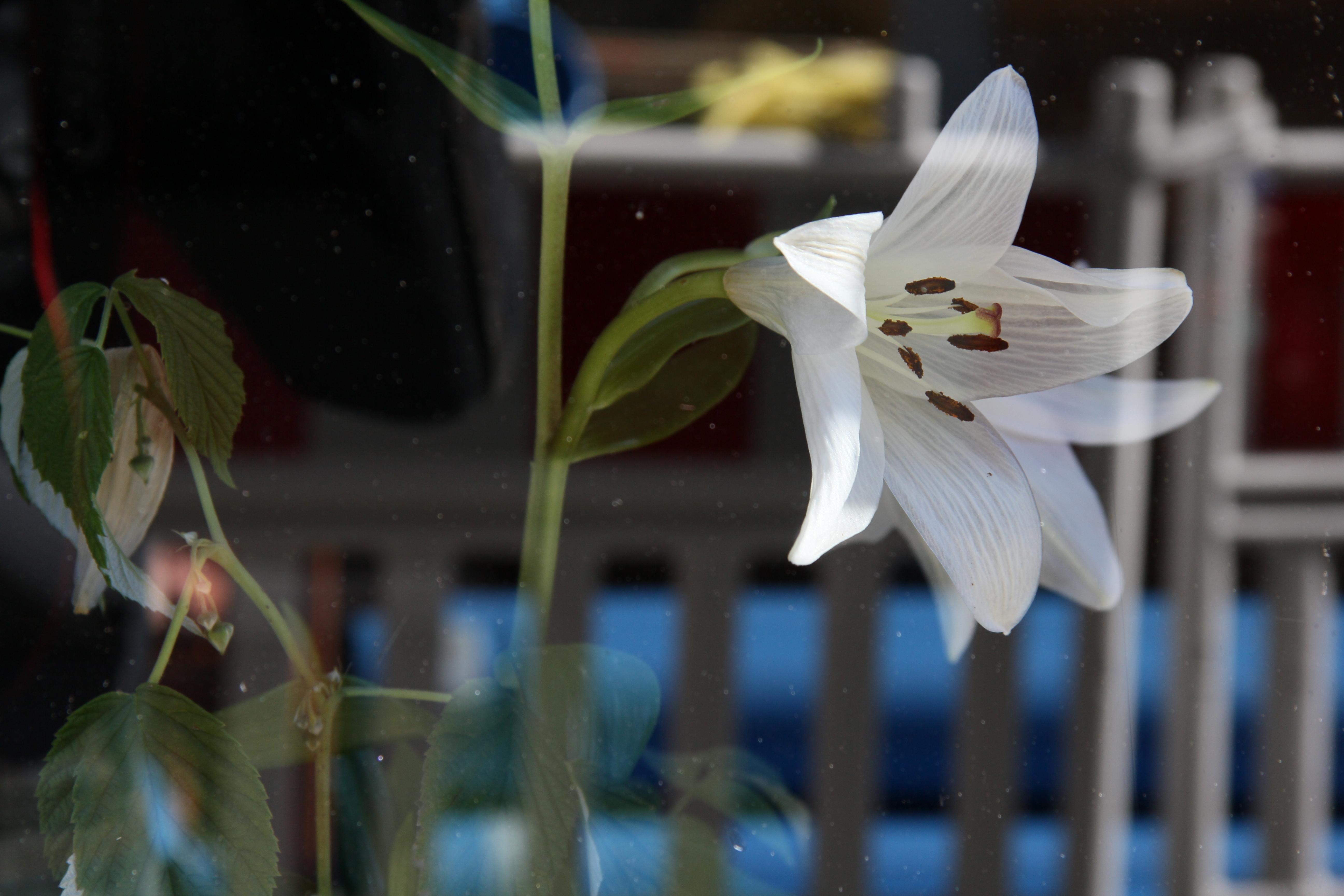
Meditation in White

lily

Meditation in White (Lilies)

Clouds pass my high window quickly, abandoning the blue.
Indefinite mass, indeterminate, impersonal

as only intimates may know.
Though you lay there, nothing remained in the bed.

Which is the blank page’s gift, the monotone
or a suggestion of mist and stripped bones.

The nurse marked the passage with pen on paper.
Renewal, departure. A rising.

I accept the ash of suffering
as I accept our destination, the morning

and its offerings, with you in synthesis,
complete and empty, shaded in contrast,

wilting, as another opens. Laughter eases the way.

***

page

This first appeared in Shadowtrain.

Earth’s Damp Mound

OLYMPUS DIGITAL CAMERA

Earth’s Damp Mound
for P.M.

I. February 1998.

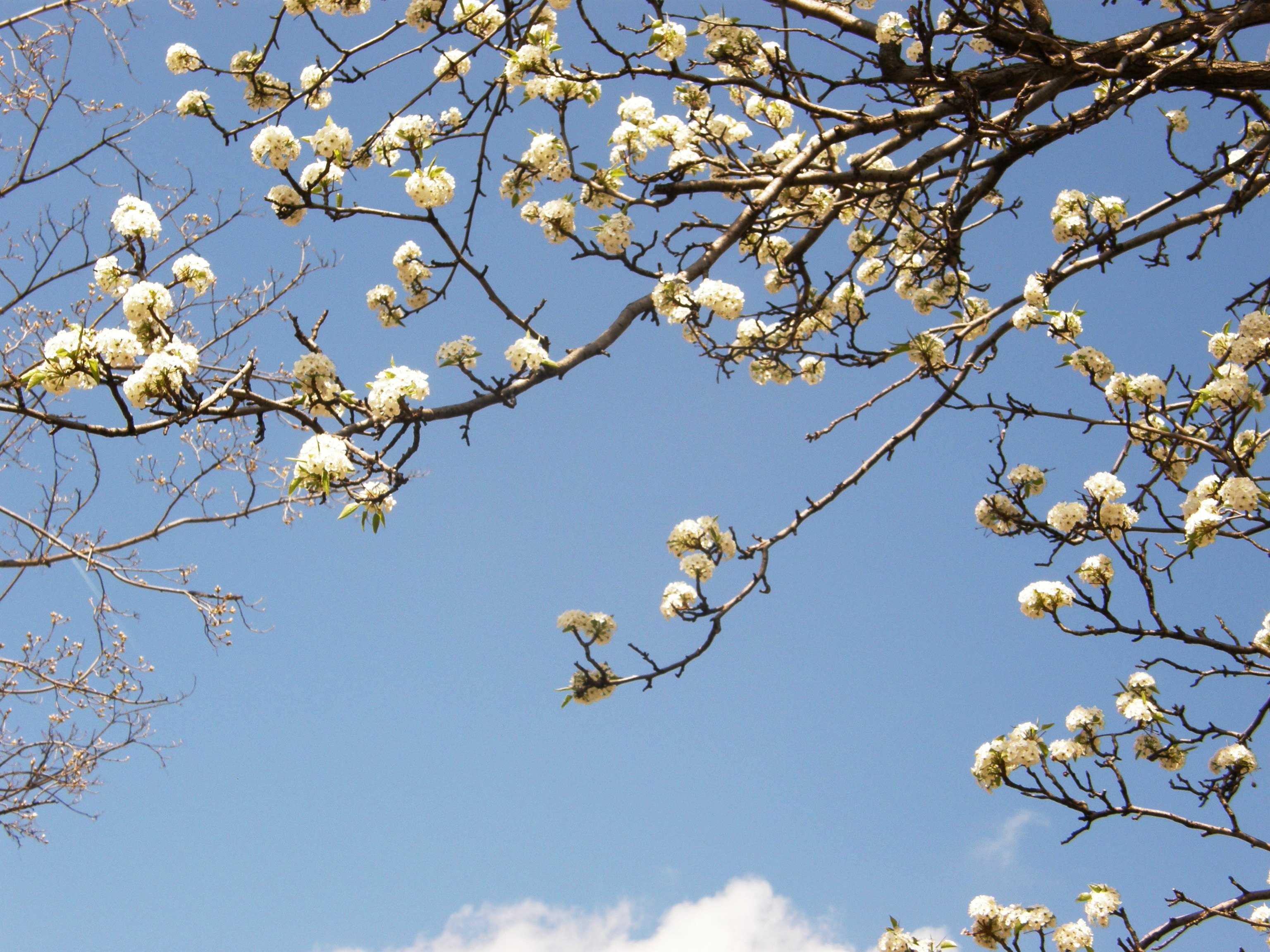
That week it rained white petals
and loss completed its

turn, the words finding themselves
alone, without measure,

without force, and no body to compare.
Though strangers spoke I could not.

Is this destiny, an unopened
mouth filled with

pebbles, a pear tree
deflowered by the wind? The earth’s

damp mound settles among your bones.


II. Count the Almonds

What bitterness
preserves your sleep,

reflects the eye’s
task along the inward thread?

Not the unspoken, but the unsayable.

Curious path, curious seed.
A shadow separates

to join another, and in the darker
frame carries the uncertain

further, past silence, past touch,
leaving its hunger alert and unfed,

allowing us our own protections.


III. The Bowl of Flowering Shadows

Reconciled, and of particular
grace, they lean, placing emphasis on balance,

on layer and focus, on depth of angle
absorbing the elegant darkness,

a lip, an upturned glance, the mirror.

What light caresses, it may destroy.
Even the frailest may alter intent.

So which, of all those you might recall,
if your matter could reform

and place you back into yourself,
would you choose? Forgive me

my selfishness, but I must know.


IV. Requiem

Then, you said, the art of nothingness
requires nothing more

than your greatest effort.
And how, seeing yours, could we,

the remaining, reclaim our
space without encroaching on what

you’ve left? One eye closes, then
the other. One mouth moves and another

speaks. One hears, one listens, the eternal
continuation. Rest, my friend. After.


Prentiss Moore influenced my reading and writing more than he ever realized. We spent many hours talking, eating, arguing, drinking, laughing. Always laughing – he had one of those all-encompassing laughs that invited the world to join in. And it frequently did. Through Prentiss I met in person one of my literary heroes, Gustaf Sobin, whose work Prentiss had of course introduced me to. Those few hours spent with the two of them driving around in my pickup truck, discussing poetry, the Texas landscape, horticulture and the vagaries of the publishing world, are hours I’ll always hold close.

Earth’s Damp Mound first appeared in the anthology Terra Firma, and is included in my chapbook, If Your Matter Could Reform.
file0001831388228

Bowls, Emptied

bowls

Bowls, Emptied

I picture them always separate, unfilled, never nested among the others.

In descending order: yellow, green, red. The missing blue.

Concave, hollow, hemispherical, freed of conscience.

Other images – the skies, denser with age.

You stirring with a wooden spoon, cigarette smoldering nearby.

Or the itinerant smell of new sod and wet soil.

My knee aches whenever I traverse stairs or turn quickly.

Which holds more grief, these vessels or memory’s lapse?

Inverted, their capacity remains constant as the heavens, dark or light.

The paling dome, a memory of freshly pulled onion.

Squatting, you would patiently pluck weeds.

I bite my tongue and kneel to place the flowers.

Near this stone, where the crickets chirr and dew worms burrow.

By this mound and these blades of near-silent grass.

Where I accept this moment’s offering. And you do not.

OLYMPUS DIGITAL CAMERA

Sheng-yu’s Lament (after Mei Yao-ch’en)

DSC_1243

Sheng-yu’s Lament (after Mei Yao-ch’en)

First heaven took my wife,
and now, my son.
These eyes will never dry
and my heart slowly turns to ash.
Rain seeps far into the earth
like a pearl dropped into the sea.
Swim deep and you’ll see the pearl,
dig in the earth and you’ll find water.
But when people return to the source,
we know they’re gone forever.
I touch my empty chest and ask, who
is that withered ghost in the mirror?

The transliteration on Chinese-poems.com reads:

Heaven already take my wife
Again again take my son
Two eyes although not dry
(Disc) heart will want die
Rain fall enter earth in
Pearl sink enter sea deep
Enter sea can seek pearl
Dig earth can see water
Only person return source below
Through the ages know self (yes)
Touch breast now ask who
Emaciated mirror in ghost
SAM_0841

Originally posted in December, 2014.

3 Poems in Shadowtrain

shadowtrain

I have three poems appearing in the latest (and evidently the last) issue of Shadowtrain. Many thanks to editor Ian Seed, for allowing these to hop aboard.