When I look up rust scabs flutter from your clicking
needles, subsuming even the brightest link in this
moon-drenched room. Communion’s possibility
perished in that wicker basket, and we hold close our
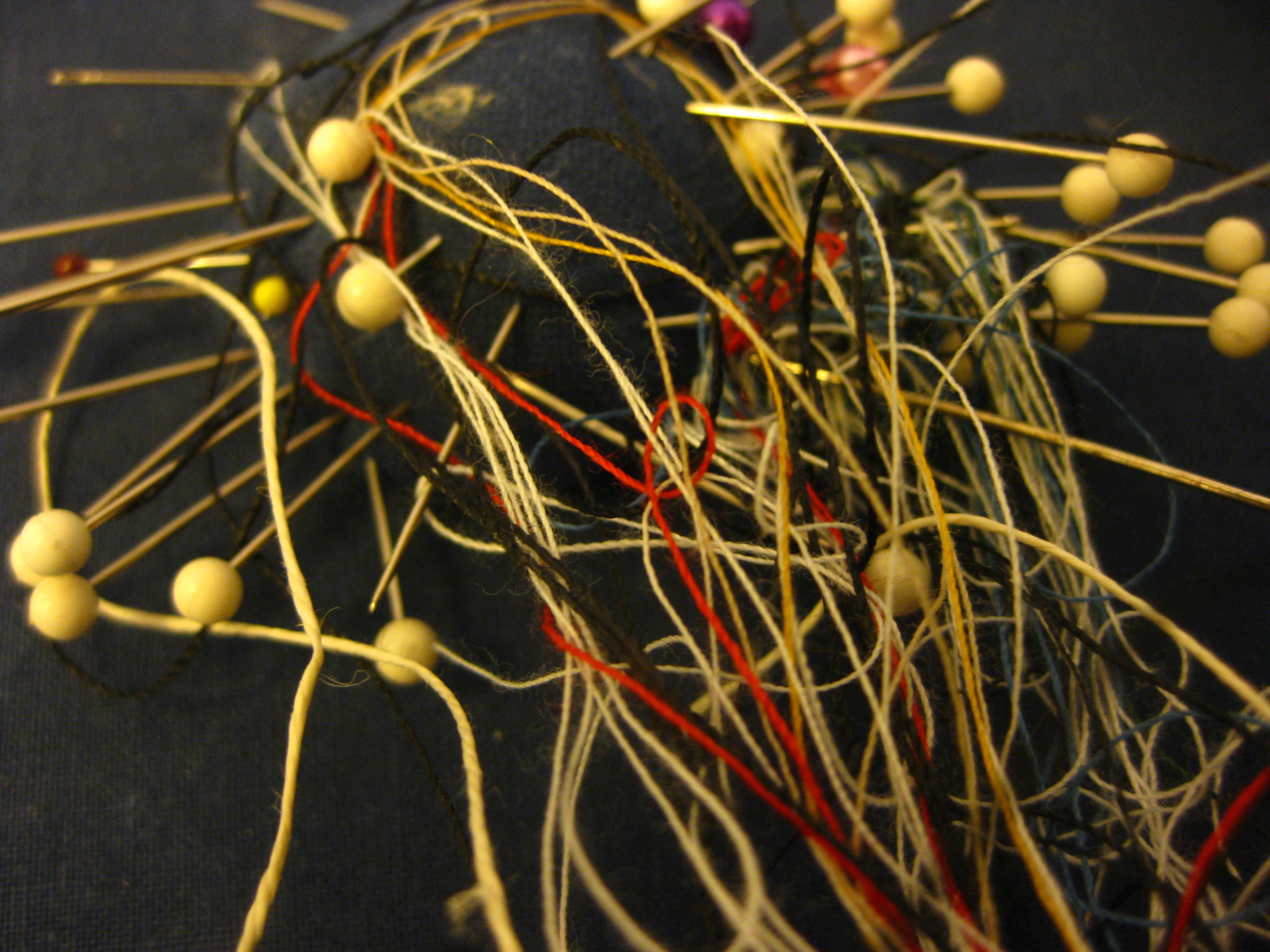
secrets, looped within circles, joined in these most hidden
stitches. Will you ever detach? I recall losing myself,
stepping from darkness into the white afternoon beyond the movie,
finding only strange faces on a street unraveling from
a wound I’d not yet felt. Now you pull apart the gatherings.
Yesterday’s scarf lies incomplete on the invisible shelf,
and tomorrow’s tightens uncomfortably around my throat,
even as I read aloud, proposing family life on a scale
we cannot duplicate, in a house lost long ago in a city
I’ve not yet seen, in a decade before my birth and a pearled
atmosphere of cleansing air into which my body longs to rise
but can’t, tethered in place by love, this terrible, beautiful love.
The difficulty lies in denying the rest,
pretending the denouement remains unknotted
like that length of rope looped over the branch,
unable to serve its purpose. I regret nothing,
but often wish that I had dangled my feet
in the stream more often and felt the trout
wriggle by in their fluency of motion. Last year
my daughter claimed that as a half-mortal
what pulsed through her heart was not blood
but ichor, the life-force of gods, and when I
stated that her mother was from Muleshoe and
not Olympus, and that I may have been the
product of divine intervention, but was neither
god nor blessed creature, she spat wine in my
face, laughed, grabbed my keys and chugged off
in the cherry-red Karmann Ghia I’d dubbed
La Gloria Roja. I’ve not seen that car again, but
I swear I’ve heard its custom klaxon ah-woo-gah
in strange small towns between train stops
and the lonely fields stretching out into the
blackness like memories losing traction. But
mostly I find myself in this house of books
and empty bottles, maintaining space and time,
herding shadows into their oblong boxes,
contemplating nooses and love, courage and
mortality, and the inability to step up, to swallow
what I most crave and do what must be done.
* * *
“The Three Disappointments of Pedro Arturo” was drafted during the August 2016 Tupelo Press 30-30 challenge, and was published in Main Street Rag in October 2017. I was fortunate to have two sponsors for the poem – Clyde Long, who provided three words (denouement, ichor and claxon) and Paul Vaughan, who offered the title. One never knows what will come of these sponsored pieces…
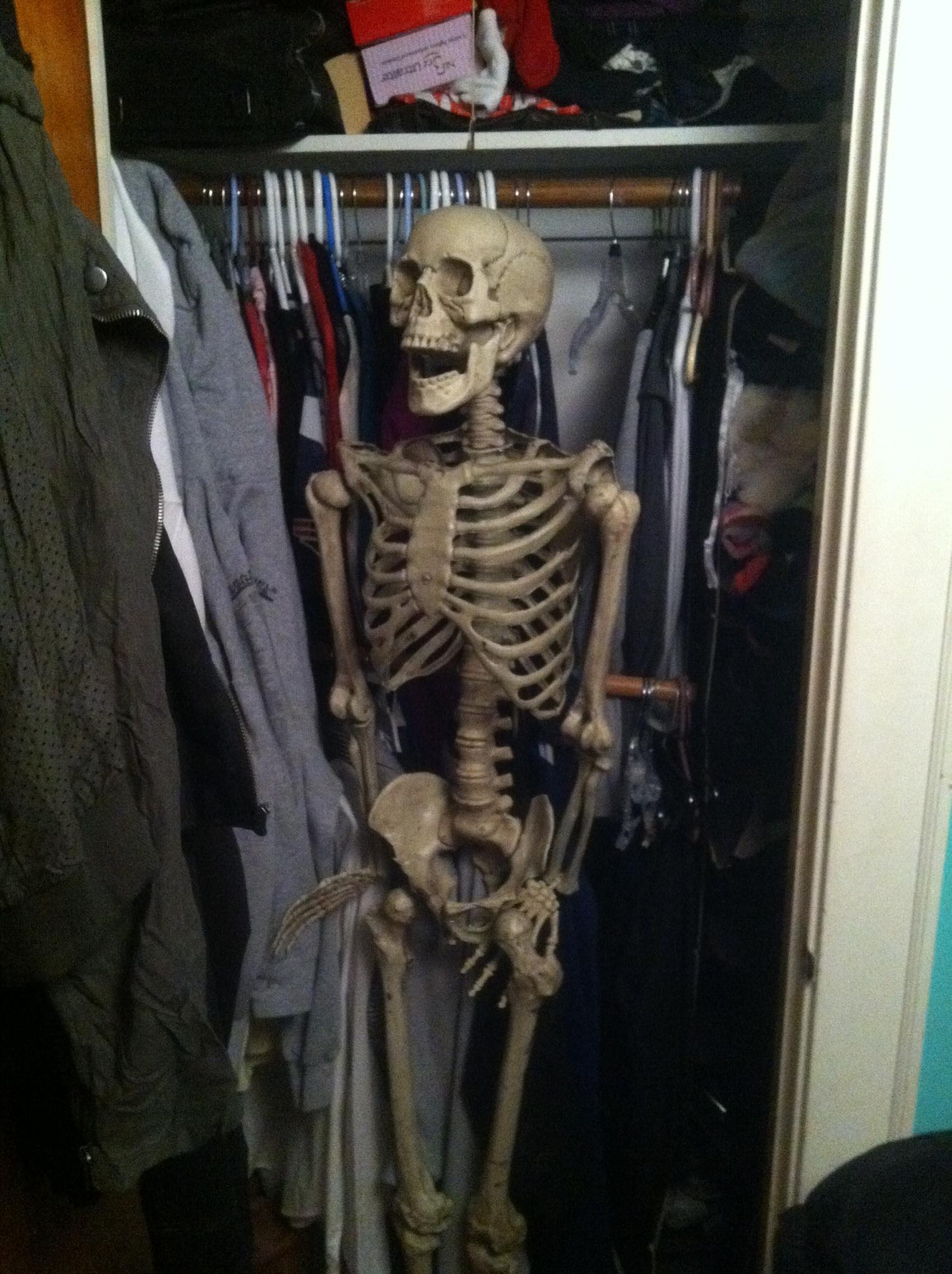
She came with the house.
A skull, spinal column, ribcage, tibia,
scapula – the list goes on, not quite to 206,
even including an extra lumbar vertebra.
Edna (long story) attended Halloween parties
and convivial gatherings, dressed in finery.
Silk suited her best, with linen falling just
behind. And hats! That green fedora,
like a parrot perched on a smiling egg,
never spoke, but stirred the conversation.
2
Old boots, worn left heel explaining the damaged meniscus.
Portable record player. Scratched vinyl.
Shopping bag of VHS tapes. Two empty scotch bottles.
The 30-year old suit that hasn’t been worn in 28 years.
Yellowed newspaper clippings of diet recipes.
The lost carton of wrapping paper.
A cheap guitar case, sans guitar.
3
If memory could speak, what would it not say?
Who else has rubbed this dust across his skin?
Only death is irrevocable.
In this darkness I find you.
Fearing withdrawal, we grow closer.
Things, and more things.
Everything we need travels with us.
Always.
* * *
This was originally drafted during the August 2016 Tupelo Press 30-30 challenge, and subsequently published in TheQuiet Letter in April 2017. It’s original title, sponsored by Darryl Williams, was “Cleaning Out Closets in Anticipation of Moving Closer to Children.”
You can find TheQuiet Letter’s 2018 interview with me here.
Even in death she scraps the easy path, choosing thorns and rocks
over blossoms and a groomed walkway. On hands and knees,
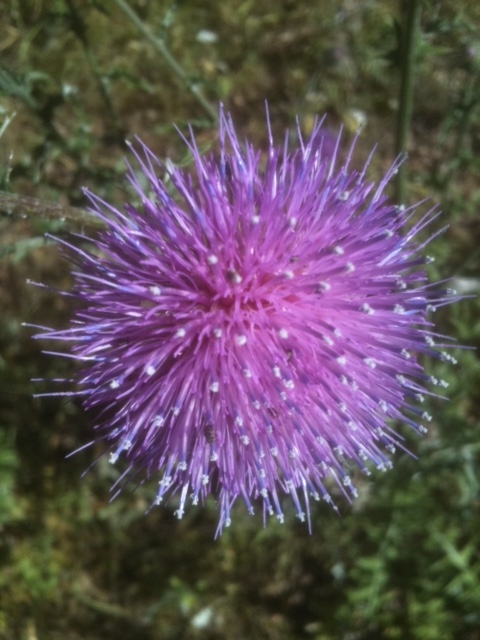
scouring the floor with ghost water and a scrub brush made of ancient
thistles, her pale figure flares yellow in the kitchen. Mom, you don’t have to do this, I say. You’re dead, and besides, I have a swiffer in the garage. I can almost hear her humming a Ray Charles
song from an album back in the sixties, and I notice that the water
in the transparent bucket remains clear and at the same level no matter
how often she dips into it. What do you say to one who never replies?
We’ve long splashed through that puddle of contention, and though
wary of repetition’s erosive qualities, I resort to ritual, drop a piece of kombu into a pot of water, bring it to a boil, remove it from the heat,
sift in a handful of dried bonito flakes and a few drops of soy sauce,
stirring it a few times. Then I strain the liquid, spoon in some miso,
add chopped green onion and a few cubes of tofu. I ladle this into two
black and red laquer bowls and set them on opposite sides of the table.
Hours later, the glow from the kitchen has faded, but I fidget and lie
awake, pain pulsing from hip to knee, and wonder if surgery is impending,
whether I should hire someone to temporarily mow the grass. How do
we reconcile reality with desire, with emotional drought and flood-swollen
creeks and the inability to draw together those things we desire most?
In the morning the floor is still dirty and the soup is where I’d left it,
at the sharp edge separating table from space, another stuttering symbol,
cold and unappetizing, smelling faintly of fish and muddy water.
“My Mother’s Ghost Scrubs the Floor at 2 a.m.” first appeared in The Indianapolis Review, and was subsequently nominated for a Pushcart Prize.
I wrote this two years ago, a week after my father died. Many of us are mourning today, with more to follow. COVID-19 doesn’t care.
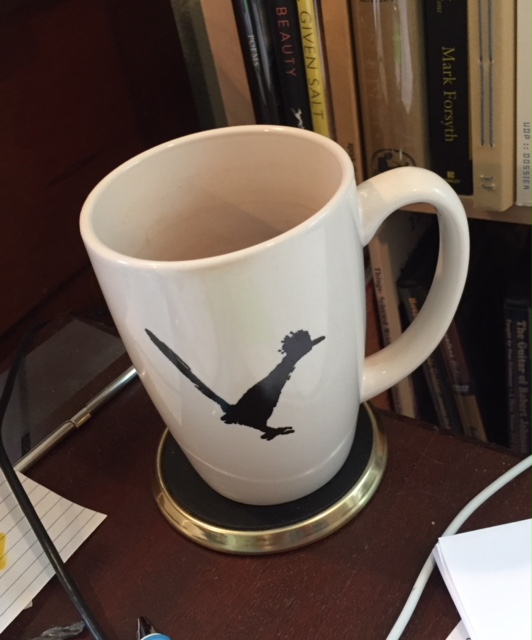
Empty Cup
I set down my cup, pour
tea and think this day, too,
may never end.
With what do we quantify love? How does grief measure us? Nine days ago I wrote “My father is dying and I’m sipping a beer.” More words followed, but I did not write them, choosing instead to let them gather where they would – among the darkening fringe at light’s edge, in that space between the shakuhachi’s notes, in the fragrance of spices toasting in the skillet. In unwept tears. Everywhere. Nowhere.
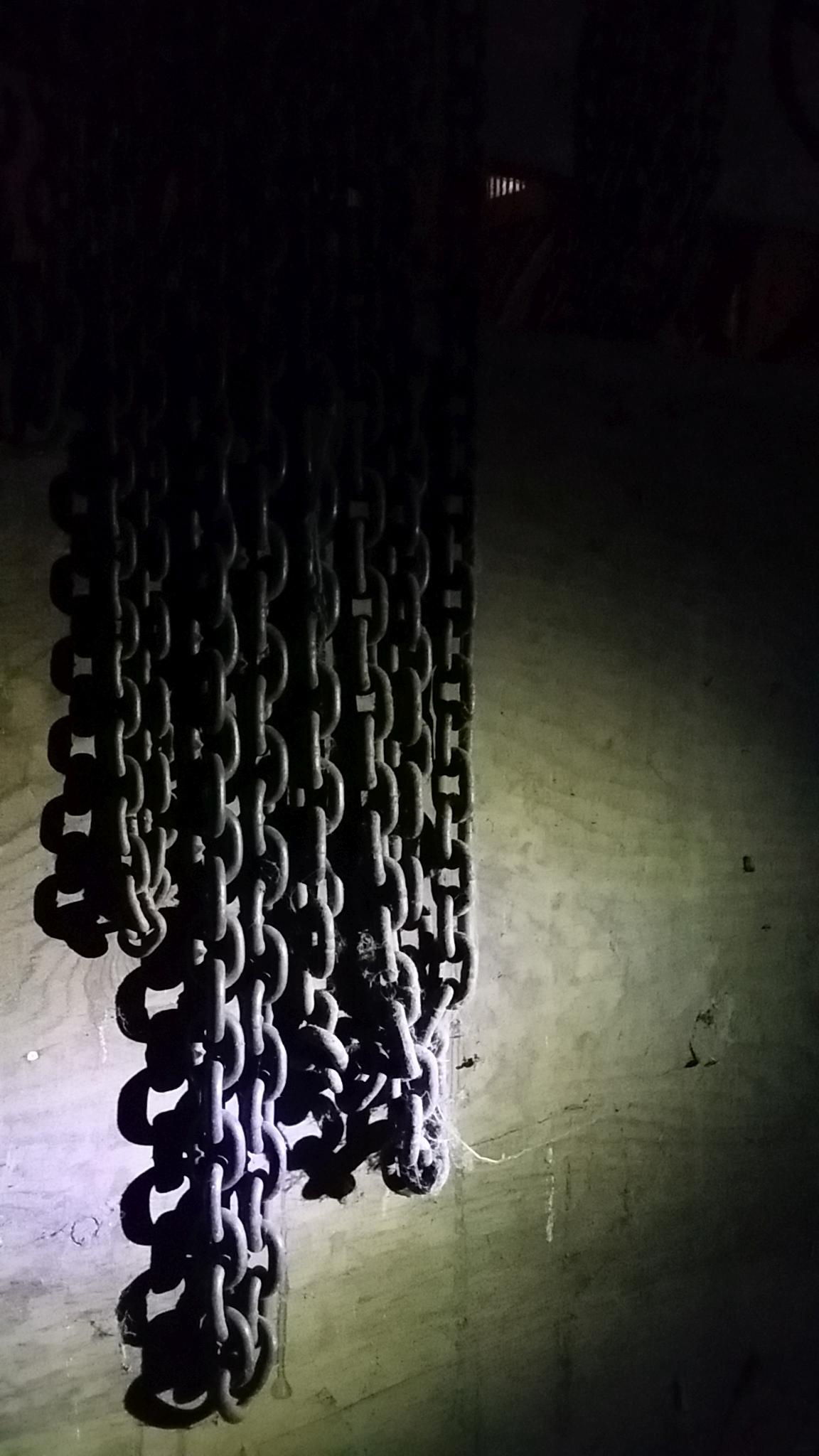
Seven days ago I wrote “My father is dead.” Again, I chose to let the unwritten words gather and linger, allowing them to spread in their own time, attaching themselves to one another, long chains of emptiness dragging through the days.
If experience reflects truth, sorrow’s scroll will unravel slowly for me, and will never stop. I feel it beginning to quiver, but only the tiniest edge emerges. I am nothing, I say. I am voice, I am loss, I am name. I am memory. I am son.
I have fifty-nine years
and no wisdom to show for it.
Never enough. Too much.
To recall but not recall: family, the swift curve
of evolution’s arc. One moment your knuckles
scrape the earth’s surface, and the next you’re
pinpointing mortar fire by satellite phone. Or,
having plowed the field by hand, you fertilize
with human dung (no swords in this hovel),
only to wake into a dream of high rises and
coffee served steaming by a blushing ingenue
who morphs into an uncle, killed in China
on the wrong side of the war, leaving his
sister still mired in grief six decades later
under the Texas sun. On this end of memory’s
ocean, we know poverty and its engendered
disrespect, neighbors’ children warned not
to play with you, for fear that the family’s
lack of nickels would rub off and contaminate,
that your belly’s empty shadow might spread
down the unpaved streets and envelop even
those who don’t need to share a single egg
for dinner. Years later the son will celebrate
his tenth year by suffering the indignity of
a bloody nose and a visit to the principal’s
office, a gift of the sixth grader who would
never again employ “Nip” to disparage
someone, at least not without looking over
his shoulder in fear of small fists and quiet
rage. Which half measures harder? In one
hand, steel. In the other, water. I pour green
tea on rice and recall days I’ve never lived.
“Genealogy Dream” was first published in August 2018 in Issue 4 of Lost River literary magazine. Many thanks to editor Leigh Cheak for taking this piece.









 O at the Edges