While Trespassing I Note the Sadness of Old Fences

While Trespassing I Note the Sadness of Old Fences

I write poems when I can,
in late morning or during

the afternoon, between chores
but before dinner. And sometimes

I duck through spaces
void of wire barbs, and consider

how to fill the incomplete, which words,
what materials could repair

those particular holes. I cut my own
fence once, to access our house

when the creek flooded the road,
lugging uphill through the snake

grass a jug of scotch, my mandolin
and a watermelon, essentials for a weekend’s

respite. To be truthful I cut only the lowest
strand, to help the dog get through — I

was able to climb over, but he couldn’t dig
through the limestone rubble to wriggle

under, and we’d come too far
to simply turn around.

* * *

This appeared in riverSedge, Volume 29, Issue 1, released in October 2016. I first encountered riverSedge in 1983, and vowed that one day my poetry would be published in this journal. It took a while…

Portrait in Ash

blue-smoke


Portrait in Ash

In summer, sweet crushed ice, and crickets pulsing through the night.

Brake lights, and always the blurred memory of nicotine.

I recall running through the glow, laughing, fingers splayed forward,
and the ensuing sharp admonishment.

Steel, flint and spark. Blackened linings and diminishment.

How many washings must one endure to accept an indelible soiling?

In retrospect, your body still resists.

Lovely smoke uncoiling towards the moon, residue of impurities
and substance. Desire, freed and returning.

You dwell underground. I gaze at the cloud-marred sky.

* * *

“Portrait in Ash” appears in Interval’s Night, a mini-digital chapbook, available for free download from Platypus Press.

Somewhere: 28 Rue St. Jacques

Somewhere: 28 Rue St. Jacques

Or eating spam fried rice in the courtyard
after kindergarten, and playing cowboys
with Thierry, the kid next-door. We shared toys,
but not comics. Written language was hard

to decipher, unlike the spoken. I
never captured the nuances, and lost
the rest over the years. Today the cost
eludes me, like moths fluttering by. Try

to recall that particular morning light,
how it glanced off the French snow, and the
way our mother smiled at breakfast, no trace

of sadness, yet, the lines marking our heights
rising along the wall, limbs of a tree
we’d never climb, out there, somewhere, in space.

* * *

This was originally drafted during the August 2015 Tupelo Press 30/30 Challenge. I was never satisfied with it, and didn’t see any reason to revise. But those memories are worth sharing!

Karl Taro Greenfield on Being a ‘Minor’ Writer

In this essay on Lithub, Karl Taro Greenfield notes that not every writer is destined for greatness.

In the Place of Cold Doors

cold doors


In the Place of Cold Doors

We have a word for everything,
or seven for nothing. Soon

you’ll enter and I’ll talk
on the other side,

watch for signs in every
dropped crumb,

every nailhead and
embedded phrase remembered

in another’s voice. The light
will dim and I’ll look for rain and

go on speaking. My words will wander
unnoticed. You hear only yesterday.

“In the Place of Cold Doors” first appeared in Gossamer: An Anthology of Contemporary World Poetry, published by Kindle Magazine in Kolkata, India. I was thrilled to have several poems included in the anthology.

nailhead

Thirty-Five Years Later, I Raise My Hand

Thirty-Five Years Later, I Raise My Hand

In spring 1983 I enrolled in a poetry writing course thinking it might help improve my short fiction. I was a history major by default, had never taken a course in poetry, but believed, with absolutely no evidence, that I could write fiction. At the time I would have been hard-pressed to name five contemporary poets, even counting my professor. To be honest, the class struggled to hold my attention. Only about a quarter of the students seemed interested in writing, and the instructor was a bit, uh, tired. But for the first time in my life I read, really read, poetry. I fell in love with Galway Kinnell, Ai, James Wright and Carolyn Forche, to name just a few of my early enthusiasms. I wanted to write like them. So I wrote. And wrote. And wrote. Most of it was laughably bad, but somehow I managed to win an undergraduate poetry contest, which suggested that hope existed. Maybe someday, I thought, one of my poems will be published. This radical idea had never occurred to me before. Publication seemed to be the privilege of special people, and a lifetime of gathered fact revealed that I was unequivocably nothing special.

Early on in the semester, perhaps even in the first class, the professor asked how many of us thought we’d still be writing poetry in twenty years. I didn’t raise my hand. I didn’t know where I’d be in six months, much less what I’d be doing in twenty years. Since I’d realized late in the game that teaching was not for me, I had no job prospects, and few marketable skills, despite experience in chugging beer, manning sound-powered phones on a ship’s helicopter tower, scraping barnacles and bending rules. The world was limited. The world was limitless.

Another gray day

dividing the old and young

Oh, this aching hip!

A song from that time:

Recording of December Moon (1999)


December Moon (1999)

If loneliness breathes,
then rain is its heart,

always falling to its lowest point
before receding. Water graces us

daily in all its forms – the slowest
drop, the line of ice on the wall,

your breath, so soft and even
in the cool night. But no one,

no thing, can fill the void of
departure. You exhale and turn

away, and the air, with its empty
arms, embraces the space

you’ve left. I feel this daily,
whenever we part. At forty-one

I’ve known you half my life
but have loved you even longer,

through the millennium’s demise
and all that preceded or follows.

The brightest moon for a century to come
is but a shadow in your light.

It’s hard to believe that I wrote “December Moon” over eighteen years ago. Busy with books, work and life, I didn’t write much in the nineties. But this, the last poem of that decade, surfaced a few years ago. The sentiments are as true today as they were then. I am a lucky man.

streetfog

Music: “Nightdreams” Kevin MacLeod (incompetech.com)
Licensed under Creative Commons: By Attribution 3.0 License
http://creativecommons.org/licenses/by/3.0/

Bone to Bone

chimes


Bone to Bone

He claims two sides frame every story.

I count three,      sometimes more,

believing in          multiplicity,

threats                concealed

but never

buried.      A dust devil twists across the path.
What ascends, what dies?

Heat, ashes.       A shadow’s flesh.

The earth, restraining all.

small town

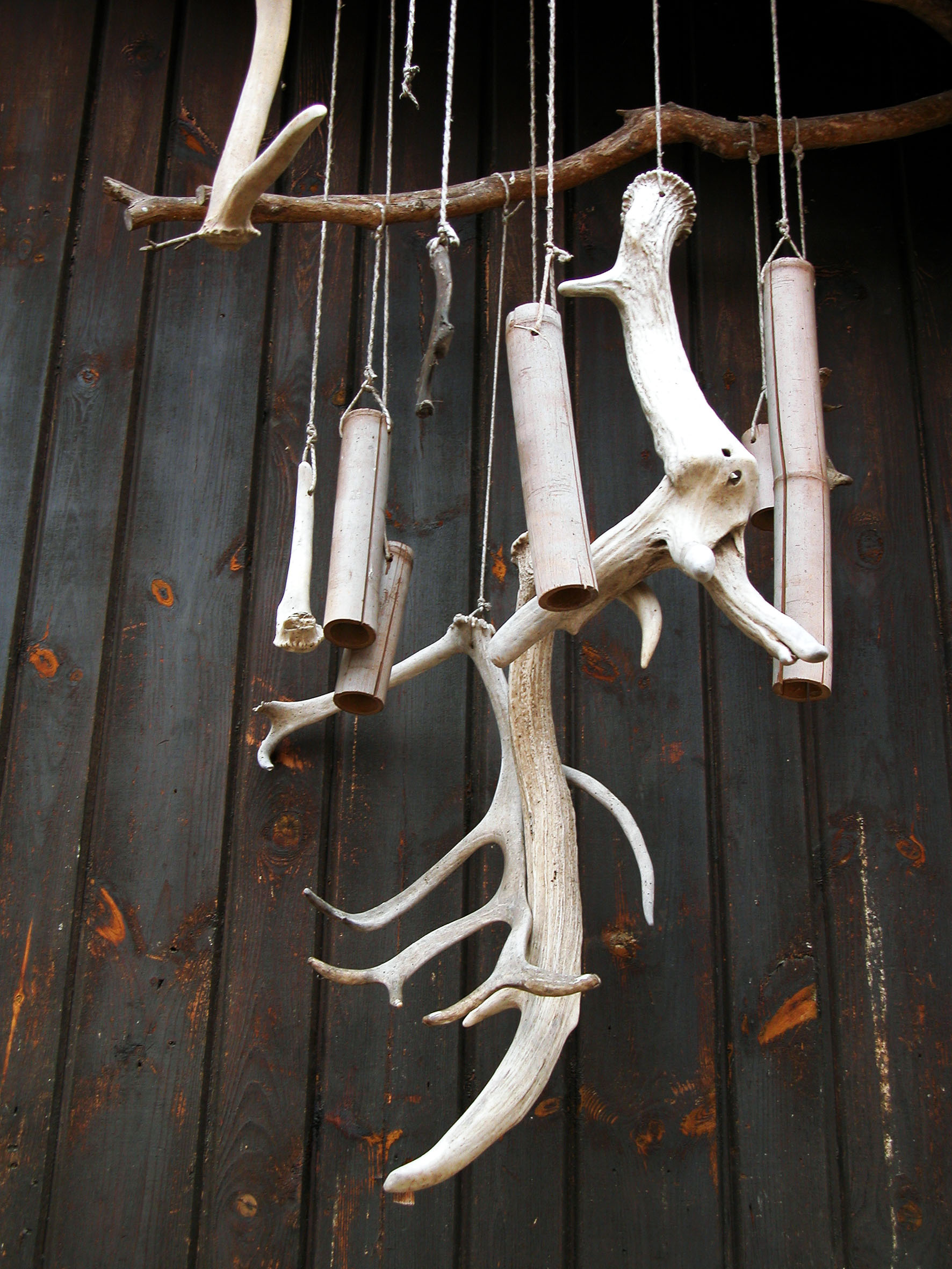
“Bone to Bone” first appeared here in June 2016.

Biography (Cento)

cage


Biography (Cento) 

I am becoming
one of the old

men, but you,
you are earth.

Where is the moment
that lingers,

the static of lost
voices and the feel

of the cleft in the bark.
Ask me anything.

Why am I
grown so cold?

Have you been here?
Thinking

is wind in a cage;
it does not say anything.

* * *

Credits:

James Wright, Cesare Pavese, Ruth Ellen Kocher, HD, Eduardo C. Corral,
Adelaide Crapsey, Denise Levertov, Blaga Dimitrova, Jacques Roubaud,

* * *

A cento is composed of lines from poems by other poets.

For further information and examples of the form, you might peruse the Academy of American Poets site: http://www.poets.org/poetsorg/text/poetic-form-cento


globe

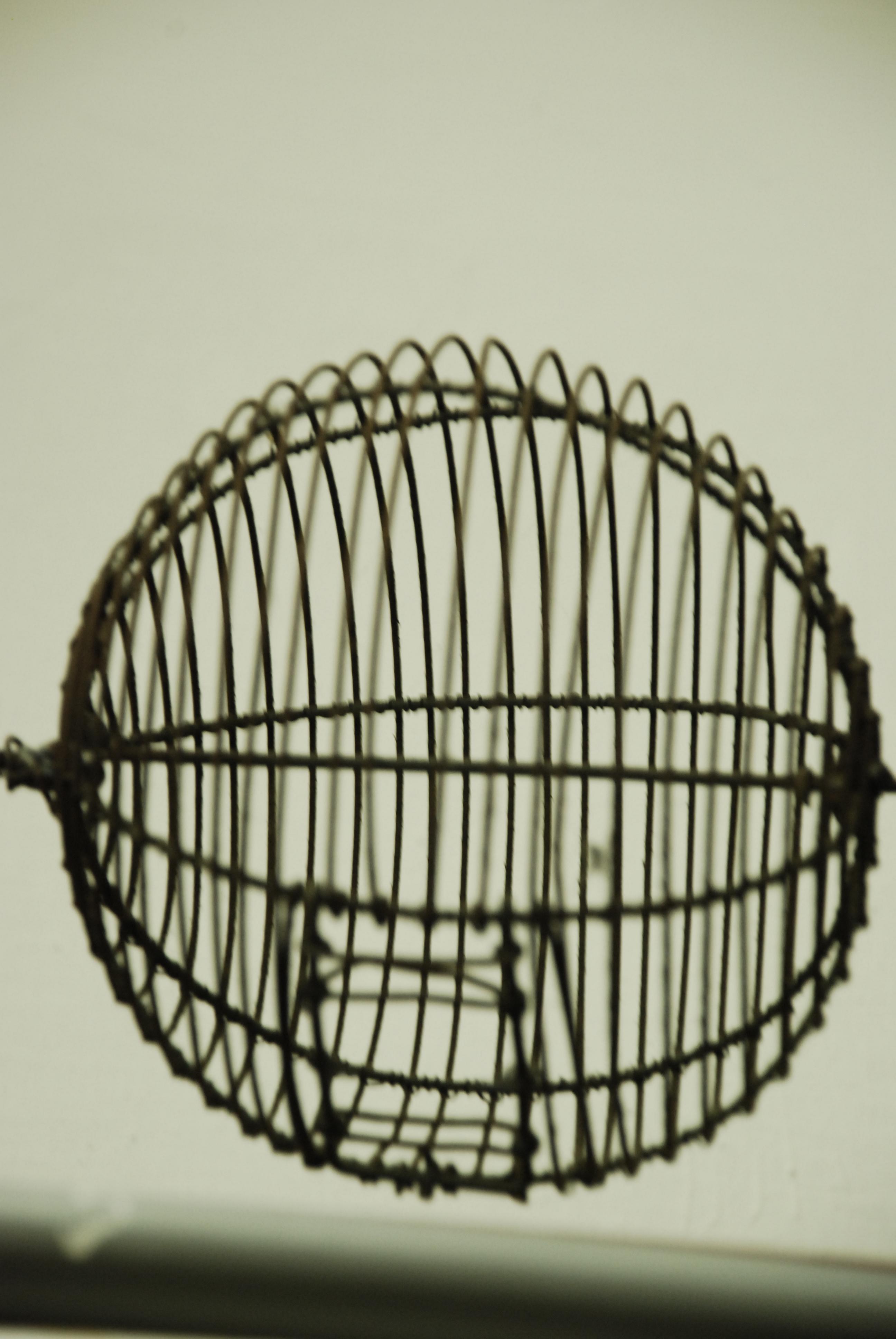
This first appeared here in September 2016.

Obsession: Books, or, Poetry Finds Me

photo 2

In another life books framed my days. I slept with them, dreamt about them, woke to their presence stacked by the bed and in various corners throughout the house, read them, handled them, discussed their merits with friends, co-workers, beer-drinking buddies, bartenders, customers, strangers, relatives, and even enemies. Traced my fingers slowly down their spines, identified some by odor alone, others by weight and feel. Bought, sold, cleaned, lent, skimmed, traded, gave, borrowed, collected, repaired, preserved, received. Traveled to acquire more, returned home to find still others languishing in never-opened, partially read or barely touched states. There were always too many. There were never enough.

The relationship began innocently. I’ve been an avid reader since the age of five, and over the years developed a knack for uncovering uncommon modern first editions. I’d walk into a thrift shop and spot a copy of William Kennedy’s first novel, The Ink Truck, snuggling up to Jane Fonda’s workout book, for a buck. Or at a small town antique store, something especially nice, perhaps a near-fine first edition of Cormac McCarthy’s Outer Dark, would leer at me from a dark shelf – $1.50. John Berryman’s Poems (New Directions, 1942) found me at a garage sale, for a quarter. Good Will yielded Pynchon’s Gravity’s Rainbow. There were others, of course. Many others.

I partnered with a few like-minded friends and opened a store, and when that didn’t work out, started my own home-based book business, which eventually expanded into a small brick-and-mortar shop, a true labor of love. And I mean labor. The forlorn space we rented was cheap and had housed for years a low-end, illicit massage parlor. Cleaning it out was, oh, shall we say interesting? I’ll never forget the furry massage table, the naked lady lamp or the various implements left behind after the joint was finally forced to close. But we hauled out the filthy carpeting, stripped and refinished the hardwood floors, fixed, painted and patched what we could, and hid what we couldn’t. It was exhausting, but well worth the toil.

My work schedule ran from Monday through Sunday, a minimum of eighty hours a week – in a seven-year period, I took off only two long weekends. It consumed me, but in the end I emerged mostly intact, a little more aware of my proclivities, of an unhealthy tendency to immerse myself wholly into an enthusiasm, to the detriment of family and friends. When we sold our store’s wares, I embraced the change; some dreams simply deplete you. But the itch remained.

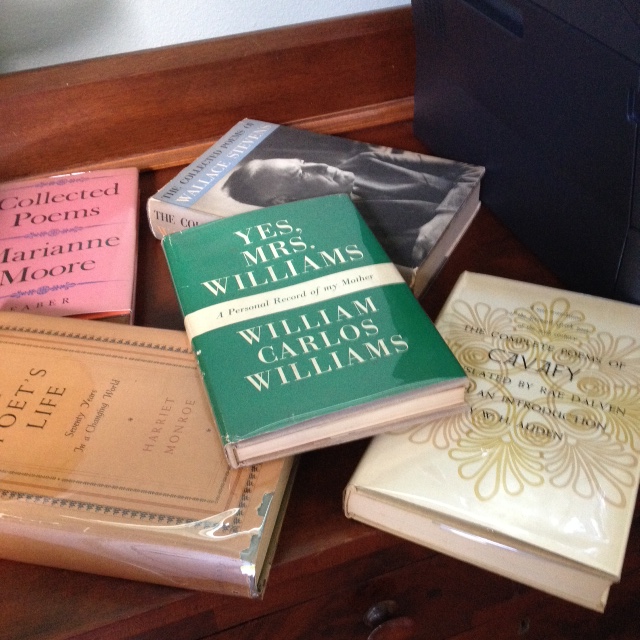
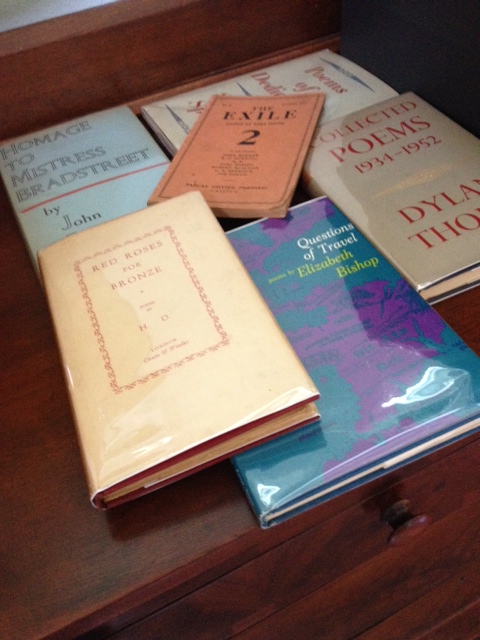
Just a few weeks ago I found myself perusing an accumulation of books in a storage facility across the street from a junk shop in Llano, Texas, a small county seat an hour’s drive west of my home on the outskirts of Austin. The shop’s owner had purchased an English professor’s estate, and judging by the collection, the professor had specialized in poetry. My first thought was “I want it all,” but reason set in (I could very well imagine my wife’s reaction were I to arrive home with a trailerful of books) so I glanced over the criticism, fiction, drama, essays and biographies, and concentrated on the poetry. In the end I walked away with thirty-one books, including H.D.’s Red Roses for Bronze (Chatto & Windus, 1931), Randall Jarrell’s Little Friend, Little Friend, Elizabeth Bishop’s Collected Poems and Questions of Travel, a brace of Berrymans – His Toy, His Dream, His Rest and Homage to Mistress Bradstreet – both the U.S. and U.K. first editions, which differ – and Love & Fame. A good haul, to say the least, but one that left me only partially satisfied and contemplating a return. But I remain resolute. So far.

As I said, the itch remains…

* * *

This first appeared in April 2015.
photo 1(1)