Life among the Prickly Pear

image


Life among the Prickly Pear

Rain’s twofold curse: not enough
too much. Still, I take comfort

even among the thorns.
There is much to like here.

Its moonlight flowers.
Paddles fried with minced garlic.

Wren’s jubilant shriek.
The fruit’s red nectar.

I wake to distant screech owls
purring their desires on separate

slopes. Late spring, storms looming.
I close my eyes and the creek rises.


* * *

A draft of this first appeared here in June 2015, and I posted this version in May 2016. I’ve had to deal with a flooded creek recently…

In the meantime, two of my guitar heroes:

Earth

puddle


Earth

Tremor and
stone

beset upon the calm.

Now water
lines the road’s

bed, and we see
no means to pass.

Even so
you break what falls.


* * *

This first appeared in Ijagun Poetry Journal in December 2013, and is also included in my micro-chapbook, You Break What Falls, available (free of charge) for download from the Origami Poems Project: http://www.origamipoems.com/poets/236-robert-okaji


image

Nocturne with a Line after Kees

country


Nocturne with a Line after Kees

I close my eyes and see nothing but rain.
And after, take pity

for what turns beyond sight: the wretched
flower, a hiss from the road. Last night the wind
stole sleep from my body,

leaving me alone, wordless, listening
for her next breath. An alchemist,

I transmute the memories of old wounds laid open.


*****

This first appeared in Ijagun Poetry Journal, in December 2013.


Antique pharmacy


A Step Closer


A Step Closer

The difference in here
and there, a step closer to infinity
swallowing the clover and wild onion.

Not knowing, you shift purpose to intent.

Following the sun,
the flower sips light all day,
pausing only when I walk between.


“A Step Closer” was published in Sleet Magazine in August 2018. I am grateful to editor Susan Solomon for taking this piece.


Driving to Work, I Pass Myself


Driving to Work, I Pass Myself

Some days the drive takes twenty minutes,
on others, thirty or more. Seems I might pass
myself on the right morning if time flexed its
biceps or looped me into a dimensional shift
thick with donuts and tires and lost minutes.
How odd it would be to wave and say “see ya,”
knowing that tendered frustration grows in
distance, until it takes over the entire mirror.
Looking back, I see my frown diminishing
to a lone point in that shrinking van at the
hill’s crest. Will we meet in the parking
garage? Should I wait? You know the rules.


This first appeared on the blog in March 2018.


Chilled Soba

Chilled Soba

I am not
philosophical
today,

but hunger
concerns me.
Oh, not

real hunger
but a desire
to consume.

Afternoon
chews morning.
Evening

swallows afternoon.
Morning digests
night. And I,

slurping chilled
soba with
pickled ginger

and scallion,
wonder which verb
my days will choose.


“Chilled Soba,” first appeared in Kikwetu: A Journal of East African Literature in November 2018. I am grateful to the editors for accepting my poem.


Scarecrow Sees

Scarecrow Sees

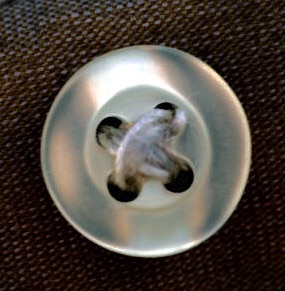
Da Vinci maintained that sight relies on the eye’s
central line, yet the threads holding my
ocular buttons in place weave through four
holes and terminate in a knot. My flying friends
perceive light in a combination of four colors,
unlike the farmer, who blends only three. The
octopus knows black and white but blushes
to escape predators, while I remain fixed,
evading no one. Certainly my sense is more
vision than sight, and not the result of nerve
fibers routing light. Crows choose colors
when asked, but a certain shade of yellow
eludes them. And who would hear, above
the flock’s clamor, my claim to see this world
as it is? Grayscale, monochrome, visual
processing and perceptual lightness measures
mean little to one whose space accumulates
in uncertain increments – what is a foot to an
empty shoe? If I painted, which hues would
prefer my attempts, which would distract or
invade my cellulosic cortex, resulting in
fragmentation or blindness? Fear is not
limited to the sighted alone. I look out over
the field and perceive the harmonious
interaction of soil and root, leaf and sun,
the beauty of atmospheric refraction and
the wonder sprouting daily around me. Then
as one entity the crows explode into the blue,
leaving me alone with the shivering stalks,
questioning my place and purpose, awaiting
the next stray thought, a spark, a lonely
word creeping through this day’s demise.


This was written during the August 2015 Tupelo Press 30-30 Challenge, and was published by The High Window in December 2016.


Agave

photo(2)

Agave

It might deceive.
Or like a cruel

window, live its life
unopened,

offering a view
yet reserving the taste

for another’s
tongue, ignoring

even the wind.
The roots, as always, look down.

* * *

This first appeared in Ijagun Poetry Journal in December 2013, was featured in poems2go in April 2016, and is also included in my micro-chapbook, You Break What Falls, available for download from the Origami Poems Project: http://www.origamipoems.com/poets/236-robert-okaji

image


At Work I Stand Observing My Diminished Self


At Work I Stand Observing My Diminished Self


1 (reflection)

Six iterations, alike but lessened in sequence, and always in pairs:
front and back, oblique, the two mirrors becoming four, then six.

A perfect mirror reflects and neither transmits nor absorbs light.

Tilting my chin, I accept reflectance according to its distribution.

Retina as transducer, producing neural impulses.

The images consume no space but the effect is of distance.

Vision is not simply the retina’s translation
but counts inference and assumption among its influences.

The sum and product of its parts: 1 + 2 + 3, or, 1 x 2 x 3.

Angles achieve distinctions apparent at each adjustment.

Turning slightly, I detect movement in each replica.

A six-door cubic cage depicting the bondage of sense and elements.

It is possible to withdraw from this frame.


2 (answers)

Does the weaker eye perceive less.
Who conceals the shadow’s death.
Is a distal truth a lie or merely implication.
How do you rid the mirror of its ghosts.
What resonates in the echo’s decline.
Did the light switch subvert the blackened image.
Apparition, projection or visual representation.
When do waves not disturb.
At what point does belief transmute sight.
What fixes the mirror’s image.
Who closed his eyes and saw light.


3 (prosopagnosia)

I sip coffee and gaze out the second-floor window.

More light enters my neighbor’s office than mine.

Calculate the difference between illumination and glare.

Looking ahead, I claim no face and recognize no one.

The eye converts a signal from one form of energy to another.

Accepting light from external objects, I perceive reflection as the true arbiter.

The dissected path impairs transduction.

Face as identifier: to make, to do.

Translation: imperfection: diminishment.

Blink.

* * *

“At Work I Stand Observing My Diminished Self” was published in Posit in October 2017.

Even at Night


Even at Night

That year it snowed
and possibilities sprouted
like secrets opening to
chambers in the deep cedars

lining our hills. What did you read
in the vultures’ loops, in those
spaces within? I recall striding
through a field of labor-drunk

bees burdened with pollen. Now
we trek from house to hovel,
carrying books and drills,
water and planks, moving

glass and stone and the dying,
finding absolution in task, in
ritual and folly, in soil and sky;
the sun touches us even at night.


“Even at Night” was first published in 13 Alphabet Magazine, out of Bangladesh, in September 2018.