Destined by Gravity to Fail, We Try


Destined by Gravity to Fail, We Try

Having fallen from the roof not once, but twice,
I verify that it is not the fall but the sudden stop that hurts.

The objectivist sense of the little: the and a, my house in this world.

Galileo postulated that gravity accelerates all falling bodies at the same rate.

While their etymologies differ, failure and fall share commonalities,
though terminal velocity is not one.

The distance between the glimpsed and the demonstrated.

Enthralled in the moment, Icarus drowned.

Rumor has it his plunge was due not to melting wax but to an improper mix
of rectrices and remiges: parental failure.

Thrust and lift. Drag. Resistance.

Acknowledgment of form in reality, in things.

When the produced drag force equals the plummeting object’s weight, the
object will cease to accelerate and will move at a constant speed.

To calculate impact force accurately, include the stopping distance in height.

Followed by long periods of silence.

 

house

This first appeared on the blog in December 2015.


The Color of Water

SONY DSC

The Color of Water

Eyes the color of water. The tree I cut down
returns: fallen leaves, smoke, the missing

shade, memory come to reflect
emotion. Once the blue grosbeak

hid in its branches, calling but refusing
to appear, the voice our only consolation.

Now rain streaks the empty space.
Those things we touch often bruise,

but to leave them untouched may harm us
even more. Two days ago the sky cleared.

Changes, how often we see them for what
they are not. An essential falsity. Those eyes.

Words, ever-changing. Shadows of lovers
whose bodies merge but never touch.

file731340645452

This first appeared on the blog in March 2015.

Nocturne with a Line from Porchia

bureau


Nocturne with a Line from Porchia

Everything is nothing, but afterwards.
I rise and the moon disturbs the darkness,
revealing symbols, a few stolen words
on the bureau. Tomorrow I’ll express
my gratitude by disappearing be-
fore I’m found, which is to say goodbye
before hello, a paradigm for the
prepossessed. Compton tells us to imply
what’s missing, like Van Gogh or Bill Monroe,
but why listen to the dead before they’ve
stopped speaking? Unfortunately we throw
out the bad with the good, only to save
the worst. I return to bed, and the floor
spins. Nothing is everything, but before.


* * *

This first appeared in The Blue Hour Magazine in December 2014, and is also included in my chapbook, If Your Matter Could Reform. The line “Everything is nothing, but afterwards” comes from Antonio Porchia’s Voices, translated by W.S. Merwin. Porchia wrote one book in his lifetime, but what a book it was! Often described as a collection of aphorisms, Voices is so much more – each time I open the book, I find new meaning in old lines.

Vincent


Requiem II (with recording)

image


Requiem II

To say what becomes: this word
bends in the wind of our

breath. Is this too simple to
say? Our bodies gather yet retain

nothing. Numbers, phrases, the way
the ocean rolls. Once I saw
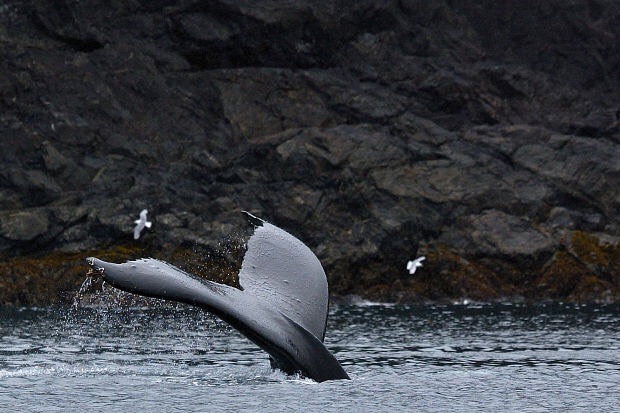
a whale at dusk. Or rather I saw its

tail part the water and disappear
into darkness, an answer too complex
and sweet for tongues to comprehend.

But waves seldom explain. Imagine
something nearby but beyond reach.

Think of clouds and shrines, consider light.


image


“Bittersweet” Kevin MacLeod (incompetech.com)
Licensed under Creative Commons: By Attribution 3.0 License
http://creativecommons.org/licenses/by/3.0/


Japanese Gardens

file3011293816499


Japanese Gardens

how natural the
lines falling so
purely as if

with a single
stroke we walk
through the opening

and see space
the white center
composed of sand

and gravel later
a gate opens
to another garden

its lantern and
stone so carelessly
arranged so deliberate


file3041292222348

“Japanese Gardens” first appeared here in January 2015.


The Draft (with recording)


The Draft

All memories ignite, he says, recalling
the odor of accelerants and charred

friends. Yesterday I walked to the sea
and looking into its deep crush

sensed something unseen washing
out, between tides and a shell-cut foot,

sand and the gull’s drift, or the early names
I assign to faces. This is not sadness.

Somewhere the called numbers meet.


* * *

“The Draft” first appeared in Taos Journal of International Poetry & Art.

Driving without Radio

trash-in-tree


Driving without Radio

One minute you’re sipping coffee at the stoplight,
and the next you find yourself six miles

down the road, wondering how you got there,
just two exits before the French bakery

and your favorite weekday breakfast taco stand.
Or while pondering the life of mud,

you almost stomp the brakes when a 40-year old
memory oozes in — two weeks before Thanksgiving,

the windshield icing over (inside), while most definitely
not watching the drive-in movie in Junction City, Kansas,

her warm sighs on your neck and ear, and the art
of opening cheap wine with a hairbrush. How many

construction barrels must one dodge to conjure these
delights, unsought and long misfiled? You turn right

on 29th Street and just for a moment think you’ve seen
an old friend, looking as he did before he died,

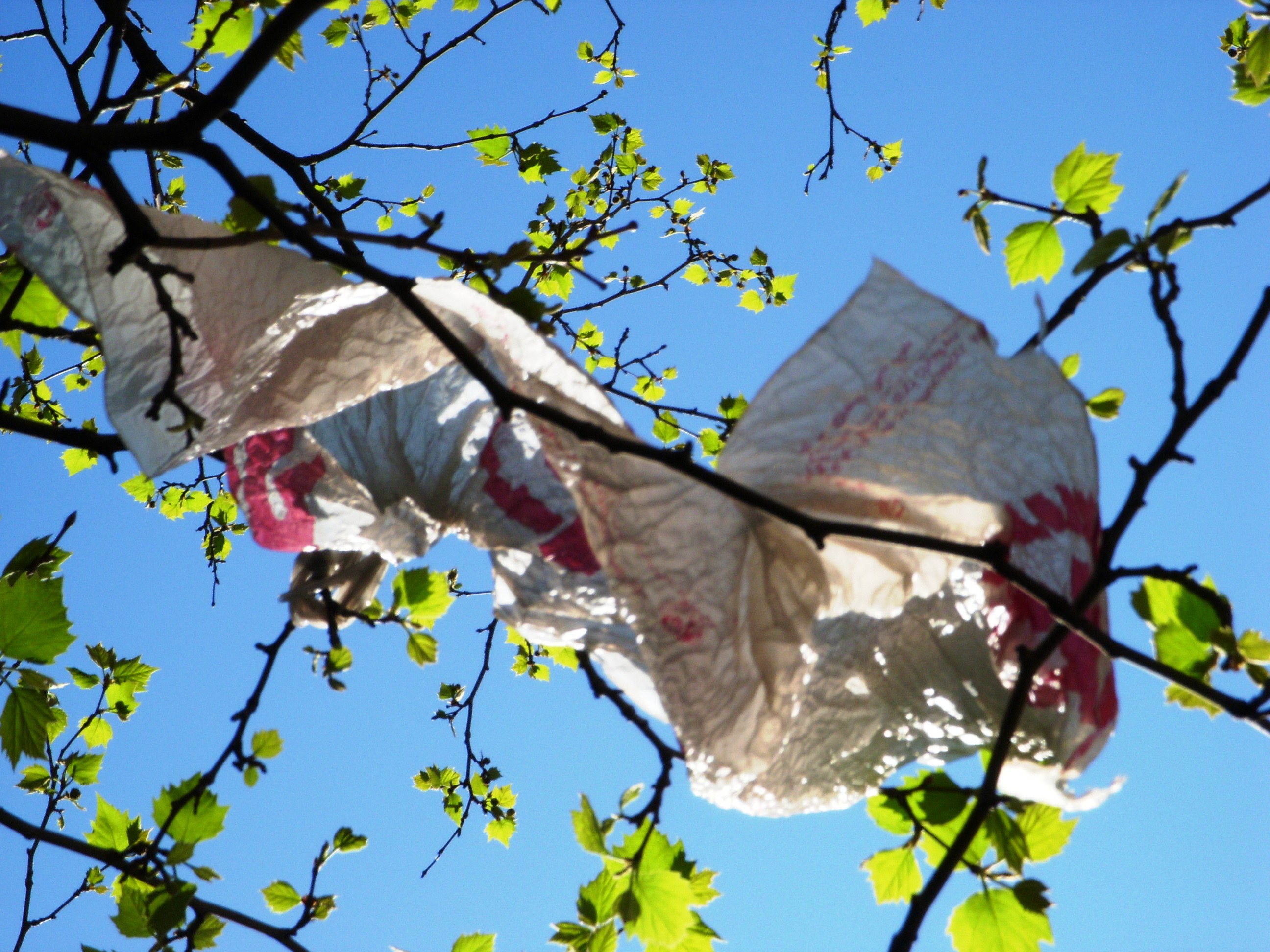
but better, and happier, and of course it’s just a trash bag
caught in a plum tree, waving hello, waving goodbye.


“Driving without Radio” was published at Split Rock Review in November 2016. Many thanks to editor Crystal Gibbins for providing a home for this one.


What the Body Gives, Gravity Takes (Cento)

balance


What the Body Gives, Gravity Takes (Cento) 

As if what we wanted
were not the thing
that falls,

as what was given
to answer ourselves with – air

moving, a stone
on a stone,
something balanced momentarily.

Or wheels turning,
spinning, spinning.

The waters would suffer
at being waves,
but nothing of their dream
takes place,

nothing that is complete
breathes. But the world
is peopled with objects.

You grow smaller,
smaller, and always
heavier.

You can think of nothing else.


Credits:

Jane Hirshfield, Gustaf Sobin, George Oppen, Joy Harjo, Alberto de Lacerda, Jacques Dupin, Francis Ponge, Denise Levertov, Jacques Roubaud.

* * *

“What the Body Gives, Gravity Takes” appeared in Issue Four of Long Exposure, in October 2016.
wheels


Knots

knot


Knots

Who you are not seldom rises
beyond midnight’s

sum: one strand thrown over
another, looped through

and pulled taut, achieving
tension and a sour taste

at the back of your throat.
Everyone believes this

doesn’t bleed. I lock the
windows, draw the shades,

twist the cord. Even distracted,
nothing comes undone.


modern light MGD©


“Knots” first appeared here in June 2016.


Morning Covers You

eye camera


Morning Covers You

1

We extract
light, bleeding
it out one

diamond-shaped
hole after
another.

Finger the results.
Remediation
in form

or placement
to best
advantage?

At night
loneliness cradles
our bones.

2

You arrange our bodies to greater effect,
presuming lesser horrors
to be less.

A list emerges.
Refuting one,
accepting another.

Choices fixed.
Ecstasies of failure
purged.

Morning covers you
like a blue
shroud, so pale.

So cold
and bitter.


This originally appeared in Boston Poetry Magazine in April, 2014, and on this blog in October 2015.

diamond fence