How to Do Nothing

OLYMPUS DIGITAL CAMERA

How to Do Nothing

First you must wash the window to observe more clearly
the dandelion seed heads bobbing in the wind. Next,

announce on Facebook and Twitter that you will be offline
for the next two days, if not forever. Heat water for tea.

Remember the bill you forgot to pay, and then cleanse
your mind of all regret. Consider industrial solvents

and the smoothness of sand-scoured stone, the miracle
of erasure. Eliminate all thought, but remember

the water. Hitch a ride on a Miles Davis solo and float
away on a raft of bluesy notes and lions’ teeth,

and wonder how to sabotage your neighbor’s leaf blower,
but nicely, of course. She’s a widow with a gun.

Now it is time to empty yourself. Close your eyes.
Become a single drop of dew on a constellation of petals.

Evaporate, share the bliss. Stuff that dog’s bark
into a lock box alongside the tapping at the door,

the phone’s vibration, the neighbor’s rumbling bass,
and the nagging, forgotten something that won’t

solidify until three in the morning, keeping you awake.
But don’t ignore the whistling. You must steep the tea.
* * *

“How to Do Nothing” was published in Volume 4 of Steel Toe Review, available for purchase here.


steel toe

Ikebana

leaf on stone

Ikebana (You without You)

Between frames, between presence and negation, authority.

If your body lies in the earth, why are you here?

Limits admired and sought: the way of the flower.

I pluck leaves from the lower half to achieve balance.

Shape and line detach, yet comprise the whole.

My father, awake in his chair, mourns quietly.

A naked twig forms one point of the scalene triangle.

Starkness implies silence, resonates depth.

Heaven, earth, man, sun and moon invoke your absence.

As you trickle through the interval’s night.

* * *

Ikebana is the art of Japanese flower arrangement.

chair

This first appeared on the blog in March 2016, and is included in my mini-digital chapbook, Interval’s Night, published by Platypus Press in December 2016, and available via free download.

Requiem II

image

Requiem II

To say what becomes: this word
bends in the wind of our

breath. Is this too simple to
say? Our bodies gather yet retain

nothing. Numbers, phrases, the way
the ocean rolls. Once I saw
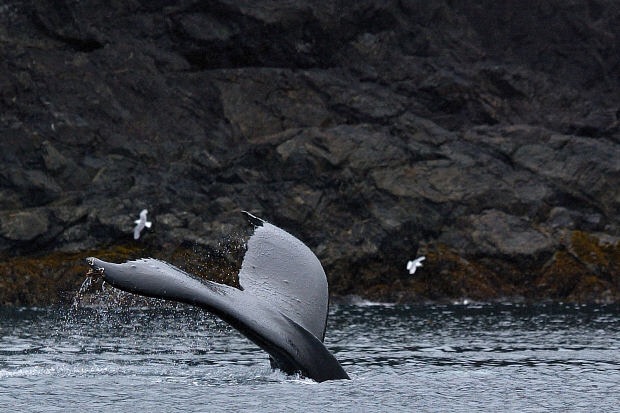
a whale at dusk. Or rather I saw its

tail part the water and disappear
into darkness, an answer too complex
and sweet for tongues to comprehend.

But waves seldom explain. Imagine
something nearby but beyond reach.

Think of clouds and shrines, consider light.

image

“Requiem II” first appeared here in May 2015.

My Poem, “Even the Light” Is in La Presa

 My poem, “Even the Light,” has been published in the May issue of La Presa.

 Many thanks to editor Lee Gould for taking this piece.

Scarecrow Takes a Holiday

Scarecrow Takes a Holiday

Having neither organs nor neural impulses,
I no longer ask why or how I hear and smell,
taste and see, feel. This morning I woke
to magpie song and onion breeze, in
a body not mine, yet mine, at peace
on Jeju Island, far from my crows, yet
still among friends singing the same
language. I know this: home lives
within, and no matter where we travel,
it rides with us. Like the man who
spoke to me, bald, bearded, a pale
foreigner in this land, comfortable
here, at home. He listened for my reply,
but unfortunately I’d not been given
a mouth, and my words dropped to the
ground and were rolled away by
beetles before he noticed them.
Perhaps I should have written a note,
but he wished to gamble and how
could I refuse? I am hollow, but not
empty, whole, yet not complete,
away but here. He took a coin
from his pocket, flipped it. I saw…

A response to Daniel Paul Marshall’s “Scarecrow Travels (after Robert Okaji)”

Recording of My Poem “His Softness”

shoes

His Softness

What name would survive
had you not stepped into the water

that day? Memory assigned
a separate word, another given,

and the face I’d placed with you
appeared in front of me

fifteen years later, in another
setting, miles away

and still breathing. How
may I honor you

if not by name? I recall
the gray ocean and how

umbrellas struggled in
the wind, and reading

in the weekly newspaper
a month after

that you had never emerged.
Now your name still lies there,

somewhere, under the surface,
unattached yet moving with

the current, and I,
no matter how I strain,

can’t grab it. Time after time,
it slips away. Just slips away.

.* * *

“His Softness” was published in January 2016 in the inaugural edition of MockingHeart Review, and reappeared here in July 2016.

To the Lovely Green Beetles Who Carried My Notes into the Afternoon

To the Lovely Green Beetles Who Carried My Notes into the Afternoon

Such beauty should not be bound,
thus I tied loose knots,

knowing you would slip free
and shed my words

as they were meant,
across browned lawns,

just over the cedar fence
or at the curb’s edge,

never to be assembled,
and better for it.

* * *

This appeared in riverSedge Volume 29, Issue 1, released in October 2016. I first encountered riverSedge in 1983, and vowed that one day my poetry would be published in this journal. It took a while…

Apricot House (after Wang Wei)

file000532973761

Apricot House (after Wang Wei)

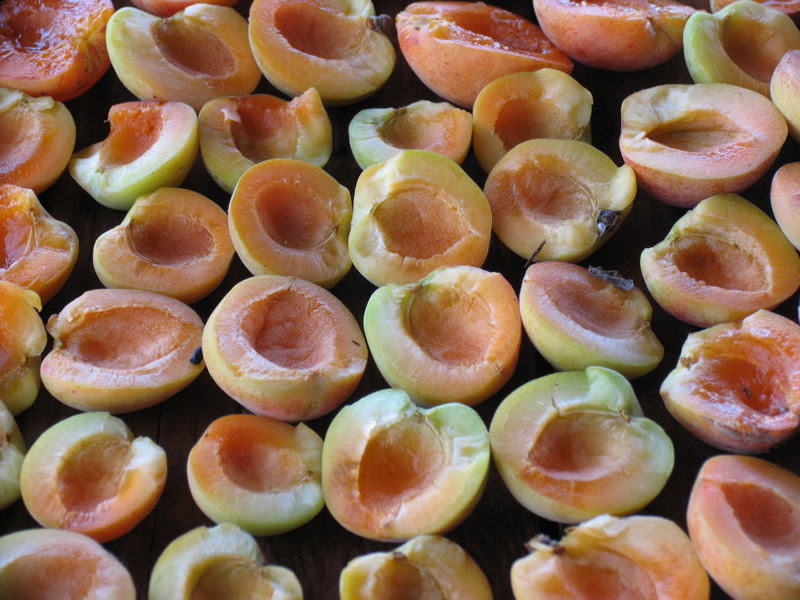
We cut the finest apricot for roof beams
and braided fragrant grasses over them.

I wonder if clouds might form there
and rain upon this world?

The transliteration on Chinese-poems.com reads:

Fine apricot cut for roofbeam
Fragrant cogongrass tie for eaves
Not know ridgepole in cloud
Go make people among rain

Each adaptation poses its challenges, and this one was certainly no exception.
First I identified key words and determined how or whether to use them.
Apricot, roofbeam, cogongrass, eaves, ridgepole, cloud, people, rain.

Apricot was a given. It offered specificity, and feels lovely in the mouth. Roof beams, as well. Cogongrass didn’t make the cut. It is indeed used for thatched roofs in southeast Asia, but it felt clumsy; in this case, the specificity it lent detracted from my reading. And rather than use “thatched” I chose “braided” to imply the layered effect of thatching, and to imply movement, to mesh with and support the idea of clouds forming and drifting under the roof. “Not know” posed a question: did it mean ignorance or simply being unaware, or perhaps a state of wonderment? I first employed “unaware” but thought it took the poem in a different direction than Wang Wei intended (but who knows?). “Ridgepole” seemed unnecessary. So I chose to let the reader follow the unsaid – using “form there” to reinforce the impression already shaped by the roof beams and the grasses “over them.” I admit to some trepidation over the second couplet. It may still need work.

clouds

“Apricot House” first appeared here in December 2014.

Rice

image

Rice

Yesterday’s rain informs me I’m born of luck and blended
strands, of hope and words forged before a common tongue emerged.

Of my first two languages only one still breathes.

The other manifests in exile, in blurred images and hummed tunes.

Rice is my staple. I eat it without regarding its English etymology,
its transition from Sanskrit to Persian and Greek, to Latin, to French.

Flooding is not mandatory in cultivation, but requires less effort.

Rice contains arsenic, yet I crave its polished grains.

In my monolingual home we still call it gohan, literally cooked rice, or meal.
The kanji character, bei, also means America.

Representing a field, it symbolizes abundance, security, and fertility.

Three rice plants tied with a rope. Many. Life’s foundation.

To understand Japan, look to rice. To appreciate breadth, think gohan.
Humility exemplified: sake consists of rice, water and mold.

The words we shape predicate a communion of aesthetics.

Miscomprehension inhabits consequence.

* * *

“Rice” appeared here in June 2015, and in my chapbook, The Circumference of Other, which is included in Ides, a one-volume collection of fifteen chapbooks published by Silver Birch Press and available on Amazon.com.

image

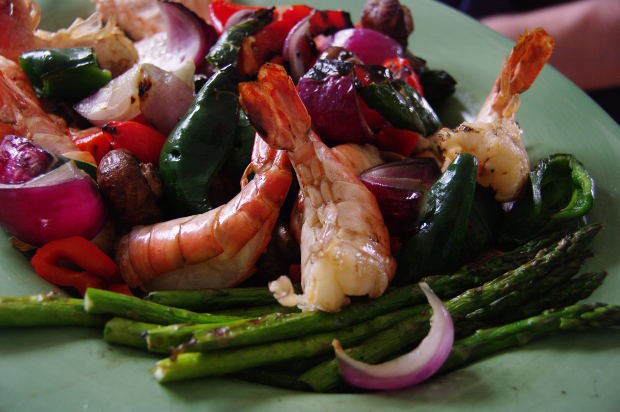
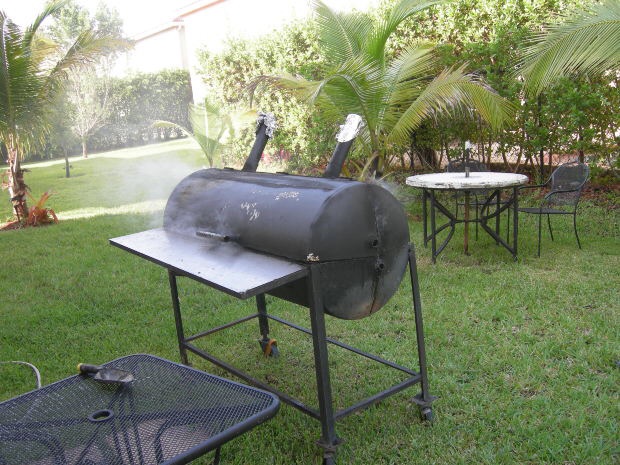
A History of Particles: Ash, Wood, Shrimp

image

A History of Particles: Ash, Wood, Shrimp

Unsettled and predisposed
to flight, they
rise. Or, awaiting the process, receive
the glow as prelude to transformation, a

nocturnal exegesis inscribed in flame
and black swirls. Death in the air,
settling upon us. The bitterest
taste. But how to explain

the tongue’s sweet tremor? And the narrow
margins between the transition

from wood to smoke?
At 250 degrees
their pale shells redden,

become vessels of radiant
heat and its attenuated function,
moisture retained so as

to delay and heighten the
delectable flesh, once freed, become
virtue, become fate

sliding down the throat,
the course of deterioration hastened
and endured in perpetuity.

image

This first appeared on the blog in June 2015.